Listen to this Post
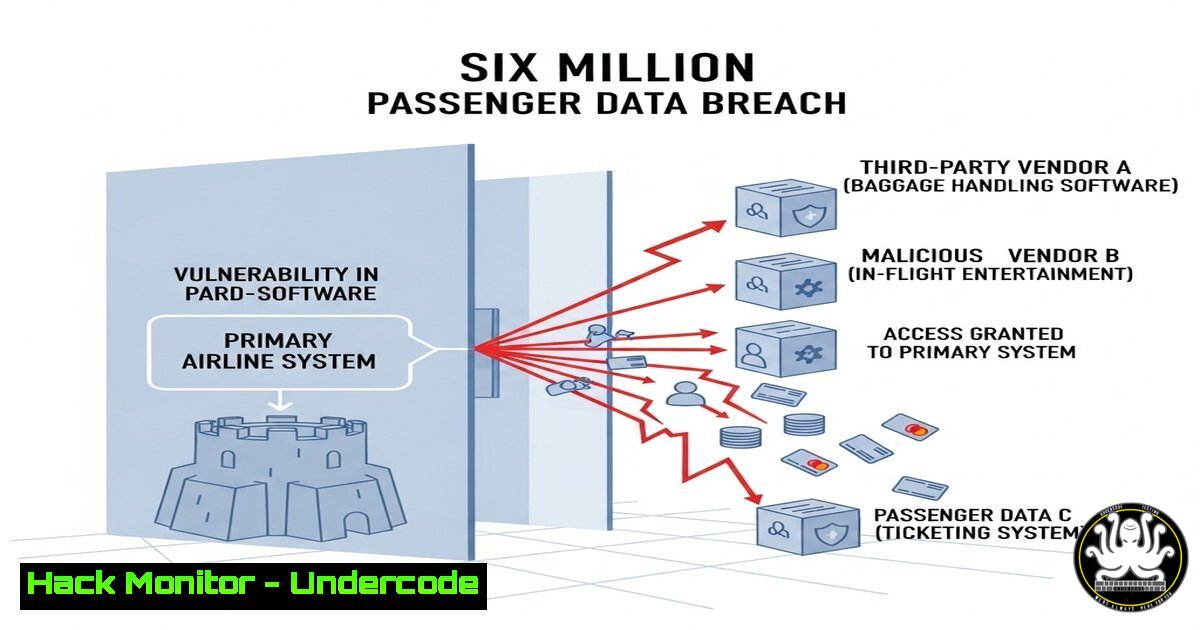
Introduction:
The recent breach exposing the data of 6 million travelers is a stark reminder that an organization’s security is only as strong as its weakest vendor. This incident, stemming from a third-party airline entertainment and booking provider, exemplifies the devastating ripple effect of supply chain attacks, where a single vulnerability in a partner’s system can compromise millions. Modern cybersecurity strategy must extend far beyond corporate firewalls to encompass rigorous third-party risk management and continuous vendor assessment.
Learning Objectives:
- Understand the mechanics and critical risks of third-party software supply chain attacks.
- Learn to implement technical controls for monitoring and hardening external vendor access.
- Develop a framework for auditing and enforcing security policies across your digital supply chain.
You Should Know:
1. Mapping Your External Attack Surface with Nmap
Before you can defend your supply chain, you must map it. A core tenet of external risk management is knowing every internet-facing asset owned by your vendors that has a connection to your data.
`nmap -sS -sV -O –script vuln,ssl-enum-ciphers -p- target-vendor-domain.com -oA vendor_scan`
`-sS`: Performs a stealthy SYN scan.
-sV: Probes open ports to determine service/version info.
`-O`: Enables OS detection.
--script vuln,ssl-enum-ciphers: Runs NSE scripts to check for known vulnerabilities and weak SSL/TLS ciphers.
`-p-`: Scans all 65,535 ports.
-oA vendor_scan: Outputs results in all formats (normal, grepable, XML) with the filename vendor_scan.
This command provides a comprehensive view of what a vendor is exposing to the internet, identifying potential entry points for attackers long before they can be exploited.
2. Interrogating SSL/TLS Configurations for Weak Vendor Links
Weak cryptographic standards on a vendor’s login portal or API are a common failure point. The `testssl.sh` tool is an indispensable, open-source utility for deep-diving into a provider’s TLS/SSL health.
`./testssl.sh –vulnerable –protocols –ciphers –server-preference https://vendor-api.com`
This command tests for a wide array of vulnerabilities (e.g., Heartbleed, ROBOT, CCS injection), enumerates supported protocols (checking for obsolete SSLv2/3), lists all ciphers, and analyzes the server’s preference. Finding weak ciphers or outdated protocols in your vendor’s stack is a major red flag that must be addressed in your contract’s security appendix.
3. Enforcing Zero-Trust Network Access (ZTNA) for Vendors
The legacy model of granting vendors broad VPN access to your internal network is inherently risky. A Zero-Trust approach mandates that no entity is trusted by default. For Linux-based infrastructure, implementing firewall rules to restrict vendor access is a first step.
`sudo iptables -A INPUT -s vendor-ip-range -p tcp –dport 443 -m state –state NEW,ESTABLISHED -j ACCEPT
`sudo iptables -A OUTPUT -d vendor-ip-range -p tcp --sport 443 -m state --state ESTABLISHED -j ACCEPT`

<h2 style="color: yellow;">
These rules first allow established, encrypted (port 443) traffic from a specific, whitelisted vendor IP range. The final rule then drops all other incoming traffic from that same vendor, enforcing the principle of least privilege at the network layer.
- Auditing Cloud IAM Roles for Excessive Vendor Permissions
In cloud environments (AWS, Azure, GCP), a vendor’s over-permissioned Identity and Access Management (IAM) role is a catastrophic risk. Use cloud-native tools to audit these policies rigorously.
`aws iam get-policy-version –policy-arn arn:aws:iam::123456789012:policy/VendorAccessPolicy –version-id v1`
`aws iam simulate-custom-policy –policy-input-list file://vendor_policy.json –action-names “s3:GetObject” “rds:DeleteDBInstance”`
The first command retrieves the specific version of an IAM policy attached to a vendor role. The second command simulates whether that policy (provided in a JSON file) allows critical actions like retrieving data from S3 or even deleting a database instance. This simulation helps identify permissions that violate the least privilege principle.
5. Continuous Vulnerability Scanning of Vendor Software Packages
If a vendor provides software libraries (e.g., a JavaScript widget for bookings), it must be continuously scanned for new vulnerabilities. Integrate this into your CI/CD pipeline.
`npm audit –audit-level high`
`docker scan vendor-image:latest`
For Node.js packages, `npm audit` checks dependencies against a database of known vulnerabilities and fails the build if a high or critical severity issue is found. For Docker containers provided by vendors, `docker scan` (powered by Snyk) performs a deep vulnerability scan of the container’s OS and application layers, ensuring a known vulnerable image never reaches production.
6. Detecting Data Exfiltration to Vendor Endpoints
Monitoring for unusual outbound data transfers to vendor IP addresses is crucial for detecting a breach. This Suricata rule provides a basic alert for large HTTP POST requests to a known vendor subnet.
`alert http $HOME_NET any -> [2001:db8::/32] any (msg:”LARGE POST to Vendor Subnet”; flow:established,to_server; http.method; content:”POST”; http.uri; content:”/api/upload”; nocase; depth:10; flowbits:set,post_to_vendor; flowbits:noalert; sid:1000001;)`
`alert http $HOME_NET any -> [2001:db8::/32] any (msg:”POSSIBLE DATA EXFIL to Vendor”; flow:established,to_server; flowbits:isset,post_to_vendor; http.request_body; size:>1000000; threshold:type limit, track by_src, count 1, seconds 60; sid:1000002;)`
The first rule tags traffic posting to a vendor upload API. The second rule triggers an alert if the body of such a request exceeds 1MB, which could indicate the unauthorized transfer of sensitive data files.
- Hardening API Security Against Broken Object Level Authorization (BOLA)
The travel leak likely involved unauthorized access to data objects via API endpoints. Testing for BOLA flaws, where a user can access another user’s data by changing an ID, is critical.
` Use Burp Suite’s Autorize extension or a custom script to replay requests with changed IDs.`
`curl -H “Authorization: Bearer $USER_A_TOKEN” https://api.vendor.com/user/123/booking`
`curl -H “Authorization: Bearer $USER_A_TOKEN” https://api.vendor.com/user/456/booking Check if this returns data for User B`
This simple cURL test demonstrates the core of a BOLA attack. If the second command, authenticated with User A’s token, successfully retrieves the booking details for User B (ID 456), the API has a critical authorization flaw that must be patched immediately by the vendor.
What Undercode Say:
- Your perimeter is now plural. Every vendor, every SaaS provider, every open-source library represents a potential entry point. Defense can no longer be inward-looking; it must be radially oriented, with continuous scrutiny applied outward across your entire digital ecosystem.
- Contracts are a cybersecurity control. A well-negotiated Master Service Agreement (MSA) with strict security appendices, mandatory pen-testing rights, and severe financial penalties for non-compliance is not a legal formality—it is your primary technical leverage for enforcing vendor security hygiene.
The Travel Leak was not an anomaly but a inevitability of outdated procurement and vendor management practices. Technical teams are often handed vendor solutions pre-approved by legal and business units, with no mechanism for a deep technical audit before integration. The analysis shows a systemic failure: prioritizing feature functionality and cost over resilient, auditable security design. The vendor’s system was a single point of failure for multiple airlines, creating a massively attractive target for attackers. This incident proves that third-party risk must be quantified, continuously monitored, and contractually enforced with the same rigor as internal security controls.
Prediction:
The regulatory fallout from this and similar breaches will catalyze a seismic shift in liability, moving from the primary data controller (the airline) directly to the negligent third-party vendor. We will see the first major test of “liability for defective software” laws, similar to product liability, resulting in multi-billion dollar lawsuits that bankrupt vendors found to have shipped knowingly vulnerable systems. This will force a industry-wide reckoning, mandating software bills of materials (SBOMs), independent security certifications, and cyber-insurance requirements for any company wishing to operate as a B2B vendor, fundamentally reshaping the software supply chain economy.
🎯Let’s Practice For Free:
IT/Security Reporter URL:
Reported By: Inga Stirbytecybersecurityleader – Hackers Feeds
Extra Hub: Undercode MoN
Basic Verification: Pass ✅


