Listen to this Post
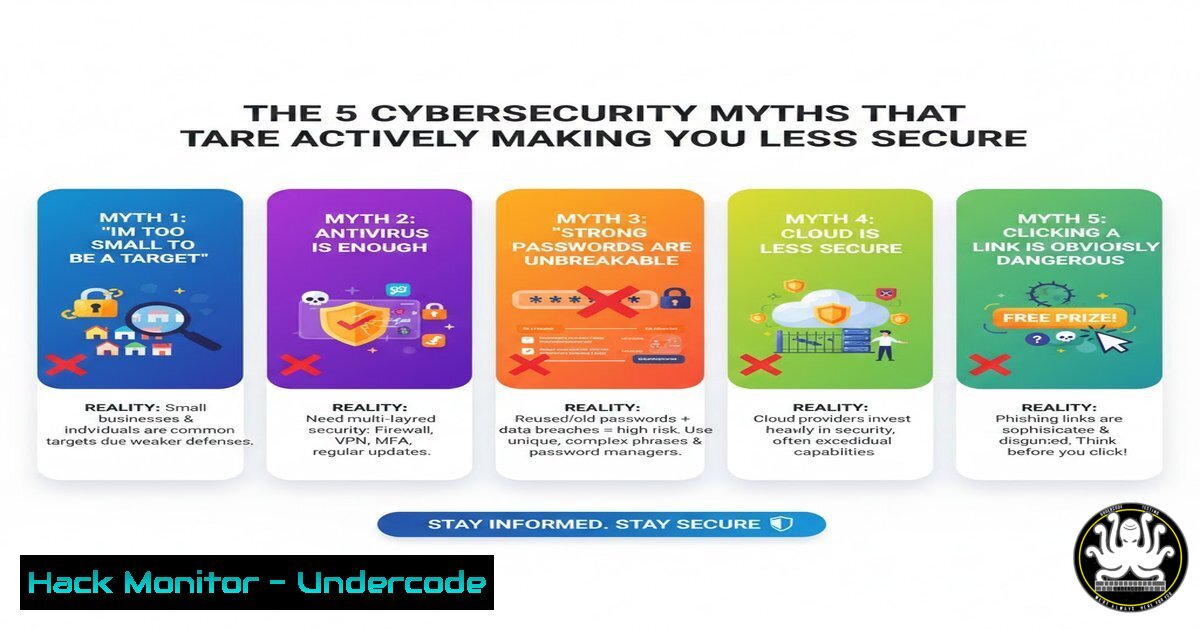
Introduction:
The cybersecurity landscape is evolving at a breakneck pace, but many foundational principles taught for years have become obsolete—and even dangerous. Adhering to outdated advice creates a false sense of security while leaving critical vulnerabilities exposed. This article dismantles five pervasive cybersecurity myths and provides modern, actionable strategies to fortify your defenses.
Learning Objectives:
- Identify and replace outdated cybersecurity practices with modern, effective alternatives.
- Implement robust technical controls like MFA, network segmentation, and behavioral monitoring.
- Understand the strategic shift from a perimeter-based defense to a Zero-Trust model.
You Should Know:
1. The Myth of the Complex Password
The longstanding belief that a complex, frequently changed password is the pinnacle of security is now counterproductive. This practice leads to predictable password patterns, insecure storage (like sticky notes), and user fatigue. Modern attackers use sophisticated brute-force and credential-stuffing techniques that easily circumvent this strategy.
Step‑by‑step guide explaining what this does and how to use it.
The modern alternative is to enforce long, memorable passphrases combined with a mandatory, robust Multi-Factor Authentication (MFA) policy.
1. Policy Configuration: In your Identity Provider (e.g., Active Directory, Azure AD), enforce a minimum password length of 14+ characters. Remove requirements for character complexity and mandatory periodic resets.
Windows (via Group Policy):
Navigate to Computer Configuration > Policies > Windows Settings > Security Settings > Account Policies > Password Policy.
Set “Minimum password length” to 14 and “Enforce password history” to 0.
Linux (via `authselect` or `pam_pwquality`):
Edit `/etc/security/pwquality.conf` and set:
minlen = 14
minclass = 0
2. Enforce MFA: Mandate MFA for all users, especially for administrative and cloud accounts. Use authenticator apps (e.g., Google Authenticator, Microsoft Authenticator) or hardware security keys instead of less secure SMS-based codes.
2. The Myth of the Impenetrable “Air-Gapped” System
The concept of a network completely isolated from the internet is often a fallacy in today’s interconnected digital environments. Even if a system is logically air-gapped, the human element remains a vulnerability. Insiders, infected removable media, and supply chain attacks can bridge the supposed gap.
Step‑by‑step guide explaining what this does and how to use it.
Instead of relying on a mythical air-gap, implement strict application whitelisting and device control policies.
1. Application Whitelisting (Windows): Use Windows Defender Application Control (WDAC) to allow only approved executables, scripts, and installers to run.
Deploy a base policy via Group Policy or MDM to allow only Microsoft-signed applications.
Gradually build a custom policy to include your organization’s specific line-of-business applications.
2. Device Control (Linux): Use `udev` rules to block unauthorized USB storage devices.
Create a file, e.g., `/etc/udev/rules.d/99-block-usb-storage.rules`.
Add the following line to block all USB mass storage:
SUBSYSTEM=="usb", ENV{ID_USB_TYPE}=="mass_storage", ATTR{authorized}="0"
- The Myth of the VPN as a Silver Bullet
Virtual Private Networks (VPNs) were designed for a different era—to extend trust to remote users connecting to a central corporate network. This model implicitly trusts any device that authenticates, creating a massive attack surface. If a VPN endpoint is compromised, the attacker has a foothold inside the “trusted” network.
Step‑by‑step guide explaining what this does and how to use it.
The modern solution is a Zero-Trust Network Access (ZTNA) model, which assumes no user or device is inherently trustworthy, regardless of location.
1. Adopt a ZTNA Solution: Implement a cloud-based ZTNA provider (e.g., Zscaler Private Access, CrowdStrike Zero Trust) that authenticates users and devices before brokering connections to specific applications, not the entire network.
2. Segment Your Network: For on-premises infrastructure, create strict network segmentation using firewalls. For example, isolate the HR database server so it can only be contacted by the HR application server, and by no other systems.
Linux (using `iptables`):
iptables -A FORWARD -s 192.168.1.0/24 -d 10.0.1.10 -p tcp --dport 5432 -j ACCEPT
iptables -A FORWARD -d 10.0.1.10 -j DROP
(This allows only the 192.168.1.0/24 subnet to access the database server on port 5432 and drops all other traffic).
4. The Myth of “Set and Forget” Antivirus
Traditional signature-based antivirus (AV) is no longer sufficient against fileless malware, polymorphic code, and living-off-the-land techniques that use legitimate system tools (like PowerShell or wmic) for malicious purposes.
Step‑by‑step guide explaining what this does and how to use it.
Upgrade to an Endpoint Detection and Response (EDR) or Next-Generation Antivirus (NGAV) solution that focuses on behavioral analysis and telemetry.
1. Deploy an EDR Platform: Choose an EDR solution (e.g., CrowdStrike Falcon, Microsoft Defender for Endpoint, SentinelOne) that provides continuous monitoring and records endpoint activities.
2. Create Behavioral Detections: Configure your EDR to alert on suspicious sequences of behavior. For instance, create a rule that triggers an alert if `powershell.exe` is launched by an Office application (like winword.exe) and immediately makes a network connection to an external IP address. This cannot be detected by signature-based AV.
5. The Myth of the Unbreakable Firewall
The classic network firewall, while still necessary, is no longer the ultimate perimeter. With cloud adoption, SaaS applications, and mobile workforces, the corporate network boundary has dissolved. An over-reliance on firewall-only security ignores threats originating from inside the network or from compromised cloud assets.
Step‑by‑step guide explaining what this does and how to use it.
Complement your network firewall with host-based firewalls and robust cloud security posture management (CSPM).
1. Harden Host-Based Firewalls: Ensure the local firewall is active and properly configured on every server and workstation.
Windows: Use Group Policy to enforce Windows Defender Firewall rules that block all inbound traffic by default and only allow specific services.
Linux: Use `ufw` (Uncomplicated Firewall) to implement a default-deny policy.
sudo ufw enable
sudo ufw default deny incoming
sudo ufw default allow outgoing
sudo ufw allow ssh
2. Implement CSPM: Use a tool like AWS Security Hub, Azure Security Center, or a third-party CSPM to continuously scan your cloud infrastructure (e.g., S3 buckets, IAM roles) for misconfigurations that firewalls cannot see.
What Undercode Say:
- Security is a Dynamic Process, Not a Static State. The most dangerous vulnerability is often the belief that you are “done” with security. Continuous assessment, adaptation, and education are non-negotiable.
- Trust is a Vulnerability. The foundational shift in modern security is from “trust but verify” to “never trust, always verify.” This Zero-Trust mindset must be applied to users, devices, and network traffic alike.
The analysis of these outdated practices reveals a common thread: a static, perimeter-centric view of security is collapsing under the weight of cloud mobility and sophisticated threats. The new paradigm is dynamic, identity-centric, and data-aware. It requires security controls that are integrated, intelligent, and capable of making context-based decisions in real-time. Organizations that fail to make this strategic shift are not just standing still; they are actively falling behind, creating a security debt that is increasingly expensive and dangerous to pay down.
Prediction:
The failure to abandon these obsolete myths will accelerate the frequency and impact of major security breaches. We will see a stark divergence between organizations that have adopted a proactive, intelligence-driven security posture and those clinging to the past. The latter will face relentless attacks targeting their over-trusted internal networks, weak authentication schemes, and unmonitored endpoints. Meanwhile, the adoption of AI-driven security platforms that automate threat hunting and response will become the standard, rendering manual, reactive defense strategies completely ineffective within the next 3-5 years. The future belongs to adaptive security architectures that learn and evolve faster than the adversaries.
🎯Let’s Practice For Free:
IT/Security Reporter URL:
Reported By: Fredraynal 5 – Hackers Feeds
Extra Hub: Undercode MoN
Basic Verification: Pass ✅


