Listen to this Post
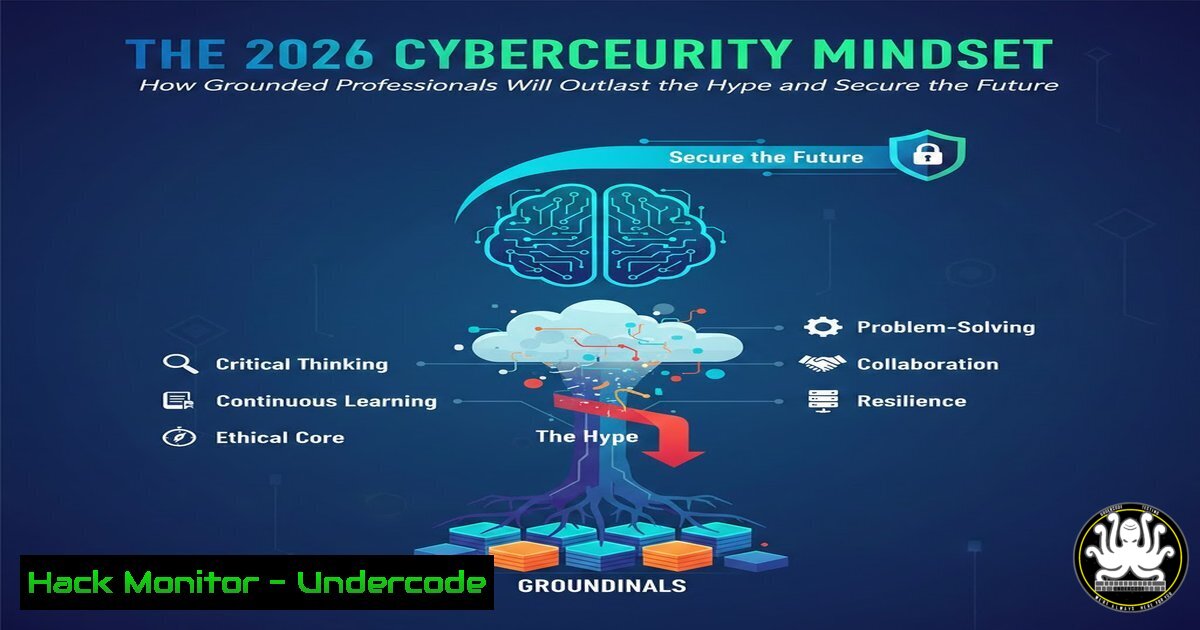
Introduction:
As we enter 2026, the cybersecurity landscape is defined not by a singular, new technology, but by an essential paradigm shift. The relentless noise of alerts, the pressure of instant response, and the division between IT and OT domains are becoming unsustainable. The future belongs to professionals who can integrate deep technical skill with a grounded, purposeful, and holistic approach to security. This article translates a leadership philosophy into actionable technical practices, emphasizing that true resilience is built by professionals who choose depth over distraction and responsibility over reaction.
Learning Objectives:
- Integrate mindful security operations (SecOps) practices to reduce alert fatigue and improve incident response clarity.
- Implement practical, hands-on command-line and network monitoring techniques that serve critical infrastructure (IT/OT) security.
- Develop a continuous learning plan focused on foundational skills and responsible tool usage over chasing hype.
You Should Know:
- Implementing “Less Noise” Through Effective Log Management and Alert Tuning
The call for “less noise” is a direct imperative for efficient Security Operations Centers (SOCs) and lone defenders. Noise leads to burnout and missed critical alerts. The first technical step is mastering your log sources and tuning detection rules.Step 1: Centralize and Correlate. Use a SIEM or centralized logging server. For a hands-on start, deploy the ELK Stack (Elasticsearch, Logstash, Kibana) or a lightweight alternative like Wazuh on a Linux server.
On Ubuntu, deploy Wazuh manager (includes integrated ELK)
curl -sO https://packages.wazuh.com/4.7/wazuh-install.sh && sudo bash ./wazuh-install.sh --generate-config-files
Step 2: Ingest Key Logs. Prioritize critical infrastructure logs: Windows Security Event Logs (especially IDs 4625, 4688, 4703), Linux audit logs (
/var/log/auth.log), and network device syslogs.
Step 3: Tune Aggressively. Analyze your top 10 most frequent, low-severity alerts. Create exceptions for known, benign activity. Use tools like `logreduce` or SIEM analytics to cluster and identify false-positive patterns. The goal is to reduce the volume by 20-30%, allowing focus on true threats. -
“Building and Fixing” – Hands-On Network Segmentation for IT/OT Convergence
“More time doing things with our hands” emphasizes practical skill over theoretical policy. For critical infrastructure, the most crucial hands-on task is implementing and verifying network segmentation.Step 1: Map the Converged Network. Use passive discovery tools. Never scan OT networks blindly.
Use a tool like Malcolm (passive network analyzer) on a SPAN/tap port
It uses Zeek (formerly Bro) and Suricata to fingerprint devices and protocols without sending packets.
Step 2: Design Zones and Conduits. Apply the ISA/IEC 62443 standard. Define your Level 3.5 (DMZ) and enforce one-way communication conduits from OT to IT where possible.
Step 3: Implement and Test with Firewall Rules. Use next-generation firewalls (Palo Alto, Fortinet) or even Linux `iptables/nftables` for prototyping. Create explicit allow rules and a final implicit deny.Example nftables rule to allow ONLY historian (port 8086) traffic from OT zone to IT DMZ nft add rule inet firewall forward ip saddr 10.10.10.0/24 ip daddr 172.16.1.10 tcp dport 8086 accept nft add rule inet firewall forward ip saddr 10.10.10.0/24 drop Deny all other traffic from OT
Step 4: Verify with Traffic Analysis. Use Wireshark or `tcpdump` on the conduit interfaces to confirm only authorized traffic passes.
-
“Learn Continuously” – Building a Personalized, Offensive-Defensive Home Lab
Continuous learning must be self-motivated and practical. A home lab is non-negotiable.Step 1: Virtualize Your Infrastructure. Use VMware ESXi (free tier) or Proxmox VE. Create a mini-network: a Windows Server (Domain Controller), a Windows 10 client, a Linux server (Kali/Ubuntu), and a virtual firewall (pfSense/OPNsense).
Step 2: Simulate Threats Safely. On your Kali VM, practice enumeration and post-exploitation against your isolated Windows VM.Use nmap for service discovery (ONLY within your lab) nmap -sV -O 192.168.1.50 Use Metasploit to exploit a known vulnerability (e.g., EternalBlue on a patched-down Windows 7 VM) msfconsole msf6 > use exploit/windows/smb/ms17_010_eternalblue
Step 3: Practice Defensive Detection. On your Windows VM, enable Sysmon and forward logs to a dedicated ELK instance in your lab. Write custom detection rules in Sigma format for the attacks you simulated.
-
“Take Responsibility” – Proactive Vulnerability Management with Prioritization
Taking responsibility means moving from passive patching to active, risk-based vulnerability management.Step 1: Asset and Vulnerability Discovery. Use authenticated scanners like OpenVAS (free) or Nessus to scan your lab and, with proper authorization, development environments.
Install and setup OpenVAS on Kali
sudo gvm-setup
sudo gvm-start
Access the web UI at https://127.0.0.1:9392
Step 2: Contextualize and Prioritize. A CVSS score of 9.0 on a test printer is not equal to a 6.0 on an internet-facing PLC. Use the STAR (Situation, Task, Action, Result) or FAIR methodology to model risk. Prioritize based on asset criticality and exploitability.
Step 3: Mitigate, Don’t Just Patch. If an immediate patch isn’t possible, implement compensating controls: network segmentation, application whitelisting (via Windows AppLocker or Linux SELinux/AppArmor), or temporary firewall blocks. -
“Collaboration Over Conflict” – Bridging the IT/OT Gap with Shared Tools and Protocols
The technical divide between IT and OT teams is a major security risk. Collaboration starts with shared visibility.Step 1: Establish a Shared Monitoring Dashboard. Use Grafana to pull data from both IT (Prometheus node_exporter) and OT (MQTT Telegraf input, OPC UA data) sources into a single pane of glass.
Step 2: Develop Unified Playbooks. Create incident response runbooks that define clear handoff points. For example: “IT SOC detects malware beacon on OT DMZ server -> Immediately notify OT lead via phone -> OT lead initiates controlled shutdown procedure per playbook ICS-1001.”
Step 3: Conduct Cross-Training Tabletop Exercises. Use breach simulation platforms like DetectionLab or pre-built OT scenarios from Mitre’s Caldera for ICS to run exercises that force both teams to communicate under pressure.
What Undercode Say:
- The Human Firewall is the Ultimate Control: By 2026, the most resilient organizations will be those that invest in the mental well-being and grounded expertise of their cybersecurity personnel, reducing burnout and turnover.
- Depth Defeats Hype: Mastery of foundational networking, system internals, and script-based automation will provide more value than a superficial familiarity with every new AI security tool. The professionals who build and fix will own the future.
The reflection from industry leaders signals a maturation of the cybersecurity field. The “move fast and break things” ethos is catastrophically insufficient for securing critical infrastructure and enterprise networks. The emerging 2026 professional is a hybrid: a technician with the hands-on skills to dissect a packet capture or harden a Linux kernel, and a philosopher who understands that technology must serve human safety and operational continuity. This balance is not a soft skill; it is the hard requirement for sustainable security. The tools and commands provided are the building blocks for developing that grounded expertise.
Prediction:
By 2028, we will see a measurable divergence in organizational resilience directly correlated to this 2026 mindset. Companies that fail to adopt this grounded, human-centric, and hands-on approach will suffer more frequent and severe breaches due to analyst fatigue, misconfigured “next-gen” tools, and toxic IT/OT silos. Conversely, organizations that empower professionals to focus, build, and collaborate will see a significant decrease in successful ransomware attacks on critical systems and will recover faster from incidents. This will reshape hiring, prioritizing T-shaped professionals with deep core skills and cross-domain empathy over checkbox certification collectors. The market will reward security vendors that enable simplification and integration, not those that add to the noise.
▶️ Related Video (78% Match):
🎯Let’s Practice For Free:
IT/Security Reporter URL:
Reported By: Durgeshkalya As – Hackers Feeds
Extra Hub: Undercode MoN
Basic Verification: Pass ✅


