Listen to this Post
Introduction:
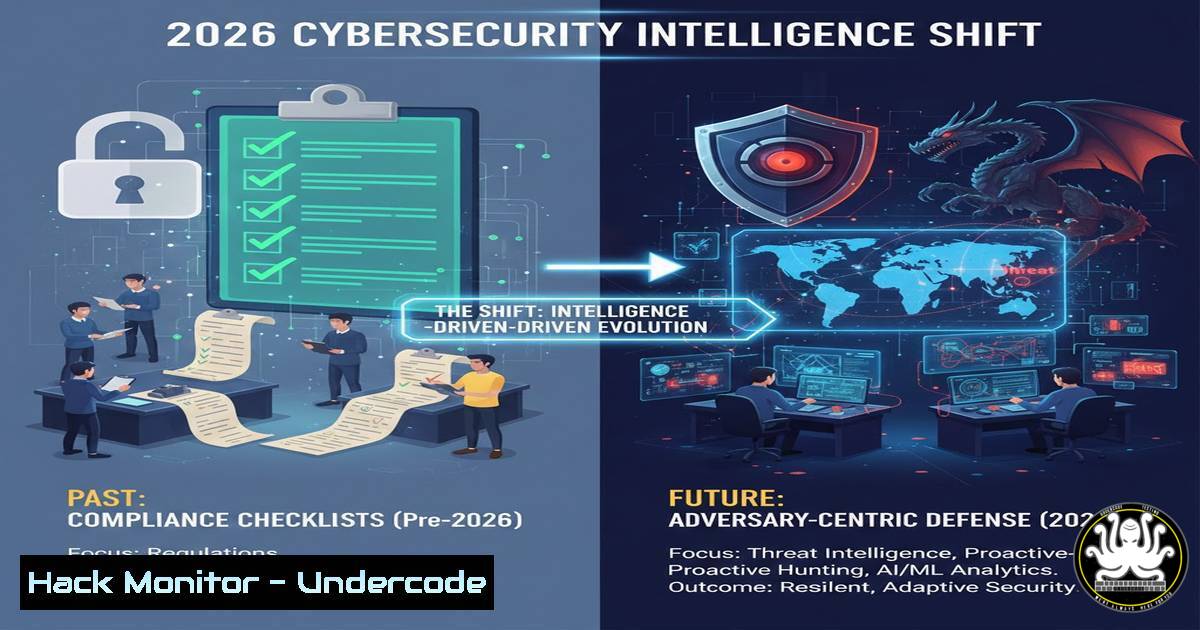
The cybersecurity landscape is undergoing a fundamental paradigm shift. The era of relying solely on frameworks, audits, and static controls is ending, giving way to a new operational model centered on continuous intelligence, adaptation, and sovereign decision-making. This transition moves cybersecurity from an administrative compliance function to a core intelligence discipline, demanding new skills, tools, and leadership mindsets to counter AI-enabled and industrialized threats.
Learning Objectives:
- Understand the limitations of pure compliance-based security and the critical capabilities of an intelligence-driven security program.
- Learn practical steps to integrate threat intelligence feeds, automate signal correlation, and build a sovereign threat intelligence capability.
- Develop a roadmap for fostering an intelligence-oriented culture and decision-making process within your security organization.
You Should Know:
1. Integrating Threat Feeds into Security Operations
The foundation of intelligence-driven security is the ingestion and correlation of external threat data. This moves beyond basic Indicators of Compromise (IoCs) to include tactics, techniques, and procedures (TTPs), threat actor profiles, and campaign summaries.
Step‑by‑step guide:
Step 1: Identify Relevant Feeds. Start with open-source intelligence (OSINT) feeds like AlienVault OTX, then integrate commercial and sector-specific ISAC/ISAO feeds. For sovereignty, prioritize European CERT feeds and trusted commercial providers within your jurisdiction.
Step 2: Ingest with a Threat Intelligence Platform (TIP). Use tools like MISP (The Open Source Threat Intelligence Platform) to aggregate, normalize, and deduplicate feeds.
Linux/MISP Command Example (Adding a feed):
 Using MISP's REST API via curl to add a new feed
curl -X POST -H "Authorization: YOUR_API_KEY" -H "Accept: application/json" -H "Content-Type: application/json" \
-d '{"name":"CERT-EU Feed","provider":"CERT-EU","url":"https://feed.cert.europa.eu/feed.json","input_source":"network","format":"json"}' \
"https://your-misp-instance.com/feeds/add"
Step 3: Enrich and Correlate. Automatically enrich IPs, domains, and hashes with tools like whois, VirusTotal API, or internal SIEM data. Use the TIP to create relationships between indicators and known threat actors.
Step 4: Push to Security Controls. Automatically push high-fidelity IoCs and TTP-based detection rules to your SIEM, EDR, and firewall to enable proactive blocking and hunting.
2. Building a Sovereign Threat Intelligence Platform
Digital sovereignty ensures your threat visibility and decision logic are not dependent on external, non-sovereign platforms. This involves control over data, processing, and analytics.
Step‑by‑step guide:
Step 1: Assess Dependencies. Map where your threat data is sourced, stored, and processed. Identify any critical dependencies on platforms outside your legal or strategic jurisdiction.
Step 2: Deploy On-Premise or Sovereign Cloud Analytics. For critical intelligence processing, use open-source analytics stacks deployed within your controlled environment.
Linux/Containerized Deployment Example (TheHive & Cortex):
 Using Docker Compose to deploy a sovereign analysis stack
git clone https://github.com/TheHive-Project/TheHive.git
cd TheHive/docker
 Edit the docker-compose.yml to point to internal object storage and databases
docker-compose up -d
Step 3: Develop Internal Enrichment. Create internal scripts to enrich data with your own historical attack data, asset inventory, and vulnerability context, reducing reliance on external enrichment APIs.
3. Automating Signal Correlation with AI & Scripting
Human-scale analysis cannot keep pace with the volume of threats. Automation is key to finding signals in noise.
Step‑by‑step guide:
Step 1: Automate TTP Mapping. Use MITRE ATT&CK Navigator profiles to map incoming threat reports to TTPs relevant to your tech stack.
Step 2: Build Correlation Scripts. Write scripts that cross-reference new IoCs against internal logs from the past 30-90 days to identify past compromises or recon activity.
Python/Splunk API Example (Retrospective Hunting):
import splunklib.client as client
service = client.connect(host="splunk.yourco.com", port=8089, username="api_user", password="secure_pass")
search_query = '| tstats `summariesonly` count from datamodel=Endpoint.Processes where Processes.destination IN ("malicious_ip_1", "malicious_domain_2") by _time, Processes.process_name, Processes.destination'
job = service.jobs.create(search_query, earliest_time="-90d@d")
 Parse and alert on any results
Step 3: Implement SOAR Playbooks. Use Security Orchestration, Automation, and Response (SOAR) platforms to automate the entire lifecycle: from intelligence ingestion, to enrichment, to creating a ticket in your ITSM, and finally pushing a blocking rule.
4. Hardening Cloud APIs and Supply Chain Visibility
Adversaries target the interconnected supply chain and cloud APIs. Intelligence must inform hardening efforts.
Step‑by‑step guide:
Step 1: Map API and Third-Party Attack Surface. Use tools like `truffleHog` to find secrets in code and `nmap` for discovering unintended API endpoints.
Linux/Command Example:
 Scanning for open ports on your cloud VPC
nmap -sV --script vuln -iL cloud-host-ips.txt -oA cloud_api_scan
 Checking git history for leaked secrets
trufflehog --regex --entropy=False file:///path/to/your/code/
Step 2: Integrate Threat Intel into CSPM. Configure your Cloud Security Posture Management (CSPM) tool to alert on configurations that are known to be exploited by active threat campaigns (e.g., a publicly accessible S3 bucket when a cloud-focused ransomware group is active).
Step 3: Enforce Software Bill of Materials (SBOM). Require SBOMs from critical vendors. Use tools like `syft` and `grype` to generate and analyze SBOMs for known vulnerabilities associated with threat actors targeting your sector.
 Generate an SBOM for a container image
syft your-application:latest -o cyclonedx-json > sbom.json
 Scan the SBOM for vulnerabilities
grype sbom:sbom.json
5. Fostering an Intelligence-Driven Security Culture
Technology is useless without the right mindset. The shift requires changing how teams think and make decisions.
Step‑by‑step guide:
Step 1: Redefine Metrics. Shift reporting from “% of controls implemented” to “mean time to detect (MTTD)”, “threat campaign coverage”, and “intelligence-to-action latency”.
Step 2: Implement Threat Briefings. Replace generic status meetings with weekly threat briefings where analysts present a recent TTP, map it to your environment, and review detection gaps.
Step 3: Run Intelligence-Led Tabletop Exercises. Simulate attacks based on real, current threat actor campaigns against your industry, forcing leaders to make decisions based on incomplete, evolving intelligence rather than static plans.
What Undercode Say:
- Sovereignty is Non-Negotiable: The strategic control over your threat intelligence pipeline is as critical as the intelligence itself. Dependence erodes resilience.
- Culture Eats Strategy for Breakfast: You can deploy the best TIP in the world, but if leaders demand compliance checklists and teams don’t learn to think like adversaries, the shift will fail.
Analysis: Van Zantvliet’s post identifies the critical inflection point where procedural security collapses under the weight of adaptive, intelligent adversaries. The technical steps outlined here are the tangible manifestation of his strategic vision. The core challenge is not technical implementation, but the organizational inertia that favors predictable audit trails over dynamic, and sometimes uncertain, intelligence assessments. The organizations that will succeed are those that empower their security teams to be analysts and decision-makers, not just control operators. This transition also creates a new demand for skills in data science, threat analysis, and strategic communication within cybersecurity teams, fundamentally reshaping the profession.
Prediction:
By 2028, “Intelligence-Driven Cybersecurity” will be a tautology; it will simply be how effective security is done. Regulatory frameworks like NIS2 will evolve to assess intelligence capabilities and operational resilience, not just control existence. A market will flourish for sovereign, European threat intelligence platforms and AI analytics tools. Organizations failing to make this shift will experience a growing “resilience gap,” facing more frequent and severe breaches as their static defenses are systematically outmaneuvered by AI-paced adversaries, leading to a stark stratification between intelligent, resilient enterprises and vulnerable, compliant ones.
▶️ Related Video (86% Match):
🎯Let’s Practice For Free:
IT/Security Reporter URL:
Reported By: Vanzantvliet Tip – Hackers Feeds
Extra Hub: Undercode MoN
Basic Verification: Pass ✅


