Listen to this Post
Introduction:
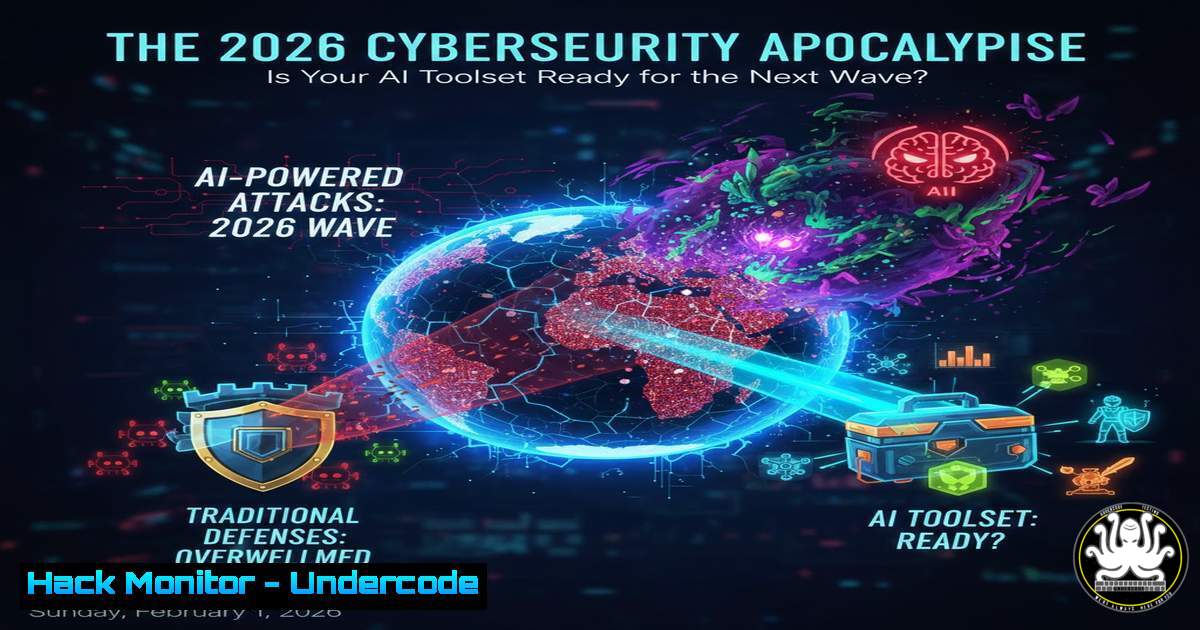
The digital landscape of 2026 is defined by asymmetric warfare where offensive AI tools evolve faster than defensive protocols. As highlighted in forward-looking discussions like the PerilScope Sunday Edition, the convergence of AI, sophisticated social engineering, and legacy infrastructure vulnerabilities creates a perfect storm. This article provides a technical survival guide for IT and cybersecurity professionals, translating high-level risk policy into actionable hardening steps, command-level configurations, and mitigation strategies to build resilience against the next generation of threats.
Learning Objectives:
- Implement AI-augmented security monitoring and threat-hunting techniques using open-source tools.
- Harden hybrid environments (Linux/Windows/Cloud) against credential-based and supply-chain attacks.
- Configure and audit critical security controls for APIs and network perimeters.
You Should Know:
- Deploying AI-Powered Threat Detection with ELK Stack and Sigma Rules
Traditional SIEMs are overwhelmed by noise. Integrating AI-driven anomaly detection layers with your existing logs is crucial. We’ll use the open-source ELK Stack (Elasticsearch, Logstash, Kibana) augmented with Sigma (generic signature rules) and Python for basic machine learning inference.
Step‑by‑step guide:
- Install ELK Stack: On your Linux analysis server, deploy using Docker for simplicity.
Create a docker-compose.yml file for ELK 8.x
version: '3.7'
services:
elasticsearch:
image: docker.elastic.co/elasticsearch/elasticsearch:8.10.0
environment:</li>
</ol>

- discovery.type=single-node
- ES_JAVA_OPTS=-Xms512m -Xmx512m
- xpack.security.enabled=false
ports:
- "9200:9200"
kibana:
image: docker.elastic.co/kibana/kibana:8.10.0
ports:
- "5601:5601"
environment:
ELASTICSEARCH_HOSTS: '["http://elasticsearch:9200"]'
Run `docker-compose up -d`.
- Ingest Logs: Configure Logstash or Filebeat agents on endpoints and servers to forward Windows Event Logs (e.g., Security, PowerShell logs) and Linux syslog/auth logs to your Elasticsearch instance.
- Integrate Sigma: Use tools like `sigma2elastic` to convert the vast repository of Sigma rules into Elasticsearch queries. This brings IOC and behavioral detection to your stack.
git clone https://github.com/SigmaHQ/sigma
pip install sigma-cli
sigma convert -t elastalert -s ~/sigma/rules/windows/ process_creation/win_susp_powershell.yml
- Add ML Layer: Use Elastic’s built-in ML jobs for anomaly detection on log data or run a simple Python script on a scheduled basis to analyze trends and flag outliers using libraries like `scikit-learn` or
PyOD. -
Implementing Zero Trust Principles in a Hybrid AD Environment
The assumed “trust” inside a network is obsolete. Apply Zero Trust by enforcing strict identity verification and micro-segmentation, starting with your Active Directory.
Step‑by‑step guide:
- Audit & Harden AD: Run PowerShell scripts to identify misconfigurations.
Check for users with outdated password settings (PasswordNeverExpires) Get-ADUser -Filter -Properties PasswordNeverExpires | Where-Object {$_.PasswordNeverExpires -eq $true} | Select-Object Name, SamAccountName Enforce LDAP signing and channel binding Set-ItemProperty -Path "HKLM:\SYSTEM\CurrentControlSet\Services\NTDS\Parameters" -Name "LdapServerIntegrity" -Value 2 - Implement Micro-Segmentation: Use Windows Defender Firewall with Advanced Security or network firewalls to create application-specific allow lists, not just port-based rules.
Create a firewall rule allowing a specific app (e.g., backup agent) only to a specific subnet
New-NetFirewallRule -DisplayName "AllowBackupAgent" -Direction Outbound -Program "C:\Program Files\Backup\agent.exe" -RemoteAddress 10.10.100.0/24 -Action Allow
- Deploy Conditional Access (If using Azure AD): Move beyond VPNs. Require device compliance (patched, encrypted) and user location for access to sensitive applications.
3. Hardening API Security: Beyond the Basic Auth
APIs are the new perimeter. Attackers exploit insecure endpoints, excessive data exposure, and broken object-level authorization.
Step‑by‑step guide:
- Implement Robust Auth: Use short-lived OAuth 2.0/JWT tokens, never API keys in URLs. Validate tokens rigorously.
- Rate Limiting and Throttling: Use an API gateway (e.g., NGINX, Kong) to prevent abuse.
NGINX configuration snippet for rate limiting http { limit_req_zone $binary_remote_addr zone=api_per_ip:10m rate=10r/s; server { location /api/ { limit_req zone=api_per_ip burst=20 nodelay; proxy_pass http://api_backend; } } } - Input Validation & Output Encoding: Treat all input as malicious. Use strict schema validation (e.g., with OpenAPI/Swagger) and encode output to prevent injection.
- Automated Security Testing: Integrate OWASP ZAP or
npm audit/pip-auditinto your CI/CD pipeline to scan for vulnerabilities in dependencies and the API itself.
4. Proactive Cloud Infrastructure Hardening (AWS/Azure)
Misconfigured cloud storage, over-permissive IAM roles, and unencrypted data are low-hanging fruit.
Step‑by‑step guide:
- Enforce Configuration as Code: Use Terraform or AWS CloudFormation to ensure reproducible, auditable environments.
- Continuous Compliance Scanning: Use tools like `prowler` for AWS or `Microsoft Defender for Cloud` for Azure.
Run a basic Prowler scan for critical CIS benchmarks
./prowler -g cislevel1
- Minimize IAM Permissions: Apply the principle of least privilege. Use policy conditions and replace long-term access keys with temporary security credentials (AWS STS) or managed identities (Azure).
- Encrypt Everything at Rest and in Transit: Enable default encryption for S3, EBS, Blob Storage. Enforce TLS 1.2+.
-
Building a Human Firewall: From Phishing Simulations to Secure Coding
Technology fails where people are the weakest link. Training must be continuous and practical.
Step‑by‑step guide:
- Conduct Regular Phishing Simulations: Use platforms like GoPhish to run controlled campaigns. Focus on current threats like QR code phishing (quishing) and AI-generated voice phishing (vishing).
- Integrate Secure Coding Training: Move beyond theoretical courses. Use interactive platforms (e.g., SecureFlag, PentesterLab) that provide real vulnerable code labs in the languages your developers use.
- Establish a Reporting Culture: Make it easy and blame-free for employees to report suspicious emails (
[email protected]) or potential security bugs.
What Undercode Say:
- The Skills Gap is the Vulnerability: The most advanced AI defense tool is useless without professionals who can configure, interpret, and respond to its alerts. Strategic investment in continuous, hands-on technical training for your team is non-negotiable.
- Resilience Over Prevention: Assume breach. Your security posture must be measured by your mean time to detect (MTTD) and mean time to respond (MTTR). Focus on robust logging, segmentation, and immutable incident response playbooks.
The linked post’s context of advanced executive education (like the DBA) underscores a critical point: cybersecurity leadership in 2026 requires strategic vision and deep technical fluency. Leaders must champion and fund the integration of AI toolsets while fostering a culture of security mindfulness. The tools and commands outlined here are the tactical implementation of that strategic risk management mindset. Relying on siloed tools or outdated perimeter models is a direct path to obsolescence and compromise.
Prediction:
By 2026, we will see the first wave of widely destructive, fully autonomous cyber-weapons capable of zero-day exploitation, lateral movement, and data corruption without human intervention. These AI-powered attack swarms will target not just data theft but the integrity of systems and physical infrastructure tied to IoT and OT environments. The organizations that survive will be those that have successfully merged human expertise with adaptive AI defense systems, implemented true Zero-Trust architectures, and fostered a pervasive security culture, making resilience an integral part of their operational DNA.
🎯Let’s Practice For Free:
IT/Security Reporter URL:
Reported By: Ivan Savov – Hackers Feeds
Extra Hub: Undercode MoN
Basic Verification: Pass ✅🔐JOIN OUR CYBER WORLD [ CVE News • HackMonitor • UndercodeNews ]
📢 Follow UndercodeTesting & Stay Tuned:


