
Listen to this Post
Introduction:
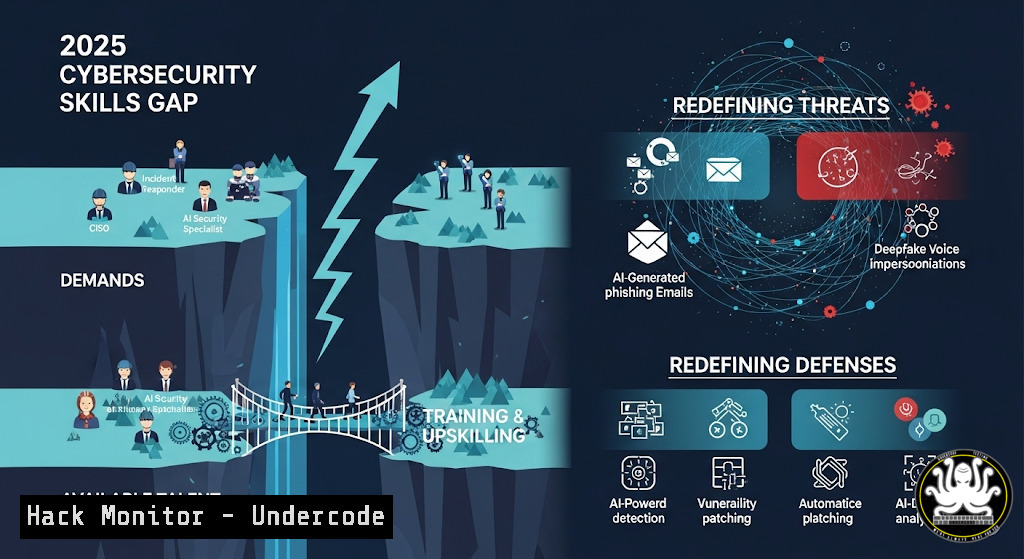
The rapid evolution of Generative AI is not only reshaping career paths but also fundamentally altering the cybersecurity landscape. As AI-powered tools become more sophisticated, they present both unprecedented threats and revolutionary defensive capabilities, creating a critical skills gap that professionals must urgently address.
Learning Objectives:
- Understand the dual-use nature of Generative AI in both offensive cyber operations and defensive security postures.
- Identify the key technical skills required to implement AI-enhanced security tools and mitigate AI-driven threats.
- Learn practical command-line and tool-based implementations for AI security monitoring, threat hunting, and system hardening.
You Should Know:
- AI-Powered Log Analysis with Python and ELK Stack
`python3 -m pip install pandas scikit-learn elasticsearch`
`import pandas as pd`
`from sklearn.ensemble import IsolationForest`
`import elasticsearch`
` Code to connect to Elasticsearch, retrieve logs, and fit anomaly detection model`
Step‑by‑step guide: This Python script integrates with the ELK (Elasticsearch, Logstash, Kibana) stack to automate the detection of anomalous network behavior. The `IsolationForest` machine learning algorithm learns a baseline of normal activity and flags deviations that could indicate a breach. Security analysts can run this as a daily cron job to process authentication and network flow logs, significantly reducing time-to-detection for advanced persistent threats (APTs).
2. Hardening Linux Systems Against AI-Enhanced Attacks
`sudo apt install aide`
`sudo aideinit`
`sudo mv /var/lib/aide/aide.db.new /var/lib/aide/aide.db`
`sudo crontab -e`
` Add: 0 0 /usr/bin/aide –check`
Step‑by‑step guide: Advanced Integrity Verification Environment (AIDE) is a host-based intrusion detection system (HIDS) that creates a database of file hashes and attributes. In the age of AI, where malware can adapt and evolve, AIDE provides a critical baseline. After initializing the database, the cron job performs a daily check, sending alerts if critical system files are modified, which is a common tactic in AI-driven supply chain attacks.
3. Windows Defender ATP for AI-Threat Hunting
`Get-MpComputerStatus`
`Set-MpPreference -DisableRealtimeMonitoring $false -SubmitSamplesConsent SendAllSamples`
`Start-MpScan -ScanType FullScan`
`Get-MpThreatDetection`
Step‑by‑step guide: These PowerShell commands configure Microsoft Defender Advanced Threat Protection (ATP) for maximum efficacy against polymorphic malware, which can be generated by AI. Enabling real-time monitoring and sample submission allows Defender’s cloud-based AI to analyze threats. The `Get-MpThreatDetection` cmdlet then retrieves a detailed history of detected threats, crucial for forensic analysis after a suspected AI-powered intrusion.
4. Implementing API Security for AI Model Endpoints
`npm install express-rate-limit helmet cors`
`const rateLimit = require(“express-rate-limit”);`
`const limiter = rateLimit({ windowMs: 15 60 1000, max: 100 });`
`app.use(limiter);`
`app.use(helmet());`
`app.use(cors({ origin: process.env.ALLOWED_ORIGIN }));`
Step‑by‑step guide: As organizations deploy generative AI models via APIs, these endpoints become prime targets for data exfiltration and model poisoning attacks. This Node.js code snippet uses the `express-rate-limit` middleware to prevent brute-force attacks, `helmet` to set secure HTTP headers, and configures CORS to restrict access. This is essential for protecting proprietary AI models and the sensitive data they process.
5. Cloud Hardening for AI Workloads on AWS
`aws iam create-policy –policy-name AIReadOnly –policy-document file://policy.json`
`aws guardduty create-detector –enable`
`aws securityhub enable-security-hub`
`aws macie2 create-classification-job –job-type ONE_TIME –name “AI-S3-Scan” –s3-job-definition bucketDefinitions=[{accountId=”ACCOUNT”,buckets=[“BUCKET”]}]`
Step‑by‑step guide: AI training data and models in cloud storage are high-value assets. These AWS CLI commands create a least-privilege IAM policy, enable GuardDuty for intelligent threat detection, activate Security Hub for a unified security view, and start a Macie job to automatically discover and classify sensitive data (like PII) in S3 buckets. This multi-layered approach is critical for securing AI data pipelines.
- Detecting AI-Generated Phishing with DMARC, DKIM, and SPF
`dig +short txt google.com`
`nslookup -type=txt _dmarc.google.com`
`python3 -m pip install dmarc`
`parse_dmarc -d google.com`
Step‑by‑step guide: Generative AI can create highly convincing and personalized phishing emails at scale. These commands verify a domain’s DNS records for SPF (Sender Policy Framework), DKIM (DomainKeys Identified Mail), and DMARC (Domain-based Message Authentication, Reporting & Conformance). Implementing and enforcing these protocols is the most effective way to prevent domain spoofing and protect your organization from AI-powered social engineering campaigns.
7. Mitigating Model Inversion and Membership Inference Attacks
`import tensorflow as tf`
`from tensorflow_privacy.privacy.optimizers import DPKerasAdamOptimizer`
`optimizer = DPKerasAdamOptimizer(l2_norm_clip=1.0, noise_multiplier=1.1, num_microbatches=256)`
`loss = tf.keras.losses.CategoricalCrossentropy(from_logits=True, reduction=tf.losses.Reduction.NONE)`
`model.compile(optimizer=optimizer, loss=loss, metrics=[‘accuracy’])`
Step‑by‑step guide: Adversaries can use attacks to extract training data from deployed AI models. This TensorFlow code implements Differential Privacy (DP), a technique that adds calibrated noise during model training. This protects the privacy of individual data points in the training set, making it extremely difficult for attackers to determine if a specific record was used, thereby mitigating critical AI-specific vulnerabilities.
What Undercode Say:
- The offensive use of AI will democratize advanced attack techniques, forcing a paradigm shift from signature-based defense to AI-enhanced behavioral analysis.
- The most significant vulnerability will be the AI models themselves; securing the training pipeline and production endpoints is as critical as securing the network perimeter.
The cybersecurity industry is facing its most profound transformation. The core challenge is no longer just human vs. human, but human+AI vs. human+AI. Defenders must leverage AI to keep pace with the scale and speed of automated threats. This necessitates a new curriculum focused on adversarial machine learning, AI supply chain security, and the ethics of autonomous response. Organizations that fail to upskill their teams in these areas will be operating with a critical blind spot, vulnerable to threats they cannot even perceive.
Prediction:
By late 2026, we predict the first major cyber incident caused by a fully autonomous AI agent capable of planning and executing a multi-stage attack without human intervention. This will trigger a massive investment in autonomous defense systems and lead to the emergence of a new cybersecurity specialty: AI Security Orchestration, focused on governing the interactions between AI agents on corporate networks. The regulatory landscape will scramble to catch up, likely mandating strict audits for high-risk AI systems.
🎯Let’s Practice For Free:
IT/Security Reporter URL:
Reported By: Mdarshad %F0%9D%90%86%F0%9D%90%9E%F0%9D%90%A7%F0%9D%90%9E%F0%9D%90%AB%F0%9D%90%9A%F0%9D%90%AD%F0%9D%90%A2%F0%9D%90%AF%F0%9D%90%9E – Hackers Feeds
Extra Hub: Undercode MoN
Basic Verification: Pass ✅


