
Listen to this Post
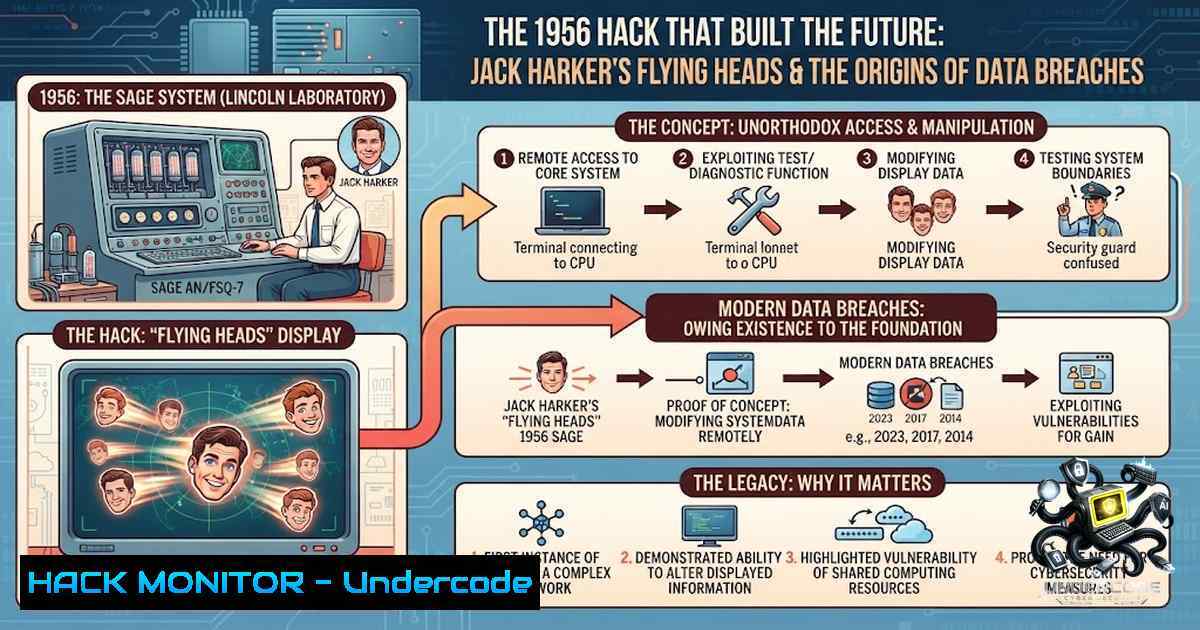
Introduction:
The foundations of modern cybersecurity are paradoxically rooted in the physical innovations of the mid-20th century. While security professionals battle zero-day exploits and AI-driven malware, the underlying battlefield is the storage medium itself—the magnetic platters spinning inside servers and endpoints. The pioneering work of IBM engineer Jack Harker, who developed the first self-acting air-bearing flying heads for the RAMAC 305, established the physics of data storage that every ransomware group and penetration tester targets today, making his legacy both a technological marvel and the primary attack surface for exfiltration.
Learning Objectives:
- Understand the physical evolution from mechanical storage to modern NVMe and how this impacts data remanence and forensic acquisition.
- Master low-level disk interrogation and security auditing commands across Linux, Windows, and enterprise storage architectures.
- Implement robust encryption and secure erasure techniques to mitigate the risks inherited from traditional magnetic storage designs.
You Should Know:
- The Air-Bearing Paradigm: From Mechanical Float to Digital Exfiltration
Jack Harker’s breakthrough eliminated physical contact between the read/write head and the platter, allowing for higher density and faster speeds. However, this “flying” mechanic introduced the concept of data remanence—the residual physical representation of data that remains on the platter even after deletion. Because the head floats microns above the surface, it relies on precise magnetic domains. In a modern context, this physical trait is exploited by attackers using advanced forensic tools to recover deleted partitions or bypass software-level “shredding.”
To understand your current exposure, you must audit the health and security of these physical mechanisms via S.M.A.R.T. (Self-Monitoring, Analysis, and Reporting Technology).
Linux Command (Disk Health & Security Audit):
 Install smartmontools
sudo apt-get install smartmontools

Check disk health and pending sectors (indicators of physical degradation)
sudo smartctl -a /dev/sda

Perform a short self-test to verify the integrity of the "flying" surfaces
sudo smartctl -t short /dev/sda

View error logs that might indicate a failing head (similar to Harker's early prototypes)
sudo smartctl -l error /dev/sda
Windows Command (PowerShell):
 Retrieve physical disk health metrics
Get-PhysicalDisk | Get-StorageReliabilityCounter

Check for wear and tear on physical sectors
wmic diskdrive get status,model,size
If you see high “Reallocated_Sector_Ct,” your physical storage is degrading, making it easier for attackers to force a failure and extract data from bad blocks.
2. The “Winchester” Architecture and Modern Access Control
The IBM 3340 “Winchester” introduced sealed assemblies and low-mass heads, a design still used in 3.5-inch drives today. For IT security, this physical seal implies a false sense of security. Attackers often bypass physical seals by targeting the firmware of the disk. This is where the legacy architecture falls short; modern firmware lacks the robust signing mechanisms required to prevent malicious code injection (e.g., the Equation Group’s firmware hacks).
To secure a Winchester-derived architecture, you must enforce hardware-level encryption and utilize Secure Boot for storage controllers.
Step-by-Step Guide: Enabling Self-Encrypting Drives (SED) via Opal 2.0:
- Check Compatibility: Verify your SSD/NVMe supports TCG Opal.
Linux: `sudo hdparm -I /dev/nvme0n1 | grep -i “opal”`
Windows: Check in Device Manager > Disk Drives > Properties > Details. -
Set a Pre-Boot Authentication (PBA): Use tools like
sedutil-cli.In Linux, download and compile sedutil git clone https://github.com/Drive-Trust-Alliance/sedutil.git cd sedutil make Initialize the drive and set a locking range sudo ./sedutil-cli --initialsetup admin_password /dev/nvme0n1
-
Enable Locking: This ensures that even if the physical head reads the platter, the data remains encrypted without the host key.
-
From Cypress to Cloud: Hardening the Billion-Bit Storage (Object Security)
Harker managed the IBM 1360 “Cypress,” the first billion-bit storage system for the U.S. Atomic Energy Commission. Today, that scale is trivial; cloud object storage (AWS S3, Azure Blob) handles exabytes. The cybersecurity challenge shifted from physical capacity to misconfiguration. The “Cypress” was secured by physical fences and clearance; modern storage is secured by IAM (Identity and Access Management) policies, which are often misconfigured.
Hardening AWS S3 Buckets (Anti-Data Leakage):
1. Block Public Access:
{
"Version": "2012-10-17",
"Statement": [
{
"Effect": "Deny",
"Principal": "",
"Action": "s3:",
"Resource": "arn:aws:s3:::your-bucket/",
"Condition": {
"Bool": {"aws:SecureTransport": "false"}
}
}
]
}
2. Enable Object Lock: To prevent ransomware from overwriting historical data (remediation for “WannaCry”-style attacks).
3. Implement S3 Access Analyzer: Audit policies that mimic the “open” nature of early mainframes.
- The Floppy Disk Microcode Attack Vector (Supply Chain)
Harker introduced the first floppy disk as a microcode loading medium. This was the genesis of the supply chain and firmware attack vector. Today, microcode updates are delivered via Windows Update or `fwupd` on Linux, but they remain a high-value target. A compromised microcode update can cause the “flying heads” to misalign, corrupting data or inserting a backdoor into the hypervisor.
Step-by-Step: Securing Firmware Updates (Linux/Windows):
1. Verify Digital Signatures:
Windows: Use `Get-WindowsUpdate` and cross-reference the catalog to ensure the driver is signed by Microsoft.
Linux: Use `fwupdmgr` to only accept updates from the LVFS (Linux Vendor Firmware Service).
sudo fwupdmgr refresh
sudo fwupdmgr get-updates
sudo fwupdmgr update
2. Apply the “SPI Write Protect” if using a UEFI BIOS to prevent the firmware from being overwritten without physical presence.
- Data Remanence and Secure Erasure (Fighting the Recovery)
Despite Harker’s innovations, data stored via magnetic domains persists. Security professionals must know how to effectively destroy data to counter forensic recovery tools like FTK or Autopsy.
Linux Command (Secure Erase for HDD/SSD):
 For HDD: Overwrite with random data (degaussing simulation)
sudo dd if=/dev/urandom of=/dev/sdb bs=1M status=progress

For SSD: Use ATA Secure Erase to clear the flash translation layer
sudo hdparm --user-master u --security-set-pass p /dev/sdb
sudo hdparm --user-master u --security-erase p /dev/sdb
Windows Command (Cipher for Overwrite):
 Overwrite free space with zeros, ones, and random patterns (3 passes)
cipher /w:C:\
This negates the threat of “Harker’s flying head” being used by forensic analysts to read residual data from previous writes.
6. Network and API Security for Storage Systems
As modern storage arrays become “software-defined” (SDS), the attack surface shifts to APIs. Harker’s legacy of “flexibility” now means REST APIs that control storage provisioning. If these APIs are insecure, an attacker can provision a new virtual disk, mount it to an attacking instance, and clone the data without ever touching a physical head.
Hardening REST APIs for Storage Controllers:
- Implement Rate Limiting: Mitigate brute-force attacks against API keys using `nginx` or cloud-1ative WAFs.
- Enforce mTLS: Ensure both client and server authenticate, mimicking the physical “locked cabinet” of the 1960s.
- Audit Logs: Use `jq` to parse JSON logs for unauthorized volume creation.
cat storage-audit.log | jq 'select(.eventType=="VolumeCreate") | {user: .userID, time: .timestamp}'
- The “Technology and Advanced Development” Mindset (AI & Anomaly Detection)
Harker established IBM’s TAD group, fostering long-term research. This is akin to modern AI-based anomaly detection for storage usage. We can use Machine Learning to detect abnormal I/O patterns that signify data exfiltration (e.g., a sudden spike in read operations on an archive volume).
Step-by-Step: Linux I/O Monitoring for Suspicious Activity:
- Use `atop` or `iotop` to establish a baseline.
2. Alert on unusual read/write ratios.
sudo iotop -o -d 5 -q
3. Implement EDR tools that track the process context of high I/O. If `pid 1234` (unauthorized) is reading a terabyte of data at 3 AM, terminate it, echoing the response of a security guard physically locking the IBM 1311 disk pack.
What Undercode Say:
- Key Takeaway 1: The physical constraints of magnetic storage (flying heads, remanence) are still the primary vectors for data recovery by adversaries; software encryption is not optional, it is mandatory to mitigate the physics of the medium.
- Key Takeaway 2: The transition from hardware-defined RAID to software-defined storage (SDS) has introduced API and identity vulnerabilities that are far easier to exploit than breaking into an IBM cleanroom; security teams must shift focus from physical platters to logical permissions.
- Analysis: Harker’s journey highlights the “Security vs. Usability” paradox. His innovations made storage cheap and fast, which democratized data. However, this democratization allowed for mass data breaches. Every time we invent a faster way to store data, we simultaneously invent a faster way to lose it. The industry is currently failing to implement the cryptographic and zero-trust controls fast enough to catch up with the hardware capabilities he pioneered. The reliance on legacy S.M.A.R.T. and ATA commands in modern Linux/Windows audits reveals that we are still fighting battles on a battlefield designed in the 1950s.
Prediction:
- -1 The inherent vulnerability of magnetic physics means that quantum computing will eventually render current hard-drive encryption (AES-XTS) obsolete, allowing attackers to read the magnetic domains Harker designed within minutes.
- +1 The focus on physical and firmware security will drive a new wave of “Immutability as a Service,” where Object Lock and WORM (Write Once, Read Many) storage become standard mandates, resurrecting the “tape-like” security of the Cypress system.
- -1 As storage density increases to meet AI training demands, the reliability of “flying heads” will decrease, leading to increased bit rot and data integrity failures that ransomware will exploit through corruption.
- +1 The implementation of PCIe 5.0 and CXL (Compute Express Link) will shift the bottleneck away from the physical head, allowing for real-time encryption that does not degrade performance, making it easier to secure data at rest without compromising speed.
- -1 The legacy of the IBM 350 RAMAC teaches us that “mass storage” always becomes “open storage” eventually; without a global standard for cryptographic shredding, the data Harker’s technology made accessible will remain accessible indefinitely.
▶️ Related Video (68% Match):
🎯Let’s Practice For Free:
🎓 Live Courses & Certifications:
Join Undercode Academy for Verified Certifications
🚀 Request a Custom Project:
Secure, high-velocity infrastructure and disruptive technological engineering. Contact our engineering team for high-tier development and proprietary systems:
[email protected]
💎 Smart Architecture | 🛡️ Secure by Design | ⭐ Trusted by Thousands
IT/Security Reporter URL:
Reported By: Sdalbera Born – Hackers Feeds
Extra Hub: Undercode MoN
Basic Verification: Pass ✅


