Listen to this Post
Introduction:
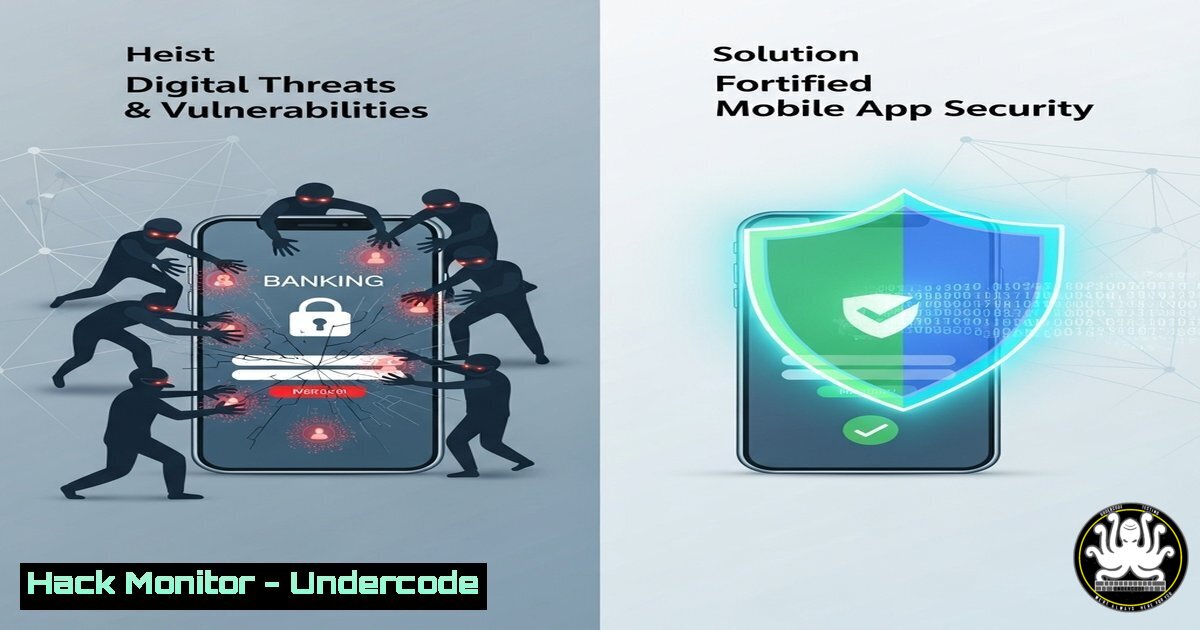
A single mobile banking app breach in Uzbekistan resulted in a $210,000 loss in mere seconds, exposing a critical vulnerability plaguing financial institutions globally. This incident underscores the catastrophic financial and reputational risks of under-secured applications, where preventive security measures are often an afterthought despite million-dollar development budgets. This article provides a technical deep dive into the essential commands, tools, and methodologies needed to transform your app from a liability into a fortress.
Learning Objectives:
- Understand the core technical vulnerabilities that lead to mobile application breaches.
- Implement immediate hardening techniques for both application code and backend infrastructure.
- Integrate automated security testing into your CI/CD pipeline to shift security left.
You Should Know:
1. Static Application Security Testing (SAST) Integration
` Sample command to run a SAST scan using Semgrep on a codebase`
`semgrep –config=p/ci [bash] –sarif > results.sarif`
SAST tools analyze source code for vulnerabilities before the application is even compiled. This command uses Semgrep, a lightweight static analysis tool, to scan a code directory using its security policy for continuous integration (p/ci). The output is saved in SARIF format, a standard for importing results into dashboards like GitHub Advanced Security. Integrating this into your pre-commit hooks or CI pipeline automatically catches hardcoded secrets, SQL injection flaws, and insecure API configurations early in the development lifecycle.
2. Secrets Detection and Management
` Scanning for accidentally committed secrets with TruffleHog`
`trufflehog git [bash] –only-verified –json`
Hardcoded API keys and credentials are a primary attack vector. This TruffleHog command scans a git repository’s entire history, checking for secrets that match patterns for over 700 different types (e.g., AWS keys, database passwords). The `–only-verified` flag is critical; it reduces false positives by automatically testing found keys against their respective services to confirm they are valid. Any verified secrets must be revoked immediately and stored in a secure vault like HashiCorp Vault or AWS Secrets Manager.
3. Dynamic Analysis with OWASP ZAP Baseline Scan
`docker run -t owasp/zap2docker-stable zap-baseline.py -t https://your-app-test-url.com -l PASS`
While SAST checks code, Dynamic Application Security Testing (DAST) tests the running application. This command runs the OWASP ZAP baseline scan in a Docker container against a test instance of your application. It performs automated penetration tests, checking for common vulnerabilities like Cross-Site Scripting (XSS) and insecure headers. The `-l PASS` sets the minimum alert level to display, ensuring you only see important issues. Schedule this scan nightly against staging environments.
4. Container Vulnerability Scanning with Trivy
`trivy image [bash]:latest –severity CRITICAL,HIGH –exit-code 1`
Modern apps are built in containers, which themselves can contain vulnerable packages. Trivy scans a Docker image for known vulnerabilities (CVEs) in the operating system packages and language dependencies. This command is configured to only report CRITICAL and HIGH severity vulnerabilities and will exit with a code 1 if any are found, making it perfect for blocking vulnerable builds in a CI/CD pipeline. This prevents deploying containers with known exploitable flaws.
5. API Security Testing with Nikto
`nikto -h https://api.yourbank.com/v1 -output results.xml`
APIs are the backbone of mobile apps and a prime target. Nikto is a classic web scanner that helps identify misconfigurations and dangerous patterns in web servers and APIs. This command targets a bank API endpoint and outputs the results to an XML file. While a simple tool, it quickly identifies issues like outdated server software, exposed HTTP methods (e.g., PUT, DELETE), and predictable authentication cookies, which are often the first things attackers probe for.
- Implementing Web Application Firewall (WAF) Rules with ModSecurity
` Example ModSecurity rule to mitigate SQL Injection (CRS ruleset)`
`SecRule ARGS “@detectSQLi” “id:942100,phase:2,deny,log,msg:’SQL Injection Attack Detected'”`
A WAF is a critical last line of defense. This is a simplified example of a ModSecurity rule from the OWASP Core Rule Set (CRS) designed to detect and block SQL injection attempts in incoming HTTP parameters. Deploying a managed WAF (e.g., AWS WAF, Cloudflare) or configuring ModSecurity on your web servers provides immediate protection against OWASP Top 10 attacks, buying crucial time for developers to patch the underlying code.
7. Infrastructure as Code (IaC) Security with Checkov
`checkov -d /path/to/your/terraform/code –quiet –compact`
Insecure cloud infrastructure provisioning can nullify secure code. Checkov scans IaC templates (Terraform, CloudFormation, Kubernetes) for misconfigurations that could expose data or services. This command scans a Terraform directory and outputs a compact report. It will flag security gaps like publicly open S3 buckets, unencrypted databases, or security groups allowing traffic from 0.0.0.0/0. “Shift-left” security must include the infrastructure layer to ensure a holistic defense.
What Undercode Say:
- The Budget Paradox is a Trap: The data reveals a devastating paradox: organizations allocate over $1M annually to build and market apps but balk at ~$100K for robust DevSecOps. This false economy directly enables threat actors, as the cost of a breach dwarfs preventive investment by orders of magnitude. The ROI of security is measured in avoided catastrophe.
- Complacency is the Vulnerability: The comment from the banking SWE—”security often comes last… keys can end up written directly in the code with a ‘that’s fine for now’ attitude”—is the most critical finding. It confirms that the biggest threat isn’t a lack of tools, but a cultural and procedural failure. Technical controls are useless without a mandate to use them.
The technical commands provided are not just a checklist; they are the foundation of a cultural shift. Automation is key to overcoming human complacency. By embedding these scans and policies directly into the development workflow, security becomes the default, unskippable state—a necessary evolution in the current threat landscape.
Prediction:
The $210K Uzbek heist is a precursor to a targeted wave of sophisticated attacks on financial apps across emerging markets. As adoption skyrockets and tech stacks homogenize (React Native, Flutter, AWS/Azure), attackers will develop and weaponize automated toolkits specifically for these environments. We predict a rise in “supply chain” attacks targeting third-party SDKs and libraries common in mobile banking apps, potentially leading to a multi-bank, systemic compromise within the next 18-24 months. The banks that survive will be those that treated their app not as a feature, but as critical infrastructure, investing in the automated, code-level security detailed above.
🎯Let’s Practice For Free:
IT/Security Reporter URL:
Reported By: Alisherfazilov 3 – Hackers Feeds
Extra Hub: Undercode MoN
Basic Verification: Pass ✅


