Listen to this Post
Introduction:
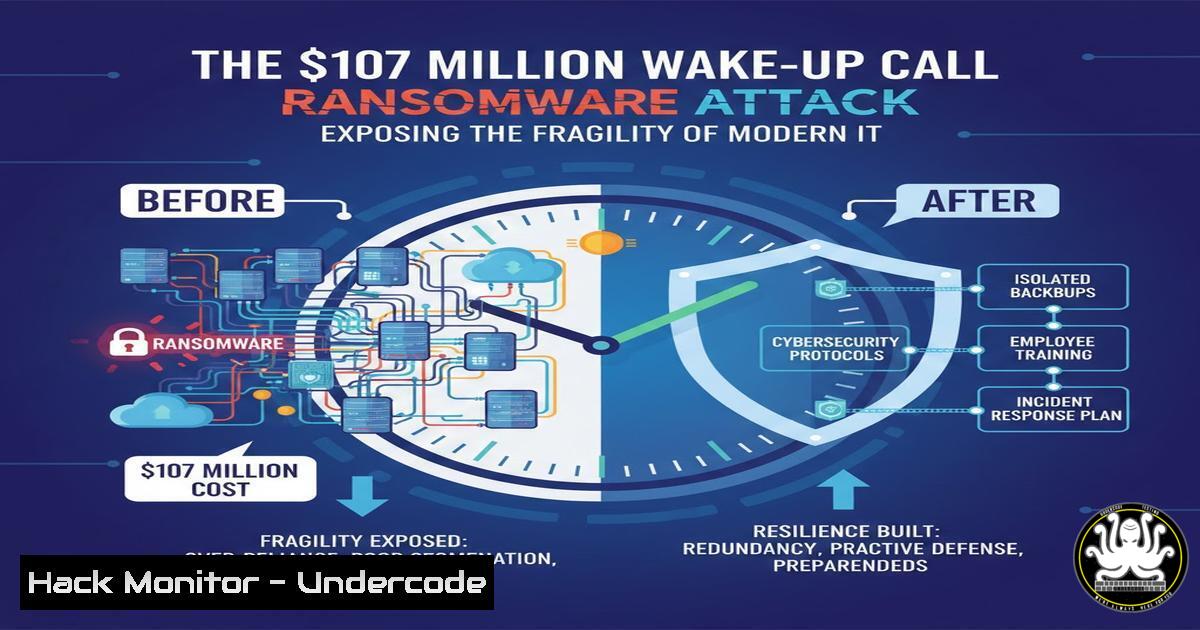
The recent ransomware attack on the UK’s Co-op, attributed to groups like Scattered Spider and DragonForce, is a stark lesson in systemic risk. Beyond the immediate encryption of data, the incident reveals how a single breach can cascade into operational paralysis, massive revenue loss, and permanent brand damage. This analysis deconstructs the attack’s technical and procedural implications, providing a blueprint for hardening defenses against similar adversary tactics.
Learning Objectives:
- Understand the kill chain of modern ransomware attacks and identify critical failure points.
- Implement immediate technical controls for detection, containment, and recovery.
- Develop a proactive security posture integrating continuous assessment, monitoring, and incident response planning.
You Should Know:
- Initial Access: The Art of the Phish and Unpatched Services
Modern ransomware groups rarely use “noisy” exploits. They often gain initial access through sophisticated phishing (like Scattered Spider’s social engineering) or by exploiting vulnerabilities in internet-facing systems like VPNs, RDP, or legacy applications.
Step‑by‑step guide explaining what this does and how to use it.
Reconnaissance Simulation: Use `nmap` to audit your external footprint.
nmap -sV --script vuln <your-public-IP-range>
This identifies open ports and associated services, flagging known vulnerabilities.
Patch Management Enforcement: On Windows, automate and verify updates.
 List all pending updates
Get-WindowsUpdate
 Install critical updates
Install-WindowsUpdate -AcceptAll -AutoReboot
Phishing Defense: Deploy DMARC, DKIM, and SPF records for email validation. Conduct regular internal phishing simulations to train staff.
- Lateral Movement & Privilege Escalation: Living Off the Land
Once inside, attackers use legitimate tools (Living-off-the-Land Binaries or LOLBins) to move undetected. They harvest credentials from memory or local stores to escalate privileges, often targeting Domain Admin accounts.
Step‑by‑step guide explaining what this does and how to use it.
Detect Anomalous Lateral Movement: Monitor for PsExec or WMI misuse. In a SIEM, create alerts for `event_id:4688` (process creation) with `parent_process` containing `psexec` or wmiprvse.exe.
Harden Credential Security:
 On Linux, audit sudo usage
sudo grep 'sudo' /var/log/auth.log | tail -20
 On Windows, enable LSA Protection (requires reboot)
New-ItemProperty -Path "HKLM:\SYSTEM\CurrentControlSet\Control\Lsa" -Name "RunAsPPL" -Value 1 -PropertyType DWORD -Force
Implement Network Segmentation: Use firewall rules to segment critical networks (e.g., POS systems, member databases).
 Example iptables rule to restrict access to a database server
iptables -A INPUT -p tcp --dport 5432 -s 10.0.1.0/24 -j ACCEPT
iptables -A INPUT -p tcp --dport 5432 -j DROP
- Data Exfiltration & Encryption: The Double Extortion Play
Before deploying ransomware, attackers exfiltrate data to use as leverage (“double extortion”). They then use custom or ransomware-as-a-service (RaaS) payloads like those from DragonForce to encrypt files.
Step‑by‑step guide explaining what this does and how to use it.
Detect Mass File Access/Exfiltration: Use File Integrity Monitoring (FIM) or audit logs.
 Audit successful file reads in a sensitive directory
auditctl -w /etc/ -p r -k sensitive_data_access
Identify Ransomware Activity: Monitor for high rates of file renames or encryption signatures.
 Windows command to search for files recently changed with common ransom extensions
Get-ChildItem -Path C:\ -Recurse -Filter .encrypted, .locked, .crypt -ErrorAction SilentlyContinue | Select-Object FullName, LastWriteTime
Implement Application Allowlisting: Use tools like AppLocker (Windows) or policy-based enforcement to prevent unauthorized binaries from executing.
4. The $60M Downtime Problem: Building Resilient Systems
The Co-op’s massive operational loss stemmed from IT system dependency. Resilient architectures assume breach and plan for rapid restoration.
Step‑by‑step guide explaining what this does and how to use it.
Maintain Immutable, Offline Backups: Follow the 3-2-1 rule (3 copies, 2 media types, 1 offline). Automate and test recovery.
 Example script to backup critical configs and encrypt for offsite storage
tar -czf /backup/configs_$(date +%Y%m%d).tar.gz /etc/
gpg --symmetric --cipher-algo AES256 /backup/configs_.tar.gz
 Securely copy to offline storage
Develop and Test an IRP: Have a documented, practiced Incident Response Plan. Define roles (Incident Commander, Tech Lead, Comms Lead) and run tabletop exercises quarterly.
5. Proactive Defense: From VAPT to 24/7 SOC
The post highlights proactive measures like Vulnerability Assessment and Penetration Testing (VAPT) and Security Operations Center (SOC) monitoring as critical for SMBs.
Step‑by‑step guide explaining what this does and how to use it.
Conduct Regular VAPT: Use automated scanners and manual penetration testing.
 Run an authenticated Nessus scan (example command for CLI)
/opt/nessus/bin/nasw --target <target_IP> --user <username> --pass <password> --policy "Basic Network Scan" --report-file report.html
Deploy Endpoint Detection and Response (EDR): EDR tools provide the visibility needed for a SOC to detect advanced threats. Ensure EDR agents are deployed on all critical assets and alerts are tuned to reduce noise.
Achieve Compliance Readiness: Frameworks like ISO 27001 or SOC 2 provide a structured roadmap for security controls, moving beyond ad-hoc measures to a managed security program.
What Undercode Say:
- The True Cost is Operational, Not Just Ransom: The $107M figure is dominated by response costs and lost revenue, not the ransom demand. Investing in resilience and continuity planning is a direct financial safeguard.
- SMBs Are Prime Targets Precisely Because of “Legacy Tech, Limited Visibility”: Attackers exploit predictable weaknesses. Implementing foundational security hygiene (patching, backups, MFA) and adding layered detection (EDR, monitoring) closes the majority of attack vectors used in these high-impact breaches.
Prediction:
The Co-op breach is a template for the future of cyber-extortion. Ransomware groups will increasingly partner with initial access brokers (IABs) like Scattered Spider to create efficient, scalable attack pipelines. The focus will shift further towards “triple extortion”—adding DDoS attacks or harassing phone calls to customers on top of encryption and data leakage. Regulatory fines under laws like the DPDP Act will become a significant additional cost driver. Organizations that fail to evolve from reactive to proactive, intelligence-driven security postures will face existential financial threats from such incidents, making cybersecurity a non-negotiable pillar of business continuity.
▶️ Related Video (78% Match):
🎯Let’s Practice For Free:
IT/Security Reporter URL:
Reported By: Chiraggoswami23 Cybersecurity – Hackers Feeds
Extra Hub: Undercode MoN
Basic Verification: Pass ✅


