
Listen to this Post
Introduction:
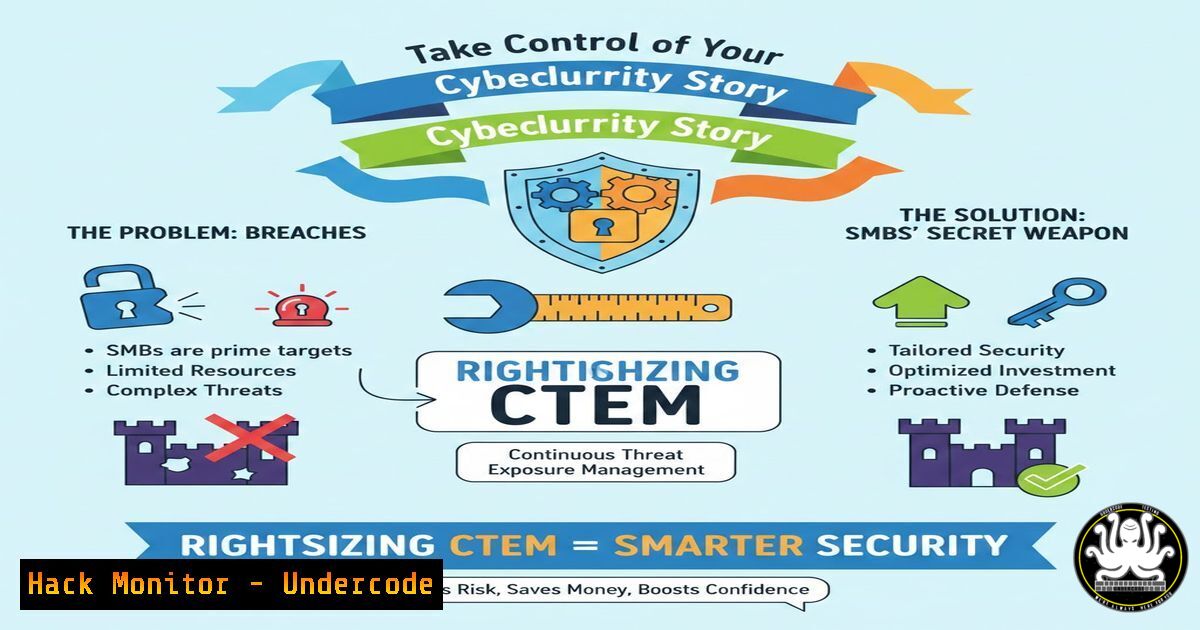
In the high-stakes world of cybersecurity, small and medium-sized businesses (SMBs) are no longer flying under the radar. Attackers know that while SMBs have the same sensitive data as enterprises, they lack the Fortune 500 budgets and dedicated security teams. This has created a critical gap where traditional, periodic vulnerability scans fail to keep pace with modern threats. Continuous Threat Exposure Management (CTEM) offers a solution, but until now, it has felt like an enterprise-only luxury. By shifting from reactive firefighting to a structured, continuous practice, organizations can finally align their security efforts with actual business risk without overwhelming their teams.
Learning Objectives:
- Understand the five pillars of the Gartner-inspired CTEM framework and how to apply them in a resource-constrained environment.
- Learn how to move beyond generic severity scores to prioritize vulnerabilities based on real-world exploitability and business impact.
- Gain practical commands and methodologies for continuous discovery, validation, and hardening across hybrid environments.
You Should Know:
- Scope Like an Attacker: Finding the Forgotten Assets
Before you can defend anything, you have to know it exists. The biggest mistake SMBs make is assuming their inventory is complete. As highlighted in the retail breach example, forgotten SaaS admin accounts, shadow IT, and decommissioned cloud instances represent massive blind spots.
Scoping isn’t about technology; it’s about business process. You must define the “crown jewels”—the data and systems that would cause the most damage if compromised.
Step‑by‑step guide to scoping your true attack surface:
- Interview Business Units: Don’t just ask IT. Talk to sales, HR, and operations about the critical SaaS applications they use daily (e.g., Salesforce, payroll portals).
- DNS Enumeration (Linux): Use tools to discover subdomains and forgotten web properties pointing to your infrastructure.
Using dig to find subdomains (basic)
dig yourcompany.com any

Using a more aggressive tool like Sublist3r
sublist3r -d yourcompany.com
-
Cloud Provider Asset Inventory (AWS CLI): List all resources in your cloud environment to catch orphaned instances.
List all S3 buckets
aws s3 ls

Describe all EC2 instances across regions
aws ec2 describe-instances --region us-east-1 --query 'Reservations[].Instances[].[InstanceId,State.Name]' --output table
- SaaS Discovery (Windows): Review browser histories and credential managers for saved logins to unsanctioned applications. Check Azure AD / Entra ID logs for sign-ins from third-party applications.
2. Continuous Discovery: Integrating with the CI/CD Pipeline
Periodic quarterly scans are artifacts of a bygone era. In modern DevOps environments, infrastructure changes by the minute. Your exposure discovery must happen at the same speed. Instead of a separate “scanning day,” integrate discovery into your existing workflows.
Step‑by‑step guide to automating discovery:
- Network Sweeping (Linux): Run continuous discovery scans to map live hosts and open ports, but schedule them intelligently to avoid alerting security tools.
Use Nmap to ping sweep a /24 subnet to find live hosts
nmap -sn 192.168.1.0/24

Scan for top 1000 ports on a discovered host
nmap -sV 192.168.1.10
- API-Driven Discovery (Windows/PowerShell): Use REST APIs to pull configuration data directly from your tools, ensuring you see what is connected right now.
Example: Querying Microsoft Graph API for all registered devices (PowerShell)
$uri = "https://graph.microsoft.com/v1.0/devices"
$devices = Invoke-RestMethod -Uri $uri -Headers $headers -Method Get
$devices.value | Select-Object displayName, operatingSystem, trustType
3. Prioritize by Real-World Risk, Not CVSS Scores
A critical severity vulnerability (CVSS 10) in a non-internet-facing, internal development server is arguably less urgent than a medium severity vulnerability in your public-facing login page that has active exploit code available. The Nanitor Prioritisation Score mentioned in the post is key here: you must contextualize.
Step‑by‑step guide to risk-based prioritization:
- Correlate with Exploit Intelligence: Use tools like `searchsploit` to check if a vulnerability has a publicly available exploit.
Search for exploits related to a specific CVE (e.g., CVE-2021-41773)
searchsploit CVE-2021-41773
- Check Network Exposure (Nmap): Determine if the vulnerable service is actually reachable from the internet.
From an external IP, test if the port is exposed
nc -zv yourpublicip.com 443
- Business Context Tagging: In your asset management system, tag assets as “Production-PCI” or “Dev-Internal.” Build a script to export the vulnerability list and cross-reference it against these tags, prioritizing anything tagged “Production-PCI” first.
4. Validate That Controls Actually Work
A “checkbox” compliance mentality is dangerous. Just because a firewall rule exists or an EDR agent is installed doesn’t mean it will stop a novel attack. You must test your defenses.
Step‑by‑step guide to validation (simulated attacks):
- Test Phishing Resilience (GoPhish): Set up a simulated phishing campaign to see if users click on malicious links.
- Validate Endpoint Detection (Linux): Simulate common attacker behaviors to trigger your EDR. This is a safe, non-malicious command to test logging.
Simulate an attacker adding a user (this will be logged heavily)
sudo useradd testuser
sudo passwd -d testuser
- Firewall Rule Testing (Windows): Use `Test-NetConnection` to validate that segmentation rules are actually blocking traffic as intended.
Test if you can reach a sensitive server on port 3389 (RDP) from a workstation
Test-NetConnection -ComputerName 10.0.0.50 -Port 3389 -InformationLevel Detailed
5. Cloud & API Security Hardening
As the post notes, cloud and remote work expands the attack surface constantly. Hardening these configurations is a core CTEM activity.
Step‑by‑step guide to hardening cloud configurations:
- S3 Bucket Permissions Check (AWS CLI): Identify buckets that might be exposed to the public.
Check the ACL of a bucket
aws s3api get-bucket-acl --bucket your-company-bucket

Check the bucket policy for public access
aws s3api get-bucket-policy --bucket your-company-bucket
- API Rate Limiting (Curl): Test if your APIs are protected against brute force or DoS.
Send rapid requests to an authentication endpoint to see if it blocks you
for i in {1..100}; do curl -X POST -d "user=admin&password=wrong" https://yourapi.com/login; done
Note: Only do this against your own systems with authorization.
What Undercode Say:
- Context is King: The retail breach example proves that technology alone fails without proper scoping. Your security strategy is only as good as your asset inventory. If you don’t know about a server, you can’t defend it. The shift from CVSS to business-risk prioritization is the most critical maturity step an SMB can take.
- CTEM is a Process, Not a Product: While platforms like Nanitor facilitate CTEM, the core takeaway is the methodology—continuous scoping, discovery, and validation. SMBs must embed these practices into their daily IT workflows (like CI/CD) rather than treating security as a separate, quarterly event. This “rightsizing” transforms security from a bottleneck into a business enabler, providing enterprise-grade peace of mind by focusing limited resources on the exposures that truly matter, effectively stopping the “firefighting” cycle before it starts.
Prediction:
Over the next 24 months, we will see the democratization of CTEM. As AI-driven analytics lower the barrier to entry, automated “CTEM-in-a-box” solutions will become the default standard for managed service providers. This will force a market shift where basic vulnerability scanning becomes a commodity, and competitive advantage is defined by an MSP’s ability to provide continuous, validated risk reduction and business context. The “forgotten SaaS admin account” will become a relic of the past as automated discovery and remediation become baked into every phase of the IT lifecycle.
▶️ Related Video (76% Match):
🎯Let’s Practice For Free:
IT/Security Reporter URL:
Reported By: Richarddaly Ctem – Hackers Feeds
Extra Hub: Undercode MoN
Basic Verification: Pass ✅


