Listen to this Post
Introduction:
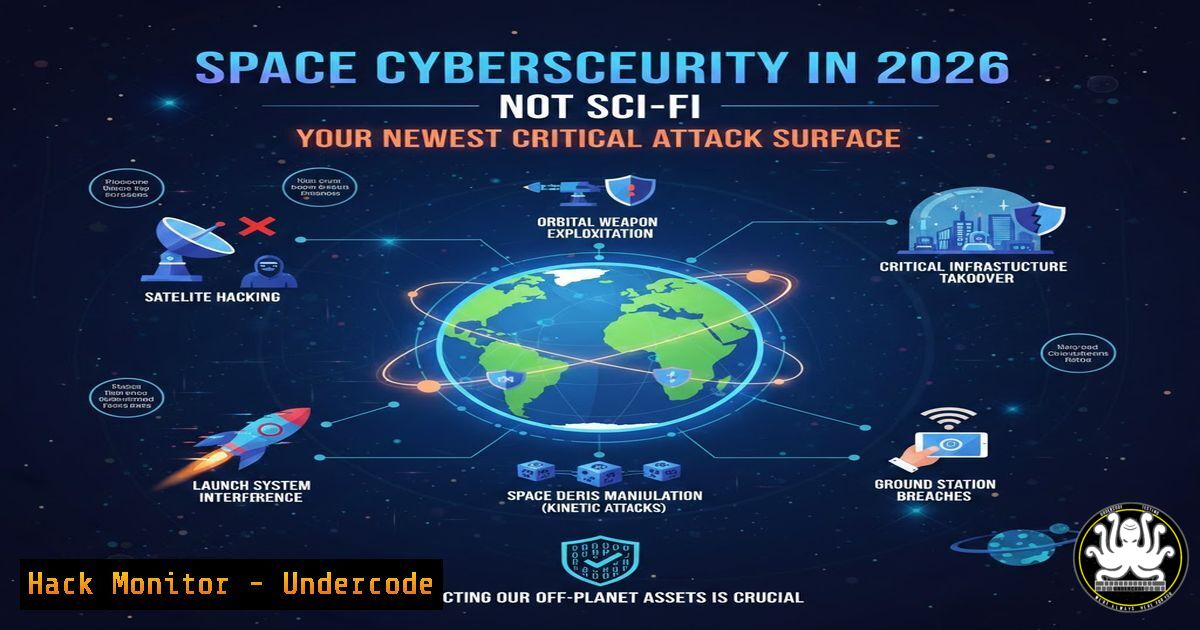
The final frontier is now the latest front line in cybersecurity. As space infrastructure—from satellites to global navigation systems—becomes deeply integrated into terrestrial critical operations, it creates a vast, vulnerable, and high-impact attack surface. The insights from CYSAT Asia 2026 underscore an urgent transition from theoretical risk to immediate, cross-sector defensive action.
Learning Objectives:
- Understand the concrete threats to modern space-based infrastructure like GNSS and LEO satellites.
- Learn the practical challenges of implementing post-quantum cryptography (PQC) beyond theory.
- Gain actionable steps to assess and harden systems dependent on space-based data links.
You Should Know:
- Mapping the Orbital Attack Surface: It’s Closer Than You Think
The integration of Low Earth Orbit (LEO) satellites and Global Navigation Satellite Systems (GNSS) into finance, logistics, and energy grids means an attack on space is an attack on Earth. This infrastructure is often built on legacy, under-validated systems with known vulnerabilities.
Step-by-Step Guide: Performing a Basic Dependency Audit for Space-Based Systems
1. Inventory Critical Services: List all services reliant on precise timing (PTP, NTP sourced from GNSS) or satellite communication (VSAT, IoT backhauls). Command example on Linux to check NTP sources: `chronyc sources -v`
2. Identify GNSS Receiver Models: Physically audit or review procurement records for GNSS receiver models (e.g., in power substations, telecom hubs). Search their model numbers against databases like CVE.mitre.org or the vendor’s security advisories.
3. Network Segmentation Check: Map the network path between the GNSS receiver or satellite modem and the core network. Use network diagrams and tools like `nmap` to verify isolation: nmap -sV -p 1-1000 <IP_of_receiver_network_gateway>. The receiver itself should not be directly accessible from the internet.
- Post-Quantum Cryptography: Securing the Implementation, Not Just the Algorithm
While migrating to NIST-standardized PQC algorithms (like CRYSTALS-Kyber) is essential, the implementation layer remains vulnerable. Side-channel attacks (measuring power consumption or timing) and fault injection (glitching hardware to cause errors) can compromise even quantum-resistant crypto.
Step-by-Step Guide: Hardening a PQC Test Implementation
- Choose a Vetted Library: Do not implement algorithms from scratch. Use established libraries like liboqs (Open Quantum Safe) that offer prototype PQC integrations. On Ubuntu, you can install: `sudo apt-get install liboqs-dev`
2. Enable Constant-Time Operations: Review code or library documentation to ensure it uses constant-time functions for critical operations (like modular exponentiation) to thwart timing attacks. In code, this often means avoiding branch- or lookup-table-dependent operations on secret data. - Implement Environmental Protections: For hardware security modules (HSMs) or dedicated security chips, ensure they have physical tampersensing and active voltage/frequency monitors to resist fault injection. Configuration is hardware-specific but must be enabled.
-
Exploiting and Mitigating GNSS Vulnerabilities: A Hands-On Look
With over 50 known vulnerabilities in GNSS receivers, threats range from spoofing (broadcasting false signals) to jamming. Attackers can manipulate timing to disrupt financial transactions or cripple smart grids.
Step-by-Step Guide: Simulating a GNSS Spoofing Detection Test
Disclaimer: Perform this only in a controlled, authorized lab environment.
1. Setup a Test Bench: Use a software-defined radio (SDR) like a USRP or HackRF One, and a standalone GNSS receiver for testing.
2. Use Spoofing Tools: Tools like `gps-sdr-sim` can generate and broadcast synthetic GPS signals. Clone and build it: `git clone https://github.com/osqzss/gps-sdr-sim.git && cd gps-sdr-sim && gcc gpssim.c -lm -O3 -o gps-sdr-sim`
3. Generate & Broadcast a Spoofed Trajectory: Create a spoofed signal file and transmit it via your SDR, overriding the real sky signals for your test receiver.
4. Monitor for Anomalies: A robust system should detect the discrepancy. Monitor your test receiver’s output for sudden jumps in reported position/time, or use specialized security tools like `gnss-sdr` with anomaly detection plugins to log the event.
- Building the Talent Pipeline: From Classroom to Orbit
The shortage of professionals who understand both orbital mechanics and kernel exploits is a critical vulnerability. Building this talent requires updated curricula and hands-on training.
Step-by-Step Guide: Creating a Space Cyber Range Lab
- Virtualize the Environment: Use virtual machines and network simulators (GNS3, EVE-NG) to create a virtual ground station network.
- Integrate Space Data Sources: Use open-source satellite toolkits (like NASA’s GMAT) or APIs from commercial space data providers to feed realistic telemetry and tracking data into your lab network.
- Deploy Vulnerable Targets: Introduce intentionally vulnerable software-defined radio (SDR) applications or legacy protocol servers (e.g., corrupted CCSDS space packet protocol handlers) as attack targets for students.
- Scenario Execution: Run controlled red-team exercises where students must spoof telemetry, perform a man-in-the-middle attack on a data downlink, or identify malicious code in satellite firmware.
5. Hardening the Maritime-LEO Nexus
Modern shipping relies on LEO constellations (e.g., Starlink, Iridium) for communication and navigation. A compromised link can lead to data interception, ransom, or even physical hijacking.
Step-by-Step Guide: Securing a Maritime Satellite Communication Terminal
- Firmware Hardening: Immediately change all default credentials on the satellite terminal (often admin/admin). Check for and apply firmware updates from the vendor—this is frequently neglected in maritime ops.
- Encrypt All Data Links: Ensure data encryption is enabled end-to-end. For VSAT systems, configure IPSec tunnels between the ship and shore-side servers. Example command to initiate a simple IPSec tunnel on a Linux-based gateway (using strongSwan): `sudo ipsec up my_maritime_tunnel`
3. Implement Network Monitoring: Install a network intrusion detection system (NIDS) like Suricata on the ship’s network gateway. Create a rule to alert on unauthorized connection attempts to the satellite modem’s management interface: `alert tcp any any -> $SHIP_NET [192.168.100.1] (management_port) (msg:”Unauthorized SATCOM mgmt access”; sid:1000001;)`
What Undercode Say:
- The Window for Proactive Design is Closing Fast: Space infrastructure is being deployed at a staggering rate. We have a brief opportunity to “bake in” security-by-design, observability, and secure upgrade paths before these systems ossify for decades.
- Convergence is the Real Threat: The greatest danger lies at the convergence points—where space signals meet terrestrial IT, where quantum software meets legacy hardware, and where multiple industries (maritime, energy, finance) depend on a single vulnerable constellation. Defense must focus on these junctions.
Prediction:
Within the next 3-5 years, we will witness the first publicly attributed, catastrophic cyberattack on space infrastructure, likely targeting GNSS timing to create cascading failures in a dependent sector like financial trading or regional power distribution. This will catalyze aggressive regulatory action and mandatory space-cyber resilience standards, similar to the evolution of aviation cybersecurity. Furthermore, the advent of AI-driven automated vulnerability discovery will turn legacy space code into a high-yield target for sophisticated attackers, accelerating the timeline for mandatory system-wide upgrades and creating a booming market for space-centric cyber insurance.
▶️ Related Video (82% Match):
🎯Let’s Practice For Free:
IT/Security Reporter URL:
Reported By: Maria S – Hackers Feeds
Extra Hub: Undercode MoN
Basic Verification: Pass ✅


