Listen to this Post
Introduction:
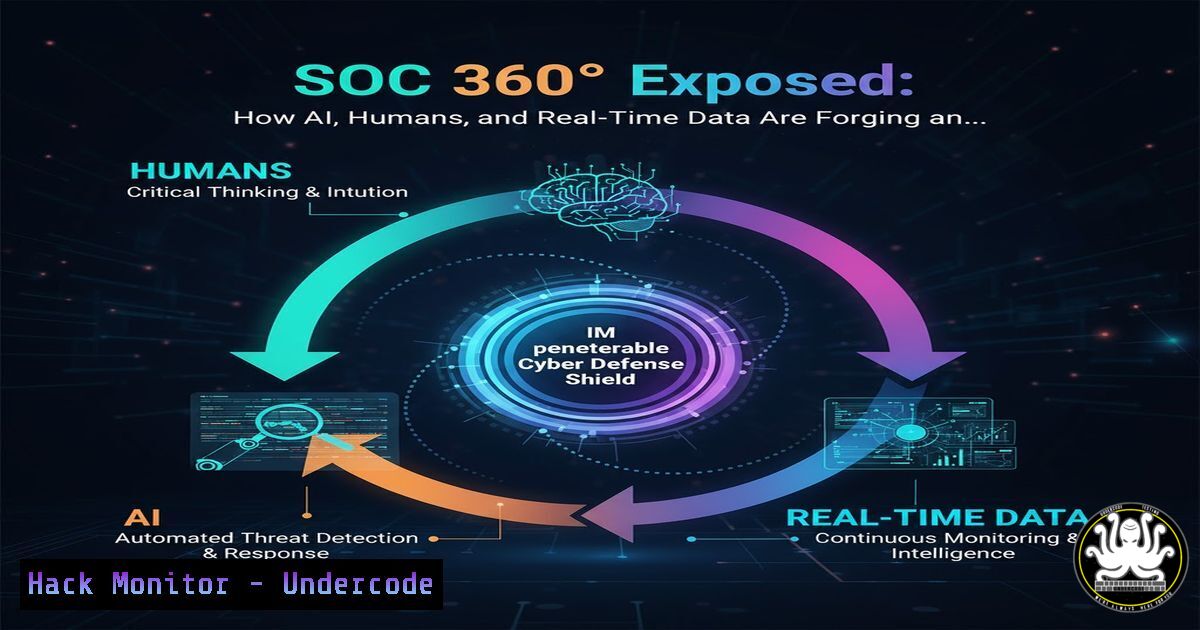
The cybersecurity landscape is evolving from siloed defenses into a unified, intelligent ecosystem known as SOC 360°. This paradigm integrates Artificial Intelligence (AI), human expertise, and real-time data analytics to create a proactive and resilient security posture. As cyberattacks grow in sophistication, this holistic approach is no longer a luxury but a necessity for organizations aiming to defend against advanced persistent threats and targeted ransomware campaigns.
Learning Objectives:
- Understand the core components of a SOC 360° framework and how they interoperate.
- Learn practical steps to implement AI-driven threat detection and automated response.
- Gain insights into real-world ransomware negotiation tactics and mitigation strategies from over 150 cases.
You Should Know:
- The Anatomy of a Modern Cyber Attack: From Reconnaissance to Exploitation
Before building a defense, you must understand the offense. Modern attacks are methodical. They often begin with passive reconnaissance to identify targets, followed by active scanning for vulnerabilities, and culminate in exploitation and lateral movement.
Step‑by‑step guide explaining what this does and how to use it.
Step 1: Passive Reconnaissance (OSINT). Attackers use Open-Source Intelligence (OSINT) to gather information from LinkedIn, company websites, and public code repositories.
Command Example (Linux – TheHarvester):
theharvester -d target-company.com -l 500 -b google,linkedin
This command scours Google and LinkedIn for emails and subdomains associated with target-company.com.
Step 2: Active Scanning & Vulnerability Assessment. Attackers use tools like Nmap and Nessus to map the network and identify weak points.
Command Example (Linux – Nmap):
nmap -sV -sC -O -p- target-ip-address
This performs a verbose scan (-sV -sC), attempts OS detection (-O), and scans all ports (-p-) to build a comprehensive profile of the target.
Step 3: Initial Exploitation. This could involve exploiting a public-facing application, a weak credential, or an unpatched system. For instance, exploiting a known vulnerability in a web server.
Mitigation Command (Linux – Patch Management):
sudo apt update && sudo apt upgrade
Regularly updating systems is the most fundamental defense against known exploitation.
- Building the SOC 360° Core: Integrating AI and Machine Learning
The “360°” signifies a panoramic view of the IT environment. AI and ML are force multipliers, analyzing massive volumes of telemetry data from endpoints, networks, and cloud environments in real-time to identify anomalies that would escape human notice.
Step‑by‑step guide explaining what this does and how to use it.
Step 1: Data Ingestion. Consolidate logs from all sources: Windows Event Logs, firewall logs, EDR (Endpoint Detection and Response) tools, and cloud trails (e.g., AWS CloudTrail).
Command Example (Windows – PowerShell to check Event Logs):
Get-EventLog -LogName Security -Newest 50 | Format-Table -AutoSize
This retrieves the 50 most recent security events, which can be fed into a SIEM (Security Information and Event Management) system.
Step 2: Implement Behavioral Analytics. Use AI models to establish a baseline of “normal” behavior for users and systems. Any significant deviation, such as a user logging in at an unusual hour or a system process accessing unusual files, triggers an alert.
Conceptual Example: An AI model can flag a PowerShell command that uses base64 encoding and unusual parameters, a common tactic for obfuscating malicious payloads.
Step 3: Automated Playbook Execution. For common, high-confidence alerts, configure automated responses. For example, if a host is confirmed to be compromised, the system can automatically isolate it from the network.
Tool Configuration (Example): In a SOAR (Security Orchestration, Automation, and Response) platform, create a playbook that triggers a `netsh` command to block a compromised IP address.
Command Example (Windows):
netsh advfirewall firewall add rule name="Block Malicious IP" dir=in action=block remoteip=192.168.1.100
- The Human Firewall: Empowering Analysts with Real-Time Context
AI is useless without human intuition and strategic oversight. SOC 360° elevates the human analyst from a data sifter to a strategic decision-maker by providing enriched, contextualized alerts.
Step‑by‑step guide explaining what this does and how to use it.
Step 1: Alert Triage and Enrichment. When an AI model generates an alert, the SOC platform should automatically enrich it with threat intelligence (e.g., IP reputation, known malware hashes), user context, and asset criticality.
Step 2: Collaborative Investigation. Use integrated communication tools within the SOC platform to allow analysts to share findings, tag colleagues, and build a collective investigation timeline in real-time.
Step 3: Proactive Threat Hunting. Empower analysts to use the consolidated data to hunt for threats that evaded automated detection. This involves crafting custom queries based on threat intelligence or hypotheses.
Command Example (EDR Query – YARA-like rule): A hunter might search for files that have a high entropy (indicating potential encryption) and were recently created, a possible sign of ransomware activity.
4. Cloud Hardening: Securing the Modern Perimeter
With the shift to cloud, the attack surface has expanded. SOC 360° must extend its visibility and control into IaaS, PaaS, and SaaS environments, where misconfigurations are a primary attack vector.
Step‑by‑step guide explaining what this does and how to use it.
Step 1: Implement Cloud Security Posture Management (CSPM). Use automated tools to continuously scan cloud environments for misconfigurations, such as publicly accessible S3 buckets or storage accounts.
Step 2: Enforce Least Privilege with Identity and Access Management (IAM). Regularly audit IAM roles and policies. Avoid using root accounts and implement the principle of least privilege.
AWS CLI Example (Check S3 Bucket Policy):
aws s3api get-bucket-policy --bucket my-bucket-name
This helps verify that the bucket isn’t open to the public ("Effect": "Allow" and "Principal": "").
Step 3: Monitor Cloud Audit Logs. Ingest logs from AWS CloudTrail, Azure Activity Log, or GCP Audit Logs into your SIEM to monitor for suspicious activity, such as unauthorized API calls or changes to security groups.
5. The Ransomware Playbook: From Negotiation to Recovery
Drawing from over 150 real cases, having a pre-defined, practiced ransomware response plan is critical. This includes technical containment, communication strategies, and the complex decision-making process around negotiation.
Step‑by‑step guide explaining what this does and how to use it.
Step 1: Immediate Containment. The moment ransomware is detected, the first step is to isolate the infected systems to prevent lateral spread.
Command Example (Network Isolation):
 Linux - Isolate a host by blocking all traffic
iptables -A INPUT -s infected-host-ip -j DROP
iptables -A OUTPUT -d infected-host-ip -j DROP
Step 2: Triage and Communication. Activate your incident response team. Determine the scope of the infection and communicate transparently with stakeholders, including legal counsel. Do not make any public statements without internal alignment.
Step 3: The Negotiation Calculus. The decision to pay a ransom is a business one, not a technical one. Factors include the availability of backups, the criticality of the encrypted data, the cost of downtime, and the ethical/legal implications. Professional negotiators can often significantly reduce the demanded ransom.
What Undercode Say:
- Integration is Non-Negotiable: The highest ROI in cybersecurity today comes not from buying another point solution, but from deeply integrating the tools and data sources you already have. A fully integrated SOC 360° is the only way to achieve the visibility and speed needed to combat modern threats.
- The Human Element is the Deciding Factor: AI handles the scale, but humans handle the strategy. Investing in continuous training and empowering your analysts with context and automation is what separates a reactive SOC from a proactive Cyber Defense Center.
The insights from Ernesto Hartmann’s presentation underscore a pivotal shift in the industry. Defenders are moving from a fragmented, alert-heavy reality to a cohesive, intelligence-driven operation. The focus on real-world ransomware cases provides a sobering reminder of the stakes involved. The key is to build a defense that is not only technologically advanced but also organizationally mature, with clear processes for the worst-case scenarios. The fusion of AI’s analytical power with human ingenuity within the SOC 360° framework represents the most robust defense model for the coming years.
Prediction:
The convergence of AI-powered offense and defense will escalate, leading to an “AI arms race” in cybersecurity. Ransomware groups will increasingly leverage AI to automate target selection, customize phishing attacks, and optimize their encryption and extortion tactics. In response, SOC 360° platforms will evolve into fully autonomous defense systems capable of predicting attack paths and executing complex mitigation playbooks without human intervention, fundamentally changing the role of the security analyst from a first responder to a strategic overseer and threat hunter.
🎯Let’s Practice For Free:
IT/Security Reporter URL:
Reported By: Ernesto Hartmann – Hackers Feeds
Extra Hub: Undercode MoN
Basic Verification: Pass ✅


