Listen to this Post
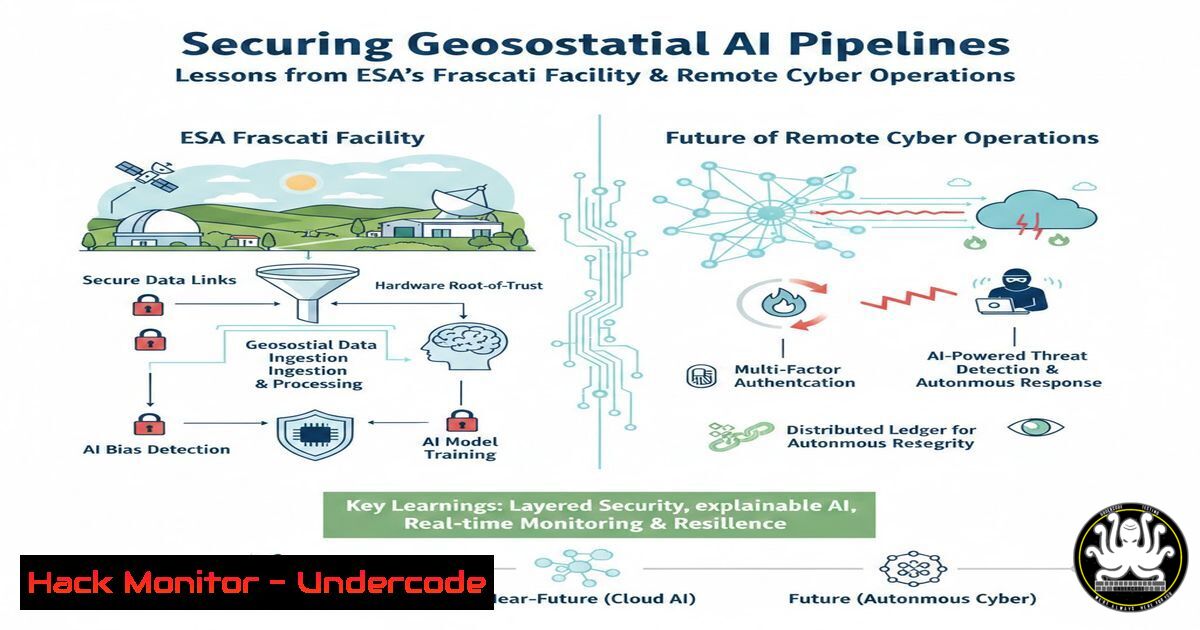
Introduction:
The European Space Agency’s ESRIN facility in Frascati, Italy, serves as a premier hub for Earth observation data processing and space innovation. However, the convergence of satellite data, Artificial Intelligence, and cloud-based analytics creates a complex attack surface ripe for exploitation. As cybersecurity professionals seek flexible, international roles in this evolving landscape, understanding how to secure these advanced technological ecosystems becomes paramount. This article explores the technical frameworks, hardening techniques, and vulnerability mitigation strategies necessary to protect AI-driven geospatial platforms, drawing inspiration from the intersection of space-grade IT and modern remote work infrastructure.
Learning Objectives:
- Understand the architecture and threat vectors associated with AI-powered geospatial data processing environments.
- Master Linux and Windows hardening commands for securing high-performance computing (HPC) clusters used in satellite data analysis.
- Implement API security measures for geospatial data ingestion and AI model endpoints.
- Configure cloud-based disaster recovery and location-agnostic secure access for remote cybersecurity teams.
- Analyze exploitation techniques targeting machine learning pipelines in remote sensing applications.
You Should Know:
1. Hardening HPC Clusters for Geospatial AI Workloads
High-performance computing environments processing satellite imagery (like those at ESA) often run on Linux-based clusters. These systems are prime targets for cryptojacking and data exfiltration attacks due to their immense computational power and valuable datasets.
Step‑by‑step guide:
First, ensure all nodes are patched and configured with mandatory access controls. Run the following to check for world-writable directories that could facilitate privilege escalation:
`find / -type d -perm -0002 -ls 2>/dev/null`
Implement `apparmor` or `SELinux` profiles for AI modeling tools. To enforce a strict firewall policy allowing only necessary inter-node communication (e.g., MPI traffic) and outbound updates:
`sudo ufw default deny incoming`
`sudo ufw default allow outgoing`
`sudo ufw allow from 192.168.1.0/24 to any port 22 SSH`
`sudo ufw allow from 192.168.1.0/24 to any port 2049 NFS`
`sudo ufw –force enable`
Finally, audit running services and disable unnecessary ones like `cups` or `avahi-daemon` to reduce the attack surface.
2. Securing Geospatial Data Ingestion APIs
Satellite ground stations and third-party data providers use RESTful APIs to feed data into AI models. These endpoints are vulnerable to injection attacks and mass assignment if not properly secured.
Step‑by‑step guide:
Implement strict input validation on your API gateway. For a Node.js Express application, use `express-validator` to sanitize GeoJSON inputs. Check for rate limiting to prevent DDoS attacks that could disrupt time-sensitive satellite downlinks. Use the following Nginx configuration to limit requests and block malicious payloads:
limit_req_zone $binary_remote_addr zone=geosapi:10m rate=10r/s;
server {
location /api/v1/ingest {
limit_req zone=geosapi burst=20 nodelay;
if ($request_body ~ "(\$ne|\$gt|\$regex|DROP|SELECT)" ) {
return 403;
}
proxy_pass http://ai_model_cluster;
}
}
Always enforce TLS 1.3 and use mutual TLS (mTLS) for machine-to-machine authentication between ground stations and your cloud ingress points.
3. Cloud Hardening for Location-Agnostic Cyber Operations
As cybersecurity professionals become more nomadic, securing access to critical infrastructure (like an ESA project control plane) from global locations is vital. Misconfigured cloud storage buckets have led to massive leaks of sensitive satellite data.
Step‑by‑step guide:
Using the AWS CLI, audit all S3 buckets for public access and encryption settings. Run this command to list buckets and check their block public access settings:
`aws s3api list-buckets –query ‘Buckets[].Name’ –output text | xargs -I {} aws s3api get-public-access-block –bucket {}`
For Azure Blob Storage, ensure “Secure transfer required” is enabled. Implement a Zero Trust architecture using Cloudflare Zero Trust or AWS Client VPN. Configure VPN access with certificate-based authentication and integrate with Okta for MFA. Ensure that all administrative access to the cloud control plane is logged to a SIEM, using a command like:
`aws cloudtrail lookup-events –lookup-attributes AttributeKey=EventName,AttributeValue=ConsoleLogin`
- Mitigating Adversarial AI Attacks on Remote Sensing Models
AI models analyzing satellite imagery (e.g., for object detection) are susceptible to adversarial attacks where imperceptible noise in input data causes misclassification. An attacker could subtly alter an image to hide military assets or cause an autonomous system to misread flood zones.
Step‑by‑step guide:
Defend by implementing adversarial training. Using TensorFlow, you can augment your training pipeline with Fast Gradient Sign Method (FGSM) attacks. A simplified code snippet to generate adversarial examples during training:
import tensorflow as tf
def adversarial_train_step(model, images, labels, epsilon=0.01):
with tf.GradientTape() as tape:
tape.watch(images)
predictions = model(images)
loss = tf.keras.losses.sparse_categorical_crossentropy(labels, predictions)
gradient = tape.gradient(loss, images)
signed_grad = tf.sign(gradient)
adversarial_images = images + epsilon  signed_grad
return model.train_on_batch(adversarial_images, labels)
Additionally, deploy input sanitization by applying image compression or smoothing filters to incoming data before inference to break the construction of adversarial perturbations.
5. Windows Hardening for Ground Station Control Terminals
Ground station operators often use Windows-based workstations to command and control satellite telemetry. These must be hardened against USB-based attacks and ransomware.
Step‑by‑step guide:
Disable AutoRun and AutoPlay via Group Policy or PowerShell to prevent malicious code execution from removable media. Run this PowerShell command as Administrator:
`Set-ItemProperty -Path “HKLM:\SOFTWARE\Microsoft\Windows\CurrentVersion\policies\Explorer” -Name “NoDriveTypeAutoRun” -Value 255`
Enable Windows Defender Application Control (WDAC) to only allow approved binaries related to telemetry software. Use the `Get-AppLockerPolicy` cmdlet to audit current rules. Finally, enable PowerShell logging to detect suspicious script activity:
`Set-ItemProperty -Path “HKLM:\SOFTWARE\Policies\Microsoft\Windows\PowerShell\ScriptBlockLogging” -Name “EnableScriptBlockLogging” -Value 1`
What Undercode Say:
- Key Takeaway 1: The security of AI-powered geospatial platforms is not just about network firewalls; it requires a deep integration of cloud security, adversarial ML defense, and traditional host hardening to protect data integrity from the satellite to the data scientist.
- Key Takeaway 2: As the workforce becomes increasingly location-agnostic, the “perimeter” dissolves entirely. Security strategies must shift toward identity-centric models (Zero Trust) and assume that all administrative access originates from untrusted networks, requiring stringent VPN, MFA, and endpoint compliance checks.
Analysis:
The narrative of working internationally on cutting-edge projects like those at ESA highlights a critical gap in current cybersecurity practices. While we focus on perimeter defense for physical offices, the future of cyber operations is remote and cloud-centric. This shift demands that professionals not only understand coding and hacking but also possess deep knowledge of securing CI/CD pipelines for AI, cloud infrastructure-as-code, and the specific nuances of the industry they protect—be it finance or space exploration. The convergence of IT, AI, and engineering (as noted in the source profile) is no longer optional; it is the baseline for effective defense in a world where data is the most valuable asset, regardless of where the defender is sitting.
Prediction:
Within the next three to five years, we will see a significant rise in “AI Pipeline Hijacking” attacks targeting geospatial and scientific research institutions. Adversaries will shift from simply stealing data to subtly manipulating the training datasets and inference outputs of AI models, leading to flawed scientific conclusions or compromised autonomous systems. This will necessitate a new category of security tools focused on data provenance and model integrity verification, moving beyond traditional DevSecOps into MLOps security. Cybersecurity roles will bifurcate further, with high-demand experts specializing in securing these complex, AI-driven workflows operating from global, distributed hubs—much like the international collaboration seen in Frascati.
▶️ Related Video (76% Match):
🎯Let’s Practice For Free:
IT/Security Reporter URL:
Reported By: Paulsanders87 Several – Hackers Feeds
Extra Hub: Undercode MoN
Basic Verification: Pass ✅


