Listen to this Post
Introduction
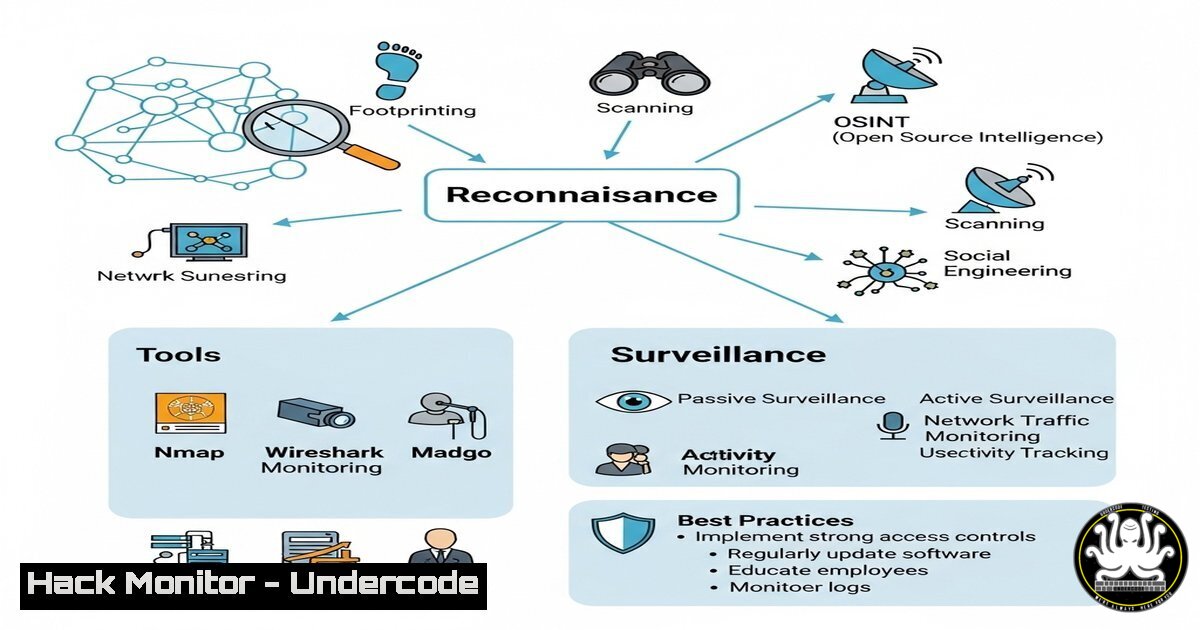
Reconnaissance and surveillance are critical phases in cybersecurity, enabling ethical hackers and penetration testers to gather intelligence before launching an attack or assessing vulnerabilities. Whether targeting web applications, APIs, or physical security systems, effective recon ensures a higher success rate in identifying weaknesses. This article explores key techniques, commands, and tools used in modern reconnaissance missions.
Learning Objectives
- Understand the role of recon in cybersecurity operations.
- Learn essential Linux and Windows commands for surveillance.
- Explore tools for web, API, and network reconnaissance.
You Should Know
1. Passive Recon with WHOIS and DNS Enumeration
Command (Linux):
whois example.com
dig example.com ANY
Step-by-Step Guide:
– `whois` retrieves domain registration details (owner, registrar, expiration).
– `dig` extracts DNS records (A, MX, TXT) to map infrastructure.
Use Case: Identify attack surfaces before engaging a target.
2. Network Scanning with Nmap
Command (Linux/Windows):
nmap -sV -A -T4 target.com
Step-by-Step Guide:
– `-sV` detects service versions.
– `-A` enables OS and script scanning.
Use Case: Discover open ports and running services.
3. Web Recon with Burp Suite
Tool Configuration:
- Configure Burp Suite Proxy to intercept HTTP/S traffic.
2. Use Burp Scanner to automate vulnerability detection.
Use Case: Analyze web apps for SQLi, XSS, and API flaws.
- API Recon with Postman and OWASP ZAP
Command (ZAP CLI):
docker run -t owasp/zap2docker zap-api-scan.py -t https://api.target.com -f openapi
Step-by-Step Guide:
- Scans APIs for misconfigurations and data leaks.
- Integrate with CI/CD pipelines for automated testing.
5. Physical Surveillance with War Flying
Tool: UAVs (drones) + Wi-Fi Pineapple.
Technique:
- Capture Wi-Fi signals for rogue access points.
- Use Kismet to log network traffic:
kismet -c wlan0
6. Smart Contract Recon with Etherscan
Tool: Etherscan
Technique:
- Audit Ethereum contracts for reentrancy or overflow bugs.
- Use Slither for static analysis:
slither target_contract.sol
7. Thick Client Reverse Engineering
Tool: Ghidra + x64dbg.
Technique:
- Decompile binaries to uncover hardcoded secrets.
- Patch vulnerabilities in proprietary software.
What Undercode Say
- Key Takeaway 1: Recon is the foundation of any successful cyber operation—skip it, and you risk missing critical vulnerabilities.
- Key Takeaway 2: Automation (Nmap, ZAP, Slither) reduces human error but manual analysis (Burp, Ghidra) catches logic flaws.
Analysis:
Reconnaissance is evolving with AI-driven tools (e.g., SpiderFoot for OSINT), but human intuition remains irreplaceable. Future attacks will leverage drone-based surveillance and blockchain analysis, making adaptive defense strategies essential.
Prediction
By 2026, AI-powered recon bots will automate 60% of vulnerability discovery, forcing defenders to adopt AI-enhanced monitoring. Meanwhile, quantum computing could break current encryption, making pre-emptive recon even more critical.
This guide equips you with verified commands and methodologies—apply them ethically and legally. Stay ahead in the cybersecurity arms race. 🚀
🎯Let’s Practice For Free:
IT/Security Reporter URL:
Reported By: Activity 7361915639017414657 – Hackers Feeds
Extra Hub: Undercode MoN
Basic Verification: Pass ✅


