
Listen to this Post
Introduction:
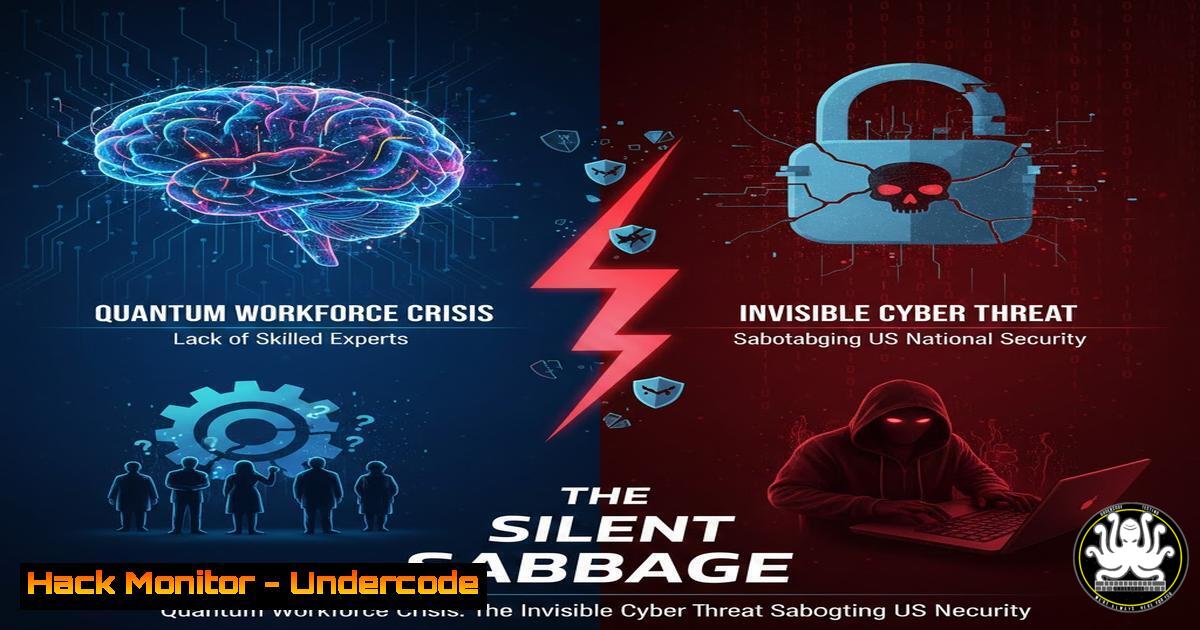
The United States is rapidly approaching a critical inflection point in the quantum race, not due to a lack of investment or innovation, but because of a severe and growing workforce shortage. This talent deficit threatens to undermine national security by delaying the deployment of quantum-resistant cryptography and ceding leadership in quantum sensing—a technology vital for maintaining military and economic advantage. As quantum computers advance toward breaking current encryption standards, the scarcity of skilled professionals to implement defenses creates a tangible vulnerability that adversaries could exploit.
Learning Objectives:
- Understand the scale and composition of the quantum talent gap and its direct impact on cybersecurity readiness.
- Identify the key technical roles beyond quantum physicist that are critical for building and securing quantum systems.
- Learn actionable steps for individuals and organizations to begin building quantum literacy and transitioning to post-quantum cryptography.
You Should Know:
- The Harvest-Now, Decrypt-Later Threat is a Ticking Clock
The most immediate quantum cybersecurity threat isn’t from a mature computer; it’s the “harvest-now, decrypt-later” attack. Adversaries are likely collecting and storing encrypted data today (e.g., state secrets, intellectual property, personal data) with the expectation that future quantum computers will break the encryption. This makes the current workforce shortage a present-day national security crisis. Organizations must begin their cryptographic migration now, as transitions are estimated to take up to a decade. The European Union, for example, has mandated its member states to start this transition by the end of 2026.
Step‑by‑step guide to initiating a post-quantum cryptography (PQC) assessment:
1. Inventory Cryptographic Assets: Catalog all systems that use cryptography for confidentiality, integrity, or authentication. Focus on TLS/SSL certificates, VPNs, digital signatures, and encrypted databases. Use automated scanning tools where possible.
2. Prioritize by Risk: Rank assets based on data sensitivity, exposure, and regulatory requirements. Systems holding data with a long shelf-life (e.g., classified information, health records) are highest priority.
3. Audit Dependencies: Identify commercial software, open-source libraries, and hardware security modules (HSMs) that provide cryptography. Contact vendors to inquire about their PQC roadmaps.
4. Develop a Migration Roadmap: Create a phased plan to test and integrate new PQC standards, starting with pilot projects in low-risk environments. NIST’s standardized PQC algorithms should form the core of this strategy.
- 80% of Quantum Jobs Don’t Need a PhD: The Diverse Talent Pipeline
A common misconception is that the quantum workforce consists solely of research scientists. In reality, industry leaders estimate that roughly 80% of future quantum jobs will not require advanced degrees. The talent gap spans a wide spectrum of roles essential for industrialization, from PhD researchers to skilled technicians. The Chicago Quantum Exchange reports that two-thirds of quantum jobs in the industry sector only require a bachelor’s degree or less.
Step‑by‑step guide to identifying and hiring for critical quantum support roles:
1. Map the Quantum Stack to Roles: Understand the different layers of quantum technology and the corresponding jobs:
Hardware Layer: Cryogenic technicians, nanofabrication engineers, laser physicists.
Software Layer: Quantum algorithm developers, Qiskit/Cirq programmers, error-correction specialists.
Application Layer: Quantum solutions architects, business developers, cybersecurity analysts specializing in PQC.
2. Upskill Existing Talent: Target employees with adjacent skills. A classical cybersecurity analyst can train in PQC standards. A Python developer can learn quantum programming SDKs like Qiskit.
3. Partner with Training Providers: Engage with organizations offering specialized quantum certifications, such as the Certified Quantum Security Analyst (CQSA) from NICCS/CISA or the Certified Quantum Cybersecurity Analyst (CQCA) from Tonex. These programs translate complex concepts into actionable skills for IT professionals.
- Quantum Sensing: The Mature Technology Where Leadership is at Stake
While quantum computing captures headlines, quantum sensing is the most mature quantum technology today and is directly tied to urgent national security needs. Quantum sensors provide ultra-precise Positioning, Navigation, and Timing (PNT) without relying on vulnerable GPS signals, which adversaries are actively jamming and spoofing. The U.S. lead in this field is fragile due to underinvestment and supply chain vulnerabilities, risking a “Valley of Death” for prototypes.
Step‑by‑step guide for IT leaders to understand quantum sensing implications:
1. Assess GPS Dependency: Identify critical operations (e.g., data center synchronization, financial transaction timestamps, logistics) that depend on GPS for timing. Document the potential cost and impact of a sustained GPS disruption.
2. Evaluate Complementary PNT Solutions: Research quantum sensing as a future component of a resilient PNT architecture. Unlike camera- or radar-based alternatives, quantum sensors are passive (don’t emit signals) and work in all weather conditions.
3. Engage with the Supply Chain: For defense and critical infrastructure IT teams, understand the brittle supply chain for quantum components like specialized lasers and photonic materials. Advocate for policies and partnerships that strengthen domestic production to mitigate reliance on foreign suppliers.
- Error Correction: The “Universal Priority” and Its Talent Bottleneck
The core technical hurdle for useful quantum computing is Quantum Error Correction (QEC). A 2025 report identifies real-time QEC as the “universal priority” and the cornerstone for achieving utility-scale machines. However, a severe global talent shortage looms, with only an estimated 1,800-2,200 QEC specialists worldwide and 50-66% of quantum job openings remaining unfilled. This niche skillset, which can take a decade to develop, is now the industry’s ultimate bottleneck.
Step‑by‑step guide for developers to start engaging with QEC concepts:
1. Grasp the Fundamental Challenge: Learn why qubits are prone to errors from environmental “noise” and how QEC uses multiple physical qubits to create one stable “logical qubit.”
2. Experiment with Software Tools: Use open-source platforms like IBM’s Qiskit to run simple QEC code simulations. Begin with basic repetition codes to understand how error detection and correction circuits are constructed.
3. Explore the Hardware-Software Co-Design Problem: Understand that real-time QEC requires ultra-fast, hardware-level decoders, often built on FPGAs or ASICs. Follow developments from companies like Riverlane, whose CEO emphasizes that success demands “collaborative co-design across the entire quantum stack”.
- Building Your Quantum Skillset: From Fundamentals to Certification
For IT and cybersecurity professionals, entering the quantum field requires strategic learning. Foundations in linear algebra, Python, and basic quantum mechanics are key. The pathway then diverges into specialized tracks like quantum software development, hardware engineering, or the critical field of quantum cybersecurity.
Step‑by‑step learning pathway for cybersecurity professionals:
- Foundation (1-3 Months): Take free online courses in quantum computing fundamentals (e.g., IBM Quantum Learning, Coursera). Simultaneously, solidify your understanding of current cryptographic standards (RSA, ECC, AES).
- Specialization (3-6 Months): Deep dive into Post-Quantum Cryptography (PQC). Study NIST’s selected PQC algorithms (e.g., CRYSTALS-Kyber, CRYSTALS-Dilithium). Use open-source libraries like liboqs to experiment with integration.
- Certification & Application (6+ Months): Pursue a professional certification to validate expertise. For example, the Certified Quantum Security Professional (CQSP) program covers migration strategy and practical implementation. Apply knowledge by conducting a quantum-risk assessment for a test system in your organization.
Table: Selected Quantum Security Certification Programs
| Certification | Provider | Focus Area | Key Audience |
|---|---|---|---|
| Certified Quantum Security Analyst (CQSA) | NICCS / CISA | Quantum security challenges & solutions | IT professionals, analysts |
| Certified Quantum Cybersecurity Analyst (CQCA) | Tonex | Quantum-resistant cryptography & QKD | Cybersecurity professionals, architects |
| Certified Quantum Security Professional (CQSP) | SISA Infosec | Quantum-safe migration & compliance | Security leaders, compliance officers |
6. The National Imperative: A Coordinated Public-Private Strategy
Addressing the workforce gap requires action beyond individual upskilling. It demands a coordinated national strategy. This includes renewing and funding the National Quantum Initiative Act, creating clear government demand signals for quantum technologies (especially sensing), and investing in education pipelines from K-12 through postgraduate levels. The Rocky Mountain region’s success, hosting over 3,000 quantum workers, demonstrates the power of concentrated research institutions and sustained investment.
Step‑by‑step guide for organizational leadership to engage strategically:
- Conduct a Quantum Impact Assessment: Form a cross-functional team (IT, security, R&D, strategy) to analyze how quantum computing and sensing could impact your business model, products, and security over the next 5, 10, and 15 years.
- Forge Academia-Industry Partnerships: Collaborate with universities on research, curriculum development, and internship pipelines. Support initiatives like the Chicago Quantum Exchange, which is committed to training at all career stages.
- Advocate for Policy: Engage with industry consortia to advocate for policies that support workforce development, supply chain resilience, and strategic R&D funding, particularly in near-term technologies like quantum sensing.
What Undercode Say:
- The Talent Gap is a Security Vulnerability. The shortage of professionals who can implement post-quantum cryptography and develop quantum-sensing defenses is as critical a vulnerability as a software flaw. It creates a window of exploitation that adversaries will use. A McKinsey study highlighted this imbalance, finding only one qualified candidate for every three quantum jobs.
- Procrastination is Not an Option. Organizations that delay preparing their workforce and systems for the quantum transition are gambling with their long-term viability. The “harvest-now, decrypt-later” threat means data encrypted today is already at risk. The decade-long migration timeline makes starting now a business and security imperative.
Analysis: The discourse around the quantum workforce has matured from a concern about training physicists to a recognition of a full-spectrum talent crisis impacting national economic and security posture. The bottleneck has shifted from pure scientific discovery to engineering, commercialization, and cybersecurity. The convergence of AI with quantum computing further complicates the landscape, creating new hybrid roles while demanding even more specialized expertise. Success hinges on dismantling silos—between government and industry, between hardware and software disciplines, and between research and vocational training. The U.S. possesses the foundational research and private capital but risks faltering without a concerted, strategic effort to build the human infrastructure required to turn prototypes into protected, deployable systems.
Prediction:
The next five years will see a dramatic stratification between “quantum-ready” and “quantum-vulnerable” organizations and nations. Countries that successfully implement coordinated workforce strategies will begin to field tangible advantages, particularly in quantum sensing for defense and resilient infrastructure. We will witness the first major data breaches attributed to the “harvest-now, decrypt-later” tactic, triggering a wave of regulatory action and liability lawsuits that will force a frantic, costly scramble for quantum security talent. The organizations that invested early in upskilling IT staff and integrating post-quantum cryptography will gain significant market trust and a durable competitive edge.
▶️ Related Video (86% Match):
🎯Let’s Practice For Free:
IT/Security Reporter URL:
Reported By: Keith King – Hackers Feeds
Extra Hub: Undercode MoN
Basic Verification: Pass ✅


