Listen to this Post
Introduction:
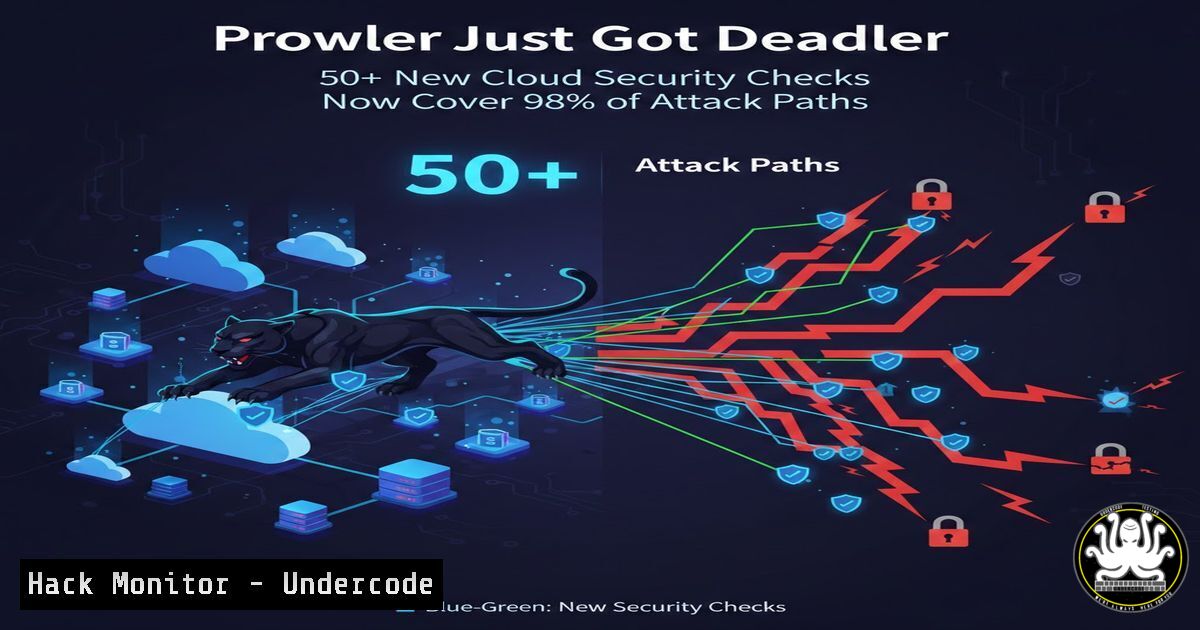
In a significant leap for open-source cloud security, the Prowler tool has drastically closed the gap on undetected cloud misconfigurations. Thanks to a community contribution, Prowler now incorporates over 50 new detection paths derived from the pathfinding.cloud project, reducing the “coverage gap” of undetectable attack paths from 42% down to a mere 2%. This integration marks a pivotal moment for security engineers and penetration testers who rely on automated tooling to identify complex, multi-service attack vectors in AWS, Azure, and GCP environments.
Learning Objectives:
- Understand the significance of the new Prowler modules based on pathfinding.cloud data.
- Learn how to install, update, and run Prowler to scan for the latest cloud attack paths.
- Identify specific high-risk misconfigurations that were previously undetectable by open-source tools.
You Should Know:
1. Understanding the “Pathfinding.cloud” Integration
Pathfinding.cloud is a resource released by Seth Art (formerly of Bishop Fox) that maps out potential attack paths across cloud service providers. Historically, open-source tools like Prowler, ScoutSuite, or CloudSploit missed approximately 42% of these paths because they focused on individual misconfigurations rather than the “chaining” of weaknesses. The recent Pull Request ( 9922 ) authored by Andoni Alonso Fernández integrates logic to detect these complex relationships. For example, instead of just checking if an S3 bucket is public, it now checks if a role assumed by an EC2 instance can be leveraged to write to a bucket that triggers a malicious Lambda function.
- Installing and Updating Prowler for the Latest Coverage
To utilize the new 50+ checks, you must run the latest version of Prowler. If you are running an older Docker container or pip installation, you will miss these critical detections.
Linux/macOS (pip):
 Update to the latest version
pip install --upgrade prowler-cloud

Verify installation
prowler --version
Docker:
 Pull the latest image
docker pull toniblyx/prowler:latest

Run the container
docker run -ti toniblyx/prowler:latest aws
Windows (using WSL or Docker Desktop):
Ensure Docker Desktop is running, then execute the same Docker commands above within a WSL terminal for optimal performance.
- Executing a Scan for the New Attack Paths
The new detections are not opt-in; they are part of the standard comprehensive scan. However, to specifically hunt for the “pathfinding” style vulnerabilities (IAM privilege escalation, cross-service abuse), you should run the tool with the “forensics” or “compliance” perspectives that check IAM and permissions.Run a full scan against an AWS profile prowler aws --profile your-production-profile Run specifically the IAM and S3 groups which contain most new paths prowler aws --group iam s3 --profile your-production-profile Export to HTML/JSON for easier analysis of the 50+ new findings prowler aws -M html csv json
4. Decoding the New Checks: IAM Role Chaining
One of the newly covered areas involves detecting when an IAM role has overly permissive trust relationships combined with specific actions. Previously, a tool might flag a role as “trusted by an account,” but now Prowler checks if that trust relationship allows for resource-based policy exploitation.
Command to check manually (AWS CLI):
 List roles and analyze trust policies manually
aws iam list-roles --query 'Roles[].[RoleName,AssumeRolePolicyDocument]' --output table --profile your-profile

Check for specific privilege escalation combinations
 Example: A role that can pass any role to an EC2 instance (iam:PassRole) and has wide EC2 permissions
aws iam simulate-principal-policy --policy-source-arn arn:aws:iam::123456789012:role/SuspiciousRole --action-names iam:PassRole ec2:RunInstances --profile your-profile
Prowler now automates the correlation between the `iam:PassRole` action and the ability to launch instances with attached profiles, a classic path to privilege escalation.
5. Detection of Unmonitored CloudTrail and Logging Gaps
Another “path” that was historically under-reported was the ability for an attacker to cover their tracks. The new Prowler checks validate if logging configurations actually capture data from critical services.
Check with AWS CLI (Manual Validation):
 Get the trail status to see if it's multi-region and logging
aws cloudtrail get-trail-status --name your-trail-name --profile your-profile

Check if CloudTrail is logging S3 data events specifically (often missed)
aws cloudtrail get-event-selectors --trail-name your-trail-name --profile your-profile
The updated Prowler tool now flags configurations where Data Events (like S3 object-level activity) are disabled, creating a blind spot that attack paths can exploit without detection.
6. Azure and GCP Implications
While the initial pathfinding project started with AWS, the methodology is cloud-agnostic. The new Prowler updates include checks for Azure RBAC chaining and GCP IAM conditions.
Azure CLI Example (Conceptual Check):
 List Azure role assignments to look for "Contributor" rights combined with "Owner" on management groups
az role assignment list --assignee [email protected] --output table

Prowler now flags when a user has write access to VMs and also access to Key Vaults,
 creating a path to exfiltrate keys via VM managed identities.
az vm list --query "[?identity.principalId!=null]" --output table
7. Remediation: Breaking the Path
When Prowler flags a new “Pathfinding” vulnerability, the fix often involves removing the link in the chain.
– Action: If the report shows an EC2 instance with an instance profile that can modify a Lambda function code, the path is “EC2 -> Lambda -> Execution”.
– Mitigation: Remove the specific Lambda modification permissions from the instance profile’s IAM policy. Use the `aws iam detach-role-policy` or update the inline policy to restrict resource ARNs.
 Example of detaching a dangerous policy
aws iam detach-role-policy --role-name EC2-Role-Name --policy-arn arn:aws:iam::aws:policy/AdministratorAccess --profile your-profile
What Undercode Say:
- Community Power: This update proves that open-source collaboration can outpace commercial tooling. By integrating pathfinding.cloud, Prowler has effectively democratized advanced attack path mapping.
- Shift in Focus: The reduction from 42% to 2% coverage gap signifies a shift in cloud security posture management (CSPM). We are moving from “checking boxes” for compliance to “graph-based analysis” of relationships. Engineers must now think in terms of attack chains, not isolated vulnerabilities.
Prediction:
This development will force commercial CSPM vendors to accelerate their investment in graph-based path analysis. Within the next six months, we will see a standardization of “Path Impact” scores in cloud security tools, similar to the CVSS score but specifically tailored to chained cloud exploits. Furthermore, penetration testers will begin weaponizing these paths more frequently, leading to a surge in “non-human identity” (NHI) breaches as attackers exploit the trust chains between services that the new Prowler checks now detect.
▶️ Related Video (78% Match):
🎯Let’s Practice For Free:
IT/Security Reporter URL:
Reported By: Sethart Huge – Hackers Feeds
Extra Hub: Undercode MoN
Basic Verification: Pass ✅


