Listen to this Post
Introduction:
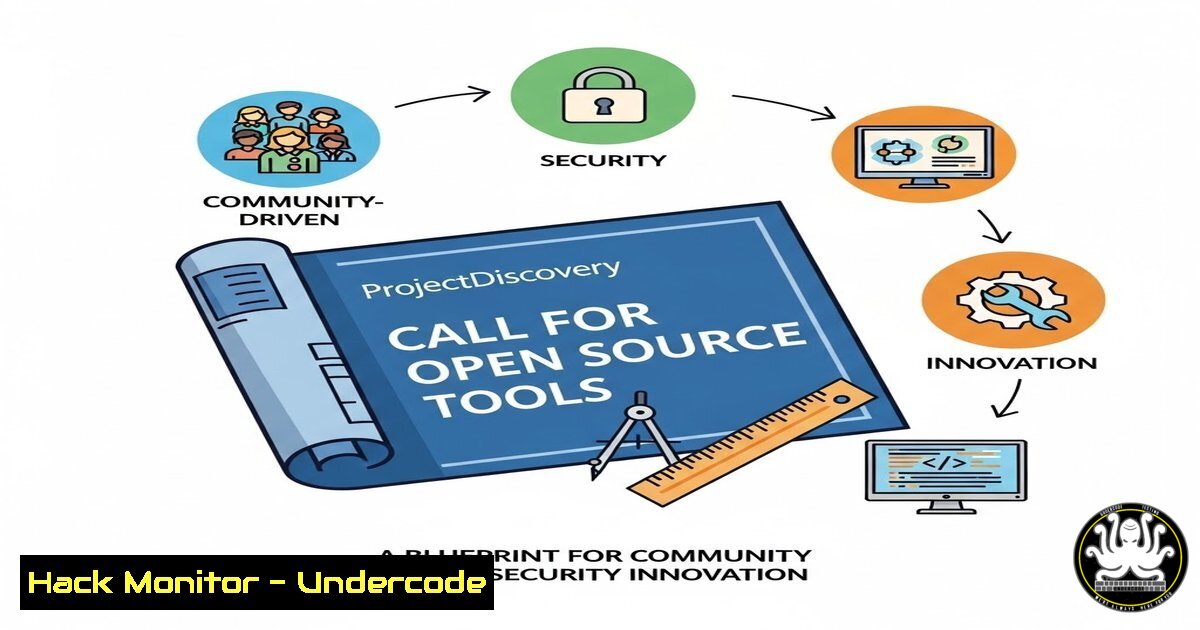
The cybersecurity landscape is evolving at a breakneck pace, and the tools required to defend digital assets must evolve just as quickly. A recent open call from a senior research engineer at ProjectDiscovery highlights a powerful trend: the shift toward community-driven development of open-source security tools. By inviting practitioners to propose ideas for tools they wish existed, the industry is tapping into the collective frontline experience of defenders and attackers alike. This initiative not only democratizes tool creation but also ensures that the resulting software directly addresses the real-world, granular challenges faced by security teams today, moving beyond commercial bloat to focused, efficient utilities.
Learning Objectives:
- Understand the workflow for contributing to or initiating an open-source security tool project.
- Learn how to leverage community feedback to define technical requirements for new cybersecurity utilities.
- Identify key technical areas (API security, cloud hardening, exploitation) ripe for open-source innovation.
- Master the foundational commands and configurations necessary to prototype a network scanning or vulnerability detection tool.
- Analyze the future impact of community-built tooling on the broader cybersecurity threat and defense landscape.
You Should Know:
1. Idea Incubation: From Concept to Technical Requirements
The process begins not with code, but with a problem statement. The call to “drop your idea here” is the first step in the software development lifecycle (SDLC) for security tools. Before writing a single line of code, you must define the scope. For example, if your idea is a tool that automates the detection of misconfigured S3 buckets across multiple cloud providers, your initial requirements would include API integrations for AWS, Azure, and GCP, as well as a rule engine for policy checks.
To prototype the API interaction layer, you might start with a simple bash script using the AWS CLI to list buckets and check their public access settings:
!/bin/bash
 List all S3 buckets and check for public access block
for bucket in $(aws s3api list-buckets --query "Buckets[].Name" --output text); do
echo "Checking bucket: $bucket"
aws s3api get-public-access-block --bucket $bucket --output table 2>/dev/null || echo "No public access block configuration found."
echo ""
done
This script serves as a proof-of-concept (PoC) for the data-gathering component of your proposed tool. It translates the abstract idea into a functional, albeit basic, technical reality.
2. Building the Core Scanner: Leveraging Existing Libraries
Many new tools are built by standing on the shoulders of giants. The reference to a previous project (https://lnkd.in/d4_vsbn5) suggests that successful tools often integrate with existing frameworks. If your idea involves subdomain enumeration or port scanning, you would likely integrate libraries from ProjectDiscovery (like httpx, nuclei, or naabu) rather than reinventing the networking stack.
Here’s a step-by-step guide to using `nmap` (a foundational tool) to simulate a basic service discovery scan, which could be a module within a larger orchestration tool:
– Step 1: Identify the target scope.
– Step 2: Run a service version detection scan.
nmap -sV -p 80,443,22,21,3306,5432 <target_ip_or_range>
– Step 3: Parse the output to feed into a vulnerability database.
nmap -sV -p- <target> -oX scan_results.xml
xsltproc scan_results.xml -o report.html
This command generates an HTML report. A proposed tool could automate this process across thousands of assets and correlate the findings (e.g., “OpenSSH 7.2p1 detected”) with a local CVE database.
3. API Security: Automating Endpoint Discovery
A common “tool idea” might involve discovering shadow APIs or undocumented endpoints in web applications. This requires a blend of web crawling and intelligent wordlist brute-forcing. A proposed tool could combine the logic of `gobuster` with the output filtering of `gf` (a pattern-finding tool).
To manually replicate a part of this process:
- Crawl the site using `katana` or `gau` to get existing URLs:
echo "example.com" | gau --subs | uro > discovered_urls.txt
2. Filter for API patterns:
cat discovered_urls.txt | grep -E "(/api/|/v1/|/v2/|/graphql|/rest/)" | sort -u > potential_api_endpoints.txt
3. Fuzz for hidden parameters: Using `ffuf` to find undocumented parameters on a specific API endpoint.
ffuf -u https://example.com/api/v1/user/FUZZ -w /usr/share/wordlists/seclists/Discovery/Web_Content/common.txt -fc 404
This command tests for common resource names appended to the API path. A community-built tool could automate this entire pipeline, from crawling to intelligent parameter fuzzing, and correlate the findings to generate an API specification document.
4. Cloud Hardening: Configuration Validation as Code
Hardening cloud environments is a prime candidate for open-source tooling. The idea is to create a tool that continuously validates infrastructure-as-code (IaC) templates (like Terraform) and running cloud configurations against benchmarks like CIS.
For a hands-on example, consider using `kics` (Keeping Infrastructure as Code Secure) to scan a Terraform file locally. This mimics the core functionality of a proposed tool.
– Step 1: Write a vulnerable Terraform snippet (main.tf):
resource "aws_s3_bucket" "insecure_bucket" {
bucket = "my-public-demo-bucket"
acl = "public-read"  Intentionally insecure
}
– Step 2: Run the static analysis tool.
kics scan -p "./main.tf" --output-path "./results"
– Step 3: Review the results. The tool will flag the `public-read` ACL as a high-severity issue. A new tool could build on this by suggesting the exact remediation command (e.g., aws s3api put-bucket-acl --bucket my-public-demo-bucket --acl private).
5. Exploitation Simulation: Building a Lab Environment
To test any new defensive tool, you need a safe environment to simulate attacks. This could be a standalone tool idea: a one-click lab deployer for penetration testing practice.
Using Docker and Docker Compose, you can simulate a vulnerable network:
1. Create a `docker-compose.yml` file:
version: '3'
services:
vulnerable-web:
image: vulnerables/web-dvwa
ports:
- "8080:80"
vulnerable-db:
image: mysql:5.7
environment:
MYSQL_ROOT_PASSWORD: weakpassword
2. Deploy the lab:
docker-compose up -d
3. Simulate an attack from your proposed detection tool. For instance, you could run a SQLmap scan against the DVWA instance to see if your hypothetical Web Application Firewall (WAF) prototype can detect and block it.
sqlmap -u "http://localhost:8080/vulnerabilities/sqli/?id=1&Submit=Submit" --cookie="security=low; PHPSESSID=your_session_id" --dbs
This entire workflow—deploy, attack, detect—represents a cyclical process that any new security tool must navigate during development.
What Undercode Say:
- Key Takeaway 1: The democratization of security tooling through open-source initiatives like this shifts the power dynamic from vendors to practitioners. The tools built will inherently be more agile, pragmatic, and free from market-driven feature bloat, directly addressing the “hair-on-fire” problems faced by defenders daily.
- Key Takeaway 2: Successful open-source security tools are not born from code alone, but from a rigorous process of idea validation, community requirements gathering, and iterative prototyping using existing foundational libraries (like those from ProjectDiscovery). The ability to translate a real-world problem into a technical specification is the most critical skill in this ecosystem.
The call for ideas represents more than just a request for suggestions; it is a strategic move to harness collective intelligence. By lowering the barrier to entry for tool creation, we enable a future where the gap between a new threat emerging and a defense being available is dramatically shortened. This model ensures that the people facing the attacks are the same ones designing the shields, leading to more resilient and effective cybersecurity postures across the entire industry.
Prediction:
We will witness a surge in specialized, micro-SaaS-style open-source tools over the next 18–24 months. These tools, born from community calls, will begin to chip away at the dominance of monolithic commercial suites. We can predict a rise in “tool chaining,” where defenders and red-teamers combine these highly specific, community-vetted utilities to create custom, powerful workflows that are more adaptable to their unique environments than any off-the-shelf product could ever be. This will force commercial vendors to either acquire these innovative projects or focus more on integration and usability rather than fundamental feature development.
▶️ Related Video (84% Match):
🎯Let’s Practice For Free:
IT/Security Reporter URL:
Reported By: Https: – Hackers Feeds
Extra Hub: Undercode MoN
Basic Verification: Pass ✅


