Listen to this Post
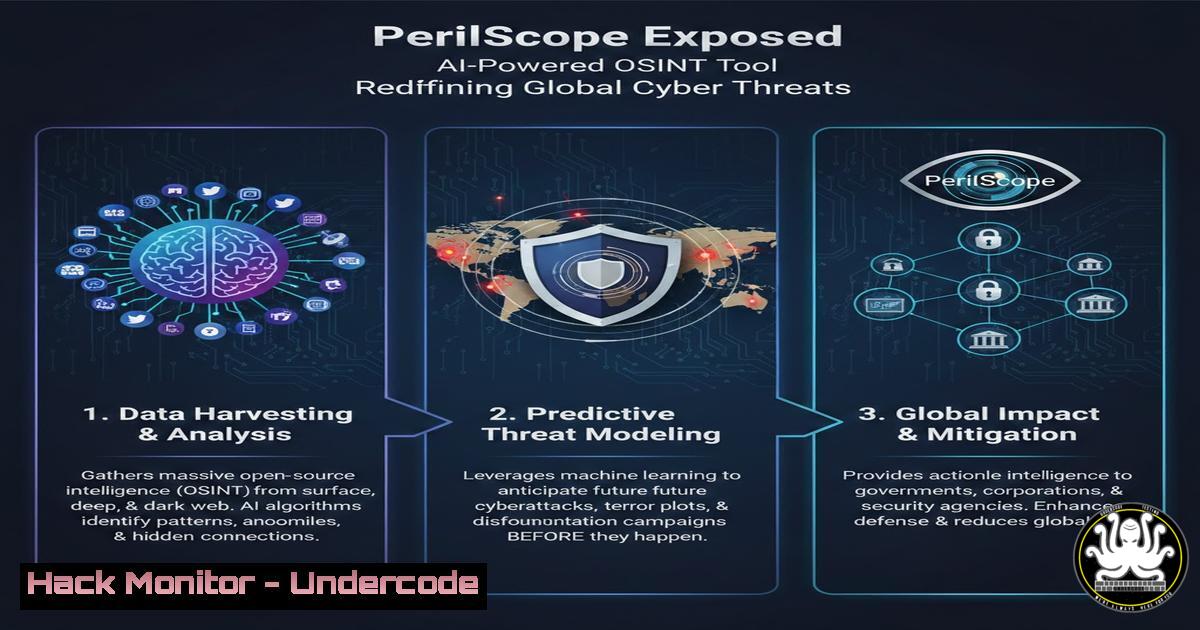
Introduction:
In an era where digital intelligence and cyber threat landscapes evolve by the minute, platforms like PerilScope® are emerging as pivotal tools for risk analysis and geopolitical cybersecurity forecasting. By aggregating open-source intelligence (OSINT) with artificial intelligence, such systems provide a “soul time” view of the world’s digital vulnerabilities. This article dissects the technical architecture behind modern threat intelligence platforms, offering cybersecurity professionals a guide to understanding, deploying, and defending against the methodologies used by tools like PerilScope.
Learning Objectives:
- Understand the core components of an AI-driven OSINT platform.
- Learn how to set up a local threat intelligence feed using open-source tools.
- Master command-line techniques for data aggregation and analysis.
- Identify vulnerabilities in API-driven intelligence sharing.
- Implement defensive measures against automated digital surveillance.
You Should Know:
- Deconstructing PerilScope®: The Architecture of a Modern Threat Intel Platform
PerilScope® represents a new breed of risk analysis engines that combine social media sentiment analysis, deep web monitoring, and AI pattern recognition. To understand how such a platform operates, we must first look at the underlying data flow.
Step‑by‑step guide to simulating a basic threat feed:
- Data Ingestion: Tools like `tweepy` (Python) or `curl` can pull public data.
Example: Using curl to fetch public RSS feeds for keywords
curl -s "https://news.google.com/rss/search?q=cybersecurity+breach&hl=en-US&gl=US&ceid=US:en" | grep -o '<title>.</title>' | head -5
- AI Analysis: Use Natural Language Processing (NLP) libraries to gauge sentiment.
Python snippet using TextBlob for sentiment from textblob import TextBlob text = "Critical vulnerability disclosed in major cloud provider." blob = TextBlob(text) print(f"Sentiment: {blob.sentiment}") - Visualization: Tools like `ELK Stack` (Elasticsearch, Logstash, Kibana) can visualize this data in a “Soul Time” dashboard.
2. OSINT Gathering: The “Soul Time” Data Harvest
The concept of “Soul Time” implies a deep, almost intuitive look into current events. Technically, this is achieved by aggressive real-time OSINT. Security experts must know how this data is gathered to protect their own digital footprints.
Step‑by‑step guide to OSINT reconnaissance (for defensive purposes):
- Harvesting Subdomains: Use `Sublist3r` or `Amass` to see what an attacker sees.
Install and run Amass against a test domain
amass enum -d example.com
- Metadata Extraction: Attackers pull data from public documents.
Using exiftool to extract metadata from a PDF found on a public site
exiftool -a -u downloaded_document.pdf
- Social Media Scraping: Tools like `Twint` (now deprecated but conceptual) can aggregate public posts without API keys, mimicking how platforms profile individuals.
-
AI Engineering: Training Models for Predictive Cyber Analysis
Tony Moukbel’s profile highlights “AI Engineering” as a core competency. For a platform like PerilScope®, AI models are trained to predict which vulnerabilities will be exploited next based on chatter.
Step‑by‑step guide to a basic threat prediction model concept:
1. Data Collection: Gather CVE (Common Vulnerabilities and Exposures) feeds.
 Download the latest CVE list
wget https://cve.circl.lu/api/last -O cve_feed.json
2. Feature Engineering: Use `jq` to parse JSON and count mentions of specific technologies (e.g., “Apache,” “Kubernetes”).
cat cve_feed.json | jq '.[].summary' | grep -i "apache" | wc -l
3. Prediction Logic: A simple script can flag trending terms as high-risk.
4. API Security: The Backbone of PerilScope® Integration
PerilScope® likely offers APIs for enterprise clients. Securing these endpoints is critical, as they are prime targets for data exfiltration.
Step‑by‑step guide to hardening an API used for threat intel:
1. Rate Limiting: Prevent scraping of your intelligence data.
 Nginx configuration for rate limiting
limit_req_zone $binary_remote_addr zone=mylimit:10m rate=10r/s;
server {
location /api/ {
limit_req zone=mylimit;
proxy_pass http://your_api_server;
}
}
2. Input Validation: Sanitize all queries to prevent injection.
 Flask example with input validation
from flask import request, jsonify
@app.route('/api/search')
def search():
query = request.args.get('q', '')
if not query.isalnum():  Basic sanitization
return jsonify({"error": "Invalid input"}), 400
5. Cloud Hardening: Protecting the Intelligence Infrastructure
Hosting a global risk platform requires robust cloud security. Misconfigurations in cloud storage buckets are a leading cause of data leaks for companies like these.
Step‑by‑step guide to securing cloud assets (AWS S3 example):
1. Audit Bucket Permissions:
 Use AWS CLI to check for public buckets
aws s3api get-bucket-acl --bucket your-company-reports-bucket
2. Block Public Access:
aws s3api put-public-access-block --bucket your-company-reports-bucket --public-access-block-configuration BlockPublicAcls=true,IgnorePublicAcls=true,BlockPublicPolicy=true,RestrictPublicBuckets=true
3. Enable Logging:
aws s3api put-bucket-logging --bucket your-company-reports-bucket --bucket-logging-status file://logging.json
- Vulnerability Exploitation: How Attackers Bypass “Soul Time” Monitoring
While PerilScope® monitors threats, it is also a high-value target. Attackers would use specific techniques to blind the platform or inject false data.
Step‑by‑step guide to understanding data poisoning (defensive):
- Identifying Injection Points: If the platform monitors public GitHub comments, an attacker can flood it with decoy data.
2. Command to Generate Decoy Logs:
 Simulate fake attack chatter (FOR EDUCATIONAL USE ONLY)
for i in {1..100}; do curl -X POST https://target-platform.com/api/feed -d "username=attacker&message=Exploiting CVE-2024-1234"; done
3. Mitigation: Implement anomaly detection using statistical models to filter out noise.
- Windows & Linux Forensics: Investigating a PerilScope® Data Breach
If a platform like this were compromised, forensic analysts would need to trace the attack.
Step‑by‑step guide to initial forensic triage:
1. Linux (Check for unauthorized processes):
 List all network connections
netstat -tulpn | grep LISTEN
 Check for modified system binaries
sudo debsums -c 2>/dev/null  On Debian/Ubuntu
2. Windows (PowerShell for event logs):
 Search for log clearing events (Indicator of Compromise)
Get-EventLog -LogName Security -InstanceId 1102 | Select-Object -First 5
 Check for scheduled tasks created by attackers
Get-ScheduledTask | Where-Object {$_.TaskPath -notlike "Microsoft"}
What Undercode Say:
- Key Takeaway 1: Platforms like PerilScope® demonstrate that cybersecurity is no longer just about defending firewalls, but about mastering OSINT and AI to predict the geopolitical landscape of digital threats.
- Key Takeaway 2: The techniques used by threat intelligence platforms are a double-edged sword; the same “Soul Time” monitoring used to protect enterprises can be weaponized by adversaries to profile and target individuals with surgical precision.
Analysis:
The intersection of AI, OSINT, and cybersecurity, as highlighted by profiles like Tony Moukbel’s and platforms like PerilScope®, marks a paradigm shift. We are moving from reactive security to predictive, intelligence-driven defense. However, this creates a new attack surface—the intelligence platform itself. Professionals must become proficient not only in using these tools but in hardening the underlying cloud infrastructure and APIs. The future of infosec lies in this duality: using AI to see the threat landscape in “Soul Time” while securing the very lenses we use to look through.
Prediction:
Within the next 18 months, we will see the emergence of “offensive AI” specifically designed to poison threat intelligence feeds. Attackers will no longer just exploit code; they will exploit the algorithms that analyze them, forcing security platforms to distrust their own “Soul Time” data and creating a crisis of confidence in automated cyber risk assessment.
🎯Let’s Practice For Free:
IT/Security Reporter URL:
Reported By: Ivan Savov – Hackers Feeds
Extra Hub: Undercode MoN
Basic Verification: Pass ✅


