Listen to this Post
Introduction:
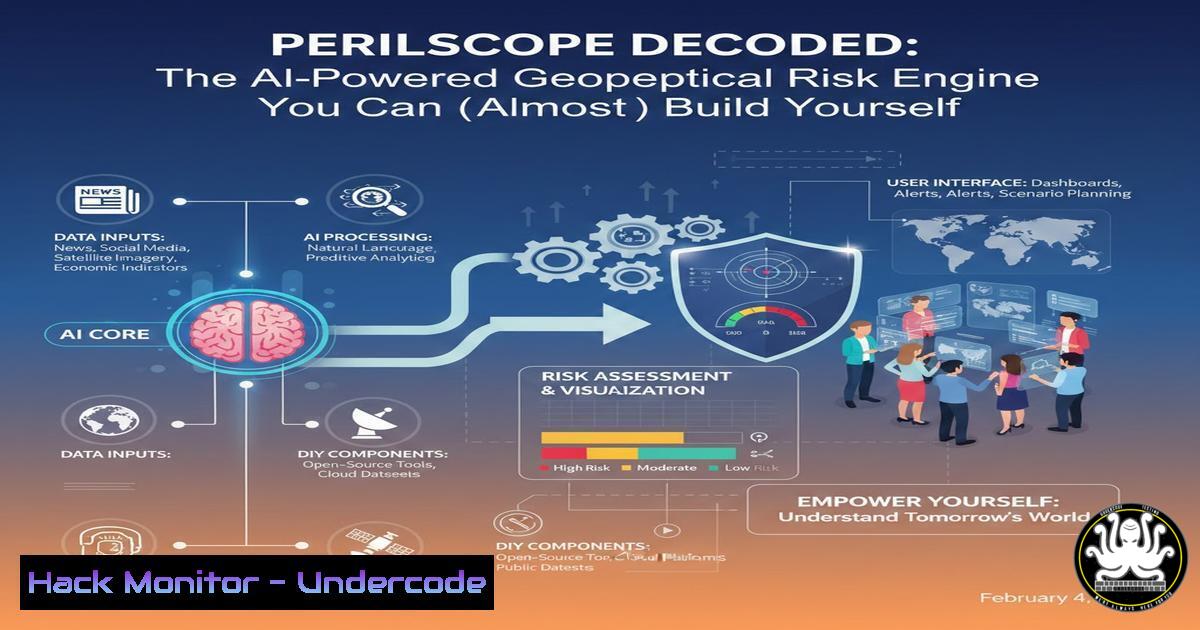
In an era defined by hybrid warfare and digital instability, traditional risk assessment frameworks are failing. The cryptic LinkedIn post by Ivan Savov featuring “PerilScope®” hints at a next-generation solution: an AI-driven platform analyzing the “Soul Time Continuum” of global events. For cybersecurity and IT professionals, this represents the convergence of threat intelligence, machine learning, and big data analytics—a system that processes open-source signals to predict geopolitical and cyber perils. This article deconstructs the implied architecture of such a tool and provides a technical blueprint for understanding, and potentially replicating, its core functionalities.
Learning Objectives:
- Understand the components of an AI-powered geopolitical risk analysis engine.
- Learn to set up a secure data ingestion pipeline from open-source intelligence (OSINT) feeds.
- Implement basic machine learning models for event classification and anomaly detection.
- Harden the associated API and data storage against common vulnerabilities.
- Automate alerting and visualization for real-time threat dashboards.
You Should Know:
1. Building the OSINT Data Ingestion Pipeline
The foundation of any system like PerilScope is automated data collection. This involves gathering structured and unstructured data from news APIs, social media scrapers (within legal bounds), government feeds, and cybersecurity bulletins.
Step-by-step guide:
- Choose Your Sources: Identify reliable, machine-readable feeds. Examples include RSS feeds from CISA, US-CERT, and Reuters APINews. For social sentiment, Twitter’s API (with strict compliance) or Reddit’s API can be used.
- Set Up a Secure Scraper (Linux Example): Use a tool like `Scrapy` within a controlled container. First, isolate the environment:
Create a dedicated Python virtual environment
python3 -m venv perilscope_scraper
source perilscope_scraper/bin/activate
pip install scrapy pandas requests
- Basic Scrapy Spider for News: Create a file `news_spider.py` to target a specific feed. This example avoids LinkedIn directly but targets a public news feed.
import scrapy class ThreatNewsSpider(scrapy.Spider): name = 'threatnews' start_urls = ['https://www.cisa.gov/uscert/ncas/alerts.xml'] def parse(self, response): for item in response.xpath('//item'): yield { 'title': item.xpath('title/text()').get(), 'link': item.xpath('link/text()').get(), 'pubDate': item.xpath('pubDate/text()').get(), 'description': item.xpath('description/text()').get() } - Schedule & Secure: Schedule the spider using `cron` and ensure all traffic is encrypted (TLS). Store collected data in an encrypted volume using `LUKS` or equivalent.
2. Processing Data with NLP for Threat Classification
Raw text data is useless without analysis. Natural Language Processing (NLP) models categorize articles, tweets, and reports into threat types (e.g., “Cyber Attack,” “Political Unrest,” “Economic Sanction”).
Step-by-step guide:
- Preprocess Text: Use `NLTK` or `spaCy` in Python to clean and tokenize your collected data.
import spacy nlp = spacy.load("en_core_web_sm") def preprocess_text(text): doc = nlp(text.lower()) Remove stop words and punctuation, lemmatize tokens = [token.lemma_ for token in doc if not token.is_stop and not token.is_punct] return " ".join(tokens) - Train a Classification Model: Start with a simple model using
scikit-learn. Label a sample dataset manually (e.g., 500 articles) with threat categories.from sklearn.feature_extraction.text import TfidfVectorizer from sklearn.svm import LinearSVC from sklearn.pipeline import Pipeline X_train is list of preprocessed texts, y_train is list of labels model = Pipeline([ ('tfidf', TfidfVectorizer()), ('clf', LinearSVC()), ]) model.fit(X_train, y_train) Save the model for later use in the API import joblib joblib.dump(model, 'threat_classifier.pkl')
3. Creating the Analysis API with Security Hardening
The classified data needs to be served through an API for dashboard consumption. This API is a critical attack surface and must be hardened.
Step-by-step guide:
- Build a FastAPI Endpoint: Create a simple, fast API with Python.
from fastapi import FastAPI, Security, HTTPException from fastapi.security import APIKeyHeader import joblib app = FastAPI() model = joblib.load('threat_classifier.pkl') API_KEY_NAME = "X-API-KEY" api_key_header = APIKeyHeader(name=API_KEY_NAME, auto_error=False) async def validate_api_key(api_key: str = Security(api_key_header)): if api_key != "YOUR_SECURE_COMPLEX_KEY": raise HTTPException(status_code=403, detail="Could not validate credentials") @app.post("/analyze", dependencies=[Security(validate_api_key)]) async def analyze(text: str): processed_text = preprocess_text(text) prediction = model.predict([bash])[bash] confidence = max(model.decision_function([bash])[bash]) return {"threat_category": prediction, "confidence": confidence} - Harden the API: Use Gunicorn with Nginx as a reverse proxy. Configure Nginx to use TLS 1.3 only, set rate limiting, and hide server headers.
Nginx snippet for /analyze endpoint
location /analyze {
limit_req zone=one burst=10 nodelay;
proxy_pass http://localhost:8000;
proxy_set_header Host $host;
proxy_hide_header X-Powered-By;
add_header X-Content-Type-Options "nosniff" always;
}
4. Cloud Storage & Logging Configuration
Processed data must be stored securely and all actions logged for audit and model retraining.
Step-by-step guide:
- Store in Encrypted S3 Bucket (AWS CLI Example): Configure an S3 bucket with default encryption (SSE-S3 or SSE-KMS) and object-level logging.
aws s3api create-bucket --bucket perilscope-data --region us-east-1 aws s3api put-bucket-encryption \ --bucket perilscope-data \ --server-side-encryption-configuration '{"Rules": [{"ApplyServerSideEncryptionByDefault": {"SSEAlgorithm": "AES256"}}]}' - Implement Structured Logging: Use a framework like `structlog` in Python. Send logs to a SIEM (Security Information and Event Manager) like Wazuh or a dedicated service.
import structlog
logger = structlog.get_logger()
def classify_article(text):
try:
result = model.predict([bash])
logger.info("article_classified", category=result, text_sample=text[:50])
except Exception as e:
logger.error("classification_failed", error=str(e))
5. Building a Real-Time Alert Dashboard
The end-user interface is a dashboard that visualizes threat levels and sends alerts based on confidence thresholds.
Step-by-step guide:
- Stream Data with WebSockets: Use `Socket.IO` or FastAPI’s WebSockets to push new, high-confidence threats to a connected frontend.
- Frontend Visualization (Basic Example): Use Chart.js or D3.js to create a live-updating map or graph. A critical alert can be triggered using the browser’s Notification API.
// Example of connecting to the alert stream
const eventSource = new EventSource('/api/alert-stream');
eventSource.onmessage = function(event) {
const data = JSON.parse(event.data);
if (data.confidence > 0.9) {
new Notification(<code>PerilScope Alert: ${data.threat_category}</code>, {
body: data.headline
});
}
updateDashboard(data);
};
What Undercode Say:
- Key Takeaway 1: Tools like the hypothesized PerilScope® are not magic; they are integrations of known technologies—OSINT, NLP, API design, and secure DevOps—wrapped in a proprietary analytical layer. The true value is in the curated data sources and the quality of the training data for the ML models.
- Key Takeaway 2: The largest vulnerability in such a system lies in its data ingestion pipeline. Poisoned or maliciously crafted source data can skew ML models, leading to false predictions (a data poisoning attack). Securing the pipeline requires strict data validation, source reputation scoring, and continuous model monitoring for drift.
Our analysis indicates that while the core concepts are replicable by skilled practitioners, the commercial advantage of platforms like PerilScope lies in their exclusive data partnerships, proprietary sentiment algorithms, and domain expertise in interpreting AI output within geopolitical contexts. The technical barrier is significant but not insurmountable; the greater challenge is maintaining a legally compliant, high-fidelity, and unbiased data stream.
Prediction:
The future of geopolitical risk analysis will be dominated by AI agents that not only report but also simulate outcomes and propose countermeasures. We predict a rise in “Autonomous Response Risk Engines” that will integrate directly with corporate security infrastructure—automatically adjusting firewall rules, triggering incident response playbooks, or halting financial transactions in specific regions based on predicted threat levels. This will create a new frontier in cybersecurity: defending the AI risk assessors themselves from adversarial attacks designed to blind or misguide corporate and governmental strategic decision-making.
▶️ Related Video (84% Match):
🎯Let’s Practice For Free:
IT/Security Reporter URL:
Reported By: Ivan Savov – Hackers Feeds
Extra Hub: Undercode MoN
Basic Verification: Pass ✅


