Listen to this Post
Introduction
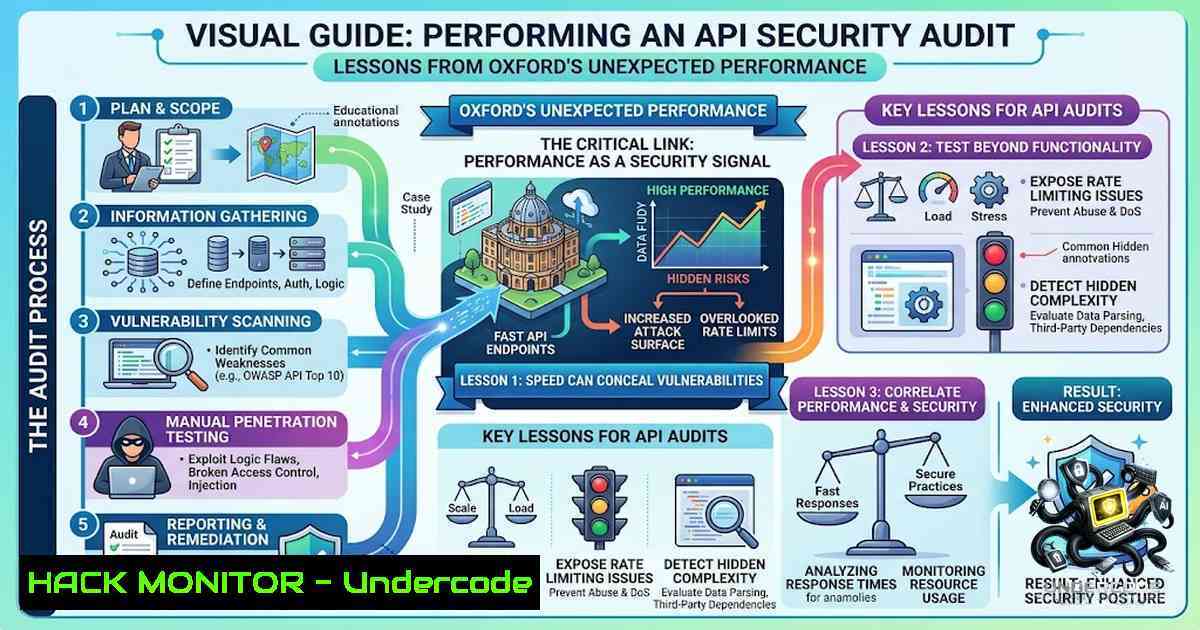
In a surprising turn of events, the University of Oxford recently witnessed an impromptu performance by Sir Mick Jagger, highlighting how unexpected moments can create lasting impact. Similarly, in the cybersecurity world, the most critical vulnerabilities often emerge from unexpected sources—misconfigured APIs, overlooked endpoints, and shadow IT implementations. This article explores the essential components of conducting a comprehensive API security audit, drawing parallels between the spontaneity of a musical performance and the need for systematic security testing in modern IT environments.
Learning Objectives
- Master API reconnaissance techniques using industry-standard tools and manual methodologies
- Implement comprehensive authentication and authorization testing protocols
- Deploy automated and manual vulnerability assessment strategies for REST and GraphQL APIs
You Should Know
- API Discovery and Reconnaissance: The Foundation of Security Assessment
The first step in any API security audit mirrors the unexpected nature of Oxford’s musical moment—you never know what you might discover. API discovery involves identifying all endpoints, both documented and undocumented, that could serve as entry points for malicious actors. This process requires a combination of automated scanning, manual inspection, and intelligent enumeration techniques.
Begin with passive reconnaissance using tools like Shodan and Censys to identify exposed API endpoints across your organization’s public IP ranges. For internal assessments, utilize network scanning tools to map service footprints. Active reconnaissance should employ tools like Burp Suite, OWASP ZAP, and Postman to systematically enumerate API routes and parameters.
On Linux systems, you can perform quick API discovery using:
 Use ffuf for directory and endpoint fuzzing
ffuf -u https://api.target.com/FUZZ -w /usr/share/wordlists/dirbuster/directory-list-2.3-medium.txt -fc 404

Enumerate API versions and endpoints with gobuster
gobuster dir -u https://api.target.com -w /usr/share/wordlists/api-common.txt -x json,xml -t 50

Use nmap to identify API services and ports
nmap -sV -p- --open target.com -oN api_service_scan.txt
On Windows systems, equivalent reconnaissance can be performed using:
 Use Invoke-WebRequest for endpoint testing
$endpoints = Get-Content .\api_endpoints.txt
foreach ($endpoint in $endpoints) {
try { Invoke-WebRequest -Uri "https://api.target.com/$endpoint" -Method GET -ErrorAction Stop }
catch { Write-Host "Endpoint $endpoint returned: $($_.Exception.Message)" }
}

Use PowerShell for subdomain enumeration
Resolve-DnsName target.com -Type A | Select-Object Name, IPAddress
2. Authentication and Authorization Testing: Verifying Access Controls
Just as Oxford’s performance required the right credentials to backstage areas, API authentication mechanisms must be rigorously tested to prevent unauthorized access. Modern APIs employ various authentication methods including OAuth2, JWT, API keys, and basic authentication—each presenting unique security challenges.
Begin by reviewing the API’s authentication flow, identifying token generation mechanisms, refresh token rotations, and session management practices. Test for common vulnerabilities such as predictable JWT secrets, weak session expiration policies, and improper token validation. Implement authorization testing to verify role-based access controls, ensuring that users cannot access resources beyond their privilege levels.
For JWT security testing:
 Use jwt_tool to analyze and test JWT tokens
jwt_tool.py <token> -t -v
jwt_tool.py <token> -X a -I -hs "weak_secret"  Attempt signature forging

Test JWT expiration and claims manipulation
jwt_tool.py <token> -T -I -c "exp" -v 1800  Modify expiration claim
For comprehensive authentication testing:
 Use hydra for brute-force testing on authentication endpoints
hydra -l admin -P /usr/share/wordlists/rockyou.txt api.target.com https-post-form "/login:username=^USER^&password=^PASS^:Invalid"

Test OAuth2 endpoints using oauth2_crack.py
python3 oauth2_crack.py -u https://api.target.com/oauth/token -c client_id:client_secret
Windows PowerShell scripts for authentication testing:
 Test API key validation
$headers = @{"X-API-Key" = "test_key_123"}
try { Invoke-RestMethod -Uri "https://api.target.com/protected" -Headers $headers -Method GET }
catch { Write-Host "Auth testing result: $($_.Exception.Message)" }

JWT token validation script
$token = "eyJhbGciOiJIUzI1NiIsInR5cCI6IkpXVCJ9..."
$parts = $token.Split('.')
$payload = [System.Text.Encoding]::UTF8.GetString([System.Convert]::FromBase64String($parts[bash]))
Write-Host "JWT Payload: $payload"
- Input Validation and Injection Testing: Defending Against Attacks
Malicious input remains one of the most common vectors for API exploitation, much like how unexpected musical guests can transform an ordinary event. SQL injection, NoSQL injection, command injection, and XML external entity (XXE) attacks target poorly validated API inputs. Comprehensive testing must examine all parameters, headers, and body content for injection vulnerabilities.
Implement automated fuzzing techniques using specialized tools to test input validation mechanisms. Manual testing should focus on edge cases, including unicode characters, extremely large payloads, and data type mismatches. Security teams must verify that APIs properly encode output, implement parameterized queries, and maintain strict input validation on both client and server sides.
Linux-based injection testing:
 SQL injection testing with sqlmap
sqlmap -u "https://api.target.com/user?id=1" --batch --level=3 --risk=2

NoSQL injection testing using nosqlmap
nosqlmap -u "https://api.target.com/search?q=test" --collection users

XML injection testing with xxe-tool
python3 xxe-tool.py -u "https://api.target.com/xml" -f /etc/passwd
Windows-based injection analysis:
 Basic SQL injection test using parameter manipulation
$payload = "1' OR '1'='1"
Invoke-RestMethod -Uri "https://api.target.com/user?id=$payload" -Method GET

Command injection test via parameter
$cmdPayload = "test; dir"
Invoke-RestMethod -Uri "https://api.target.com/execute?cmd=$cmdPayload" -Method GET
4. Rate Limiting and Denial of Service Protection
The spontaneous nature of Oxford’s performance could overwhelm a small venue, much like excessive API requests can overwhelm backend systems. Rate limiting testing examines how APIs handle high-volume requests, ensuring they maintain stability under normal and malicious load conditions. Testers must verify that APIs properly implement throttling, queuing mechanisms, and graceful degradation strategies.
Implement distributed testing methodologies to simulate realistic attack scenarios without impacting production systems. Analyze response times, error rates, and resource utilization under various load conditions. Verify that rate limiting applies to authenticated and unauthenticated endpoints, preventing resource exhaustion attacks and ensuring fair usage.
Linux-based rate limiting tests:
 Use siege for load testing
siege -c 100 -t 60 -d 1 https://api.target.com/endpoint

Use Apache Bench for concurrent request testing
ab -1 10000 -c 100 -k https://api.target.com/endpoint

Implement custom rate limiting test script
for i in {1..1000}; do curl -s -o /dev/null https://api.target.com/endpoint & done; wait
Windows-based load testing:
 Use PowerShell for concurrent API requests
$script = {
param($url)
1..100 | ForEach-Object { Invoke-WebRequest -Uri $url -Method GET -ErrorAction SilentlyContinue }
}
Start-Job -ScriptBlock $script -ArgumentList "https://api.target.com/endpoint"
Get-Job | Receive-Job
5. Security Headers and Configuration Review
Security misconfigurations often provide easy entry points for attackers, similar to how an unlocked door could lead to backstage access at Oxford’s performance. Comprehensive API audits must review server configurations, SSL/TLS settings, CORS policies, and security header implementations. Testers should verify proper implementation of security headers including Content-Security-Policy, Strict-Transport-Security, and X-Content-Type-Options.
Review API documentation for security implications, identifying exposed sensitive information, deprecated versions, and insecure default configurations. Verify that API gateways and proxies properly filter traffic and that logging mechanisms capture sufficient audit trails for security incident investigation.
Linux security header testing:
 Use curl to check security headers
curl -I https://api.target.com

Use testssl.sh for TLS configuration analysis
testssl.sh -e -s -p -U https://api.target.com

Automated header testing script
curl -s -D - https://api.target.com | grep -E "Strict-Transport-Security|Content-Security-Policy|X-Frame-Options"
Windows security configuration verification:
 Check security headers using Invoke-WebRequest
$response = Invoke-WebRequest -Uri "https://api.target.com" -Method GET
$response.Headers | Select-Object @{N="Header";E={$<em>.Key}}, @{N="Value";E={$</em>.Value}}

SSL/TLS configuration check
$cert = [System.Net.HttpWebRequest]::Create("https://api.target.com").ServicePoint.Certificate
Write-Host "Certificate valid until: $($cert.GetExpirationDateString())"
6. Cloud-Specific API Security Considerations
Modern API deployments in cloud environments introduce additional security considerations, much like how Oxford’s historical buildings require special consideration for modern events. Audit cloud-specific configurations including API gateway policies, serverless function permissions, and container orchestration security. Examine Kubernetes admission controllers, service meshes, and cloud provider IAM roles for potential misconfigurations.
Cloud API security testing:
 AWS API Gateway security scanning with awscli
aws apigateway get-rest-apis --region us-east-1
aws apigateway get-stage --rest-api-id <api_id> --stage-1ame <stage>

Kubernetes API security verification
kubectl auth can-i --list --1amespace production
kubectl get networkpolicies --all-1amespaces

Serverless framework security testing
sls config credentials -p aws -k <key> -s <secret>
sls deploy --stage production --verbose
7. API Monitoring and Incident Response
Just as Oxford’s musical moment was captured and shared, API monitoring captures security events for analysis and response. Implement comprehensive monitoring strategies including real-time anomaly detection, comprehensive logging, and automated alerting mechanisms. Configure dashboards that visualize API traffic patterns, error rates, and authentication failures to identify potential attacks quickly.
Linux-based monitoring setup:
 Use ngrep for real-time API traffic analysis
ngrep -q -d any -W byline "POST /api/v1"

Implement custom log monitoring script
tail -f /var/log/api_access.log | grep -E "401|403|500" | while read line; do echo "ALERT: $line"; done

Set up Prometheus metrics collection
echo "api_request_total{method='GET',status='200'} 1000" | curl --data-binary @- http://prometheus:9091/metrics/job/api_monitoring
Windows monitoring implementation:
 Real-time API monitoring script
Get-WinEvent -LogName "Application" -FilterXPath "[System[Provider='API Application']]" -MaxEvents 100

Log file monitoring with PowerShell
Get-Content -Path C:\Logs\api_audit.log -Wait | Select-String "Error|Unauthorized"
What Undercode Say:
- API security testing requires a blend of automated scanning and manual penetration testing techniques to identify both common and business logic vulnerabilities
- Organizations must implement comprehensive authentication and authorization controls, including OAuth2, JWT, and role-based access control, while continuously monitoring for unusual access patterns
- The unexpected nature of API vulnerabilities demands proactive security auditing and threat modeling throughout the development lifecycle, treating API security as an ongoing process rather than a one-time checkpoint
Prediction:
+1: Increased adoption of AI-powered API security testing tools will significantly reduce false positive rates and improve vulnerability detection accuracy
+1: Zero-trust architecture implementation for APIs will become standard practice, with micro-segmentation and continuous verification replacing perimeter-based security models
+1: The integration of GraphQL security testing into standard penetration testing methodologies will mature as adoption of GraphQL APIs increases
-1: The proliferation of microservices and distributed architectures will create unprecedented API sprawl, increasing the attack surface beyond organizations’ ability to manually audit effectively
-1: Threat actors will increasingly target API business logic vulnerabilities as automated scanning tools improve for traditional vulnerabilities
+1: Standardized API security testing frameworks, incorporating OWASP API Security Top 10 and NIST guidelines, will emerge as mandatory compliance requirements for regulated industries
+1: Real-time API security monitoring leveraging machine learning will become essential for detecting zero-day attacks and advanced persistent threats targeting API infrastructures
▶️ Related Video (88% Match):
🎯Let’s Practice For Free:
🎓 Live Courses & Certifications:
Join Undercode Academy for Verified Certifications
🚀 Request a Custom Project:
Secure, high-velocity infrastructure and disruptive technological engineering. Contact our engineering team for high-tier development and proprietary systems:
[email protected]
💎 Smart Architecture | 🛡️ Secure by Design | ⭐ Trusted by Thousands
IT/Security Reporter URL:
Reported By: Worldmusicday UgcPost – Hackers Feeds
Extra Hub: Undercode MoN
Basic Verification: Pass ✅


