Listen to this Post
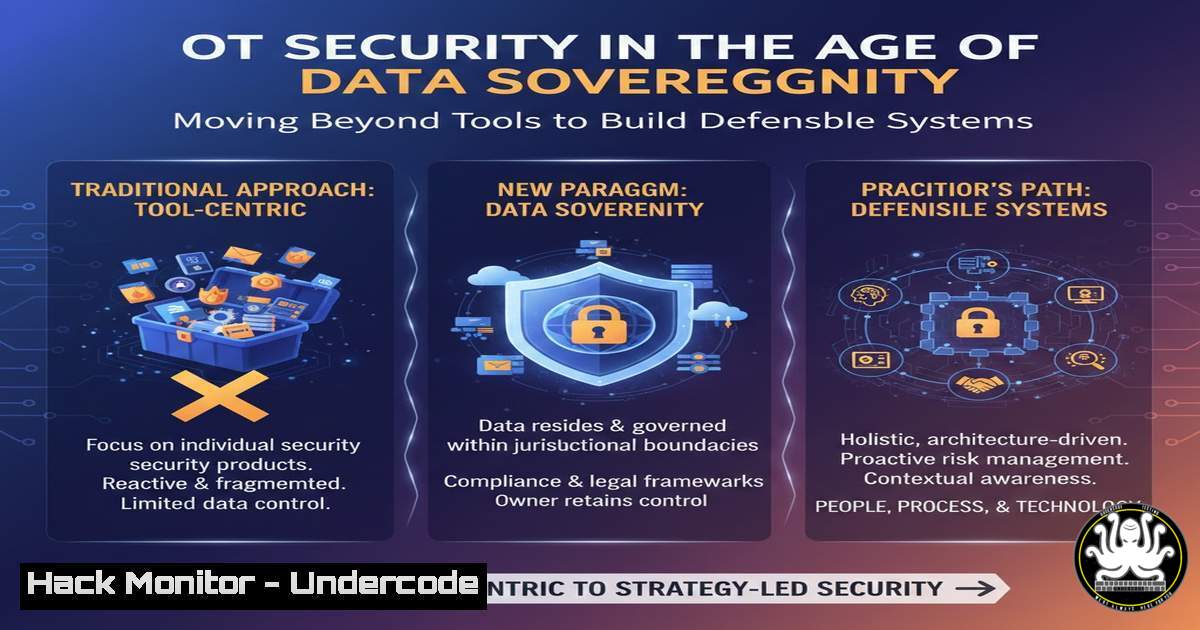
Introduction:
The convergence of Operational Technology (OT) and traditional IT networks has created a new frontier for cybersecurity, where data protection regulations like India’s DPDP Act add layers of governance complexity. As highlighted in recent practitioner forums, the critical challenge is no longer just deploying tools but architecting practical, defensible systems that integrate privacy, security, and compliance from the ground up. This article dissects the actionable strategies emerging from frontline security communities to harden OT/IT environments against modern threats while ensuring regulatory adherence.
Learning Objectives:
- Understand the core security controls required for OT/IT convergence in a regulated environment.
- Learn practical steps to implement “Privacy by Design” within critical infrastructure systems.
- Develop a roadmap for building a defensible security posture that satisfies both technical and compliance auditors.
You Should Know:
1. Architecting Network Segmentation for OT/IT Convergence
The foundational step in securing converged networks is enforcing strict segmentation to limit lateral movement from IT to critical OT assets. This involves creating firewall policies and access control lists that mirror operational workflows.
Step‑by‑step guide:
- Map Your Crown Jewels: Identify all OT assets (PLCs, SCADA systems, HMIs) and their communication pathways using tools like `nmap` or OT-specific network scanners.
Linux example: Discover devices on OT network segment
nmap -sT --scan-delay 1s -p 502,44818,102 192.168.1.0/24
- Deploy a Next-Gen Firewall: Install a firewall between the IT and OT zones. Configure explicit deny-all rules, then allow only specific, necessary traffic.
- Implement Micro-Segmentation: Within the OT zone, use VLANs or software-defined perimeters to segment further. For Windows-based engineering workstations, enforce host-based firewall rules:
Windows PowerShell: Block all inbound except from SCADA server
New-NetFirewallRule -DisplayName "OT-Allow-SCADA" -Direction Inbound -LocalPort 102 -Protocol TCP -RemoteAddress 10.0.1.5 -Action Allow
New-NetFirewallRule -DisplayName "OT-Block-All" -Direction Inbound -Action Block
2. Embedding Privacy by Design into Data Flows
With regulations like DPDP, data collection in OT (e.g., sensor data, operator logs) must adhere to purpose limitation and storage limitation principles. This requires technical controls at the data pipeline level.
Step‑by‑step guide:
- Data Inventory & Tagging: Catalog all data collected by OT systems. Use metadata tagging to classify data types (e.g.,
personal_data=true,retention_period=30days). - Implement Anonymization/Pseudonymization: For data used in analytics, deploy techniques like tokenization at the edge gateway. A simple Python script using the `cryptography` library can pseudonymize operator IDs before logging.
from cryptography.fernet import Fernet
key = Fernet.generate_key()
cipher_suite = Fernet(key)
operator_id = b"OPR12345"
tokenized_id = cipher_suite.encrypt(operator_id)  Store this token, not the plain ID
- Automated Retention & Deletion: Configure log managers or SIEM systems to automatically purge data exceeding its defined retention period using scheduled jobs or API calls.
3. Hardening API Security for OT Data Access
Modern OT systems expose APIs for data integration, creating a significant attack surface. These APIs must be secured beyond basic authentication.
Step‑by‑step guide:
- Enforce Strict Authentication & Authorization: Implement OAuth 2.0 with client credentials grant for machine-to-machine API access. Always use short-lived tokens.
- Apply Rate Limiting and Throttling: Protect API endpoints from Denial-of-Service (DoS) attacks. In an API Gateway like NGINX, configure:
nginx.conf snippet location /api/sensor_data { limit_req zone=ot_api burst=10 nodelay; proxy_pass http://scada_backend; } - Input Validation & Schema Enforcement: Reject any API payload that does not strictly conform to the expected schema. Use libraries like `jsonschema` for validation to prevent injection attacks.
4. Proactive Vulnerability Management in OT Environments
Patching OT systems is notoriously difficult due to availability requirements. A strategy of compensating controls and virtual patching is essential.
Step‑by‑step guide:
- Passive Vulnerability Assessment: Deploy network scanners that do not send active probes to identify vulnerabilities. Use tools like Tenable.ot or Claroty.
- Deploy Virtual Patches: Use Intrusion Prevention Systems (IPS) to block exploit attempts targeting known vulnerabilities in unpatched systems. Write custom SNORT rules:
Example SNORT rule to detect a known PLC exploit
alert tcp any any -> $OT_NET 102 (msg:"Potential S7Comm Plus Exploit"; flow:to_server; content:"|03 00 00 16 11 e0|"; depth:6; sid:1000001;)
- Compensating Control Audit: For each unpatched CVE, document the compensating control (e.g., network segmentation, IPS rule) and monitor its effectiveness.
5. Building a Defensible Compliance Posture
A defensible posture means you can demonstrate compliance through auditable technical evidence, not just policy documents.
Step‑by‑step guide:
- Centralized Logging & Integrity Protection: Aggregate all OT security logs (firewall, IPS, application) to a secured SIEM. Ensure log integrity using hashing or write-once storage.
Linux: Use auditd and forward logs via rsyslog with integrity seals
sudo auditctl -w /path/to/plc_config -p war -k ot_config_change
- Automated Evidence Collection: Use scripts to automatically gather configuration snapshots, firewall rule sets, and user access lists weekly. Store these in a tamper-evident repository.
- Continuous Compliance Monitoring: Implement tools that continuously check configurations against baselines (e.g., using CIS benchmarks for OT) and alert on drift.
What Undercode Say:
- The Tool is Just 20%: The most sophisticated security tool fails without the 80%—clear process, skilled practitioners, and an organizational culture of security. The community emphasis is on building the human and process framework first.
- Defensibility Over Checkboxes: In the event of a breach or audit, demonstrating a logical, implemented, and monitored security architecture carries more weight than a stack of compliant but unimplemented policies. Your network segmentation diagrams and IPS logs are your best defense.
Analysis: The shift in discourse from “which tool to buy” to “how to build a defensible system” marks a maturation of the OT security field. It reflects an understanding that regulatory pressure and advanced threats cannot be solved by point solutions. The practitioner community is correctly focusing on architectural integrity, where security and privacy controls are woven into the data lifecycle. This approach, while more demanding initially, reduces long-term risk and creates sustainable compliance. The collaboration between CISOs, OT engineers, and privacy specialists is the key enabler, breaking down silos that were once the biggest vulnerability.
Prediction:
In the next 2-3 years, we will see the rise of integrated “OT Security Posture Management” platforms that combine asset discovery, network segmentation validation, compliance mapping (DPDP, NIST, IEC 62443), and virtual patching into a single pane of glass. AI will be leveraged not for hype, but for predictive analysis of abnormal OT network behavior and automated generation of defensible audit trails. Furthermore, “Privacy-Enhancing Computation” (like federated learning) will begin to appear at the OT edge, allowing data utility for predictive maintenance without centralizing raw personal or operational data, thus addressing core privacy regulations by design.
▶️ Related Video (72% Match):
🎯Let’s Practice For Free:
IT/Security Reporter URL:
Reported By: Jasmineamin Gratitude – Hackers Feeds
Extra Hub: Undercode MoN
Basic Verification: Pass ✅


