Listen to this Post
Introduction:
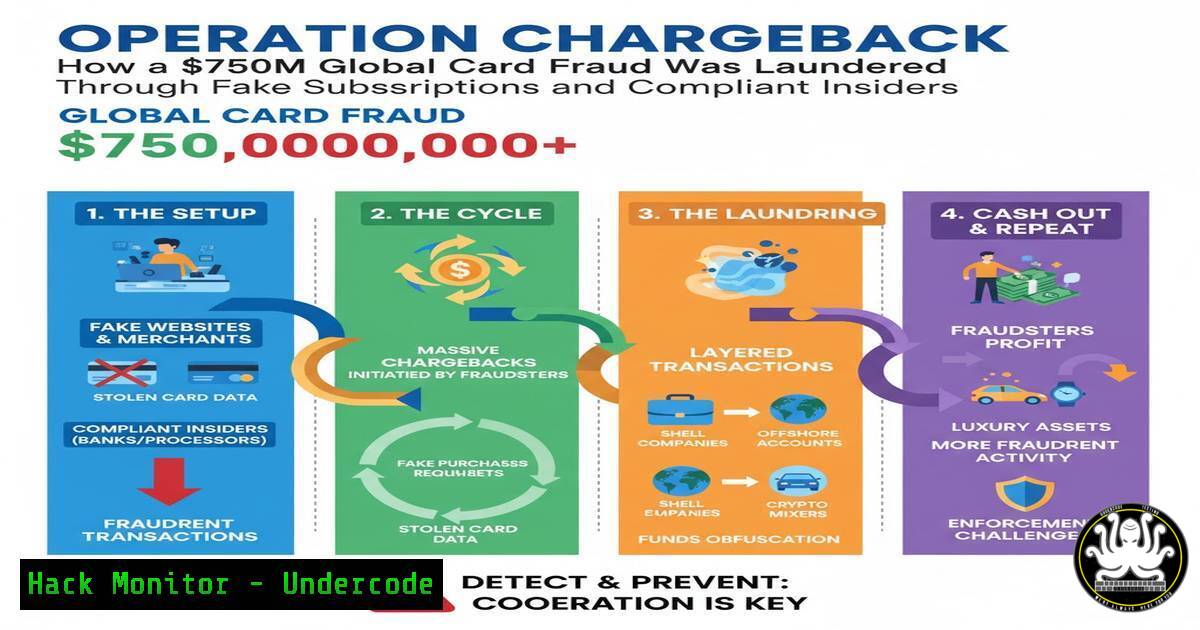
A sophisticated global card fraud network leveraged stolen payment data, shell companies, and insider complicity to orchestrate a massive subscription scam. The scheme, recently dismantled by Europol, exploited nearly 4.3 million compromised cards through deliberately obscure billing descriptors and search-engine-invisible websites. This case reveals critical vulnerabilities in digital payment ecosystems and the dangerous intersection of cybercrime and internal corruption.
Learning Objectives:
- Understand the technical mechanics of card-not-present (CNP) fraud and chargeback evasion.
- Learn to identify red flags of fraudulent merchant accounts and shell company structures.
- Implement technical controls to detect payment fraud and harden financial infrastructure.
You Should Know:
1. The Anatomy of a Fake Subscription Network
The criminal operation established numerous adult content, streaming, and dating websites that were intentionally hidden from search engines. These sites were only accessible via direct links, creating a “dark storefront” model that avoided public scrutiny while processing fraudulent transactions.
Step-by-step guide explaining what this does and how to use it:
– Technical Infrastructure: The criminals used standard e-commerce platforms but modified robots.txt files and meta tags to prevent indexing:
User-agent:
Disallow: /
Combined with “noindex” meta tags in HTML headers:
<meta name="robots" content="noindex, nofollow, noarchive">
– Payment Flow: Stolen card data was processed through seemingly legitimate payment processors who were complicit in the scheme. Each transaction used vague descriptors like “PMT SERVICES” or “DIGITAL SOLUTIONS” to avoid cardholder suspicion.
– Scale Management: Automated systems created approximately 19 million fake subscriptions between 2016-2021, charging consistent amounts around €50 monthly to avoid transaction monitoring thresholds.
2. Shell Companies and Crime-as-a-Service Infrastructure
The network utilized ready-made corporate structures registered in the UK and Cyprus, obtained through crime-as-a-service providers. These shell companies included fabricated directors, complete documentation, and banking facilities specifically designed to process fraudulent payments.
Step-by-step guide explaining what this does and how to use it:
– Corporate Obfuscation: Each shell company maintained apparent legitimacy through:
– Nominee directors with fabricated credentials
– Virtual office addresses in reputable business districts
– Professionally prepared incorporation documents
– Financial Layering: Funds were routed through multiple corporate entities across jurisdictions using techniques like:
 Example of tracking financial flows across entities
 Using blockchain analysis for crypto components
chainalysis --input transactions.csv --output mapped_entities --cluster-size 5
– Due Diligence Evasion: The operations maintained transaction volumes below regulatory reporting thresholds and rotated corporate entities every 6-12 months to avoid detection.
3. Insider Threat: The Compliance Complicity Angle
Six suspects, including company executives and compliance officers, deliberately provided payment infrastructure access to the criminal networks in exchange for financial compensation. This insider access allowed fraudulent transactions to blend with legitimate payment flows.
Step-by-step guide explaining what this does and how to use it:
– Access Manipulation: Insiders modified merchant account risk scoring parameters and disabled fraud detection rules:
 Example of malicious rule modification in payment systems
 Original fraud rule
if transaction_amount > 5000 and country_risk > 8:
flag_for_review()

Modified by insider
if transaction_amount > 100000 and country_risk > 9:
flag_for_review()  Effectively disables most checks
– Monitoring Evasion: Insiders configured alert systems to ignore specific BIN ranges or merchant category codes associated with the fraudulent activities.
– Detection: Organizations should implement dual-control systems and regular audit trails:
-- Query for detecting unusual permission changes
SELECT user_id, table_name, action_type, timestamp
FROM audit_logs
WHERE action_type IN ('UPDATE_RULE', 'MODIFY_THRESHOLD')
AND timestamp BETWEEN date_sub(now(), INTERVAL 30 DAY) AND now();
4. Technical Detection of Fraudulent Payment Patterns
Financial institutions and payment processors can identify similar schemes through abnormal transaction patterns and merchant behavior analytics.
Step-by-step guide explaining what this does and how to use it:
– Velocity Monitoring: Implement real-time checks for unusual subscription patterns:
def detect_subscription_fraud(transactions):
 Check for multiple same-amount charges
amount_counts = {}
for t in transactions:
if t.amount in amount_counts:
amount_counts[t.amount] += 1
else:
amount_counts[t.amount] = 1

Flag if 50+ same-amount transactions from different cards
suspicious_amounts = [amt for amt, count in amount_counts.items()
if count > 50 and amt in [49.99, 50, 50.99]]
return len(suspicious_amounts) > 0
– Descriptor Analysis: Use natural language processing to identify vague merchant descriptors:
 Analyze payment descriptors for obscurity
grep -E "SERVICES|SOLUTIONS|DIGITAL|ONLINE|GROUP" descriptors.txt |
awk '{print $1}' | sort | uniq -c | sort -nr
– Geographic Correlation: Flag transactions where cardholder locations significantly differ from merchant registration countries.
5. Hardening Payment Infrastructure Against Insider Threats
Organizations must implement technical and procedural controls to prevent compliance team manipulation and ensure transaction integrity.
Step-by-step guide explaining what this does and how to use it:
– Segregation of Duties: Implement role-based access control with mandatory approvals:
 Example RBAC configuration for payment systems
- role: compliance_analyst
permissions:
- read_transaction_data
- flag_suspicious_activity
restrictions:
- cannot_modify_rules
- cannot_whitelist_merchants

<ul>
<li>role: security_admin
permissions:</li>
<li>modify_fraud_rules</li>
<li>approve_merchant_accounts
requirements:</li>
<li>dual_approval_required: true</li>
<li>audit_trail_mandatory: true
// Example using blockchain for audit integrity
const auditBlock = {
timestamp: Date.now(),
user: user.id,
action: 'MODIFY_FRAUD_RULE',
previousState: oldRule,
newState: newRule,
hash: calculateHash(oldRule + newRule + timestamp)
};
blockchain.addBlock(auditBlock);
-- Query for detecting suspicious insider access patterns
SELECT employee_id, count() as after_hours_access
FROM access_logs
WHERE access_time BETWEEN '22:00:00' AND '06:00:00'
AND accessed_table IN ('fraud_rules', 'merchant_whitelist')
GROUP BY employee_id
HAVING count() > 5;
6. International Investigation Coordination Techniques
The successful takedown involved synchronized operations across eight countries, demonstrating effective cross-border cybercrime investigation methodology.
Step-by-step guide explaining what this does and how to use it:
– Evidence Standardization: Use INTERPOL’s standardized digital evidence forms and chain of custody procedures:
 Creating forensic images with international hash verification
dc3dd if=/dev/sdb hash=sha256 log=forensic_log.txt
of=evidence_image.raw ofs=evidence_image.raw.%
– Secure Communication Channels: Establish encrypted channels for international law enforcement collaboration:
 Using GPG for secure evidence sharing
gpg --encrypt --recipient [email protected]
--output encrypted_evidence.gpg raw_evidence.xml
– Data Correlation: Develop unified analysis platforms for connecting disparate investigation threads:
 Cross-jurisdictional data correlation framework
def correlate_evidence(germany_data, us_data, singapore_data):
common_entities = find_common_merchants(
germany_data['merchants'],
us_data['merchants'],
singapore_data['merchants']
)
return build_consolidated_timeline(common_entities)
7. Preventive Measures for Financial Institutions
Banks and payment processors must enhance their fraud detection capabilities and corporate customer due diligence processes.
Step-by-step guide explaining what this does and how to use it:
– Enhanced Due Diligence: Implement automated verification of corporate structure legitimacy:
def verify_corporate_structure(company_data):
 Check for shell company red flags
red_flags = []

if company_data['directors_count'] < 2:
red_flags.append('MINIMAL_DIRECTOR_STRUCTURE')

if company_data['address_type'] == 'VIRTUAL_OFFICE':
red_flags.append('VIRTUAL_LOCATION')

if company_data['incorporation_age'] < 180:
red_flags.append('RECENTLY_INCORPORATED')

return len(red_flags) < 3  Fail verification if 3+ red flags
– Machine Learning Detection: Deploy AI models to identify sophisticated fraud patterns:
from sklearn.ensemble import IsolationForest
import pandas as pd

def detect_anomalous_merchants(transaction_data):
features = ['txn_volume', 'chargeback_ratio',
'avg_transaction_amount', 'international_ratio']

clf = IsolationForest(contamination=0.01)
predictions = clf.fit_predict(transaction_data[bash])

return transaction_data[predictions == -1]  Return anomalies
– Real-time Blocking: Implement immediate transaction blocking for identified fraud patterns:
-- Database trigger for real-time fraud prevention
CREATE TRIGGER block_suspicious_merchants
BEFORE INSERT ON transactions
FOR EACH ROW
BEGIN
IF NEW.merchant_id IN (
SELECT merchant_id FROM blacklisted_merchants
WHERE blacklist_date > DATE_SUB(NOW(), INTERVAL 30 DAY)
) THEN
SIGNAL SQLSTATE '45000' SET MESSAGE_TEXT = 'Merchant blacklisted';
END IF;
END;
What Undercode Say:
- The scale of insider involvement highlights critical vulnerabilities in payment processor compliance departments that cannot be solved by technical controls alone.
- The criminal innovation of “dark storefronts” specifically engineered to avoid search engine detection represents a sophisticated evolution of digital fraud tactics.
- International cooperation remains the most effective weapon against globally distributed cybercrime networks, but procedural and technical standardization across jurisdictions is still lacking.
The Operation Chargeback case demonstrates that modern cybercrime has fully industrialized, with complete crime-as-a-service ecosystems providing everything from stolen data to corporate infrastructure. What makes this case particularly concerning is the successful co-opting of compliance professionals within legitimate payment companies. This suggests that traditional trust models in financial services require fundamental rethinking. The criminals’ technical sophistication in creating search-engine-invisible storefronts combined with their understanding of payment system vulnerabilities shows a deep knowledge of both technical and procedural weaknesses. Future defenses must assume insider threat scenarios while implementing immutable audit trails and behavioral monitoring of both systems and personnel.
Prediction:
The successful dismantling of this network will temporarily disrupt high-volume card fraud operations, but we predict rapid adaptation within 6-9 months. Criminal groups will likely shift toward decentralized payment methods including cryptocurrency and embedded finance platforms. The insider threat component will escalate as criminals increasingly target mid-level compliance staff at financial technology companies. We anticipate emergence of AI-powered fraud systems that can dynamically generate convincing corporate documentation and mimic legitimate business patterns, making detection increasingly challenging. Financial institutions must invest in behavioral analytics and cross-institutional data sharing to counter these evolving threats.
🎯Let’s Practice For Free:
IT/Security Reporter URL:
Reported By: Cyber It – Hackers Feeds
Extra Hub: Undercode MoN
Basic Verification: Pass ✅


