Listen to this Post
Introduction:
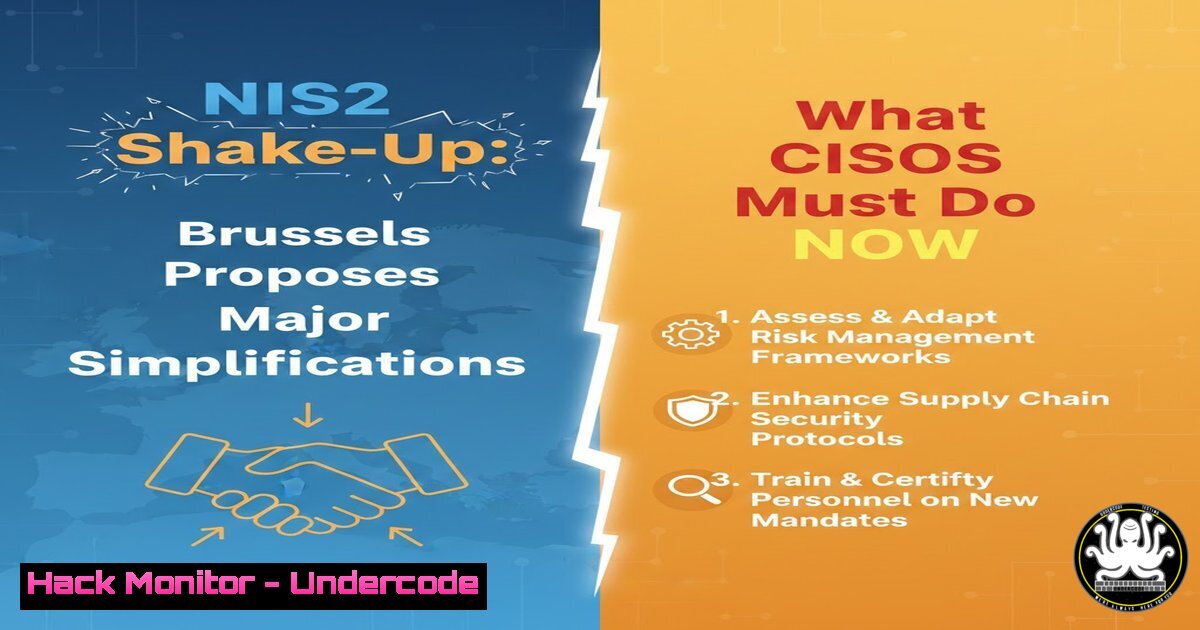
The European Commission has published a formal proposal to modify and simplify the NIS2 Directive, a cornerstone of EU-wide cybersecurity legislation. This move signals a significant shift in the regulatory landscape, aiming to reduce administrative burdens while maintaining robust security postures for essential and important entities. For cybersecurity professionals and legal advisors, understanding these impending changes is critical for strategic planning and compliance.
Learning Objectives:
- Decode the key proposed modifications to the NIS2 Directive and their practical implications.
- Implement technical and administrative controls to align with the expected “simplified” compliance requirements.
- Develop a proactive strategy for adapting organizational policies, incident response, and supply chain security ahead of the final adoption.
You Should Know:
- Asset Management & Vulnerability Reduction in a Simplified Regime
The core of NIS2 remains protecting critical assets. Simplification likely means smarter, more focused asset management rather than less security. Begin by inventorying all network assets, prioritizing those supporting essential services.
Step‑by‑step guide explaining what this does and how to use it.
Step 1: Discover Network Assets. Use automated tools to build a live inventory. On Linux, `nmap` is indispensable for network discovery.
sudo nmap -sP 192.168.1.0/24  Ping scan to find live hosts
sudo nmap -sV -O 192.168.1.10  Service and OS detection on a specific host
Step 2: Categorize and Prioritize. Classify assets based on the service they provide (e.g., “customer database,” “industrial control system”). Tag them with a criticality level (High, Medium, Low) in your asset management system.
Step 3: Automated Vulnerability Scanning. Integrate regular scanning for prioritized assets. Use OpenVAS or a commercial scanner to run credentialed scans for deeper analysis.
 Example using gvm-cli (OpenVAS/GVM)
gvm-cli --gmp-username admin --gmp-password password socket --socketpath /run/gvmd/gvmd.sock --xml "<get_tasks/>"
Step 4: Patch Management Enforcement. Configure centralized patch management. On Windows domains, use Group Policy to enforce update schedules. On Linux, use cron jobs with `apt` or yum.
 Example cron job for nightly security updates (Ubuntu)
0 2    /usr/bin/apt-get update && /usr/bin/apt-get upgrade --yes --only-upgrade
2. Incident Reporting: Streamlining the Process
Proposed simplifications may affect reporting timelines and content. Prepare your technical stack for efficient data collection to meet any reporting requirement.
Step‑by‑step guide explaining what this does and how to use it.
Step 1: Centralized Logging. Aggregate logs from all critical systems (firewalls, servers, endpoints) to a SIEM (Security Information and Event Management) system. For a cost-effective start, deploy the ELK Stack (Elasticsearch, Logstash, Kibana).
Step 2: Define Alerting Triggers. Within your SIEM, create correlation rules to detect potential incidents. For example, multiple failed logins from a foreign country followed by a successful login and lateral movement.
Step 3: Create an Incident Evidence Toolkit. Have ready commands to capture forensic data from a potentially compromised host.
Linux: `ss -tulpn` (list open ports), `ps auxf` (process tree), `last` (login history), `sudo grep ‘Failed password’ /var/log/auth.log` (failed SSH attempts).
Windows (PowerShell): `Get-NetTCPConnection | where State -eq Listen` (listening ports), `Get-Process` (running processes), `Get-WinEvent -FilterHashtable @{LogName=’Security’; ID=4625} -MaxEvents 10` (failed logins).
Step 4: Draft Reporting Templates. Pre-populate report templates with fields expected under NIS2 (e.g., incident start time, affected systems, impact assessment, mitigation actions). Integrate these with your ticketing or incident management system.
3. Supply Chain Security & Third-Party Risk
NIS2 emphasizes supply chain security. Simplification won’t remove this requirement. You must assess the cybersecurity practices of your key suppliers.
Step‑by‑step guide explaining what this does and how to use it.
Step 1: Identify Critical Suppliers. Map your digital supply chain, focusing on providers with network access or those handling sensitive data.
Step 2: Develop a Security Questionnaire. Create a technical questionnaire based on standards like ISO 27001 or the NIS2 requirements themselves. Ask about their incident response plan, encryption standards, and audit practices.
Step 3: Contractual Safeguards. Ensure contracts with suppliers include clauses mandating compliance with NIS2 (or equivalent), immediate breach notification, and right-to-audit clauses.
Step 4: Continuous Monitoring. For critical SaaS providers, use external monitoring tools to check their status pages and SSL/TLS configurations.
 Check SSL/TLS configuration of a supplier's portal
openssl s_client -connect supplier.com:443 -servername supplier.com | openssl x509 -noout -text | grep -A 2 "Validity"
4. Access Control & Multi-Factor Authentication (MFA) Hardening
Strengthening access controls is a universal baseline. Enforce MFA, especially for remote access and privileged administrative accounts.
Step‑by‑step guide explaining what this does and how to use it.
Step 1: Enforce MFA for All Cloud & Remote Access. Configure conditional access policies in Azure AD or similar IAM solutions to require MFA for any access outside the corporate network.
Step 2: Harden Privileged Access Workstations (PAWs). Dedicate hardened machines for administrative tasks. Apply strict GPOs: block internet browsing, email, and allow connections only to specific management VLANs.
Step 3: Implement Just-In-Time (JIT) Administration. Use PAM (Privileged Access Management) tools to elevate privileges only when needed and for a limited time, rather than granting standing admin rights.
Step 4: Regular Access Reviews. Automate user access reviews. Use PowerShell to audit AD group memberships weekly.
 PowerShell: Get members of "Domain Admins" group
Get-ADGroupMember -Identity "Domain Admins" | Select-Object name, SamAccountName
5. Encryption & Data Protection Strategy
Data confidentiality and integrity are paramount. Ensure encryption is applied both at rest and in transit.
Step‑by‑step guide explaining what this does and how to use it.
Step 1: Encrypt Sensitive Data at Rest. Use BitLocker for Windows full-disk encryption (manage via `manage-bde` command) or LUKS for Linux. For databases, enable TDE (Transparent Data Encryption).
Step 2: Enforce TLS 1.3 for Data in Transit. Disable older, insecure protocols (SSLv3, TLS 1.0, 1.1) on web servers, email servers, and VPN endpoints.
Apache Example: In ssl.conf, set `SSLProtocol all -SSLv3 -TLSv1 -TLSv1.1`
Step 3: Implement Certificate Management. Use a PKI or trusted certificate authority. Monitor certificates for expiration to avoid service outages.
 Check SSL certificate expiry
echo | openssl s_client -servername yourdomain.com -connect yourdomain.com:443 2>/dev/null | openssl x509 -noout -dates
What Undercode Say:
- Regulatory Agility is the New Compliance. The proposal proves that cyber regulations are not static. CISOs must build processes that are both robust and adaptable to change, focusing on security outcomes over checkbox auditing.
- Simplification Demands Technical Clarity. Reducing administrative burden often means regulators will expect more demonstrable, effective technical controls. Your ability to provide clear evidence from logs, configurations, and tool outputs will be your strongest defense.
Analysis: Brussels’ push for simplification is a direct response to industry feedback about the complexity of overlapping regulations like NIS2, DORA, and the AI Act. This is not a relaxation of security expectations but an attempt to make compliance more efficient and outcome-focused. Organizations that have treated NIS2 as a mere paperwork exercise will struggle, as the “simplified” version will likely sharpen focus on verifiable technical and organizational measures. The interim period before final adoption is a golden opportunity to mature cybersecurity programs, focusing on automated asset management, tested incident response, and hardened supply chain contracts. The future of EU cyber regulation points towards greater harmonization and potentially stricter enforcement of a simpler set of core rules.
Prediction:
The finalized NIS2 modifications will accelerate the convergence of cybersecurity and legal functions within organizations, giving rise to the “Technical RSSI” (Chief Information Security Officer) as a standard role. We will see increased adoption of Regulatory Technology (RegTech) platforms that use AI to continuously map technical controls to evolving legal articles, automate evidence collection, and simulate audit scenarios. Failure to integrate these capabilities will leave organizations perpetually in reactive mode, facing not only regulatory fines but also increased cyber insurance premiums and loss of competitive trust.
▶️ Related Video (84% Match):
🎯Let’s Practice For Free:
IT/Security Reporter URL:
Reported By: Marc Antoine – Hackers Feeds
Extra Hub: Undercode MoN
Basic Verification: Pass ✅


