Listen to this Post
Introduction:
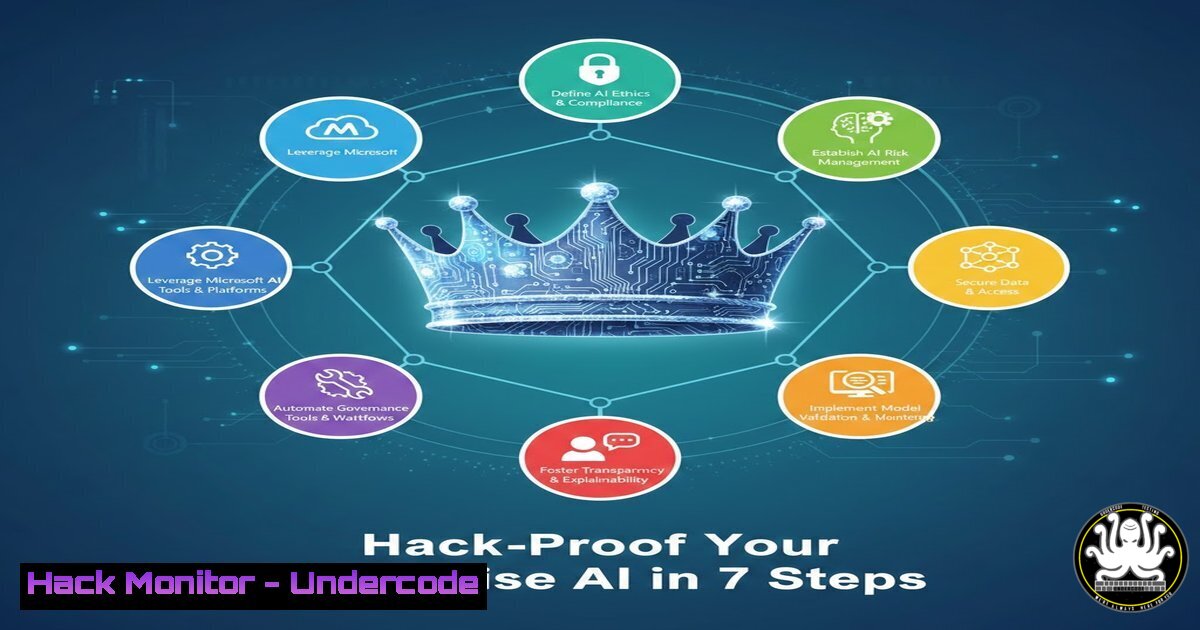
As AI adoption accelerates across enterprises, robust governance frameworks have become the linchpin for securing models, data, and agents against emerging threats. Microsoft’s recognition as a Leader in the IDC MarketScape for Unified AI Governance underscores the critical integration of security, compliance, and centralized control in AI systems, highlighting how tools like Microsoft Purview and Agent 365 are reshaping cybersecurity postures. This article delves into the technical imperatives for implementing enterprise-grade AI governance, with practical steps to fortify your AI infrastructure against vulnerabilities and ensure responsible AI deployment.
Learning Objectives:
- Understand the core components of AI governance, including model security, data protection, and compliance frameworks.
- Learn to configure and utilize Microsoft’s AI governance tools, such as Purview and Foundry, for enhanced security.
- Implement step-by-step hardening techniques for AI systems across cloud and on-premises environments.
You Should Know:
1. Deconstructing AI Governance: Frameworks and Security Implications
AI governance encompasses end-to-end oversight of AI models, agents, and data, ensuring they operate securely, ethically, and in compliance with regulations like GDPR or HIPAA. From a cybersecurity perspective, governance mitigates risks such as data poisoning, model theft, or adversarial attacks by embedding security controls into the AI lifecycle.
Step-by-Step Guide:
- Start by assessing your AI inventory: catalog all models, data sources, and agents using a tool like Microsoft Purview’s data map. On Linux, use command-line tools to scan datasets:
Example: Scan a directory for sensitive data in AI training sets find /path/to/ai/data -type f -exec grep -l "credit_card|ssn" {} \; - Define governance policies: Establish access controls and encryption standards. In Windows, use PowerShell to audit permissions:
Audit file permissions for AI data directories
Get-Acl -Path "C:\AI\Models" | Format-List
- Integrate with compliance frameworks: Leverage Purview’s compliance manager to map controls to regulations, automating alerts for deviations.
- Configuring Microsoft Purview for AI Data Security Posture Management (DSPM)
Microsoft Purview provides unified data governance, crucial for securing AI training data and preventing leaks. Its DSPM capabilities scan data stores for sensitivity, classify information, and enforce policies.
Step-by-Step Guide:
- Set up Purview in Azure: Create a Purview account via Azure Portal or CLI:
az purview account create --name "YourPurviewAccount" --resource-group "YourRG" --location eastus
- Scan data sources: Connect Azure Blob Storage, SQL databases, or on-premises servers. Use Purview’s REST API to automate scans:
Python snippet to trigger a scan import requests url = "https://management.azure.com/subscriptions/{subId}/resourceGroups/{rg}/providers/Microsoft.Purview/accounts/{account}/scans/{scan}?api-version=2021-12-01" headers = {"Authorization": "Bearer YOUR_TOKEN"} response = requests.put(url, headers=headers, json={"properties": {"scanLevel": "Full"}}) - Review findings: Access Purview Studio to classify data (e.g., as “AI Training Data”) and set encryption rules. Implement just-in-time access using Azure AD conditional access.
- Implementing Responsible AI with Built-in Compliance and Threat Monitoring
Responsible AI involves fairness, accountability, and transparency, but from a security lens, it also requires monitoring for anomalous model behavior or bias exploitation. Microsoft’s built-in tools offer dashboards and alerts.
Step-by-Step Guide:
- Enable Azure Machine Learning’s responsible AI dashboard: After training a model, generate explanations and fairness assessments using Python:
from raiwidgets import ResponsibleAIDashboard
from responsibleai import RAIInsights
Load model and data
rai = RAIInsights(model, train_data, test_data, target_column='label')
rai.compute()
ResponsibleAIDashboard(rai)
- Set up log analytics: Stream AI model logs to Azure Log Analytics for real-time threat detection. Use KQL queries to spot intrusions:
// Kusto query to detect unusual model access
AzureDiagnostics
| where Category == "AIModelAudit"
| where OperationName == "ModelQuery"
| summarize Count = count() by bin(TimeGenerated, 5m), ClientIP
| where Count > 100 // Threshold for alerting
- Automate compliance checks: Use Azure Policy to enforce resource tagging and audit AI resources for compliance standards.
- Securing AI Models and Agents in Cloud Environments
AI models deployed in cloud services like Azure AI are vulnerable to endpoint attacks, requiring hardening of APIs and containers. Implement zero-trust principles for agents and microservices.
Step-by-Step Guide:
- Harden API endpoints: For AI models served via REST APIs, use Azure API Management with rate limiting and OAuth2. Configure via ARM template:
{ "properties": { "authenticationSettings": { "oAuth2": { "authorizationServerId": "your-auth-server" } }, "rateLimit": "100-calls-per-second" } } - Secure containers: If using Docker for AI agents, scan images for vulnerabilities with Trivy on Linux:
trivy image your-ai-agent-image:latest
- Implement network security: Use NSGs in Azure to restrict traffic to AI endpoints. Example command to add a rule:
az network nsg rule create --nsg-name "AI-NSG" --name "Allow-HTTPS" --priority 100 --access Allow --protocol Tcp --direction Inbound --source-address-prefixes Internet --destination-port-ranges 443
- Centralized Control with Microsoft Foundry and Agent 365 for Threat Response
Foundry and Agent 365 provide centralized governance for AI workflows, enabling swift incident response and policy enforcement across the Microsoft ecosystem.
Step-by-Step Guide:
- Onboard to Microsoft 365 Defender: Integrate AI agents with Defender for Endpoint to monitor suspicious activities. Use PowerShell to configure integration:
Connect to Defender API
Connect-MsolService
Set-MsolCompanySettings -SecurityComplianceCenterNotificationsEnabled $true
- Automate responses: Create playbooks in Azure Sentinel for AI-related alerts. For example, if a model is accessed anomalously, trigger a workflow to isolate the agent. Use Logic Apps or PowerShell runbooks.
- Audit controls: Regularly review Foundry’s policy assignments using Azure CLI:
az policy assignment list --query "[?contains(displayName, 'AI')]" --output table
- Vulnerability Exploitation and Mitigation in AI Systems: Red Teaming Techniques
AI systems face unique vulnerabilities, such as prompt injection in LLMs or training data manipulation. Proactive red teaming identifies weaknesses before attackers do.
Step-by-step Guide:
- Conduct adversarial testing: Use tools like MITRE ATLAS framework to simulate attacks on AI models. On Linux, install and run example exploits:
git clone https://github.com/mitre/atlas
cd atlas
python -m pytest tests/ --model-path your_model.pkl
- Patch vulnerabilities: For data poisoning, implement data lineage tracking in Purview. Use SQL commands to monitor data changes:
-- SQL query to audit AI training data updates
SELECT  FROM sys.dm_db_objects_modified WHERE object_name LIKE '%training_data%';
- Harden endpoints: Apply Web Application Firewall (WAF) rules in Azure Front Door to block malicious prompts. Example rule to filter SQL injection in AI queries:
{
"customRules": [{
"name": "BlockAIAttacks",
"priority": 1,
"ruleType": "MatchRule",
"action": "Block",
"matchConditions": [{
"matchVariables": [{"variableName": "QueryString"}],
"operator": "Contains",
"negateCondition": false,
"matchValues": ["' OR '1'='1"]
}]
}]
}
- Best Practices for Enterprise AI Governance: Continuous Monitoring and Training
Sustaining AI security requires ongoing monitoring, staff training, and integration with IT workflows. Leverage Microsoft Learn and hands-on labs for skill development.
Step-by-Step Guide:
- Enroll in training courses: Access Microsoft’s AI security modules at https://learn.microsoft.com/en-us/security/ai. Use PowerShell to automate course tracking:
Script to log training completion $course = "AI-Security-Fundamentals" Invoke-RestMethod -Uri "https://api.learn.microsoft.com/users/me/completions" -Method Post -Body @{courseId=$course} - Implement SIEM integration: Feed AI audit logs into Splunk or Azure Sentinel for correlation. Use Linux syslog to forward logs:
Configure rsyslog to send AI logs to SIEM
echo ".info @your-siem-server:514" >> /etc/rsyslog.conf
systemctl restart rsyslog
- Schedule regular drills: Conduct tabletop exercises for AI incidents, using scenarios from the IDC report referenced in the post (https://lnkd.in/djb5qafY).
What Undercode Say:
- Key Takeaway 1: AI governance is no longer optional but a cybersecurity imperative, with Microsoft’s tools offering integrated defense-in-depth for models, data, and agents.
- Key Takeaway 2: Practical implementation requires combining configuration expertise (e.g., via Purview and CLI commands) with proactive red teaming to mitigate unique AI vulnerabilities.
Analysis: The IDC recognition highlights a shift toward unified platforms that consolidate security and compliance, reducing the attack surface in AI deployments. However, enterprises must move beyond vendor tools to cultivate in-house skills for hardening AI systems, as adversaries increasingly target machine learning pipelines. The integration of DSPM, responsible AI dashboards, and centralized control points like Foundry demonstrates a mature approach, but ongoing vigilance through monitoring and training is essential to stay ahead of evolving threats.
Prediction:
In the next 2-3 years, AI governance frameworks will become primary targets for sophisticated cyberattacks, with hackers exploiting gaps in model management and data lineage to manipulate outcomes or steal intellectual property. Enterprises that adopt unified governance early, as Microsoft advocates, will gain a competitive edge by preventing breaches and ensuring regulatory adherence, while laggards face heightened risks of AI-driven security incidents and compliance penalties. The convergence of AI and cybersecurity will spur new roles, such as AI Security Architects, and drive demand for specialized training courses focused on ethical hacking and governance automation.
▶️ Related Video (86% Match):
🎯Let’s Practice For Free:
IT/Security Reporter URL:
Reported By: Arpadb Microsoftsecurity – Hackers Feeds
Extra Hub: Undercode MoN
Basic Verification: Pass ✅


