Listen to this Post
Introduction:
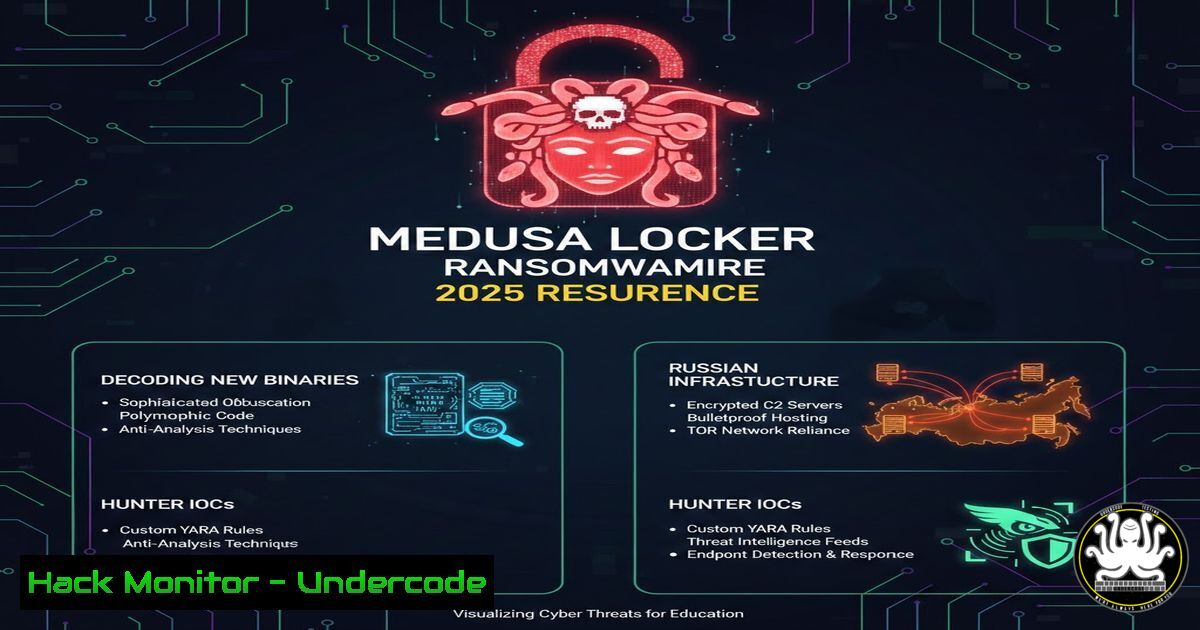
The Medusa Locker ransomware has dramatically resurfaced in 2025 with a new wave of attacks, marked by 31 fresh binaries and bizarre file extensions. This resurgence highlights significant operational changes, including a shift to Russian-hosted infrastructure and exposed backend systems, posing a renewed threat to global enterprises that requires updated defensive intelligence and hunting strategies.
Learning Objectives:
- Understand the technical evolution and new tactics of the 2025 Medusa Locker variant, including its novel file extensions and infrastructure.
- Learn how to analyze the ransomware’s infrastructure, including its persistent Russian-hosted servers and new TOR payment sites.
- Acquire practical skills to hunt for, mitigate, and investigate infections using the provided Indicators of Compromise (IOCs) and system commands.
You Should Know:
- Analyzing the New Binary Variants and Encryption Patterns
The 2025 campaign introduced 31 new binaries, moving beyond the classic `.medusalocker` extension to more randomized and varied ones like.meduza51,.jackpot27, and.hazard. This is a deliberate evasion tactic to bypass static detection rules that may only look for the older, known extension.
Step‑by‑step guide explaining what this does and how to use it.
To identify these new variants on a potentially infected system, you need to search for files with these novel extensions and analyze binary characteristics.
On a Linux/Unix-based system or with WSL on Windows, use the `find` command to locate encrypted files. This command recursively searches from the root directory for files matching the new patterns.
sudo find / -type f ( -name ".meduza51" -o -name ".jackpot27" -o -name ".hazard" ) 2>/dev/null
On Windows (Command Prompt or PowerShell), you can use a similar approach. The following PowerShell command searches the C: drive for the new extensions.
Get-ChildItem -Path C:\ -Recurse -Filter .meduza51, .jackpot27, .hazard -ErrorAction SilentlyContinue | Select-Object FullName
For initial binary analysis, use the `file` command in Linux to determine the file type, and `strings` to extract human-readable content like embedded IP addresses, domain names, or ransom notes.
file suspicious_binary.exe
strings suspicious_binary.exe | grep -E 'http|tor|onion|[0-9]{1,3}.[0-9]{1,3}.[0-9]{1,3}.[0-9]{1,3}'
2. Investigating the Russian-Hosted Command & Control Infrastructure
The operational infrastructure has shown a clear geographical shift. Threat actors are leveraging Russian-hosted servers, and notably, a previously leaked IP address remains active. This indicates a potential comfort zone for the operators or a calculated decision to use infrastructure in a jurisdiction that is less cooperative with international takedown requests.
Step‑by‑step guide explaining what this does and how to use it.
Security teams must monitor and block traffic to these known malicious IPs and domains.
To check for outgoing connections from a compromised Windows host, use `netstat` in an elevated command prompt. This helps identify if the malware is beaconing to its C2 server.
netstat -ano | findstr ESTABLISHED
Cross-reference the foreign IP addresses in the output with your threat intelligence feed containing the published Medusa Locker IOCs.
On a network perimeter (e.g., using a Linux-based firewall or security appliance), immediately implement block rules for the known bad IPs. Using `iptables` as an example:
sudo iptables -A INPUT -s <MALICIOUS_RUSSIAN_IP> -j DROP
sudo iptables -A OUTPUT -d <MALICIOUS_RUSSIAN_IP> -j DROP
For proactive hunting, use `nslookup` or `dig` to see if any internal machines are resolving the known malicious domains, which could indicate a DNS-based infection vector.
dig @<your_dns_server> A known-malicious-medusa-domain.com
- Tracing the Evolution of TOR Payment and Communication Sites
Medusa Locker operators have migrated from an old TOR domain to a new v3 onion service for ransom payments and communication. TOR v3 offers improved security and cryptography over v2. The redirection from the old domain suggests an attempt to maintain continuity for victims from prior campaigns while updating their hidden service.
Step‑by‑step guide explaining what this does and how to use it.
While direct browsing of TOR sites is not recommended from a corporate network, security analysts can use threat intelligence platforms to monitor these addresses.
You can use the TOR network safely for analysis in an isolated sandbox environment. First, install and run the TOR browser. Then, you can attempt to resolve the onion address to check if the payment site is live (this is for forensic validation only).
This action should only be performed from a dedicated, disposable virtual machine with no connection to your production network.
Network Detection: Corporate security tools can be configured to look for traffic patterns associated with TOR. The use of TOR is a high-fidelity indicator of compromise in most enterprise environments. Look for traffic on non-standard ports to known TOR relay IPs.
Endpoint Detection: On a Windows host, review the ransom note (typically `README_FOR_DECRYPT.txt` or similar). It will contain the new TOR v3 address. Use the `findstr` command to search for onion address patterns in files.
findstr /s /i "onion" C:.txt C:.html C:.htm
4. Examining the Exposed NodeJS Ticketing System
The exposure of a Node.js-based ticketing system is a significant operational security (OPSEC) failure by the threat actors. This backend system, potentially used to manage victim communications and decryption key sales, could leak metadata, victim identities, internal logs, or even credentials if not properly secured.
Step‑by‑step guide explaining what this does and how to use it.
Analysts and hunters should search for any contact with the infrastructure hosting this system.
Analyze web server logs (like Apache `access.log` or Nginx logs) for any POST requests or unusual traffic to paths that might indicate communication with a ticketing API (e.g., paths containing /api/ticket, /submit, /status).
sudo tail -f /var/log/apache2/access.log | grep -E "POST|/ticket|/submit"
On the endpoint, check for the presence of Node.js or related tools in unexpected places, which could indicate a dropped payload or staging tool. In Windows PowerShell:
Get-ChildItem -Path C:\ -Recurse -Name node.exe -ErrorAction SilentlyContinue
Use a tool like `curl` from a safe, isolated research environment to probe the exposed API endpoints (if the IP/domain is known from IOCs) and understand its structure, but be cautious not to interact with live victim data.
curl -X GET http://<exposed_system_ip>:<port>/api/status
- Leveraging Full IOCs for Proactive Hunting and Detection
The research provides a “Hunter’s Gold” mine of over 50+ IOCs, including file hashes (MD5, SHA256), mutex names, TOR v3 domains, and entry vectors. These are the most actionable pieces of intelligence for defenders to block the threat preemptively.
Step‑by‑step guide explaining what this does and how to use it.
Integrate these IOCs into your security stack immediately.
Create YARA rules to detect the new binaries based on their strings or patterns. Example of a simple YARA rule skeleton:
rule MedusaLocker_2025 {
meta:
description = "Detects Medusa Locker ransomware variants from 2025 campaign"
author = "Your_SOC"
date = "2025-12-25"
strings:
$s1 = "meduza51" wide ascii
$s2 = "jackpot27" wide ascii
$s3 = "hazard" wide ascii
$mz = { 4D 5A } // MZ header
condition:
$mz at 0 and any of ($s)
}
Scan your systems with the YARA tool: `yara -r medusa_2025.yara /path/to/scan`
Hunt for Mutexes on Windows endpoints. Ransomware often uses mutexes to ensure only one instance runs. Use PowerShell or Sysinternals `handle.exe` to search for the known mutex names from the IOCs.
Get-Process | Select-Object -ExpandProperty Modules | Where-Object {$_.ModuleName -like "Mutex"} | Format-List
Block Hashes: Ensure your Endpoint Detection and Response (EDR) or antivirus solution is updated to block execution of files matching the provided SHA256 hashes. This can often be done by importing a custom IOC blocklist.
6. Hardening Systems Against the Documented Entry Vectors
While the specific initial access vectors for the 2025 campaign require detailed analysis from the full report, common vectors for ransomware include phishing, exploiting public-facing applications (like RDP, VPNs), and software vulnerabilities.
Step‑by‑step guide explaining what this does and how to use it.
Implement these mitigations to reduce your attack surface.
Patch Management: Aggressively patch all systems, especially those with public exposure. On Linux, automate updates. On Windows, ensure Windows Update is configured for automatic updates or use WSUS/SCCM.
 Debian/Ubuntu
sudo apt update && sudo apt upgrade -y
 RHEL/CentOS
sudo yum update -y
Harden Remote Access: If RDP is necessary, place it behind a VPN with multi-factor authentication (MFA). Implement account lockout policies and restrict RDP access to specific user groups.
Windows Command: Configure Network Level Authentication (NLA) for RDP, which is more secure.
reg add "HKLM\SYSTEM\CurrentControlSet\Control\Terminal Server\WinStations\RDP-Tcp" /v UserAuthentication /t REG_DWORD /d 1 /f
Phishing Defense: Deploy robust email filtering and conduct regular user awareness training. Use tools to block macros in Office documents from the internet.
7. Incident Response and Forensic Evidence Collection
If you detect a Medusa Locker infection, a swift and evidence-preserving response is critical.
Step‑by‑step guide explaining what this does and how to use it.
Isolate the infected system and begin collecting data for analysis and potential decryption efforts.
First, isolate the network segment of the infected host using switch or firewall rules to prevent lateral movement.
Capture volatile data from a live Windows system using trusted tools. Create a memory dump and collect process information.
 Using built-in tools (minimal):
tasklist /v > C:\evidence\processes.txt
netstat -ano > C:\evidence\network_connections.txt
For more robust forensics, use dedicated toolkits like the SANS SIFT workstation or commercial EDR’s evidence collection features.
Preserve the ransom note and encrypted files. Do not modify, rename, or delete them. They may contain unique victim IDs or cryptographic information needed for decryption tools later.
Check for Volume Shadow Copy deletion. Medusa Locker typically deletes these backups. The command `vssadmin list shadows` run from an elevated Command Prompt will show if shadows are available. Their absence is a strong indicator of ransomware activity.
What Undercode Say:
Evolution Over Revolution: Medusa Locker’s 2025 comeback is not a complete rewrite but a calculated evolution—new extensions to evade signature-based defenses, refreshed infrastructure for resilience, and the same core destructive ransomware-as-a-service (RaaS) business model. The operational misstep of exposing the NodeJS backend, however, shows that even sophisticated actors make critical mistakes that hunters can exploit.
Infrastructure Tells a Story: The conscious shift to and continued use of Russian-hosted infrastructure, even after an IP leak, is a geopolitical signal. It suggests the actors are either based in or feel protected by that region, complicating legal takedowns and requiring defenders to rely more heavily on network boundary blocks and internal detection rather than hoping for infrastructure removal.
The analysis suggests that Medusa Locker’s operators are focused on sustainability and evasion rather than groundbreaking new techniques. The reuse of old infrastructure elements (like redirects from old TOR sites) alongside new ones indicates a pragmatic approach to maintaining an existing criminal enterprise. The exposure of the ticketing system is the most critical intelligence gain, offering a potential goldmine for law enforcement and threat intelligence firms to map affiliates, victims, and financial flows. For defenders, the wealth of IOCs provided is the most immediately valuable output, enabling proactive defense before the wave reaches its peak.
Prediction:
The 2025 Medusa Locker resurgence indicates this RaaS operation is entering a mature, stability-focused phase. In the near future, we can expect it to continue refining its evasion tactics, potentially adopting more “living-off-the-land” techniques (LoLBins) and targeting hybrid cloud environments. The exposed NodeJS system, if not already shuttered, will likely be analyzed by competing threat groups, leading to either copycat systems or new attacks targeting Medusa’s own infrastructure. For the cybersecurity community, this campaign underscores that ransomware groups never truly disappear; they regroup, rebrand, and return. Defense must shift from reacting to individual campaigns to building resilient architectures (zero-trust, immutable backups) and continuous threat-hunting processes based on evolving IOC streams like the one provided in this research.
▶️ Related Video (80% Match):
🎯Let’s Practice For Free:
IT/Security Reporter URL:
Reported By: Rakesh Krishnan – Hackers Feeds
Extra Hub: Undercode MoN
Basic Verification: Pass ✅


