
Listen to this Post
Introduction:
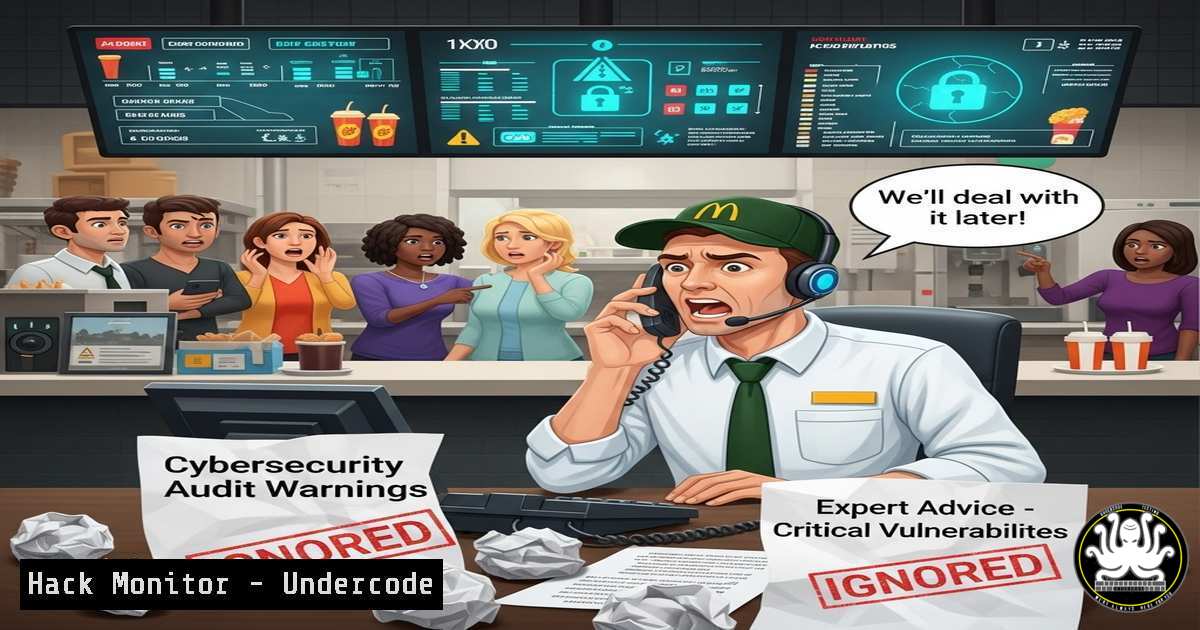
McDonald’s recent firing of a security engineer who exposed critical vulnerabilities highlights systemic corporate security failures. This incident reveals how dismissing technical expertise creates massive attack surfaces, putting customer data and brand reputation at risk.
Learning Objectives:
- Identify common cloud misconfigurations using CLI tools
- Implement real-time intrusion detection on Windows/Linux systems
- Harden API endpoints against OWASP Top 10 vulnerabilities
- Establish secure incident response protocols
- Automate vulnerability scanning across hybrid environments
1. Cloud Storage Bucket Auditing
`aws s3api list-buckets –query “Buckets[].Name”`
`aws s3 ls s3://exposed-bucket –recursive –human-readable`
Step-by-step:
1. Authenticate to AWS CLI using `aws configure`
- List all S3 buckets to identify public-facing storage
- Scan bucket contents for sensitive files (PII, credentials)
- Check permissions with `aws s3api get-bucket-acl –bucket TARGET_BUCKET`
5. Remediate public access via `aws s3api put-public-access-block`
2. Network Vulnerability Scanning
`nmap -sV –script vuln 192.168.1.0/24 -oX scan.xml`
`grep “CVE-” scan.xml | awk -F’id=’ ‘{print $2}’ | cut -d\” -f2`
Step-by-step:
1. Install Nmap: `sudo apt install nmap`
2. Run comprehensive vulnerability scan against subnet
3. Parse results for critical CVEs
4. Validate findings with `vulscan –update-db`
- Patch systems using `sudo apt update && sudo apt upgrade`
3. Windows Event Log Monitoring
`Get-WinEvent -LogName Security -MaxEvents 50 | Where-Object {$_.ID -eq 4625}`
Step-by-step:
1. Open PowerShell as Administrator
2. Retrieve failed login attempts from Security log
3. Filter suspicious IPs: `| Select-Object -Property @{n=’IP’;e={$_.Properties[bash].Value}}`
- Block brute-force attacks: `New-NetFirewallRule -DisplayName “BlockAttacker” -RemoteAddress MALICIOUS_IP -Action Block`
5. Enable advanced auditing: `auditpol /set /subcategory:”Logon” /failure:enable`
4. API Security Hardening
`curl -H “Authorization: Bearer $TOKEN” https://api.target.com/v1/users | jq .`
Step-by-step:
1. Test endpoint authentication with invalid tokens
- Check rate limiting: `for i in {1..100}; do curl -s -o /dev/null -w “%{http_code}” API_ENDPOINT; done`
- Validate input sanitation: `curl -X POST -d ‘{“query”:”SELECT FROM users”}’ API_ENDPOINT`
4. Implement OAuth2 scopes: `scope=read:user_profile`
- Enable WAF rules: `az network application-gateway waf-config set –gateway-name GATEWAY –enabled true –rule-set-type OWASP –rule-set-version 3.2`
5. Linux Memory Exploit Mitigation
`sudo sysctl -w kernel.randomize_va_space=2`
`sudo apt install checksec`
`checksec –file=/usr/sbin/sshd`
Step-by-step:
- Enable ASLR: `echo 2 | sudo tee /proc/sys/kernel/randomize_va_space`
- Install security hardening tools: `sudo apt install checksec hardening-check`
3. Audit binaries: `hardening-check $(which sshd)`
- Restrict kernel modules: `sudo echo “install usb-storage /bin/false” >> /etc/modprobe.d/disable-usb.conf`
- Monitor dmesg: `watch -n 1 “dmesg | tail -20″`
6. Container Security Scanning
`docker scan –file Dockerfile –exclude-base .`
`trivy image –severity CRITICAL my-app:latest`
Step-by-step:
- Install Docker Scan: `curl -sSfL https://raw.githubusercontent.com/docker/scan-cli-plugin/main/install.sh | sh`
- Check Dockerfiles: `docker scan –dependency-tree –file Dockerfile .`
- Runtime monitoring: `docker run –security-opt “apparmor=docker-default” -d my-app`
4. Verify signatures: `cosign verify –key public.key my-registry/my-app@sha256:digest`
5. Enforce policies: `kyverno apply policy.yaml –resource deployment.yaml`
7. Incident Response Automation
`thehive-project/bin/thehive -d`
`curl -XPOST ‘http://localhost:9000/api/case’ -H ‘Authorization: Bearer API_KEY’ -d ‘{“title”:”Breach Alert”,”description”:”Detected C2 traffic”}’`
Step-by-step:
1. Install TheHive: `docker-compose -f docker-compose.thehive.yml up -d`
2. Configure Cortex analyzers: `cortex -analyzer “HybridAnalysis”`
- Automate alerts: `python3 -m “import thehive4py; client.create_case(title=’New Incident’)”`
- Isolate hosts: `salt ” cmd.run ‘iptables -A INPUT -s ATTACKER_IP -j DROP’`
5. Preserve evidence: `dd if=/dev/sda1 of=/evidence/disk.img bs=4M conv=noerror`
What Undercode Say:
- Security Ignorance Is Technical Debt: Firing experts who surface vulnerabilities compounds risk exponentially
- Executive Accountability Matters: CISOs must report directly to boards with veto power on releases
- Automate Or Die: Manual security processes fail at scale – SOCs need SOAR integration
- Culture Trumps Tools: No technology fixes leadership that punishes truth-tellers
Analysis: McDonald’s failure stems from broken organizational psychology, not technical gaps. The engineer’s termination demonstrates catastrophic misalignment between security teams and executive incentives. Modern security programs require psychological safety protocols where vulnerability disclosure triggers predefined investigation workflows, not retaliation. Companies must implement non-punitive reporting channels with direct board access, separating vulnerability discovery from performance metrics. Technical controls become irrelevant when human systems incentivize silence.
Prediction:
Within 24 months, this pattern of security negligence will trigger a Fortune 500 collapse. We’ll see either:
1) A catastrophic breach costing over $1B in direct damages, or
2) SEC-mandated shutdown of publicly traded companies for repeated violations.
Regulators will demand personal liability for executives ignoring credentialed warnings, while insurers will deny coverage for organizations without independent security oversight. The engineer-as-whistleblower trend will accelerate, creating new legal protections under enhanced CFAA amendments.
🎯Let’s Practice For Free:
IT/Security Reporter URL:
Reported By: Nickvangilder Ba – Hackers Feeds
Extra Hub: Undercode MoN
Basic Verification: Pass ✅


