Listen to this Post
Introduction
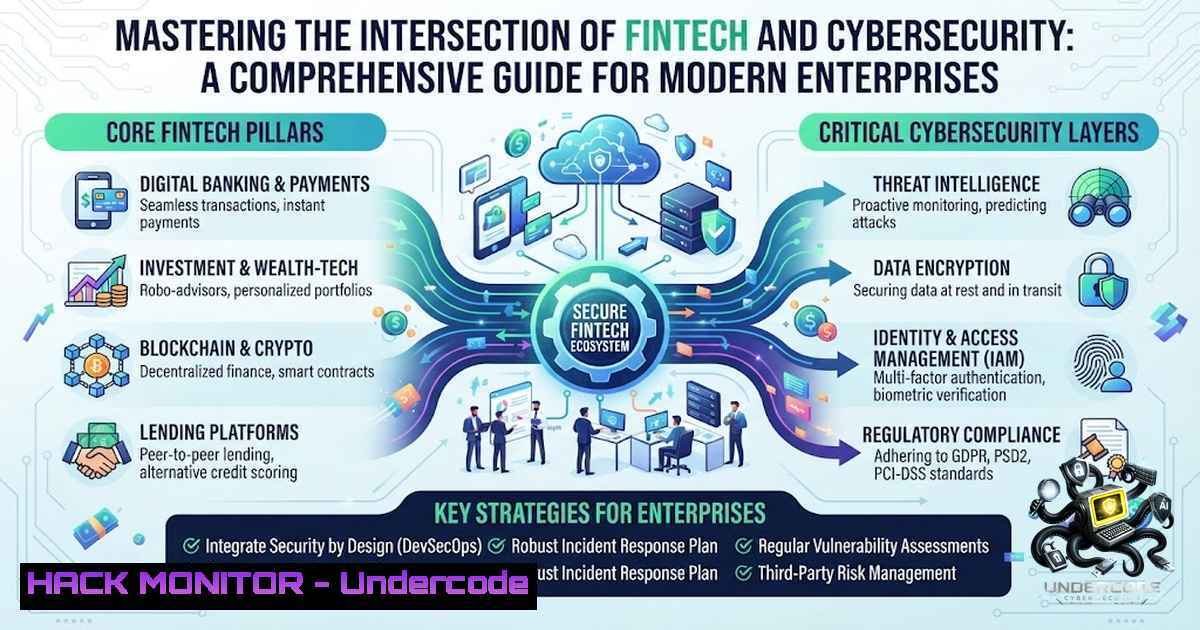
As financial institutions like CFI Financial Group prepare to showcase their innovations at Money Expo Abu Dhabi 2026, the intersection of financial technology and cybersecurity has never been more critical. This comprehensive guide explores the essential security frameworks, penetration testing methodologies, and cloud hardening techniques that modern financial organizations must implement to protect their trading platforms and client data in an increasingly threat-laden digital landscape.
Learning Objectives
- Understand and implement API security best practices for financial trading platforms
- Master Linux and Windows server hardening techniques for financial infrastructure
- Develop comprehensive cloud security strategies for FinTech environments
- Learn vulnerability assessment and exploitation mitigation techniques
- Implement AI-driven threat detection and response mechanisms
You Should Know
- Securing Financial Trading APIs: A Step-by-Step Implementation Guide
Financial trading platforms rely heavily on RESTful APIs for data exchange, order execution, and client authentication. Protecting these critical interfaces requires a multi-layered approach.
Step-by-Step Guide:
Step 1: Implement OAuth 2.0 with PKCE
 Linux: Install OAuth2 server dependencies
sudo apt-get update
sudo apt-get install oauth2-server -y

Configure OAuth2 client
oauth2-server --config /etc/oauth2-server.conf --client-id YOUR_CLIENT_ID --client-secret YOUR_SECRET_KEY

Windows PowerShell: Generate secure client credentials
Step 2: Rate Limiting and Throttling
 Linux: Implement rate limiting with iptables
sudo iptables -A INPUT -p tcp --dport 443 -m connlimit --connlimit-above 100 -j DROP

Nginx rate limiting configuration
http {
limit_req_zone $binary_remote_addr zone=mylimit:10m rate=10r/s;
server {
location /api/ {
limit_req zone=mylimit burst=20 nodelay;
proxy_pass http://backend;
}
}
}
Step 3: API Request Validation and Sanitization
 Python example: Input validation for trading API
import re
import json
from flask import request, jsonify

def validate_trade_request(data):
required_fields = ['symbol', 'quantity', 'order_type', 'price']
for field in required_fields:
if field not in data:
return False, f"Missing required field: {field}"

Validate symbol format
if not re.match(r'^[A-Z]{1,5}$', data['symbol']):
return False, "Invalid symbol format"

Validate quantity
try:
quantity = float(data['quantity'])
if quantity <= 0 or quantity > 100000:
return False, "Quantity must be between 0 and 100,000"
except ValueError:
return False, "Invalid quantity format"

return True, "Validation successful"
Step 4: Implement Mutual TLS (mTLS)
 Generate client certificate on Linux
openssl req -1ew -1ewkey rsa:2048 -days 365 -1odes -x509 -keyout client.key -out client.crt

Configure nginx for mTLS
server {
listen 443 ssl;
ssl_client_certificate /etc/nginx/client_certs/ca.crt;
ssl_verify_client on;
}
Step 5: Logging and Monitoring
 Linux: Configure API logging with rsyslog
echo ".info;mail.none;authpriv.none;cron.none /var/log/api.log" >> /etc/rsyslog.conf
systemctl restart rsyslog

Windows PowerShell: Enable advanced auditing
auditpol /set /subcategory:"Application Group Management" /success:enable /failure:enable
2. Server Hardening for Financial Infrastructure
Protecting the underlying server infrastructure is paramount for any financial institution processing millions of transactions daily.
Linux Server Hardening:
 Update system packages
sudo apt-get update && sudo apt-get upgrade -y

Remove unnecessary services
sudo systemctl list-units --type=service --state=running
sudo systemctl stop apache2
sudo systemctl disable apache2

Configure SSH security
sudo nano /etc/ssh/sshd_config
 Add these configurations:
 PermitRootLogin no
 PasswordAuthentication no
 AllowUsers adminuser
 X11Forwarding no
 MaxAuthTries 3

Restart SSH service
sudo systemctl restart sshd

Configure firewall rules
sudo ufw default deny incoming
sudo ufw default allow outgoing
sudo ufw allow 443/tcp
sudo ufw allow 22/tcp
sudo ufw enable
Windows Server Hardening:
 Disable unnecessary services via PowerShell
Get-Service | Where-Object {$<em>.StartType -eq 'Automatic' -and $</em>.Status -eq 'Running'} |
Where-Object {$_.Name -1otin @('W3SVC','MSSQLSERVER','IISADMIN')} |
Set-Service -StartupType Disabled

Configure Windows Firewall rules
New-1etFirewallRule -DisplayName "Allow HTTPS" -Direction Inbound -LocalPort 443 -Protocol TCP -Action Allow
New-1etFirewallRule -DisplayName "Allow SSH" -Direction Inbound -LocalPort 22 -Protocol TCP -Action Allow

Implement Account Lockout Policy
Set-ADDefaultDomainPasswordPolicy -LockoutThreshold 5 -LockoutDuration 00:30:00 -LockoutObservationWindow 00:30:00
Auditing and Logging Configuration:
 Linux: Configure auditd for financial transaction monitoring
sudo auditctl -w /var/log/financial_transactions.log -p wa -k transaction_log
sudo auditctl -w /etc/passwd -p wa -k user_management

Windows: Enable PowerShell script block logging
Set-ItemProperty -Path "HKLM:\SOFTWARE\Policies\Microsoft\Windows\PowerShell\ScriptBlockLogging" -1ame "EnableScriptBlockLogging" -Value 1
3. Cloud Security Hardening for FinTech Applications
Financial institutions increasingly leverage cloud infrastructure for scalability and agility. Implementing proper cloud security controls is essential.
AWS Security Configuration:
 AWS CLI: Enable CloudTrail for auditing
aws cloudtrail create-trail --1ame financial-trail --s3-bucket-1ame financial-logs-bucket

Configure VPC Flow Logs
aws ec2 create-flow-logs --resource-type VPC --resource-id vpc-12345 --traffic-type ALL --log-group-1ame vpc-flow-logs

Implement Security Groups
aws ec2 authorize-security-group-ingress --group-id sg-12345 --protocol tcp --port 443 --cidr 10.0.0.0/8

Enable GuardDuty for threat detection
aws guardduty create-detector --enable
Azure Security Configuration:
 Azure CLI: Configure Network Security Groups
az network nsg rule create --1sg-1ame financial-1sg --1ame AllowHTTPS --priority 100 --direction Inbound --access Allow --protocol Tcp --destination-port-range 443

Enable Azure Security Center for continuous monitoring
az security pricing create --1ame VirtualMachines --tier Standard

Configure Azure Active Directory conditional access policies
az ad conditional-access policy create --1ame "MFA for Financial Services" --conditions '{ "Users": { "IncludeUsers": ["All"] }, "Applications": { "IncludeApplications": ["All"] } }' --grant-controls '{ "BuiltInControls": ["MFA"] }'
Multi-Cloud Security Best Practices:
 Implement consistent IAM policies across clouds
 AWS IAM Policy Example
{
"Version": "2012-10-17",
"Statement": [
{
"Effect": "Deny",
"Action": "",
"Resource": "",
"Condition": {
"BoolIfExists": {
"aws:MultiFactorAuthPresent": "false"
}
}
}
]
}
4. Vulnerability Assessment and Exploitation Mitigation
Regular vulnerability assessment is crucial for identifying security weaknesses before attackers exploit them.
Conducting Vulnerability Scans:
 Linux: Install and run OpenVAS
sudo apt-get install openvas
sudo gvm-setup
sudo gvm-start

Windows: Use PowerShell for basic port scanning
function Scan-Ports {
param($hostname, $ports)
foreach ($port in $ports) {
$tcp = New-Object System.Net.Sockets.TcpClient
try {
$tcp.Connect($hostname, $port)
Write-Host "Port $port is open on $hostname" -ForegroundColor Green
} catch {
Write-Host "Port $port is closed on $hostname" -ForegroundColor Red
} finally {
$tcp.Dispose()
}
}
}
Scan-Ports -hostname "financial-api.example.com" -ports @(22, 443, 8443, 8080)
Common Exploitation Vectors and Mitigations:
 SQL Injection Prevention (Python with SQLAlchemy)
from sqlalchemy import create_engine
from sqlalchemy.text import text

def safe_query(user_id):
engine = create_engine('postgresql://user:pass@localhost/financial_db')
with engine.connect() as conn:
 Use parameterized queries
result = conn.execute(text("SELECT  FROM users WHERE id = :user_id"), {"user_id": user_id})
return result.fetchone()

XSS Prevention (JavaScript sanitization)
function sanitizeHTML(input) {
const temp = document.createElement('div');
temp.textContent = input;
return temp.innerHTML;
}

CSRF Protection with Token Implementation
from django.middleware.csrf import get_token

def get_csrf_token(request):
token = get_token(request)
return JsonResponse({'csrf_token': token})
5. AI-Driven Threat Detection and Response
Artificial Intelligence is revolutionizing cybersecurity in the financial sector, enabling real-time threat detection and automated response.
Implementing AI-Based Anomaly Detection:
 Python: Machine Learning for transaction anomaly detection
import pandas as pd
from sklearn.ensemble import IsolationForest
from sklearn.preprocessing import StandardScaler

def detect_anomalies(transaction_data):
 Scale features
scaler = StandardScaler()
scaled_data = scaler.fit_transform(transaction_data)

Train Isolation Forest
model = IsolationForest(contamination=0.1, random_state=42)
predictions = model.fit_predict(scaled_data)

Identify anomalies (predictions = -1)
anomalies = transaction_data[predictions == -1]
return anomalies

Example: Real-time transaction monitoring
def monitor_transactions(transaction_stream):
for transaction in transaction_stream:
features = extract_features(transaction)  Amount, time, location, device
is_anomalous = detect_anomalies(features)
if is_anomalous:
send_alert(transaction)
block_transaction(transaction)
Automated Response Playbooks:
 Linux: Automate threat response with Ansible

<ul>
<li>name: Block suspicious IP
hosts: firewall
tasks:</li>
<li>name: Add IP to block list
iptables:
chain: INPUT
source: "{{ suspicious_ip }}"
jump: DROP
when: alert_severity == "high"

Windows PowerShell: Automated quarantine script
function Quarantine-Threat {
param($ProcessID)
$process = Get-Process -ID $ProcessID
if ($process) {
Stop-Process -ID $ProcessID -Force
Add-Content -Path "C:\quarantine\log.txt" -Value "Process $($process.Name) stopped at $(Get-Date)"
}
}
6. Container Security for Microservices Architecture
Modern financial applications increasingly use containers for deployment. Securing these containers is critical.
Docker Security Best Practices:
 Dockerfile with security hardening
FROM python:3.9-slim

Use non-root user
RUN useradd -m -s /bin/bash appuser
USER appuser

Copy application with proper permissions
COPY --chown=appuser:appuser app /app

Use multi-stage builds to reduce attack surface
FROM python:3.9-slim as builder
COPY requirements.txt .
RUN pip install --user -r requirements.txt

FROM python:3.9-slim
COPY --from=builder /root/.local /root/.local

Implement health checks
HEALTHCHECK --interval=30s --timeout=3s --retries=3 \
CMD curl -f http://localhost/health || exit 1
Kubernetes Security Configuration:
 Pod Security Policy
apiVersion: policy/v1beta1
kind: PodSecurityPolicy
metadata:
name: financial-app-psp
spec:
privileged: false
allowPrivilegeEscalation: false
runAsUser:
rule: 'MustRunAsNonRoot'
seLinux:
rule: 'RunAsAny'
fsGroup:
rule: 'RunAsAny'

Network Policy
apiVersion: networking.k8s.io/v1
kind: NetworkPolicy
metadata:
name: financial-api-1etpol
spec:
podSelector:
matchLabels:
app: financial-api
policyTypes:
- Ingress
ingress:
- from:
- namespaceSelector:
matchLabels:
name: api-gateway
ports:
- protocol: TCP
port: 443
What Undercode Say:
Key Takeaway 1: The convergence of FinTech and cybersecurity demands a proactive rather than reactive approach. Financial institutions like CFI Financial Group must integrate security into their DevOps pipeline from the outset, implementing continuous security monitoring and automated incident response.
Key Takeaway 2: AI-driven threat detection is becoming indispensable for modern financial security operations. Organizations that fail to implement machine learning-based anomaly detection will struggle to identify sophisticated threats in real-time, potentially leading to significant financial losses.
Analysis: The financial sector faces unprecedented security challenges as digital transformation accelerates. With events like Money Expo Abu Dhabi showcasing the latest financial technologies, the need for robust cybersecurity frameworks has never been more apparent. Organizations must invest in comprehensive security training, implement zero-trust architectures, and develop sophisticated threat intelligence capabilities. The integration of AI and automation in security operations offers the potential to significantly reduce response times and mitigate threats before they cause damage. However, organizations must also be mindful of the regulatory landscape and ensure their security practices comply with data protection regulations like GDPR and PCI DSS.
Prediction:
+1: The adoption of AI-driven security systems in the financial sector will increase by 300% over the next three years, leading to significantly reduced incident response times and improved threat detection accuracy.
-1: The complexity of securing multi-cloud financial environments will present substantial challenges, with 70% of organizations expecting to experience at least one security breach related to cloud misconfigurations in 2026.
+1: Regulatory bodies will introduce standardized cybersecurity frameworks specifically for FinTech companies, providing clearer guidance and reducing compliance costs for smaller financial institutions.
-1: The threat landscape for financial APIs will become more sophisticated, with attackers developing AI-powered tools specifically designed to bypass traditional security controls.
+1: Strategic partnerships between financial institutions and cybersecurity providers will create more robust defense mechanisms, leveraging collective intelligence and shared threat intelligence platforms to combat emerging threats effectively.
▶️ Related Video (82% Match):
🎯Let’s Practice For Free:
🎓 Live Courses & Certifications:
Join Undercode Academy for Verified Certifications
🚀 Request a Custom Project:
Secure, high-velocity infrastructure and disruptive technological engineering. Contact our engineering team for high-tier development and proprietary systems:
[email protected]
💎 Smart Architecture | 🛡️ Secure by Design | ⭐ Trusted by Thousands
IT/Security Reporter URL:
Reported By: Moneyexpoabudhabi Cfi – Hackers Feeds
Extra Hub: Undercode MoN
Basic Verification: Pass ✅


