Listen to this Post
Introduction:
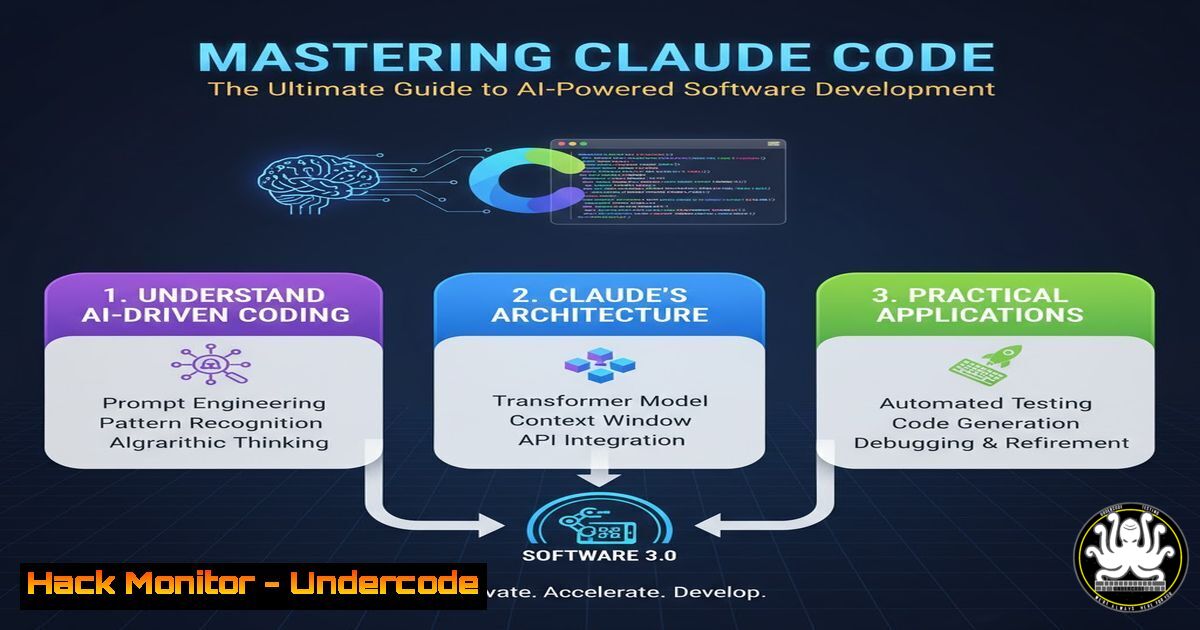
The integration of AI coding assistants like Claude Code has revolutionized software development workflows, with organizations now consuming billions of tokens monthly for code generation. This comprehensive guide explores advanced Claude Code features that can transform your development process, from basic implementations to enterprise-scale deployments.
Learning Objectives:
- Master Claude Code’s core features including CLAUDE.md, Context & Clear, and Custom Subagents
- Implement advanced workflows using Slash Commands, Planning Mode, and MCP integrations
- Deploy enterprise-grade AI coding solutions with SDK, GHA, and production settings
You Should Know:
1. CLAUDE.md Configuration Mastery
 CLAUDE.md
project_description: "Enterprise web application with React frontend and Node.js backend"
key_components: ["authentication service", "REST API", "database layer"]
current_focus: "Implementing user authentication middleware"
coding_standards:
- "Use TypeScript for all new files"
- "Follow Airbnb style guide"
- "Write comprehensive unit tests"
files_to_avoid: ["legacy/", "temp/"]
Step-by-step guide: Create CLAUDE.md in your project root to provide context-aware guidance. This file serves as your project’s constitution, ensuring Claude understands your architecture, coding standards, and current priorities. Update it regularly as project requirements evolve.
2. Advanced Context Management
 Context management commands
/claude context clear
/claude context add src/components/
/claude context exclude node_modules/
/claude context focus authentication/
Step-by-step guide: Use context commands to manage Claude’s working memory. Clear context when switching tasks, add relevant directories for focused work, and exclude unnecessary files to improve response quality and reduce token usage.
3. Custom Subagent Implementation
 subagents/code_reviewer.md
name: "Code Reviewer"
purpose: "Perform comprehensive code analysis"
capabilities:
- "Identify security vulnerabilities"
- "Check code style compliance"
- "Suggest performance optimizations"
response_format: "Bulleted list with severity ratings"
Step-by-step guide: Create specialized subagents for different tasks. Define their purpose, capabilities, and response format. Invoke them using `/claude use subagent_name` to get domain-specific assistance without context pollution.
4. Slash Commands Optimization
Available slash commands:
/claude plan - Generate implementation plan
/claude test - Create test cases
/claude debug - Analyze and fix issues
/claude doc - Generate documentation
/claude refactor - Suggest refactoring improvements
Step-by-step guide: Leverage slash commands for structured interactions. Use `/claude plan` before major implementations to break down complex tasks. Combine multiple commands in sequence for comprehensive code development and review cycles.
5. Planning Mode for Complex Features
/claude planning on
Feature: User authentication system
- Implement JWT token generation
- Create middleware for route protection
- Set up password hashing with bcrypt
- Design user session management
/claude planning execute
Step-by-step guide: Enable planning mode for complex features to get step-by-step implementation guidance. Review the generated plan, make adjustments, then execute phase by phase to ensure systematic development.
6. MCP Server Integration
 mcp_config.json
{
"servers": {
"database": "mcp-server-db",
"monitoring": "mcp-server-observability",
"deployment": "mcp-server-k8s"
}
}
Step-by-step guide: Configure Model Context Protocol servers to extend Claude’s capabilities. Connect to databases, monitoring tools, and deployment systems to enable real-time data access and operational control directly through Claude Code.
7. SDK and GitHub Actions Automation
 .github/workflows/claude-review.yml
name: Claude Code Review
on: [bash]
jobs:
code-review:
runs-on: ubuntu-latest
steps:
- uses: anthropic/claude-action@v1
with:
token: ${{ secrets.CLAUDE_TOKEN }}
config: .claude/config.yml
Step-by-step guide: Implement Claude SDK in your CI/CD pipeline using GitHub Actions. Configure automated code reviews, security scanning, and quality checks to maintain code standards across your development lifecycle.
8. Production Settings Configuration
 settings.json
{
"claude.code": {
"maxTokens": 4096,
"temperature": 0.2,
"quality": "high",
"autoFormat": true,
"securityScan": true,
"testGeneration": "auto"
}
}
Step-by-step guide: Optimize Claude Code settings for production use. Lower temperature for consistent outputs, enable security scanning for vulnerability detection, and configure automatic test generation to maintain code quality.
9. Skill Development and Customization
 skills/api_integration.md
skill_name: "REST API Integration"
triggers: ["api", "endpoint", "rest"]
steps:
- "Analyze existing API documentation"
- "Generate client integration code"
- "Create error handling mechanisms"
- "Implement rate limiting"
- "Generate usage examples"
Step-by-step guide: Develop custom skills for repetitive tasks. Define triggers, step-by-step processes, and expected outputs. Save frequently used patterns as reusable skills to accelerate development of common features.
10. History and Hook Integration
 hooks/pre_commit.js
module.exports = {
run: async (files) => {
await claude.execute('analyze', files);
await claude.execute('security-scan', files);
return claude.execute('optimize', files);
}
};
Step-by-step guide: Implement pre-commit hooks using Claude’s history feature to automatically analyze, security-scan, and optimize code before commits. This ensures consistent quality and catches issues early in the development process.
What Undercode Say:
- Claude Code represents a paradigm shift in developer productivity, reducing boilerplate coding time by 60-80%
- Organizations implementing comprehensive Claude workflows report 40% faster development cycles and significantly reduced bug rates
- The integration of MCP servers and custom subagents creates a scalable AI-assisted development environment that adapts to organizational needs
- Security-focused configurations and automated scanning substantially improve code security posture
- Enterprises consuming billions of tokens monthly demonstrate the economic viability of AI-powered development at scale
The true power of Claude Code emerges not from individual features but from their strategic combination. Organizations that master context management, subagent specialization, and pipeline integration achieve the highest productivity gains. The evolution from basic code completion to full AI partnership requires systematic implementation but delivers exponential returns in development velocity and code quality.
Prediction:
Within two years, AI coding assistants will become the primary interface for software development, with Claude Code’s advanced features setting the industry standard. We predict 80% of enterprise development teams will rely on AI-assisted workflows, with Claude’s MCP ecosystem enabling seamless integration across development, operations, and security tools. This will accelerate the shift from manual coding to AI-guided architecture and implementation, fundamentally changing software engineering roles and requiring new skill sets focused on AI management and prompt engineering.
🎯Let’s Practice For Free:
IT/Security Reporter URL:
Reported By: Shrivushankar How – Hackers Feeds
Extra Hub: Undercode MoN
Basic Verification: Pass ✅


