Listen to this Post
Introduction:
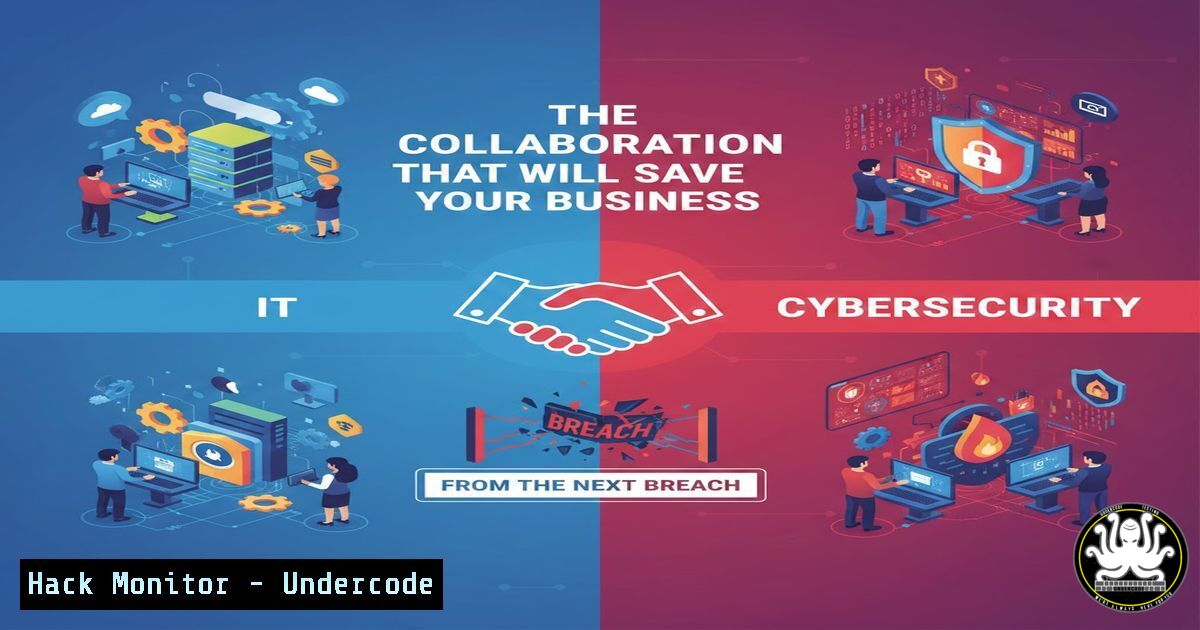
The modern digital enterprise is built on two interdependent pillars: Information Technology (IT), focused on availability and performance, and Cybersecurity, dedicated to integrity and confidentiality. Misunderstanding their distinct yet symbiotic roles creates critical strategic vulnerabilities, while aligning them transforms security from a bottleneck into a business enabler for true digital resilience.
Learning Objectives:
- Understand the core, distinct missions of IT Operations and Cybersecurity functions.
- Identify practical, technical collaboration points between IT and Security teams.
- Implement actionable commands and configurations that demonstrate this synergy in hardening your environment.
You Should Know:
1. Identity Governance: The First Line of Defense
The user account lifecycle is a primary battleground. IT provisions access; Security ensures it is secure. True collaboration here is exemplified by enforcing Multi-Factor Authentication (MFA) and the Principle of Least Privilege (PoLP) programmatically.
Step‑by‑step guide explaining what this does and how to use it.
IT Action (Provisioning): On a Windows Active Directory or Azure AD, the IT admin creates the user account and adds them to basic groups.
 PowerShell (Azure AD / Microsoft Entra ID example)
New-AzureADUser -DisplayName "Jane Doe" -UserPrincipalName "[email protected]" -AccountEnabled $true -MailNickName "janedoe" -PasswordProfile $PasswordProfile
Security Action (Hardening): The Cybersecurity team ensures MFA is enforced and reviews group memberships for privilege creep.
 Enforce MFA via Conditional Access Policy (Azure AD Portal / Graph API)
 Review group memberships for privilege audit
Get-AzureADUserMembership -ObjectId <user-object-id> | Format-Table DisplayName
Collaboration Point: Automate this process. When IT runs the user creation script, it should trigger a Security team review workflow and automatically apply a “require MFA” policy tag.
2. Network Architecture: Building Secure Highways
IT designs networks for performance and scalability. Cybersecurity architects them to contain breaches. Micro-segmentation is the key collaborative outcome, preventing lateral movement.
Step‑by‑step guide explaining what this does and how to use it.
IT Action (Foundation): Configure a VLAN for corporate workstations.
 Cisco IOS Example (IT Network Admin)
configure terminal
vlan 10
name Corporate-Users
exit
interface GigabitEthernet0/1
switchport mode access
switchport access vlan 10
Security Action (Segmentation): Implement firewall rules (micro-segmentation) between this VLAN and sensitive servers, allowing only necessary traffic.
 Linux iptables example on a gateway (Security Admin)
 Drop all traffic from user VLAN (192.168.10.0/24) to server VLAN (192.168.20.0/24) by default
iptables -A FORWARD -s 192.168.10.0/24 -d 192.168.20.0/24 -j DROP
 Allow only specific, approved traffic (e.g., HTTPS to web server 192.168.20.10)
iptables -I FORWARD -s 192.168.10.0/24 -d 192.168.20.10 -p tcp --dport 443 -j ACCEPT
Collaboration Point: Jointly design the network zoning diagram. IT provides the performance requirements; Security defines the segmentation policy. Use infrastructure-as-code (Terraform, Ansible) to deploy both VLANs and security rules simultaneously.
3. Vulnerability Management: Patching with Purpose
IT owns the patch deployment process. Cybersecurity identifies critical vulnerabilities and quantifies risk. The collaboration accelerates the remediation of exploitable flaws.
Step‑by‑step guide explaining what this does and how to use it.
Security Action (Discovery): Run an authenticated vulnerability scan using a tool like Nessus or OpenVAS to identify missing patches.
 Example OpenVAS (gvm-cli) command to initiate a scan
gvm-cli --gmp-username admin --gmp-password password socket --socketpath /run/gvmd/gvmd.sock --xml "<create_task><name>Patch Audit</name><config id='daba56c8-73ec-11df-a475-002264764cea'/><target id='target-id-here'/></create_task>"
IT Action (Remediation): Deploy critical patches using a centralized management tool. For Windows, use PowerShell Remoting to target a critical patch.
 PowerShell: Force install a specific KB on a list of remote workstations
$Computers = "PC1", "PC2", "PC3"
Invoke-Command -ComputerName $Computers -ScriptBlock {
wusa.exe "\patchserver\MS23-Oct\windows10.0-kb5031356-x64.msu" /quiet /norestart
}
Collaboration Point: Establish a Shared SLA: Cybersecurity must prioritize findings (e.g., CVSS score >= 7.0 + public exploit), and IT must commit to deploying those patches within 72 hours. Automate ticket creation in the IT Service Management (ITSM) tool from the vulnerability scanner.
4. Endpoint Configuration: Secure by Default
IT images machines for user productivity. Security ensures they are hardened from first boot. This is achieved through collaborative Gold Image creation and Group Policy/Object Management.
Step‑by‑step guide explaining what this does and how to use it.
Collaborative Action (Image Creation): Use a tool like Packer to build a “Golden Image” where IT injects standard software (Office, Adobe) and Security injects hardening scripts.
// Example Packer JSON provisioner section
"provisioners": [
{
"type": "shell",
"inline": [
// IT: Install Chrome
"apt-get install -y google-chrome-stable"
]
},
{
"type": "shell",
"script": "security_harden.sh" // Security: Disable guest account, enforce firewall, etc.
}
]
Security Hardening Script (`security_harden.sh`) Snippet:
 Disable USB storage (Linux example)
echo 'install usb-storage /bin/true' >> /etc/modprobe.d/disable-usb-storage.conf
 Set strong password policy (Windows via local policy script)
net accounts /minpwlen:12 /maxpwage:90
- Logging & Monitoring: Building a Single Pane of Glass
IT manages the log aggregation infrastructure (SIEM). Cybersecurity defines the critical alerts and hunts for threats within the data. The collaboration creates an effective Security Operations Center (SOC).
Step‑by‑step guide explaining what this does and how to use it.
IT Action (Infrastructure): Deploy and configure a syslog server or SIEM forwarder (e.g., Elastic Agent, Wazuh agent).
 Linux: Configure rsyslog to forward logs to SIEM (IP: 10.0.0.50)
echo ". @10.0.0.50:514" >> /etc/rsyslog.conf
systemctl restart rsyslog
Security Action (Detection): Write a detection rule in the SIEM (e.g., Sigma rule format) to alert on a potential brute-force attack.
 Sigma Rule Example for Failed Logons
title: High Number of Failed Logons
logsource:
product: windows
service: security
detection:
selection:
EventID: 4625
condition: selection | count() by Account_Name > 10 within 5m
Collaboration Point: Joint SIEM Tuning. IT provides context on normal network traffic patterns to reduce false positives. Security refines alert logic. They jointly review and adjust the SIEM’s correlation rules weekly.
What Undercode Say:
- Security is a Feature of the System, Not a Bolt-On. The most resilient systems are designed with security and operational requirements in parallel from day one, not as an afterthought during an audit. The commands and automation shown above are the tangible implementation of this philosophy.
- Metrics Drive Alignment. IT’s success (uptime) and Security’s success (risk mitigated) must be rolled up into a shared business KPI: Operational Resilience. This shifts the conversation from “security says no” to “how do we achieve our goal securely?”
The future of enterprise technology is not a merger of IT and Cybersecurity into one homogenous blob, but the evolution of a deeply integrated, automated, and communicative partnership. As AI-driven operations (AIOps) and AI-powered security (AI SecOps) mature, the collaboration will happen increasingly through automated playbooks. An IT ticket for a new server will automatically trigger security policy application; a security alert on a zero-day will auto-generate a temporary containment firewall rule while IT patches. Organizations that fail to architect both their technology and their team structures for this symbiosis will find themselves outpaced by competitors and overrun by threats. The gap is a vulnerability; the bridge is your competitive advantage.
🎯Let’s Practice For Free:
IT/Security Reporter URL:
Reported By: Thomasflynn Usa – Hackers Feeds
Extra Hub: Undercode MoN
Basic Verification: Pass ✅


