Listen to this Post
Introduction:
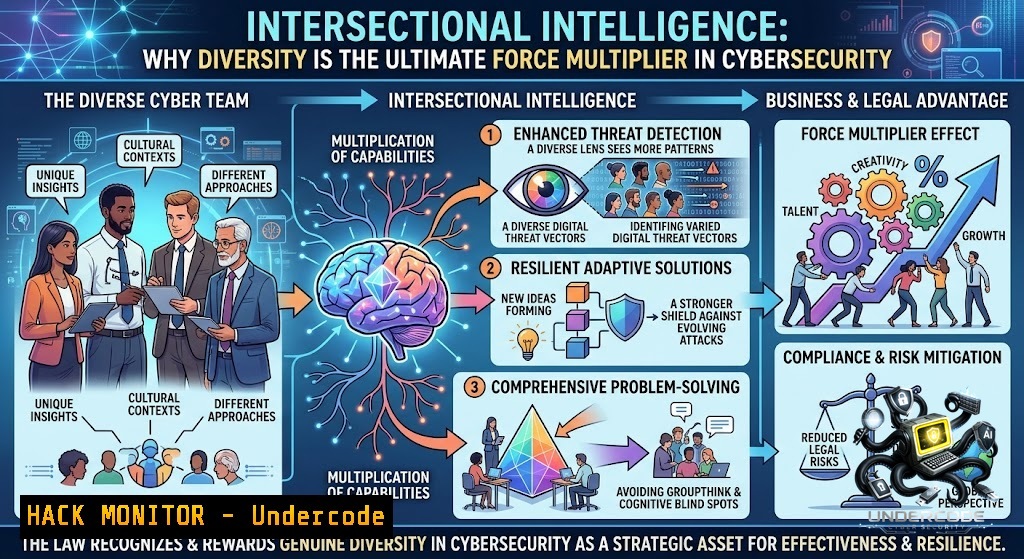
Australia’s cybersecurity workforce is at a critical juncture. Despite escalating cyber threats and a widening skills gap, women represent only 17% of the nation’s cyber security workforce. This persistent underrepresentation is not merely an equity issue—it is a strategic vulnerability. As geopolitical tensions intensify and AI-powered attacks accelerate, the industry faces a stark reality: homogeneous teams produce homogeneous defenses, leaving critical blind spots that adversaries are eager to exploit. The AWSN – Australian Women in Security Network Symposium 2026 confronts this challenge head-on, framing intersectional leadership not as symbolic inclusion, but as an operational necessity for building resilient, innovative, and future-fit cyber ecosystems.
Learning Objectives:
- Understand the strategic link between workforce diversity and improved threat detection, incident response, and security innovation.
- Identify systemic barriers to gender and intersectional diversity in cybersecurity and learn practical strategies to dismantle them.
- Acquire actionable frameworks for building inclusive cyber teams that leverage diverse cognitive perspectives as a competitive advantage.
You Should Know:
- The Diversity-Defense Dividend: Why Inclusion Strengthens Security Posture
The argument for diversity in cybersecurity has evolved beyond social justice to hard operational metrics. Research consistently demonstrates that diverse teams outperform homogeneous groups in scenario planning, threat modeling, and anticipating unconventional attack vectors. Organizations with inclusive practices achieve superior outcomes in risk management and threat mitigation because women and individuals from varied backgrounds bring different analytical frameworks and problem-solving approaches. In an era where AI-enabled attackers move faster and produce more convincing material, the ability to challenge assumptions and think laterally is not optional—it is defensive. Diverse teams are more likely to identify vulnerabilities that a monolithic group might overlook, effectively closing the cognitive gaps that adversaries target.
The AWSN Symposium’s panel, Women at the Intersection, featuring Laura O’Neill, Partner at Uvance Wayfinders, directly addresses this paradigm. The discussion moves beyond representation metrics to explore how the intersection of gender, culture, neurodiversity, and socioeconomic background creates a strategic advantage in cyber defense.
- Access for All: Removing Economic Barriers to Cyber Careers
Fujitsu’s sponsorship of 20 places through the Access for All initiative exemplifies a critical intervention: removing cost as a barrier to opportunity. This practical commitment recognizes that talent is distributed equally, but access is not. By subsidizing attendance for individuals who might otherwise be unable to participate, Fujitsu and AWSN are directly addressing one of the primary obstacles to workforce diversification.
From a technical perspective, Fujitsu’s broader cybersecurity framework—encompassing defense-in-depth strategies, proxy-based malware filtering, two-factor authentication, and encrypted communications—mirrors the layered approach required for inclusive workforce development. Just as security requires multiple controls at different levels, building a diverse talent pipeline demands interventions at recruitment, retention, mentorship, and leadership development. Fujitsu’s Microsoft security specializations in Cloud Security, Threat Protection, Identity and Access Management (IAM), and Information Protection further underscore the company’s comprehensive approach to both technical and human security.
3. Intersectional Leadership in Practice: A Step-by-Step Framework
Building a truly inclusive cyber team requires deliberate, structured action. The AWSN Symposium emphasizes moving from intention to impact. Here is a practical framework for cybersecurity leaders:
Step 1: Audit Your Talent Pipeline
Analyze recruitment sources, job descriptions, and selection criteria for unconscious bias. Use tools like the ISC2 Bias Toolkit to identify and eliminate biased language and practices.
Step 2: Implement Structured Mentorship and Sponsorship
Programs like AWSN’s Speed Mentoring events create focused, high-impact connections between experienced professionals and emerging talent. Pair formal mentorship with sponsorship—where senior leaders actively advocate for diverse talent in promotion and project opportunities.
Step 3: Embed Inclusion in Security Operations
Diversity must be operationalized, not siloed. Include diverse team members in red-team exercises, threat modeling sessions, and incident response drills. Different cognitive approaches yield more robust defenses.
Step 4: Measure and Report
Establish clear diversity benchmarks and track progress transparently. The Australian government’s Cyber5050 initiative provides a framework for achieving gender parity through six targeted initiatives addressing attraction and retention.
Step 5: Foster Psychological Safety
Inclusion is meaningless without safety. Create environments where individuals from all backgrounds can voice concerns, challenge assumptions, and report errors without fear of retribution. Psychological safety is the foundation of effective team performance in high-stakes security environments.
- Secure Coding and Technical Upskilling: Closing the Skills Gap
The AWSN’s Secure Coding Workshops, conducted in partnership with Secure Code Warrior and Commonwealth Bank, represent a practical approach to technical upskilling. These tournaments across Melbourne and Sydney equip participants with hands-on secure coding skills—a critical capability as organizations grapple with AI-driven development and increasing software supply chain risks.
Linux Command: Auditing User Permissions
 List all users and their group memberships
cat /etc/passwd | cut -d: -f1 | xargs -11 groups

Check for sudo privileges
grep -E '^sudo|^wheel' /etc/group

Audit file permissions for sensitive directories
find /etc -type f -perm /6000 -ls 2>/dev/null
What this does: These commands help security teams audit user access rights, identify privilege escalation risks, and ensure the principle of least privilege is enforced—a foundational control in any IAM strategy.
Windows Command: Auditing Local Group Memberships
 List all local users
Get-LocalUser

Display members of the Administrators group
Get-LocalGroupMember -Group "Administrators"

Export security event logs for analysis
Get-WinEvent -LogName Security -MaxEvents 100 | Format-Table TimeCreated, Id, Message -AutoSize
What this does: These PowerShell commands enable rapid auditing of local user accounts and administrative group memberships, essential for detecting unauthorized access and maintaining secure configurations.
- AI Security and Ethical Innovation: The New Frontier
The AWSN Symposium’s concurrent session on How can organisations innovate (securely, ethically and responsibly) with AI? highlights the growing intersection of AI and cybersecurity. As organizations race to adopt AI, they must balance innovation with risk, regulation, and ethical considerations. This session, facilitated by Microsoft’s Director of Security Sarah Young, addresses how AI is being used in security operations and the critical need for diverse perspectives in developing AI governance frameworks.
API Security Checklist for AI-Enabled Applications:
- Authentication: Enforce OAuth 2.0 or OpenID Connect with short-lived access tokens.
- Rate Limiting: Implement throttling to prevent abuse and denial-of-service attacks.
- Input Validation: Sanitize all inputs to prevent injection attacks, including prompt injection in LLM-powered applications.
- Encryption: Use TLS 1.3 for all data in transit; encrypt sensitive data at rest using AES-256.
- Audit Logging: Log all API access with user identity, timestamp, and action for forensic analysis.
- Zero Trust: Apply least-privilege access principles to all API endpoints, regardless of network location.
- Tabletop Exercises: Preparing for AI Data Leak Incidents
The symposium includes a tabletop exercise on preparing for an AI data leak incident, facilitated by Shanna Daly, CEO of Torin Cyber Group. This practical session underscores the importance of incident response planning in an AI-driven threat landscape. Tabletop exercises simulate real-world scenarios, allowing teams to test their response procedures, communication protocols, and decision-making under pressure. Including diverse participants in these exercises ensures that multiple perspectives are considered, reducing the risk of groupthink and improving overall response effectiveness. -
Building a Resilient Cyber Ecosystem: Collaboration Over Competition
The AWSN Symposium is described as a “community-powered” event that brings together over 500 professionals and senior leaders from across sectors. This collaborative model is essential for building Australia’s national cyber resilience. No single organization or government agency can address the cybersecurity challenge alone. Cross-sector collaboration—between government, industry, academia, and community organizations—is critical for sharing threat intelligence, developing best practices, and building a skilled workforce. The symposium’s focus on “aligning leadership, policy, community, and innovation” reflects this systems-thinking approach.
What Undercode Say:
- Diversity is a strategic imperative, not a compliance checkbox. The 17% representation of women in Australia’s cyber workforce is a national security risk that demands urgent, coordinated action.
- Inclusion must be operationalized. Symbolic gestures are insufficient. Organizations must embed diversity into recruitment, retention, mentorship, and security operations to realize tangible benefits.
- Cost should never be a barrier to opportunity. Initiatives like Fujitsu’s Access for All demonstrate how corporate sponsorship can democratize access to professional development and accelerate workforce diversification.
- Intersectionality matters. Gender is only one dimension. True inclusion recognizes the complex interplay of culture, neurodiversity, socioeconomic background, and lived experience.
- AI amplifies the need for diverse thinking. As AI transforms both attack and defense, the cognitive diversity of security teams becomes a critical factor in anticipating and mitigating emerging threats.
Prediction:
- +1 By 2030, organizations with top-quartile gender diversity in cybersecurity leadership will demonstrate 30% faster incident response times and 25% lower average breach costs, driven by improved threat detection and decision-making.
- +1 The integration of intersectional leadership frameworks into national cybersecurity strategies will become a standard requirement for government contracts and critical infrastructure protection, mirroring existing security compliance mandates.
- -1 Organizations that fail to prioritize diversity will face escalating talent shortages, as the competition for skilled professionals intensifies and underrepresented groups gravitate toward more inclusive employers.
- -1 Without systemic intervention, the cybersecurity skills gap will widen disproportionately, leaving nations with homogeneous workforces increasingly vulnerable to sophisticated, AI-driven attacks that exploit cognitive blind spots.
- +1 Initiatives like AWSN’s Secure Coding Workshops and mentorship programs will scale nationally, creating a self-reinforcing pipeline of diverse talent that transforms Australia’s cyber workforce over the next decade.
▶️ Related Video (86% Match):
https://www.youtube.com/watch?v=3vjSUssT4uE
🎯Let’s Practice For Free:
🎓 Live Courses & Certifications:
Join Undercode Academy for Verified Certifications
🚀 Request a Custom Project:
Secure, high-velocity infrastructure and disruptive technological engineering. Contact our engineering team for high-tier development and proprietary systems:
[email protected]
💎 Smart Architecture | 🛡️ Secure by Design | ⭐ Trusted by Thousands
IT/Security Reporter URL:
Reported By: Himesh Rane – Hackers Feeds
Extra Hub: Undercode MoN
Basic Verification: Pass ✅


