Listen to this Post
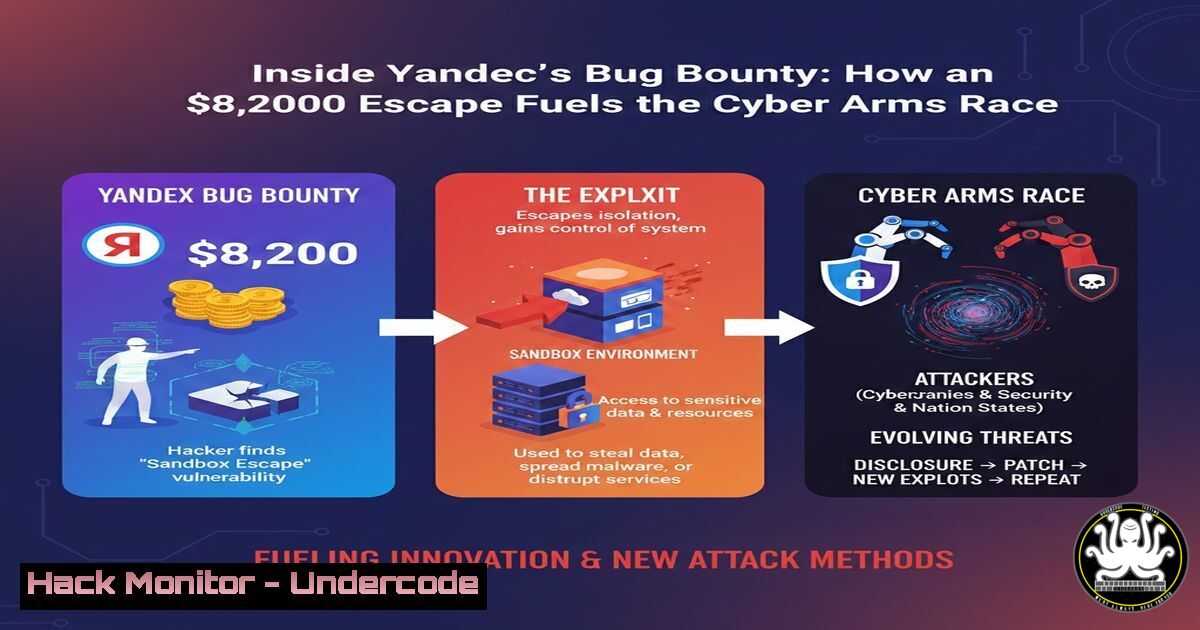
Introduction:
A recent, discreet LinkedIn post by a top bug bounty hunter celebrating a Yandex reward unveils the high-stakes world of vulnerability research. Behind such successes lies a structured multi-million dollar program enticing researchers to find critical flaws, from Chromium sandbox escapes to sophisticated privacy violations, revealing a complex intersection of security, corporate practice, and geopolitics.
Learning Objectives:
- Decode the structure and lucrative rewards of Yandex’s Bug Bounty Program for its flagship browser.
- Understand the technical severity and exploit chains of vulnerabilities like sandbox escapes and the “localhost attack.”
- Analyze the dual role of major tech firms as both security patrons (via bounties) and potential threat actors (via privacy violations).
You Should Know:
- The Yandex Bug Bounty Ladder: From $400 to $8,200 Payouts
Yandex operates a tiered reward system for its browser, with bounties meticulously calibrated to the vulnerability’s impact and exploit complexity. A detailed Proof of Concept (PoC) demonstrating a clear security breach is mandatory for maximum reward.
Step‑by‑step guide explaining what this does and how to use it.
The program’s scope is strictly defined. Researchers must first verify that a flaw is unique to Yandex Browser and not reproducible in the upstream Chromium project. The highest rewards target core browser security failures.
Top Tier – Sandbox Escape ($8,200): This reward is for breaking out of the browser’s sandbox, a critical containment mechanism. A winning report must show execution of arbitrary OS commands as a privileged browser process.
Mid Tier – Remote Code Execution & Privacy Bypasses ($1,700-$4,900): This covers vulnerabilities like logic bugs leading to code execution, bypassing Same-Origin Policy (UXSS), or compromising secure mechanisms like HTTPS or Yandex’s Safebrowsing technology.
Lower Tier – Spoofing & Policy Bypasses ($400-$800): Rewards here are for issues like Address Bar Spoofing or bypassing a site’s Content Security Policy (CSP) directives.
- Dissecting a Critical Vulnerability: The macOS Search Path Hijack (CVE-2025-5470)
A recent vulnerability in Yandex Disk for macOS, identified as CVE-2025-5470, is a textbook case of an “Uncontrolled Search Path Element” or search order hijacking flaw. Rated with a high-severity CVSS-BT score of 7.3, it allows attackers with local access to plant malicious libraries that the application will load instead of legitimate ones, leading to privilege escalation or code execution.
Step‑by‑step guide explaining what this does and how to use it.
This attack exploits how an application finds the dynamic libraries it needs. On macOS, attackers can abuse environment variables like `DYLD_LIBRARY_PATH` or DYLD_INSERT_LIBRARIES.
1. Reconnaissance: An attacker first identifies a vulnerable application like Yandex Disk (versions before 3.2.45.3275). Tools like `otool -L /Applications/Yandex.Disk.app/Contents/MacOS/YandexDisk` can list its dependencies.
2. Crafting the Payload: The attacker writes a malicious library with the same name as a legitimate one the app uses. For instance, a simple library that executes a shell command.
// malib.c
include <stdlib.h>
<strong>attribute</strong>((constructor)) void evil() {
system("open -a Calculator");
}
Compile it: `gcc -dynamiclib -o libz.1.dylib malib.c`
- Exploitation: The attacker places the malicious library in a writable directory and manipulates the application’s launch environment to prioritize that path. This could be done by tampering with a launch agent or tricking a user into running the app from a terminal with the variable set:
DYLD_LIBRARY_PATH=/path/to/malicious/folder /Applications/Yandex.Disk.app/Contents/MacOS/YandexDisk. - Mitigation (System Hardening): System administrators can mitigate this risk by disabling library path environment variables for critical applications. This can be done via Apple’s System Integrity Protection (SIP) and by managing the `get-task-allow` and `com.apple.security.cs.disable-library-validation` entitlements.
-
The Researcher’s Playbook: From Discovery to Detailed PoC
Successful bug bounty hunting requires methodical processes. Historical accounts show that clear communication and persistent follow-up are as crucial as the initial find. Yandex explicitly requires a detailed report including a PoC screencast that visually demonstrates the exploit, browser version info (frombrowser://version), and a clear scenario of the security breach.
Step‑by‑step guide explaining what this does and how to use it.
A professional vulnerability report follows a strict format to ensure reproducibility and swift triage.
1. Isolation & Verification: Before reporting, verify the bug in the current release version of Yandex Browser. Crucially, check if it also exists in the same version of plain Chromium. If it does, the report falls outside the bounty scope. Use the browser’s built-in version page for evidence.
2. Building the PoC: Create a minimal, reproducible example. For a web vulnerability, host the exploit code on a controlled server or a local file. For a UXSS flaw, the PoC must demonstrate accessing third-party origin data.
3. Documentation & Submission: Record a concise screencast (using tools like OBS or Kap) showing the exploit steps and the security impact. Draft the report with: Vulnerability Class, Attack Vector, Steps to Reproduce, Browser/OS Environment, and Impact Assessment. Submit via the official program channels and be prepared for a dialogue with the security team, which historically has involved follow-ups.
4. The Geopolitical and Supply Chain Shadow
Yandex’s position as a Russian “national champion” tech company casts a long shadow over its global software footprint. Research has highlighted cases where a Russia-based Yandex employee is the sole maintainer of a popular open-source tool (fast-glob) embedded in U.S. Department of Defense software. While no malice was found, this creates a single point of failure and a potential coercion vector, demonstrating how commercial software can introduce strategic supply chain risks.
Step‑by‑step guide explaining what this does and how to use it.
Organizations must audit their software bill of materials (SBOM) for dependencies tied to entities in adversarial jurisdictions.
1. Dependency Mapping: Use Software Composition Analysis (SCA) tools (like OWASP Dependency-Track, Snyk) to scan your codebase and generate an SBOM. For a quick CLI check on a Node.js project, run `npm list` to see the tree of dependencies.
2. Maintainer Analysis: For critical dependencies, investigate their source. The `package.json` file or a tool’s GitHub repository will list maintainers. The command `npm info fast-glob` would show repository and maintainer data.
3. Risk Mitigation: Strategies include: Pinning Versions to known-stable releases, Forking critical libraries to maintain internal control, and implementing vulnerability scanning in CI/CD pipelines to flag new threats.
- When the Hunter Becomes the Threat: The Localhost Tracking Attack
In a stark contradiction to its security advocacy, Yandex was implicated in a major privacy scandal. Alongside Meta, it was found to have deployed a “localhost attack” that deliberately broke Android/browser sandboxing to link users’ web browsing history with their app profiles without consent. This technique, akin to malware, allowed Yandex to tie browsing data from sites using its Yandex Metrica pixel to user accounts in its Search, Maps, and Taxi apps.
Step‑by‑step guide explaining what this does and how to use it.
This attack exploited the localhost communication channel (e.g., `http://127.0.0.1`) that is typically trusted.
1. The Exploit Chain: The Yandex app would open a localhost server on the device. The Yandex tracking pixel on a website would then send HTTP requests containing tracking identifiers to this localhost endpoint, bridging the isolated browser session with the identifiable app.
2. Detection & Prevention: Users and auditors can look for suspicious localhost traffic.
On Android: Use a packet capture app (like Packet Capture) to monitor network activity and filter for requests to `127.0.0.1` or `localhost` from the browser.
On Desktop (Linux/macOS): Use command-line tools like `lsof` to see open network connections. `sudo lsof -i :
3. System Defense: The ultimate mitigation is robust application sandboxing enforced at the OS level. On Android, users should rigorously review app permissions and consider using privacy-focused custom ROMs or tracker-blocking DNS services.
What Undercode Say:
- Bug bounties are a double-edged sword. They incentivize the discovery of critical security flaws but also serve as a PR mechanism for companies whose core business models may fundamentally conflict with user privacy and security, as evidenced by Yandex’s own “localhost attack”.
- Modern cyber risk is multi-vector. The threat landscape extends beyond obvious hackers to include strategic supply chain compromises (like a sole-maintainer open-source package) and to the data-hungry practices of major tech firms themselves, requiring defenders to audit both vulnerabilities and vendor trust.
The Yandex case study reveals that the security posture of a global tech firm cannot be evaluated solely by its bug bounty program. True defense requires a holistic view encompassing technical vulnerability management, rigorous software supply chain auditing, and a critical assessment of the data ethics of the vendors in your ecosystem.
Prediction:
The tension exemplified by Yandex—acting as a security patron through bounties while engaging in adversarial privacy violations—will become a standard corporate playbook. Future state-sponsored cyber operations will increasingly leverage “softer” vectors, such as coercing or infiltrating key maintainers in the open-source ecosystems of major tech companies, rather than just conducting direct attacks. Furthermore, as regulatory pressure on surveillance advertising grows, tech firms will innovate even more covert tracking methods that blur the line between legitimate service and exploit, forcing a fundamental re-evaluation of trust in digital infrastructure. Bug bounty programs will remain vital, but they will be perceived as just one layer in a deeply complex and often contradictory cyber risk environment.
▶️ Related Video (80% Match):
🎯Let’s Practice For Free:
IT/Security Reporter URL:
Reported By: Nurlan Bazarbekov – Hackers Feeds
Extra Hub: Undercode MoN
Basic Verification: Pass ✅


