Listen to this Post
Introduction:
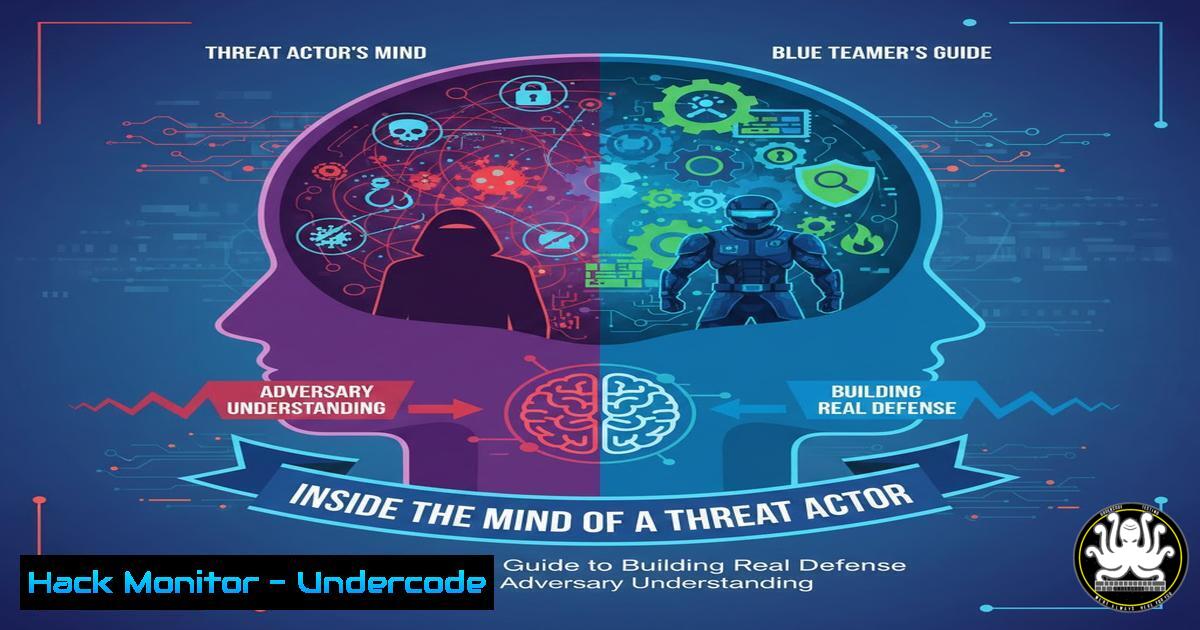
For years, cybersecurity defense has often been a game of catch-up, reacting to breaches and patching vulnerabilities after exploitation. This podcast episode marks a pivotal shift in mindset, engaging directly with a known threat actor, “Pryx,” to dissect the operational realities of the cybercrime ecosystem. This isn’t about glorification; it’s a tactical deep dive into the adversary’s playbook, emphasizing that authentic threat intelligence and proactive defense are built on genuine understanding, not just data scraping.
Learning Objectives:
- Understand the operational workflows and economic models within modern cybercrime ecosystems.
- Learn how to translate adversarial insights into actionable defensive controls and hunting hypotheses.
- Identify the critical differences between surface-level threat data and deep, interaction-based threat intelligence.
You Should Know:
- The Cybercrime Economy: It’s a Business, Not Just Chaos
The first step in defending against threat actors is to recognize their actions as structured business operations. Conversations with individuals like Pryx reveal ecosystems with specialized roles—initial access brokers, ransomware-as-a-service (RaaS) operators, malware developers, and negotiators. Understanding this supply chain is crucial for disrupting it at its weakest links.
Step‑by‑step guide explaining what this does and how to use it.
Step 1: Map the Adversary’s Value Chain. Use intelligence from reports based on real interactions (like those from DarkAtlas) to diagram how an attack campaign progresses from phishing to monetization.
Step 2: Identify Friction Points. Pinpoint stages where the adversary relies on external services (e.g., bulletproof hosting, cryptocurrency tumblers) or must perform noisy actions (lateral movement, data exfiltration).
Step 3: Implement Disruption Controls. For example, if initial access is often sold via dark web forums, implement robust phishing defenses and multi-factor authentication (MFA) to devalue that commodity. Use network segmentation to hinder lateral movement.
2. From Telegram Scraping to Human-Driven Intelligence
Many commercial “threat intelligence” feeds are automated aggregates from public Telegram channels and paste sites. While useful for indicators of compromise (IoCs), they lack context. Human-driven intelligence, as practiced by teams like DarkAtlas, involves direct, albeit cautious, engagement to understand intent, capability, and targeting—the core components of the Cyber Kill Chain.
Step‑by‑step guide explaining what this does and how to use it.
Step 1: Evaluate Your Intel Sources. Audit your threat feeds. Are you only getting IoCs (IPs, domains, hashes) or are you also receiving Tactics, Techniques, and Procedures (TTPs) and campaign analysis?
Step 2: Enrich Data with Context. When you get an IoC, use tools to add context. For a malicious IP, use commands like `whois` and `nslookup` to gather registration data and associated domains.
 Linux/OSX
whois <malicious_ip>
nslookup <malicious_domain>
 For deeper analysis, use passive DNS tools or services like VirusTotal's API.
Step 3: Build Threat Profiles. Create profiles for adversary groups targeting your sector, documenting their preferred TTPs (e.g., “uses Cobalt Strike for beaconing,” “exfiltrates data via Rclone to MegaNZ”).
3. Turning Adversary TTPs into Hunting Queries
Once you understand an adversary’s methods, you can hunt for them in your environment before a full breach occurs. This is where knowledge from conversations becomes actionable defense.
Step‑by‑step guide explaining what this does and how to use it.
Step 1: Extract a TTP. From the podcast, a threat actor might discuss using Living-off-the-Land Binaries (LOLBins) like `certutil.exe` for payload download.
Step 2: Craft a Detection Rule. Create a SIEM or EDR query to flag suspicious use.
/ Example SIEM query for suspicious certutil download /
process.name = "certutil.exe"
AND command_line CONTAINS ("-urlcache" OR "-split" OR "-ping")
AND command_line CONTAINS ("http://" OR "https://")
Step 3: Validate and Deploy. Test the query in a lab environment to reduce false positives, then deploy it to your production security analytics platform.
4. Hardening Against Common Initial Access Techniques
Threat actors repeatedly exploit a handful of common vectors. Understanding their preference helps prioritize defense.
Step‑by‑step guide explaining what this does and how to use it.
Step 1: Secure Email Gateways. Configure advanced anti-phishing policies, impersonation protection, and attachment sandboxing.
Step 2: Enforce Multi-Factor Authentication (MFA). Mandate MFA, especially for all external-facing services (VPN, OWA, cloud consoles). Use phishing-resistant methods where possible (FIDO2/WebAuthn).
Step 3: Patch Relentlessly. Automate patch management for operating systems and third-party applications (like browsers, Office suites, PDF readers). Use a command to quickly audit patches on a critical Windows server:
 Windows PowerShell
Get-HotFix | Sort-Object InstalledOn -Descending | Select-Object -First 20
5. API Security: The Modern Attack Frontier
Threat actors are increasingly targeting APIs, which often lack the visibility and controls of web applications. Understanding this shift is critical.
Step‑by‑step guide explaining what this does and how to use it.
Step 1: Inventory Your APIs. Use tools to discover all internal and external APIs. You can’t protect what you don’t know.
Step 2: Implement Strict Authentication and Rate Limiting. Ensure every API endpoint is protected by robust auth (OAuth 2.0, API keys) and rate limiting to prevent abuse and credential stuffing.
Step 3: Analyze Traffic for Anomalies. Deploy a Web Application Firewall (WAF) or API security gateway that can inspect JSON/XML payloads and detect sequences of calls that indicate data scraping or exploit attempts.
6. Cloud Configuration Hardening
Misconfigured cloud storage (S3 buckets, Blob containers) and over-permissive identity roles are a goldmine for threat actors.
Step‑by‑step guide explaining what this does and how to use it.
Step 1: Run Continuous Configuration Checks. Use tools like AWS Config, Azure Policy, or open-source tools like `ScoutSuite` to audit your cloud environments.
 Example to install and run ScoutSuite for AWS
pip install scoutsuite
python -m scoutsuite -h
Step 2: Apply the Principle of Least Privilege. Regularly review IAM roles and service principles. Use just-in-time access for privileged roles.
Step 3: Encrypt and Log Everything. Enable default encryption on all storage services and ensure CloudTrail (AWS) or Activity Log (Azure) is enabled and exported to a secure, immutable storage for auditing.
7. Building a Proactive Security Culture
Finally, defense is human. Insights from threat actors must be socialized across IT, development, and executive teams to foster a unified, vigilant culture.
Step‑by‑step guide explaining what this does and how to use it.
Step 1: Share Intel Contextually. Don’t just send threat reports. Brief development teams on how specific malware exploits dependencies. Show the finance team how business email compromise (BEC) works.
Step 2: Conduct Purple Team Exercises. Regularly bring your red (attack) and blue (defense) teams together to test detection and response plans against real-world TTPs discussed in intelligence reports.
Step 3: Simulate Phishing with a Purpose. Go beyond basic tests. Create campaigns that mimic the latest initial access techniques observed in your threat intelligence, teaching users to recognize sophisticated lures.
What Undercode Say:
- True Defense is Proactive, Not Reactive: Engaging with the adversary’s perspective is the ultimate strategic advantage, transforming defense from a cost center into a business intelligence function.
- Intelligence Without Context is Just Noise: The value of human-driven threat intelligence cannot be automated away; it provides the “why” and “how” that turns isolated indicators into a coherent defensive strategy.
- Analysis: This podcast represents a maturing of the cybersecurity field. The era of hiding behind firewalls and fearing knowledge of the adversary is over. The most resilient organizations are those that systematically study their opponents, much as any competitive enterprise does. Teams like DarkAtlas, which ethically bridge this gap, are creating a new standard for threat intelligence. This approach moves security beyond compliance checklists and into the realm of strategic business risk management, where understanding the attacker’s ROI is as important as calculating your own security budget.
Prediction:
The normalization of ethical, direct engagement with threat actors for intelligence gathering will become a standard practice for elite security teams within the next 3-5 years. This will bifurcate the threat intelligence market, with a premium placed on high-context, human-sourced insights over bulk indicator feeds. Consequently, we will see a rise in more sophisticated, adaptive attacks from adversaries who know they are being studied, forcing defenders to develop even more dynamic and automated response mechanisms, accelerating the integration of AI on both sides of the cyber battlefield.
▶️ Related Video (72% Match):
🎯Let’s Practice For Free:
IT/Security Reporter URL:
Reported By: Generaleg Darkatlas – Hackers Feeds
Extra Hub: Undercode MoN
Basic Verification: Pass ✅


