
Listen to this Post
Introduction:
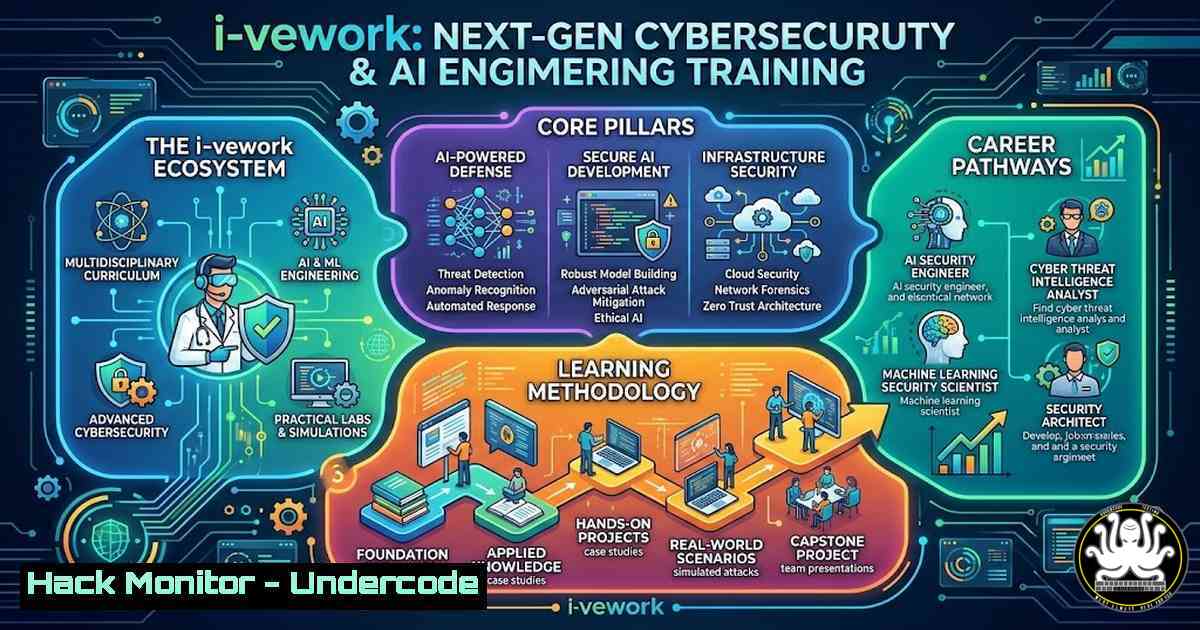
A recent LinkedIn post by Mil Williams, shared by cybersecurity expert Tony Moukbel, has surfaced, hinting at a sophisticated new project focused on digital sovereignty and secrecy. The post references a new slide-deck and points to a series of intriguing URLs under the domain i-ve.work. For cybersecurity professionals and AI engineers, these links represent a potential goldmine of technical frameworks, methodologies, and training resources. This article deconstructs the provided links and associated content, translating them into actionable learning objectives and technical exercises that bridge the gap between digital defense, AI integration, and practical infrastructure hardening.
Learning Objectives:
- Objective 1: Perform digital reconnaissance and footprinting to profile hidden organizational infrastructure and project scopes.
- Objective 2: Analyze foundational security architectures and apply initial hardening techniques to cloud and on-premise environments.
- Objective 3: Implement advanced exploitation and mitigation strategies for interconnected systems and API-driven architectures.
You Should Know:
1. Profiling the Infrastructure: i-ve.work/about
The first link, i-ve.work/about, is the logical starting point for any security assessment. In a professional context, an “/about” page often reveals the mission, team, and technology stack of a project. From a cybersecurity standpoint, this is a footprinting exercise.
What this does:
This step involves passive reconnaissance to understand the target’s digital footprint without directly interacting with the servers in a way that triggers alerts. We are simulating an initial information-gathering phase.
Step‑by‑step guide for Linux (using common CLI tools):
- DNS Lookup: First, resolve the domain to find its IP address. This can reveal if the site is hosted on a shared or dedicated server.
dig i-ve.work +short
nslookup i-ve.work
- Web Server Fingerprinting: Use `curl` to fetch the HTTP headers from the `/about` page. This can reveal the server software (e.g., nginx, Apache), programming language (e.g., PHP, Python), and caching mechanisms.
curl -I https://i-ve.work/about
- Technology Stack Detection: Use `whatweb` (if installed) to passively identify the technologies powering the site.
whatweb https://i-ve.work/about
- Subdomain Enumeration: Use a tool like `sublist3r` or `assetfinder` to find any other subdomains that might host development or staging environments.
assetfinder --subs-only i-ve.work
2. Deconstructing the Foundation: i-ve.work/first
The `/first` endpoint often indicates an introduction or a foundational module. In a security context, this could represent the baseline security controls or the “first principles” of the project’s architecture.
What this does:
This section simulates reviewing a new project’s initial security posture. We will look for common misconfigurations in a standard web stack, assuming the `/first` page contains introductory content or a basic application.
Step‑by‑step guide for Windows (using PowerShell and built-in tools):
1. Check for Directory Listing: Navigate to `https://i-ve.work/first/` (with a trailing slash) in a browser to see if directory listing is enabled, which is a common security flaw.
2. Test for Information Disclosure using PowerShell: Use `Invoke-WebRequest` to download the page and search for comments or hidden fields that might contain developer notes, API keys, or database credentials.
$response = Invoke-WebRequest -Uri "https://i-ve.work/first"
$response.Content -match "<!--(.?)-->"
$response.Content -match "api[_-]?key"
3. Analyze Response Headers for Security Misconfigurations: Check if essential security headers are missing. A missing `Content-Security-Policy` or `X-Frame-Options` header can leave the site vulnerable to XSS and clickjacking.
$response.Headers
3. Full-Scale Architecture Analysis: i-ve.work/full
The `/full` endpoint suggests a complete overview or the entire project documentation. For a cybersecurity engineer, this is equivalent to having access to the full system architecture. This is where we move from passive analysis to understanding potential attack vectors.
What this does:
This step involves conceptualizing the system’s full scope—its APIs, databases, and user interactions—and then applying theoretical exploitation and mitigation techniques.
Step‑by‑step guide (Conceptual and Command-Based):
- API Endpoint Discovery: If the `/full` page leads to documentation, it might list API endpoints. Use `gobuster` (Linux) or a fuzzer to discover hidden API paths if they aren’t explicitly linked.
Linux - Fuzzing for API docs
gobuster dir -u https://i-ve.work -w /usr/share/wordlists/dirb/common.txt -x json,yaml,yml
- Simulating API Security Testing: Assume an API endpoint `https://i-ve.work/api/v1/user`. Test for Insecure Direct Object References (IDOR) by manipulating user IDs in requests.
Attempt to access another user's data by changing the ID
curl -X GET https://i-ve.work/api/v1/user/1234 -H "Authorization: Bearer [bash]"
curl -X GET https://i-ve.work/api/v1/user/1235 -H "Authorization: Bearer [bash]"
- Mitigation Strategy: The correct mitigation is to implement robust authorization checks. For every API request, the server must verify that the authenticated user (from the token) has permission to access the requested resource (user ID 1235).
4. Cloud Infrastructure Hardening: i-ve.work/cloud
The `/cloud` link is the most critical from a modern infrastructure perspective. It likely details the deployment environment, which could be AWS, Azure, or GCP. This section is dedicated to cloud security posture management (CSPM).
What this does:
This guides you through auditing a cloud environment for common misconfigurations, such as open S3 buckets or overly permissive IAM roles, which are leading causes of data breaches.
Step‑by‑step guide (Using AWS CLI as an example):
- Simulate S3 Bucket Discovery: If the project uses AWS S3, bucket names might be predictable (e.g.,
i-ve.work-data). Attempt to list the contents of a bucket if it’s misconfigured to be publicly readable.Linux - Attempt to list a bucket (requires AWS CLI configured, or just curl) Using curl directly to test public access curl https://i-ve.work-data.s3.amazonaws.com/ curl https://i-ve.work-backup.s3.amazonaws.com/
- Check for Open S3 Buckets with AWS CLI:
If you have AWS CLI and a potential bucket name
aws s3 ls s3://i-ve.work-data --no-sign-request
- Hardening Command: To fix a publicly exposed bucket, you would apply a bucket policy that blocks all public access.
// Example AWS S3 Bucket Policy to block public access
{
"Version": "2012-10-17",
"Statement": [
{
"Effect": "Deny",
"Principal": "",
"Action": "s3:",
"Resource": [
"arn:aws:s3:::i-ve.work-data",
"arn:aws:s3:::i-ve.work-data/"
],
"Condition": {
"Bool": {
"aws:SecureTransport": "false"
}
}
}
]
}
4. Cloud Hardening Checklist:
- Enable S3 Block Public Access at the account level.
- Enforce MFA for IAM user deletion and sensitive actions.
- Use AWS Config rules to continuously monitor for non-compliant resources (like security groups allowing SSH from 0.0.0.0/0).
What Undercode Say:
- Key Takeaway 1: Digital sovereignty projects like the one hinted at by Mil Williams require a “security-first” architecture. The URLs shared (
/first,/full,/cloud) represent a structured approach to building and documenting such a system, which is a best practice for any enterprise. The focus on secrecy and defence necessitates that every layer, from the `/about` page to the `/cloud` deployment, is hardened against reconnaissance and attack. - Key Takeaway 2: The integration of cybersecurity, AI, and IT engineering, as highlighted in Tony Moukbel’s profile, is the future of infrastructure management. The commands and steps outlined above—spanning DNS recon, API testing, and cloud hardening—are not isolated tasks but part of a continuous, automated DevSecOps pipeline. The analysis of these links serves as a practical example of how to dissect and secure a complex, interconnected system, moving from passive observation to active defense.
Prediction:
The convergence of digital infrastructure and national defence, as implied by “Fortress Europe,” will accelerate the demand for “Full-Stack Security Engineers”—professionals who can navigate the layers from `/about` to `/cloud` with equal proficiency. Future attacks will not target a single server but the entire lifecycle, exploiting weaknesses in AI models, API integrations, and cloud configurations simultaneously. Consequently, training resources will evolve from static courses to dynamic, interconnected platforms like i-ve.work, simulating real-world, multi-vector attack scenarios. The emphasis will shift from simply preventing breaches to ensuring resilience and secrecy in an increasingly sovereign digital landscape.
▶️ Related Video (86% Match):
🎯Let’s Practice For Free:
IT/Security Reporter URL:
Reported By: Mil Williams – Hackers Feeds
Extra Hub: Undercode MoN
Basic Verification: Pass ✅


