Listen to this Post
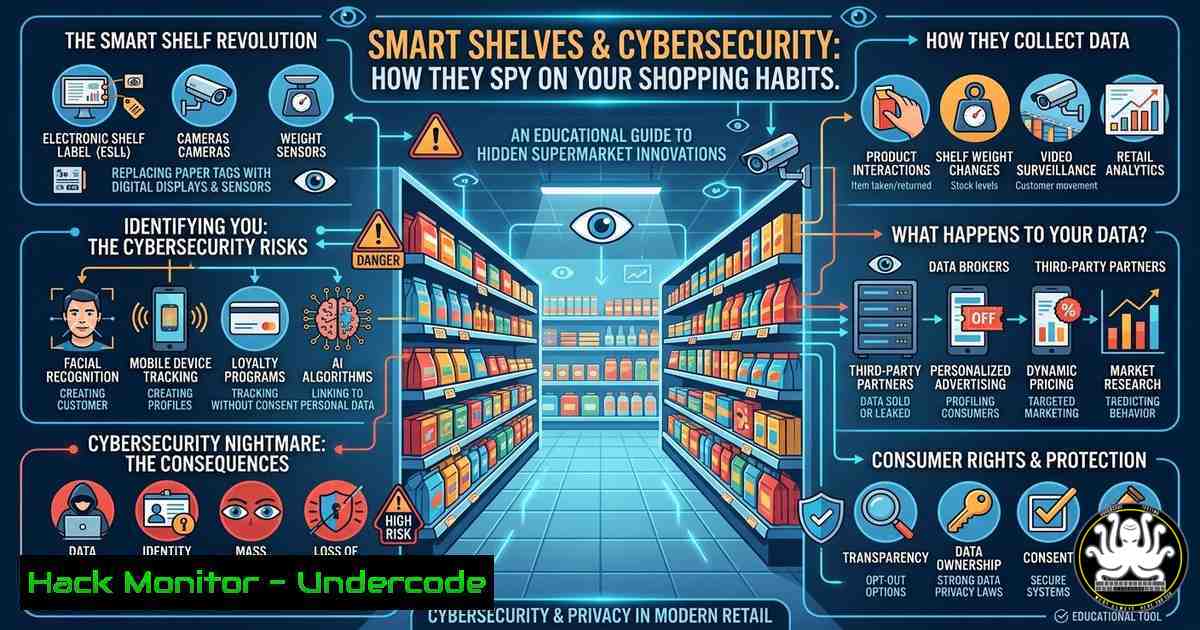
Introduction:
The viral video of rotating supermarket shelves designed for efficient restocking represents more than just a retail innovation—it introduces a new frontier in IoT security vulnerabilities. As physical retail spaces integrate smart technologies like automated shelving systems, the convergence of operational technology (OT) and information technology (IT) creates an expanded attack surface where threat actors can potentially disrupt supply chains, manipulate inventory data, or exfiltrate sensitive consumer behavior analytics.
Learning Objectives:
- Identify security vulnerabilities in automated retail infrastructure systems
- Implement network segmentation strategies for IoT-enabled operational technology
- Apply penetration testing methodologies to physical retail automation environments
You Should Know:
- Mapping the Attack Surface of Automated Shelf Systems
The rotating shelf system shared by Christine Raibaldi represents a class of smart retail infrastructure that typically relies on embedded controllers, sensors, and network connectivity for remote management. Understanding the underlying architecture is crucial for security assessments.
Start by identifying the components:
- PLC (Programmable Logic Controllers) managing motor controls
- Sensor arrays (weight, motion, RFID) for inventory tracking
- Network interfaces (Ethernet, Wi-Fi, or industrial protocols like Modbus)
- Central management server or cloud platform
To map potential vulnerabilities, perform network reconnaissance:
Linux command for local network scanning:
sudo nmap -sn 192.168.1.0/24 | grep -E "MAC|Nmap scan" | awk '{print $5,$6}' | grep -v "Host is up"
For Windows (PowerShell):
Get-NetNeighbor -AddressFamily IPv4 | Where-Object {$_.State -eq "Reachable"} | Select-Object IPAddress, LinkLayerAddress
Identify industrial control protocols:
sudo nmap -sU -p 502,1911,44818,2222 192.168.1.0/24  Common SCADA/Modbus ports
sudo nmap -sT -p 80,443,8080,8443,1883,8883 192.168.1.0/24  Web interfaces and MQTT
These commands help enumerate devices that might be vulnerable to default credentials or unpatched firmware, which are prevalent in retail automation deployments.
2. Hardening Industrial Communication Protocols
Many automated shelf systems communicate using legacy industrial protocols like Modbus TCP, which lack built-in security features such as authentication or encryption. A threat actor gaining network access could send arbitrary commands to manipulate shelf movements or inventory data.
To secure these communications, implement a defense-in-depth approach:
Step 1: Deploy network segmentation using VLANs:
 Cisco IOS example for isolating OT network
interface vlan 100
description OT-SmartShelves
ip address 10.10.10.1 255.255.255.0
!
access-list 100 deny ip any 10.10.10.0 0.0.0.255
access-list 100 permit ip any any
Step 2: Implement Modbus TCP firewall filtering with iptables on Linux gateway:
 Allow only specific management IP to Modbus port
sudo iptables -A INPUT -p tcp --dport 502 -s 10.10.20.5 -j ACCEPT
sudo iptables -A INPUT -p tcp --dport 502 -j DROP
Step 3: Deploy Modbus proxy with authentication using open-source tools:
 Using ModbusPal for simulation and security testing
java -jar ModbusPal.jar
 Configure slave simulation and monitor anomalous commands
For Windows environments, consider using Windows Defender Firewall with advanced security rules to restrict communication to only authorized systems.
3. Credential Management and Default Password Audits
Retail automation systems frequently ship with default credentials that remain unchanged during deployment. Attackers leverage this weakness through automated scanning tools searching for exposed industrial control systems.
Perform a credential audit using Metasploit:
msf6 > use auxiliary/scanner/scada/modbus_findunitid
msf6 > set RHOSTS 192.168.1.50-100
msf6 > run
For Windows-based management interfaces, utilize:
 Audit for weak passwords in local users
Get-LocalUser | Where-Object { $<em>.PasswordRequired -eq $false }
 Check for service accounts with interactive logon rights
Get-WmiObject -Class Win32_Service | Where-Object { $</em>.StartName -ne "LocalSystem" }
Implement password policies using Linux PAM modules:
sudo nano /etc/pam.d/common-password
 Add: password requisite pam_pwquality.so retry=3 minlen=12 difok=3
The rotating shelf systems likely include administrative interfaces accessible via web dashboards. Tools like Hydra can test for weak credentials:
hydra -L admin_users.txt -P common_passwords.txt 192.168.1.100 http-post-form "/login:username=^USER^&password=^PASS^:Login failed"
4. Securing Supply Chain Data with API Security
Modern smart shelf systems transmit inventory data to cloud platforms for real-time analytics, often through REST APIs. Weak API security can expose stock levels, consumer movement patterns, and operational schedules—valuable intelligence for competitors or threat actors planning physical supply chain disruptions.
Test API endpoints using Burp Suite or OWASP ZAP:
– Intercept API calls from the shelf management interface
– Check for excessive data exposure in responses
– Test for IDOR (Insecure Direct Object References) by modifying numeric identifiers
Example API security testing with curl:
 Test for information disclosure in API responses
curl -X GET "https://smartretail-api.com/shelves/001/inventory" -H "Authorization: Bearer [bash]" -v

Attempt privilege escalation by modifying user ID
curl -X GET "https://smartretail-api.com/users/001/permissions" -H "Authorization: Bearer [bash]" -v

Check for SQL injection in query parameters
curl -X GET "https://smartretail-api.com/search?product=' OR '1'='1" -H "Authorization: Bearer [bash]"
Implement API security controls:
- Rate limiting using NGINX: `limit_req_zone $binary_remote_addr zone=api:10m rate=10r/s;`
– Input validation with JSON Schema validation - JWT tokens with short expiration times and refresh token rotation
5. Physical Security and Tamper Detection
Automated shelving introduces physical security concerns where unauthorized access to control panels or network ports could allow attackers to disable safety mechanisms or cause physical damage.
Implement tamper detection using Raspberry Pi with GPIO sensors:
 Python script for tamper detection using magnetic switches
import RPi.GPIO as GPIO
import time

GPIO.setmode(GPIO.BCM)
DOOR_SENSOR_PIN = 17
GPIO.setup(DOOR_SENSOR_PIN, GPIO.IN, pull_up_down=GPIO.PUD_UP)

try:
while True:
if GPIO.input(DOOR_SENSOR_PIN) == GPIO.LOW:
print("ALERT: Shelf access panel opened")
 Log to SIEM or send alert
time.sleep(0.5)
except KeyboardInterrupt:
GPIO.cleanup()
For Windows-based monitoring, use PowerShell to monitor event logs for unauthorized physical access attempts:
 Monitor security log for physical access events
$query = @"
<QueryList>
<Query Id="0">
<Select Path="Security">
[System[EventID=4648 or EventID=4624 or EventID=4672]]
</Select>
</Query>
</QueryList>
"@
Get-WinEvent -FilterXml $query -MaxEvents 10
6. Cloud Infrastructure Hardening for Retail IoT
If the shelf system uses cloud connectivity (likely AWS IoT Core, Azure IoT Hub, or similar), misconfigured cloud services represent a significant risk. Attackers can leverage exposed S3 buckets, insecure device shadow updates, or weak IAM roles.
Perform cloud security assessments using AWS CLI:
 List S3 buckets for exposure
aws s3api list-buckets --query "Buckets[].Name"

Check bucket ACLs for public access
aws s3api get-bucket-acl --bucket your-bucket-name

Audit IAM roles with excessive permissions
aws iam list-roles | grep -A 5 "IoT"
Azure IoT Hub security hardening:
 List IoT hubs and check diagnostic settings
Get-AzIotHub | Select-Object Name, ResourceGroup

Enable diagnostic logs for security monitoring
Set-AzDiagnosticSetting -ResourceId /subscriptions/subid/resourceGroups/rg/providers/Microsoft.Devices/IotHubs/hub -Enabled $true -Category "Connections","DeviceTelemetry"
Implement device authentication using X.509 certificates rather than symmetric keys to prevent credential theft from device compromise.
What Undercode Say:
- Converged Risk: The integration of physical automation with digital systems transforms simple inventory innovations into complex cybersecurity challenges requiring multidisciplinary security approaches.
- Default is Defeat: Automated shelf systems inherit the same fundamental vulnerabilities as industrial control systems—default credentials, unencrypted protocols, and insufficient network segmentation—making them low-hanging fruit for opportunistic attackers.
- Supply Chain as Attack Vector: Compromising smart retail infrastructure enables threat actors to manipulate inventory data, cause physical disruptions, or pivot into corporate networks, blurring the lines between physical security and cybersecurity.
- Visibility is Prevention: Organizations deploying smart retail technologies must implement continuous monitoring for OT networks, leveraging tools like Security Onion or Wazuh to detect anomalous Modbus commands or unauthorized configuration changes before they cause operational impact.
Prediction:
The retail sector will experience a significant security incident involving automated shelving systems within the next 24 months, likely orchestrated through exploited IoT vulnerabilities to orchestrate coordinated inventory manipulation across multiple store locations. This will catalyze regulatory requirements mandating security certifications for retail automation equipment and force retailers to treat physical infrastructure as part of their security operations center (SOC) monitoring scope. Forward-thinking organizations will begin conducting purple-team exercises that simulate combined physical-digital attacks, preparing for scenarios where cyber compromises translate directly into operational failures on the retail floor.
▶️ Related Video (76% Match):
🎯Let’s Practice For Free:
IT/Security Reporter URL:
Reported By: Christine Raibaldi – Hackers Feeds
Extra Hub: Undercode MoN
Basic Verification: Pass ✅


