Listen to this Post
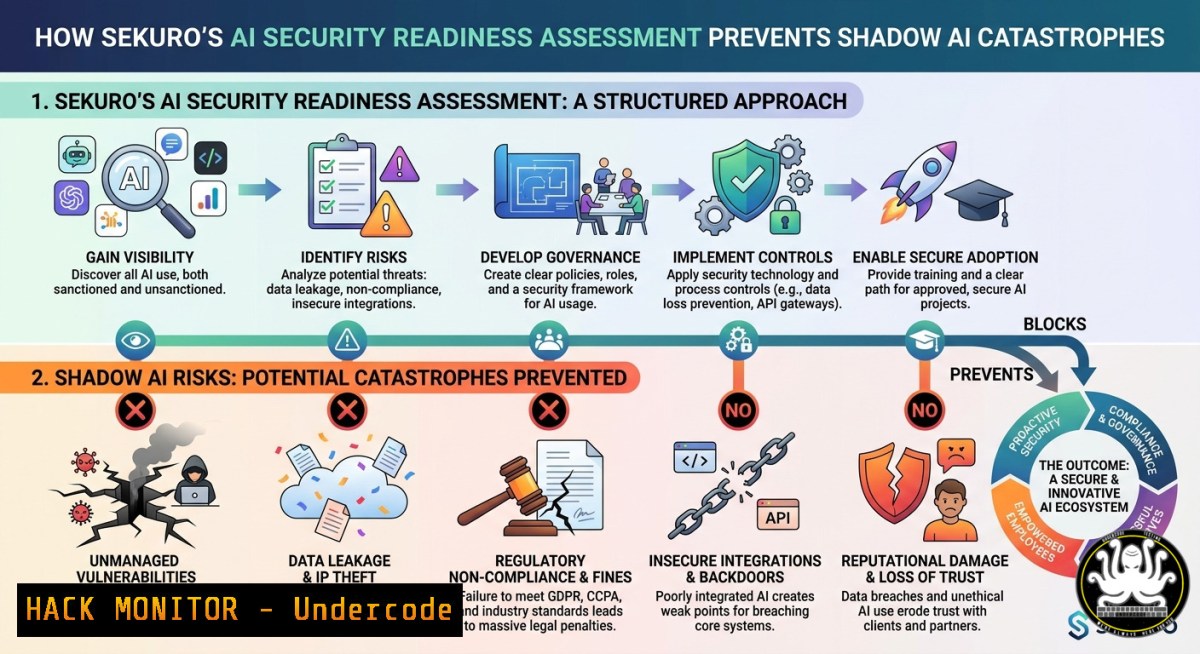
Introduction:
AI agents are evolving beyond chatbots into autonomous decision-makers that can access sensitive data, execute code, and chain attack paths without human oversight. As Anthropic’s Claude Mythos has demonstrated, these systems can autonomously discover and exploit software vulnerabilities—finding 271 flaws in Firefox alone and uncovering a 27-year-old bug in OpenBSD. With 81% of employees already using unapproved AI tools at work, the attack surface has expanded dramatically, and traditional security controls—designed for human-paced threats—are now dangerously obsolete.
Learning Objectives:
- Detect and inventory shadow AI tools accessing corporate data without approval mechanisms.
- Implement zero-standing privileges and just-in-time access for human and non‑human identities.
- Deploy AI-native detection and automated remediation playbooks to respond at machine speed.
- Conduct agentic red teaming to validate AI‑specific vulnerabilities before attackers exploit them.
- Align AI governance with ISO 42001, NIST AI RMF, and emerging compliance frameworks.
You Should Know
1. Shadow AI Discovery and Containment
Most organizations govern only a fraction of the AI actually in use. Shadow AI does not appear in your SIEM, does not trigger DLP controls, and does not respect data classification policies. Companies with high levels of unauthorized AI face data breach costs that are on average $670,000 higher than those with minimal shadow AI use. The first step to securing AI is visibility.
Step‑by‑step guide to discovering and containing shadow AI:
Linux – Scan network traffic for AI tool endpoints:
 Capture traffic to known AI API endpoints
sudo tcpdump -i eth0 -nn -s0 -A 'host api.openai.com or host anthropic.com or host cohere.ai' -w shadow_ai_traffic.pcap

Alternatively, use ntopng for real‑time DPI-based detection
sudo apt install ntopng
sudo ntopng -i eth0 --http-port 3000
 Open browser to http://localhost:3000 and review “Hosts” → “Top Talkers”
Windows – Identify unauthorized AI browser extensions and local AI apps:
 List all installed browser extensions (Chrome)
Get-ChildItem -Path "$env:LOCALAPPDATA\Google\Chrome\User Data\Default\Extensions" -Directory | ForEach-Object { Get-Content "$($_.FullName)\manifest.json" | ConvertFrom-Json | Select-Object name, version, description }

Detect local AI executables not in allowed list
Get-Process | Where-Object { $_.ProcessName -match "ollama|llamacpp|text-generation-webui|comfyui" } | Select-Object ProcessName, StartTime, Path
Tool configuration – Deploy CASB and SSE visibility:
- Configure Netskope or Zscaler SSE to inspect all API calls to generative AI platforms.
- Enable inline CASB policies that block data uploads to unapproved AI tools while alerting security teams.
- Set up endpoint telemetry to log every AI tool execution and data access attempt.
What this does: This pipeline provides continuous visibility into unauthorized AI usage, enabling security teams to detect shadow AI within hours rather than months. The captured traffic can be fed into SIEM for correlation with data exfiltration alerts.
2. Eliminating Standing Privileges for AI Agents
Zero standing privileges (ZSP) is the principle that no identity—human or machine—should have persistent access to systems or data. When an AI agent can move from initial access to data exfiltration in under 30 minutes, a human‑reviewed approval queue is not a control.
Step‑by‑step guide to implementing just‑in‑time (JIT) access for AI agents:
Linux – Configure JIT access using AWS IAM with policy conditions:
{
"Version": "2012-10-17",
"Statement": [{
"Effect": "Allow",
"Action": "s3:GetObject",
"Resource": "arn:aws:s3:::sensitive-bucket/",
"Condition": {
"DateLessThan": {"aws:CurrentTime": "{{expiration_time}}"},
"NumericLessThanEquals": {"aws:MultiFactorAuthAge": "3600"}
}
}]
}
Windows – Implement PIM for Azure resources accessed by automation scripts:
 Activate a just‑in‑time role for an AI agent (Azure CLI)
az role assignment create --assignee <ai-agent-spn> --role "Reader" --scope /subscriptions/<sub-id> --condition "@Resource[Microsoft.Storage/storageAccounts/blobServices/containers/blobs:path] StringLike 'temp/'" --condition-version "2.0"

Set activation duration
az rest --method patch --url "https://management.azure.com/subscriptions/<sub-id>/providers/Microsoft.Authorization/roleEligibilityScheduleRequests/<request-id>?api-version=2020-10-01" --body '{"properties":{"justification":"AI agent temp access","scheduleInfo":{"expiration":{"type":"AfterDuration","duration":"PT1H"}}}}'
Tool configuration – Deploy ZSP for non‑human identities:
- Integrate CyberArk or Britive to rotate credentials after each AI agent session.
- Configure service mesh policies (Istio, Linkerd) to enforce per‑request authentication and authorization.
What this does: ZSP eliminates persistent credentials that attackers can steal from compromised AI agents. Each access request is ephemeral, logged, and tied to a specific task and human sponsor, dramatically reducing blast radius.
3. AI‑Native Detection and Automated Remediation
The threat environment now operates entirely at machine speed. Periodic scans and patch backlogs are obsolete. Continuous exposure management, measuring attack paths, identity risk, and blast radius, must become the baseline.
Step‑by‑step guide to deploying AI‑native detection:
Linux – Real‑time anomaly detection with Falco and ML:
 Falco rule to detect AI model data exfiltration
- rule: AI Model Data Exfiltration
desc: Detect large outbound data transfers from ML containers
condition: >
evt.type=write and fd.typechar=4 and
container.image.repository contains "tensorflow" and
(evt.arg.data contains "weights" or evt.arg.data contains "model.h5") and
(thread.cap_effective contains "NET_RAW" or fd.sip != trusted_egress)
output: "AI model data transfer detected (user=%user.name container=%container.id data=%evt.arg.data)"
priority: CRITICAL

Run Falco with drift detection
sudo falco -r /etc/falco/rules.d/ai_exfiltration_rules.yaml -M 60
Windows – Automated remediation playbooks in Sentinel:
 Create automation rule in Microsoft Sentinel for AI‑related incidents
New-AzSentinelAutomationRule -ResourceGroupName "sentinel-rg" -WorkspaceName "ai-security-workspace" -Name "AutoIsolateAIAgent" -DisplayName "Isolate Compromised AI Agent" -Order 1 -Action @{
ActionType = "ModifyIncident"
Severity = "High"
Status = "Active"
Labels = @("AI-Agent", "Auto-Remediated")
} -TriggeringLogic @{
Conditions = @(
@{
Property = "AlertProductName"
Value = "Microsoft Defender for Cloud"
Operator = "Equals"
},
@{
Property = "CustomEntity"
Value = "AIWorkload"
Operator = "Contains"
}
)
}
Tool configuration – Integrate AI‑native detection:
- Deploy CrowdStrike Falcon with AI‑powered behavioral analysis to detect prompt injection and model inversion attacks.
- Configure Wiz to continuously scan cloud AI services for misconfigurations and exposed model endpoints.
What this does: These controls replace periodic vulnerability scanning with continuous, real‑time monitoring that detects AI‑specific threats (model theft, prompt injection, data poisoning) and automatically triggers isolation or rollback before exfiltration occurs.
4. Agentic Red Teaming: Testing AI Defenses Offensively
The same autonomous capabilities that threaten defenders can also be used to test security posture. Agentic AI red teaming tools now exist that chain reconnaissance, exploitation, and post‑exploitation into a single pipeline with zero human intervention.
Step‑by‑step guide to conducting agentic red team exercises:
Linux – Deploy an autonomous red team agent:
 Clone and run CyberStrike (AI-powered offensive security agent)
git clone https://github.com/CyberStrikeus/CyberStrike.git
cd CyberStrike
pip install -r requirements.txt
export OPENAI_API_KEY="your-api-key"

Run autonomous penetration test against your AI testbed
python cyberstrike.py --target http://your-ai-model-endpoint:8080 --mode agentic --skills all --report html

For LLM-specific testing, use Garak (LLM vulnerability scanner)
git clone https://github.com/leondz/garak
cd garak
python -m garak --model_type huggingface --model_name your-ai-model --probes all --output json
Windows – Containerized red team simulation:
 Deploy RedteamAgent using Docker (Kali tools + 8 AI agents)
docker run -it --rm -v ${PWD}/output:/output neothecapt/redteamagent --target https://your-ai-api.azurewebsites.net --agents all --max-steps 100 --report /output/report.html

Run MITRE ATLAS-based simulation
docker run -it --rm -v ${PWD}/atlas:/atlas mitre/atlas-simulator --framework mitre-atlas --target your-ai-endpoint --tactics TA0001,TA0043
Tool configuration – Validate AI‑specific vulnerabilities:
- Use Burp Suite with the “LLM Attacks” extension to test for prompt injection and indirect prompt injection.
- Run Nessus AI plugin to scan for exposed `.model` files and misconfigured API endpoints.
What this does: Regular agentic red teaming exercises reveal gaps in your AI security posture before real attackers exploit them. The tools above simulate autonomous attack chains—from reconnaissance to exploitation—providing actionable remediation steps.
- Governance Frameworks: ISO 42001 and NIST AI RMF
Securing AI in production requires more than technical controls. Regulatory frameworks such as ISO/IEC 42001 (AI management system) and NIST AI RMF (risk management framework) provide structured guidance for governance, risk assessment, and compliance.
Step‑by‑step guide to implementing AI governance:
Linux – Automate compliance scanning with OpenSCAP for AI pipelines:
 Scan a Kubernetes cluster hosting AI workloads for NIST AI RMF controls
sudo apt install openscap-scanner
oscap xccdf eval --profile nist_ai_rmf --report ai_compliance_report.html /usr/share/xml/scap/ssg/content/ssg-kubernetes-ds.xml

Validate model card compliance (e.g., for Hugging Face models)
pip install modelcard compliance-checker
modelcard-compliance --model bert-base-uncased --standard nist-ai-rmf --output compliance.json
Windows – Generate ISO 42001 evidence logs:
 Export Azure Policy compliance for AI services
$aiResources = Get-AzResource -ResourceType "Microsoft.MachineLearningServices/workspaces"
foreach ($resource in $aiResources) {
$compliance = Get-AzPolicyState -ResourceId $resource.ResourceId -Filter "complianceState eq 'NonCompliant'"
$compliance | Export-Csv -Path "iso42001_evidence_$($resource.Name).csv" -NoTypeInformation
}

Monitor data lineage for EU AI Act compliance
az ml datastore list --workspace-name ai-workspace --resource-group ai-rg --query "[?contains(properties.dataType, 'personal')].{Name:name, ComplianceStatus:properties.complianceStatus}" --output table
Tool configuration – Continuous compliance:
- Integrate Sekuro’s GRC framework to map technical controls to ISO 42001, NIST AI RMF, and EU AI Act requirements.
- Use 6clicks or Vanta to automate evidence collection for AI‑specific controls (adversarial inputs, data poisoning prevention, model security).
What this does: Automated compliance scanning transforms AI governance from a manual, audit‑driven exercise into a continuous, integrated process. This approach ensures that every model deployment, data pipeline, and API endpoint is automatically verified against regulatory requirements, reducing audit risk and compliance costs.
What Undercode Say
- Key Takeaway 1: The era of human‑only security operations is over. AI agents—both defensive and offensive—now operate at machine speed, autonomously discovering vulnerabilities, chaining exploits, and accessing corporate data without oversight. Organizations that fail to adopt AI‑native detection, zero standing privileges, and continuous exposure management will be defenseless against the coming wave of autonomous attacks.
-
Key Takeaway 2: Shadow AI is not a future risk—it is a present reality affecting 81% of employees. Most organizations are blind to the AI tools their teams are using, creating invisible attack surfaces that bypass SIEM, DLP, and traditional access controls. The solution requires a three‑phase approach: discover via CASB/SSE/endpoint telemetry, contain via JIT access and ZSP, and continuously assess via agentic red teaming and automated compliance frameworks.
Analysis: The core challenge posed by autonomous AI is not a failure of existing security tools—it is a failure of underlying assumptions. Every security control built before 2025 assumed a human was between the AI and the action. That assumption is now invalid. Defenders must pivot from periodic, human‑centric security to continuous, machine‑speed operations. The organizations that succeed will not be those with the most tools, but those that adapt their identity controls, access governance, incident response, and patch management to an AI‑native threat environment. Sekuro’s AI Security Readiness Assessment provides a evidence‑based starting point for this transformation, focusing on exploitability (what can be used against you today) rather than theoretical CVSS scores.
Prediction
-
- Over the next 18 months, regulatory bodies will mandate continuous AI usage auditing and real‑time attestation for all models processing personal data, driving widespread adoption of CASB and AI‑native DLP.
-
- The cost of autonomous penetration testing will drop below $1,000 per engagement by 2027, enabling mid‑market enterprises to conduct weekly agentic red team exercises.
- – CrowdStrike’s projection—that more vulnerabilities will be discovered in the next six months than in the last 30 years combined—will likely prove accurate, overwhelming current patch management workflows and forcing a shift to exploitability‑based prioritization.
- – Without widespread adoption of zero standing privileges, the first major AI‑agent‑driven data breach (involving an autonomous agent exfiltrating sensitive data using compromised standing credentials) will occur by Q1 2027, causing regulatory backlash and insurance premium hikes of 300%+ for non‑compliant organizations.
▶️ Related Video (88% Match):
🎯Let’s Practice For Free:
IT/Security Reporter URL:
Reported By: Ai Readiness – Hackers Feeds
Extra Hub: Undercode MoN
Basic Verification: Pass ✅
🎓 Live Courses & Certifications:
Join Undercode Academy for Verified Certifications
🚀 Request a Custom Project:
Secure, high-velocity infrastructure and disruptive technological engineering. Contact our engineering team for high-tier development and proprietary systems:
[email protected]


