
Listen to this Post
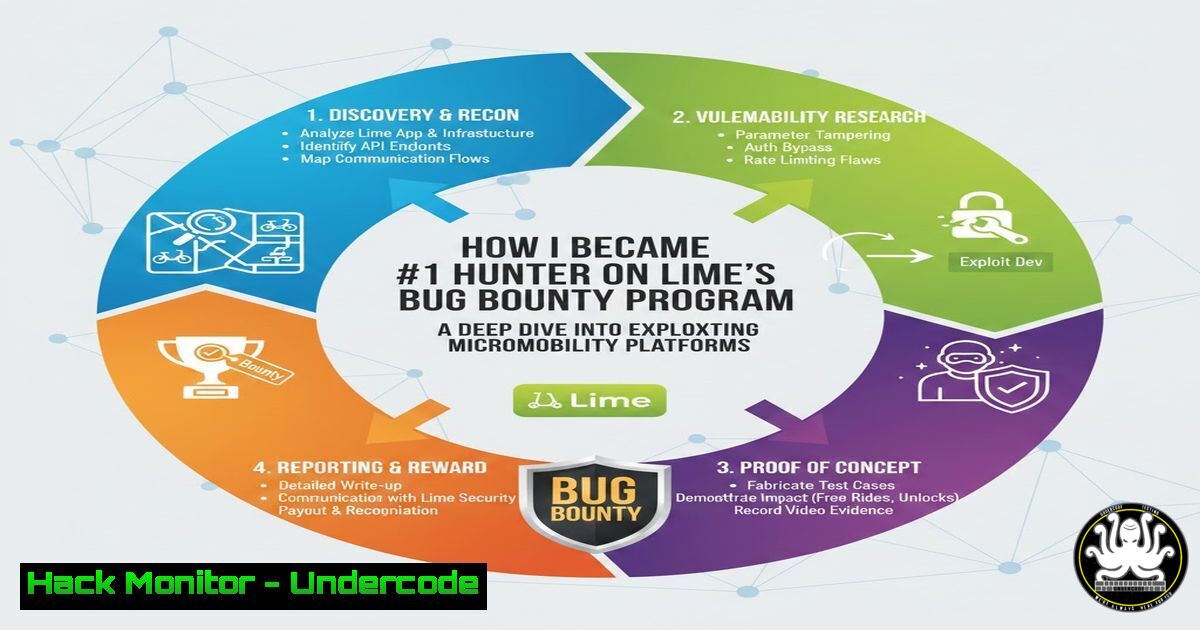
Introduction:
Bug bounty programs have become the frontline defense for companies like Lime, the world’s largest micromobility operator, offering rewards to ethical hackers who uncover vulnerabilities before malicious actors can exploit them. Achieving the top spot on such a competitive program requires a blend of recon, technical prowess, and understanding of IoT, mobile, and cloud ecosystems. This article dissects the methodologies, tools, and commands that can help you dominate bug bounty hunting on platforms like Lime, turning security flaws into cash and recognition.
Learning Objectives:
- Understand the attack surface of micromobility platforms, including mobile apps, APIs, and IoT firmware.
- Master practical techniques for reconnaissance, vulnerability scanning, and exploitation using open-source tools.
- Learn how to write clear, impactful bug reports that maximize bounty rewards and avoid duplicates.
You Should Know:
1. Reconnaissance: Mapping Lime’s Digital Footprint
Recon is the foundation of any successful bug hunt. For a target like Lime, which operates via mobile apps (iOS/Android) and backend APIs, start by gathering subdomains, endpoints, and exposed assets.
- Passive Recon: Use tools like `amass` and `subfinder` to enumerate subdomains.
amass enum -d lime.com -o lime_subdomains.txt
subfinder -d lime.com -all -o lime_subdomains.txt
- Active Recon: Probe for live hosts and open ports with `httpx` and
nmap.httpx -l lime_subdomains.txt -status-code -title -tech-detect -o live_hosts.txt nmap -sS -p- -T4 -iL live_hosts.txt -oA lime_nmap
- Mobile App Analysis: Download the Lime APK or IPA and extract endpoints using `apktool` and
MobSF.apktool d lime.apk -o decompiled/ grep -r "https\?://" decompiled/ | cut -d '/' -f3 | sort -u > endpoints.txt
Upload the APK to MobSF (https://github.com/MobSF/Mobile-Security-Framework-MobSF) for automated static and dynamic analysis, revealing hardcoded API keys, insecure data storage, and more.
- API Security Testing: Finding Flaws in Lime’s Backend
Micromobility apps rely heavily on RESTful APIs for ride requests, payments, and vehicle status. Testing these APIs can uncover IDOR, broken authentication, and rate-limiting issues.
- Intercept Traffic: Configure Burp Suite or OWASP ZAP as a proxy on your mobile device. Install CA certificates to decrypt HTTPS traffic.
- Automated Scanning: Use `ffuf` for directory fuzzing and parameter discovery.
ffuf -u https://api.lime.com/FUZZ -w /usr/share/wordlists/dirb/common.txt -mc 200,403
- IDOR Testing: Look for endpoints like `/api/v1/user/{id}` or
/ride/{ride_id}. Change the ID and check if you can access another user’s data.curl -H "Authorization: Bearer <token>" https://api.lime.com/api/v1/user/12345 curl -H "Authorization: Bearer <token>" https://api.lime.com/api/v1/user/12346
If the second returns data without proper authorization, you’ve found an IDOR.
- Rate Limiting: Use a simple Python script to bombard an endpoint (e.g., password reset) and see if it blocks after N attempts.
import requests
for i in range(100):
r = requests.post("https://api.lime.com/api/v1/auth/reset", data={"email":"[email protected]"})
print(i, r.status_code)
- IoT Firmware Analysis: Hacking the Lime Scooter Itself
Lime’s scooters are IoT devices with firmware that communicates with the cloud. Analyzing firmware can reveal hardcoded credentials, vulnerable services, or update mechanisms.
- Firmware Extraction: If you can obtain a firmware update file (e.g., from an OTA endpoint), use `binwalk` to extract it.
binwalk -e lime_firmware.bin
- File System Inspection: Look for configuration files, scripts, and binaries.
find extracted_fs/ -name ".conf" -o -name ".key" -o -name ".pem" 2>/dev/null
strings extracted_fs/bin/ | grep -i "password|secret|token"
- Emulation: Use QEMU to emulate the firmware and test services locally.
qemu-system-arm -M vexpress-a9 -kernel vmlinuz -initrd initrd.img -append "root=/dev/mmcblk0" -net nic -net user
- Check for Debug Interfaces: Many IoT devices expose UART or JTAG. If you have physical access, you can connect via UART to get a root shell. This isn’t always possible remotely, but you can search for exposed debug endpoints in the firmware.
4. Cloud Misconfigurations: Exposed S3 Buckets and Databases
Lime likely uses cloud services like AWS, GCP, or Azure. Misconfigured cloud storage or databases can leak sensitive data.
- Bucket Brute-Forcing: Use `s3scanner` to check for public buckets.
s3scanner --bucket-file buckets.txt --enumerate
Generate bucket names from permutations of “lime”, “limebike”, “micromobility”, etc.
- Bucket Listing: If a bucket is public, list its contents.
aws s3 ls s3://lime-public-backup --no-sign-request
Download interesting files.
- Database Exposure: Search for exposed MongoDB, Elasticsearch, or MySQL instances on common ports (27017, 9200, 3306) using `shodan` or
masscan.masscan -p27017,9200,3306 --rate=1000 --range 0.0.0.0/0 -oJ shodan_lime.json
5. Web Application Vulnerabilities: XSS, SQLi, and SSRF
Though Lime’s primary interface is mobile, there are often web portals for admins, partners, or support. Test these thoroughly.
- XSS: Inject payloads into input fields. Use a tool like
XSStrike.python xsstrike.py -u "https://admin.lime.com/search?q=test"
- SQL Injection: Use `sqlmap` on parameters.
sqlmap -u "https://api.lime.com/api/v1/vehicles?id=1" --batch --dbs
- SSRF: Test for server-side request forgery by injecting internal URLs.
curl -X POST https://api.lime.com/api/v1/fetch -d "url=http://169.254.169.254/latest/meta-data/"
If you get AWS metadata, you can escalate to cloud compromise.
6. Exploiting Weak Authentication and Session Management
Many bug bounty payouts come from bypassing authentication or hijacking sessions.
- JWT Weaknesses: Decode and inspect JWT tokens from the app. Check if the algorithm is set to “none” or if the key is guessable.
echo "eyJhbGciOiJIUzI1NiIsInR5cCI6IkpXVCJ9.eyJzdWIiOiIxMjM0NTY3ODkwIiwibmFtZSI6IkpvaG4gRG9lIiwiaWF0IjoxNTE2MjM5MDIyfQ.SflKxwRJSMeKKF2QT4fwpMeJf36POk6yJV_adQssw5c" | cut -d'.' -f2 | base64 -d
Use `jwt_tool` to test for weak secrets.
python jwt_tool.py <token> -C -d /usr/share/wordlists/rockyou.txt
– OAuth Misconfigurations: Intercept OAuth flows and see if you can reuse codes, leak tokens, or bypass redirects.
7. Writing a Winning Bug Report
Your findings are only valuable if you can communicate them effectively.
- Clear and concise, e.g., “IDOR in /api/v1/user/{id} allows viewing any user’s personal data”.
- Description: Explain the vulnerability, impact, and steps to reproduce with screenshots or videos.
- Proof of Concept (PoC): Include exact requests and responses using `curl` or Burp logs.
- Impact: Describe worst-case scenarios (e.g., data breach, account takeover).
- Remediation: Suggest fixes, like input validation or access control checks.
What Undercode Say:
- Key Takeaway 1: Dominating a bug bounty program like Lime’s requires a holistic approach—targeting not just the web app, but the entire ecosystem: mobile, IoT, and cloud.
- Key Takeaway 2: Automation is your friend, but manual creativity often uncovers the critical flaws that automated scanners miss. Combine tools like ffuf, Burp, and custom scripts for maximum coverage.
- Analysis: The Lime bug bounty success story underscores the growing importance of crowdsourced security in the IoT sector. As micromobility expands, so does the attack surface—each scooter is a potential entry point. Ethical hackers who understand both hardware and software will continue to be invaluable. Companies must adopt a “secure by design” mentality, integrating security into every layer from firmware to cloud APIs. The trend of real-time, location-based services also introduces new classes of vulnerabilities, such as GPS spoofing and ride hijacking, which require novel testing methodologies. Bug bounty programs not only improve security but also foster a community of researchers who push the boundaries of what’s possible.
Prediction:
As micromobility companies like Lime scale globally, we will see a surge in bug bounty payouts for vulnerabilities related to autonomous vehicle control systems and user privacy. The integration of AI for fleet management will create new attack vectors, such as adversarial machine learning attacks that could manipulate scooter availability or pricing. Expect bug bounty platforms to introduce specialized IoT and AI-focused tracks, with rewards reaching six figures for critical remote code execution in vehicle firmware.
▶️ Related Video (74% Match):
🎯Let’s Practice For Free:
IT/Security Reporter URL:
Reported By: Austin Nichols – Hackers Feeds
Extra Hub: Undercode MoN
Basic Verification: Pass ✅


