Listen to this Post
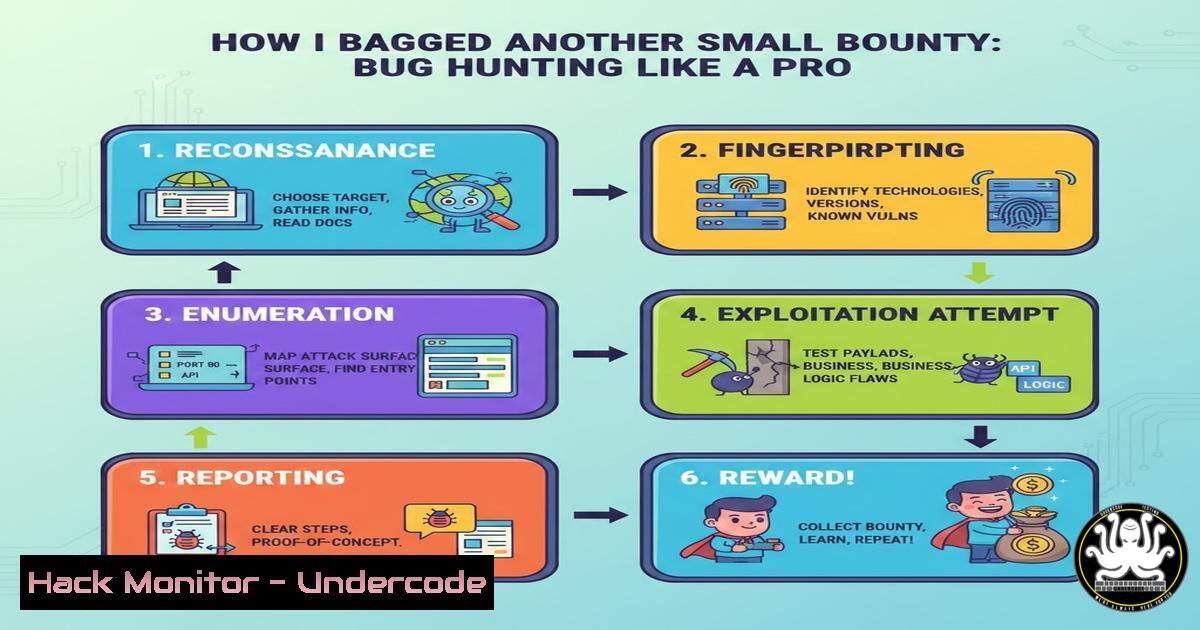
Introduction:
Bug bounty hunting has become a mainstream avenue for security researchers to earn rewards while helping organizations secure their digital assets. Even a “small bounty” represents a validated vulnerability that could have been exploited by malicious actors. This article dissects the mindset, tools, and techniques behind finding and reporting such flaws, drawing from real-world experiences like the recent LinkedIn post by Aditya Singh. Whether you are a beginner or an experienced pentester, the following guide will help you refine your approach to consistently uncover and responsibly disclose security issues.
Learning Objectives:
- Understand the core phases of bug bounty hunting: reconnaissance, exploitation, and reporting.
- Learn to set up a professional testing environment with essential tools.
- Master hands-on techniques for finding common web and API vulnerabilities using practical commands and payloads.
You Should Know:
- Building Your Bug Bounty Arsenal: The Essential Toolkit
Before you start hunting, you need a reliable and well-configured environment. Most bug bounty hunters use a combination of Linux-based distributions and specialized software.
Step‑by‑step guide:
- Install a penetration testing OS (Kali Linux or Parrot OS) on a virtual machine (VMware/VirtualBox) or as a dual-boot. This gives you pre-installed tools like Nmap, Burp Suite, and Metasploit.
- Set up Burp Suite Community Edition as your primary web proxy. Configure your browser (Firefox with FoxyProxy) to route traffic through Burp (127.0.0.1:8080) and install Burp’s CA certificate to intercept HTTPS traffic.
- Install essential recon tools:
subfinder,amass,httpx,nuclei, andffuf. On Kali, you can use:sudo apt update && sudo apt install amass go install -v github.com/projectdiscovery/subfinder/v2/cmd/subfinder@latest go install -v github.com/projectdiscovery/httpx/cmd/httpx@latest go install -v github.com/projectdiscovery/nuclei/v3/cmd/nuclei@latest go install -v github.com/ffuf/ffuf@latest
- Create a workspace directory to organize your findings for each target program.
2. Reconnaissance: Finding the Weak Spots
Reconnaissance is the most critical phase; a small oversight here can mean missing a bounty. Start with passive recon (gathering information without touching the target) and then move to active recon.
Step‑by‑step guide:
- Use `subfinder` to enumerate subdomains:
subfinder -d target.com -all -o subdomains.txt
- Probe for live hosts with
httpx:cat subdomains.txt | httpx -title -status-code -tech-detect -o live_hosts.txt
- Perform directory fuzzing with `ffuf` to discover hidden endpoints:
ffuf -u https://target.com/FUZZ -w /usr/share/wordlists/dirb/common.txt -mc 200,403,301
- For API endpoints, use tools like `kiterunner` or manually review JavaScript files. Extract URLs from JS using:
cat live_hosts.txt | while read url; do echo $url | gau | tee -a all_urls.txt; done
- Analyze the results and prioritize targets that appear to have user input or unusual parameters.
- Web Application Attacks: From XSS to SQL Injection
Once you have a list of potential targets, it’s time to test for common vulnerabilities. Even small bounties often come from straightforward issues like reflected XSS or open redirects.
Step‑by‑step guide for finding XSS:
- Identify input points (search bars, comment fields, URL parameters).
- Inject a simple payload like `` encoded in various ways.
- Use Burp Intruder with a list of XSS payloads (e.g., from PayloadAllTheThings) to automate testing.
- For a reflected XSS, a typical manual test is:
https://target.com/search?q=<script>alert(1)</script>
- If the application blocks certain characters, try polyglots or context-specific payloads.
For SQL injection:
- Look for dynamic parameters in URLs (e.g.,
?id=5). - Append a single quote `’` and observe error messages.
- Use `sqlmap` for automated detection (only on authorized targets):
sqlmap -u "https://target.com/page?id=1" --batch --dbs
- Manual testing with time-based payloads: `’ OR SLEEP(5)– -`
4. API Security Testing: The Modern Attack Surface
APIs are everywhere and often overlooked, making them a rich source of bounties. Focus on endpoints that handle user data or perform actions.
Step‑by‑step guide:
- Collect API endpoints from the web application using browser developer tools (Network tab) or by scraping JavaScript.
- Use Postman or Burp Repeater to manually test each endpoint.
- Check for Broken Object Level Authorization (BOLA) by changing identifiers in requests (e.g., `/api/user/123` to
/api/user/456). - Test for excessive data exposure: see if the API returns more information than necessary.
- Attempt mass assignment by adding unexpected parameters (e.g.,
{"user":"me","role":"admin"}). - Use automated tools like `Arjun` to discover hidden parameters:
arjun -u https://api.target.com/endpoint -m POST
- Writing a Professional Report: From Finding to Bounty
A well-written report can mean the difference between a quick payout and a rejection. Even for small bugs, clarity and proof of concept are key.
Step‑by‑step guide:
- Use a template that includes: title, severity, vulnerable endpoint, description, steps to reproduce, impact, and remediation.
- Provide clear, step-by-step reproduction steps with screenshots or video.
- Include the exact request/response (using Burp’s copy as curl command).
- Suggest a fix if possible (e.g., input validation, parameterized queries).
- Submit through the program’s official channel (HackerOne, Bugcrowd, or direct email).
Example snippet for a report:
Reflected XSS in search functionality
Endpoint: https://target.com/search?q=test
Steps to Reproduce:
1. Navigate to https://target.com/search?q=<script>alert(document.cookie)</script>
2. Observe that the script executes.
Impact: An attacker can craft a malicious link to steal user cookies.
Remediation: Encode output and validate input.
6. Continuous Learning and Certification Pathways
The bug bounty landscape evolves rapidly. To stay ahead, invest in continuous learning and recognized certifications. Tony Moukbel, for instance, holds 57 certifications across cybersecurity, forensics, and programming. While you don’t need that many, targeted certifications validate your skills.
- Entry-level: CompTIA Security+, Certified Ethical Hacker (CEH)
- Hands-on: Offensive Security Certified Professional (OSCP) – highly recommended for practical skills.
- Web-focused: Burp Suite Certified Practitioner, eLearnSecurity Web Application Penetration Tester (eWPT)
- Free resources: PortSwigger Web Security Academy, OWASP Top 10, and TryHackMe rooms.
Set aside time each week to practice on platforms like HackTheBox, PentesterLab, or bug bounty playgrounds.
What Undercode Say:
- Persistence Pays Off: Every “small bounty” is a testament to your attention to detail and ability to find what others missed. The hunter in the original post celebrated a small bounty, but it’s these consistent wins that build a reputation and lead to larger opportunities.
- Methodology Over Luck: Successful bug hunters follow a structured process—recon, testing, reporting. Randomly poking at websites rarely yields results; a repeatable methodology ensures you cover all bases.
- Ethics and Responsibility: Always stay within the scope of bug bounty programs. Responsible disclosure protects users and companies alike, and it’s the foundation of trust in the security community. The thrill of finding a bug should never override the principle of doing no harm.
Prediction:
As artificial intelligence continues to integrate into development pipelines, we will see AI-assisted vulnerability discovery become commonplace. Tools that automatically generate and test payloads will increase the volume of low-hanging fruit found by bots. However, human creativity, contextual understanding, and the ability to chain complex vulnerabilities will remain irreplaceable. Bug bounty hunting will evolve into a hybrid discipline where researchers leverage AI to augment their manual expertise, making the field both more competitive and more rewarding.
▶️ Related Video (78% Match):
🎯Let’s Practice For Free:
IT/Security Reporter URL:
Reported By: Aditya Singh4180 – Hackers Feeds
Extra Hub: Undercode MoN
Basic Verification: Pass ✅


