
Listen to this Post
Introduction:
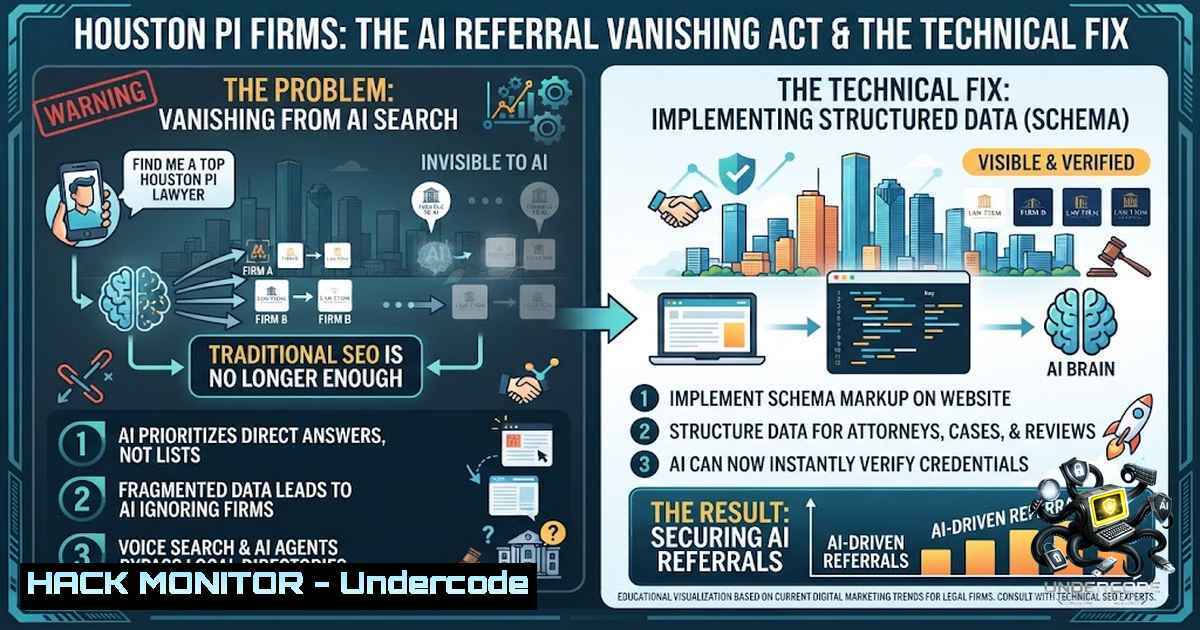
The legal industry’s traditional referral economy—built on trust transferred through phone calls and friend-of-a-friend recommendations—is being quietly disrupted by something that doesn’t sleep, doesn’t charge referral fees, and talks to thousands of potential clients simultaneously. AI answer engines like ChatGPT, Perplexity, and Google’s AI Overviews are now intercepting legal questions and synthesizing the entire web into a single summarized answer, deciding which firms deserve to be cited as trusted sources. Research from SE Ranking shows that legal searches triggered AI overviews almost 78 percent of the time—the highest in any category—while a Pew Research Center study tracking 68,000 real search queries found that users clicked on results only 8 percent of the time when AI summaries appeared, compared to 15 percent without them. The firms that AI can clearly understand, confidently describe, and trust are the ones getting recommended. Everyone else is training AI models for free.
Learning Objectives:
- Understand how Retrieval-Augmented Generation (RAG) and answer engine optimization (AEO) fundamentally differ from traditional SEO for legal practices
- Implement JSON-LD schema markup, server-side rendering, and structured data layers that make law firm websites machine-readable and AI-citable
- Build a coherent “authority graph” across websites, directories, social platforms, media mentions, and reviews to create consistent trust signals that AI models reward
You Should Know:
- The RAG Pipeline: How AI Decides to Cite Your Firm
When a potential client asks ChatGPT or Perplexity “Who’s the best personal injury lawyer in Houston?”, the AI doesn’t simply recall training data. It uses Retrieval-Augmented Generation (RAG)—a process where the model retrieves live data from the web, augments its internal knowledge with that data, and generates a response. For law firms, this means AI is actively looking for live, accurate data on current statutes, settlements, and practice areas. If your site provides this data in a clean, machine-readable format, you become the “augmented” part of the AI’s answer.
The mechanics work like this: When a user submits a query, the AI system performs a vector search across indexed content, identifies the most semantically relevant passages, and feeds them into the generation model as context. Pages with well-implemented schema appear in AI Overviews and rank highest in traditional SEO; pages with poorly implemented schema or no schema simply don’t appear.
Step‑by‑step guide to understanding and auditing your RAG visibility:
- Test your AI visibility manually: Open ChatGPT, Perplexity, and Google’s AI Overviews. Ask “Who is the best [your practice area] lawyer in [your city]?” Document whether your firm is mentioned, cited, or completely absent.
-
Audit your current schema: Use Google’s Rich Results Test (https://search.google.com/test/rich-results) to check what structured data Google can detect on your site. If the test returns errors or “No rich results detected,” you have foundational issues.
-
Check your “Share of Model” (SoM) : This is the percentage of time an LLM includes your brand in its response for a specific practice area or location. Track citations (your URL explicitly linked as the source), mentions (your firm named in the text), and sentiment (whether AI describes your firm as “expert,” “reliable,” or “top-rated”).
-
Verify crawlability: Run `curl -I https://yourfirm.com` to check HTTP headers. Ensure `200 OK
status and that `X-Robots-Tag` doesn't block AI crawlers. For Windows, useInvoke-WebRequest -Uri https://yourfirm.com -Method Head`. -
Monitor server-side rendering: Many AI crawlers cannot execute client-side JavaScript. Test your site with JavaScript disabled in your browser. If critical content disappears, implement server-side rendering (SSR) or static site generation (SSG) to ensure AI bots see fully rendered content.
-
Schema Markup: The JSON-LD Templates That Get You Cited
AI models process structured data with far higher confidence than raw, lengthy text. Schema markup acts as a high-speed digital translator—it tells AI exactly what your content means, allowing it to recommend your business with 100% certainty. Content with properly implemented schema shows 30-40% higher AI visibility compared to identical content without it.
For law firms, the critical schema types are:
- Organization (legal name, logo, contact points, sameAs relationships)
- LocalBusiness (geographical coordinates, service areas, opening hours)
- LegalService (practice areas, bar admissions, jurisdictional reach)
- Attorney (named attorney authors with credentials and experience)
- FAQPage (question-answer pairs that AI can extract directly)
- (blog posts, guides, thought leadership with author attribution)
Step‑by‑step guide to implementing AI-ready schema:
- Deploy Organization schema with every property that matters. Here’s the template we use for service businesses:
{
"@context": "https://schema.org",
"@type": "Organization",
"name": "Your Firm Name",
"legalName": "Your Firm Legal Name PLLC",
"url": "https://yourfirm.com",
"logo": {
"@type": "ImageObject",
"url": "https://yourfirm.com/images/logo.png",
"width": 600,
"height": 60
},
"description": "Houston-based personal injury law firm specializing in auto accident claims, premises liability, and wrongful death cases.",
"foundingDate": "2010",
"address": {
"@type": "PostalAddress",
"streetAddress": "123 Main Street",
"addressLocality": "Houston",
"addressRegion": "TX",
"postalCode": "77002",
"addressCountry": "US"
},
"contactPoint": {
"@type": "ContactPoint",
"telephone": "+1-713-555-0123",
"contactType": "Sales",
"availableLanguage": ["English", "Spanish"]
},
"sameAs": [
"https://www.linkedin.com/company/yourfirm",
"https://www.avvo.com/attorneys/yourfirm",
"https://www.justia.com/lawyers/yourfirm"
]
}
- Add Attorney schema to every bio page. Include bar admissions, practice areas, educational background, and years of experience:
{
"@context": "https://schema.org",
"@type": "Attorney",
"name": "Jane Doe",
"jobTitle": "Partner",
"worksFor": {
"@type": "Organization",
"name": "Your Firm Name"
},
"address": {
"@type": "PostalAddress",
"addressLocality": "Houston",
"addressRegion": "TX"
},
"hasCredential": {
"@type": "EducationalOccupationalCredential",
"credentialCategory": "Bar Admission",
"recognizingAuthority": "State Bar of Texas"
},
"knowsAbout": ["Personal Injury", "Auto Accident", "Wrongful Death"]
}
- Implement FAQPage schema on every practice page. AI engines use FAQ content as direct answer sources:
{
"@context": "https://schema.org",
"@type": "FAQPage",
"mainEntity": [
{
"@type": "Question",
"name": "What should I do immediately after a car accident in Houston?",
"acceptedAnswer": {
"@type": "Answer",
"text": "Seek medical attention immediately, document the scene with photos, exchange information with other drivers, report the accident to your insurance company, and contact a Houston personal injury attorney as soon as possible to protect your rights."
}
}
]
}
- Validate your JSON-LD: Use the Schema Markup Validator (https://validator.schema.org/) to check for syntax errors. For Linux, you can use `jq` to validate JSON structure:
cat schema.json | jq empty. For Windows PowerShell:Get-Content schema.json | ConvertFrom-Json | Out-1ull. -
Deploy schema via Google Tag Manager or directly in the `
` . Place JSON-LD scripts immediately after the opening `` tag for maximum crawler visibility. -
Content Architecture: Writing for the Question, Not the Keyword
Large language models synthesize answers to natural-language questions. The old SEO habit of writing around a keyword phrase (“Houston personal injury lawyer”) has been replaced by writing around the question a real client would ask (“What should I do if I’m injured in a car accident in Houston and the other driver is uninsured?”).
AI models prioritize direct, conversational content, ruthlessly cutting through the fluff that old-school SEO once demanded. Source-grounding algorithms prioritize the inverted pyramid style of writing—models like Gemini and ChatGPT are significantly more likely to cite businesses that place the big answer within the first 200 characters of a page.
Step‑by‑step guide to answer-first content structure:
- Lead every page with the answer. Whether it’s a practice description, an attorney bio, or a thought leadership piece, the first sentence should answer the core question someone might ask. Instead of “Jane Doe is a partner in the Personal Injury Group,” try: “Jane Doe represents Houston accident victims in auto injury claims, securing over $50 million in settlements for her clients over the past decade.” That sentence is extractable. The first one isn’t.
-
Add an FAQ block to every practice page—not as decoration, but as a structured data container that AI can directly query.
-
Implement a “TL;DR” summary at the top of every service page. The modern client doesn’t want a 3,000-word essay; they want to know, right now, if you have handled cases like theirs.
-
Write at an eighth-grade reading level using plain language. Stiff, overly formal legal writing doesn’t resonate with people or LLMs. Dense paragraphs packed with jargon come out the other end as garbled summaries that misrepresent the original point.
-
Map questions by persona and buyer journey stage to cover the exact queries AI engines are trying to answer. For personal injury, this means mapping questions from “What is a personal injury claim?” (awareness) to “How much is my car accident case worth?” (consideration) to “How do I file a lawsuit in Harris County?” (decision).
-
Building an Authority Graph Across the Entire Web
AI doesn’t just read your website. It does its due diligence across the entire internet to see what the world thinks of you. Large Language Models use RAG to cross-reference your claims against third-party validation. If your information on Google Business, Avvo, Justia, and your own site doesn’t match, AI will flag you as unreliable.
The goal is a coherent, machine-recognizable “authority graph” across websites, profiles, directories, social platforms, media mentions, reviews, and user-generated content. AI systems reward three core components: authority, credibility, and structured content.
Step‑by‑step guide to building cross-platform authority:
- Audit your digital footprint: Search for your firm name across Google, LinkedIn, Avvo, Justia, Martindale-Hubbell, and local news outlets. Document every mention. Check for consistency in name, address, phone number (NAP), practice areas, and attorney names.
-
Clean your entity data: Ensure your firm name, specialty, and city appear identically across all platforms. AI recommends firms it can summarize in one sentence—be easy to describe.
-
Secure third-party citations: Get mentioned by sources AI already trusts—local press, legal directories, credible review platforms. When AI agents scan the web to confirm your status as a leader, they search for organic mentions in reputable news outlets, niche industry journals, and independent podcasts.
-
Monitor AI-generated mentions and referral patterns to capture emerging traffic sources. Set up Google Alerts for your firm name and track which platforms are sending referral traffic.
-
Build a review strategy: Review volume and recency are key ranking factors for AI platforms. Encourage satisfied clients to leave reviews on Google, Avvo, and Facebook. Respond to all reviews—positive and negative—to demonstrate engagement.
5. Technical Infrastructure: Server-Side Rendering and Crawl Optimization
AI crawlers don’t browse your website the way a human does. They don’t read your hero section, scroll past your testimonials, or click your “About” page. They process structured data. They read JSON-LD, extract entity relationships, and use those signals to decide whether your business is a credible answer.
Many AI crawlers cannot execute client-side JavaScript. If your site is built with client-side frameworks (React, Angular, Vue) without server-side rendering, AI bots may see a blank page or incomplete content.
Step‑by‑step guide to technical optimization for AI crawlers:
- Test JavaScript rendering: Open your site in a browser with JavaScript disabled. If critical content (practice areas, attorney bios, contact information) disappears, implement server-side rendering or static site generation.
-
Configure your `robots.txt` : Ensure AI crawlers are allowed to access your content. Add:
User-agent:
Allow: /
Disallow: /admin/
Disallow: /wp-admin/
Sitemap: https://yourfirm.com/sitemap.xml
-
Submit an XML sitemap to Google Search Console and Bing Webmaster Tools. Include all practice pages, attorney bios, and blog posts.
-
Optimize page load speed: AI crawlers have timeout limits. Use Google’s PageSpeed Insights to identify performance issues. Compress images, enable browser caching, and minify CSS/JavaScript.
-
Monitor crawl logs: On Linux, use `tail -f /var/log/nginx/access.log | grep -E “Googlebot|bingbot|ChatGPT|Perplexity”` to see which AI crawlers are visiting your site. On Windows with IIS, use PowerShell:
Get-Content C:\inetpub\logs\LogFiles\W3SVC1\.log | Select-String "Googlebot".
6. Monitoring and Measuring AI Visibility
Traditional SEO metrics (keyword rankings, organic traffic, backlinks) are now part of a larger ecosystem. In 2026, “ranking” has a new name: Share of Model (SoM)—the percentage of time an LLM includes your brand in its response for a specific practice area or location.
Step‑by‑step guide to monitoring AI visibility:
- Set up brand monitoring: Use tools like Brand24, Mention, or Google Alerts to track when your firm is mentioned across the web.
-
Monitor AI platform referrals: Check your analytics for referral traffic from chat.openai.com, perplexity.ai, and gemini.google.com. ChatGPT is already a referral powerhouse, sending 4 times more traffic than competing AI platforms.
-
Track zero-click conversions: A “zero-click” result is often viewed as a loss of traffic, but in the legal sector, it is a high-intent opportunity. When Perplexity or ChatGPT provides a legal answer and includes your firm in a citation, it acts as an implicit endorsement.
-
Run regular AI audits: Use the AEO Audit Rig from GitHub (https://github.com/AI-Captains-Academy/aeo-audit) which generates AEO and SEO audit reports for businesses.
-
Benchmark against competitors: Identify which firms are consistently cited by AI in your practice area and location. Analyze their content structure, schema implementation, and authority signals.
What Undercode Say:
- AI is not replacing word-of-mouth referrals—it’s adding a new layer that’s growing fast and remains completely unclaimed in most legal markets. The firms that moved first didn’t just survive; they owned the new channel before competitors understood it existed.
- The best referral partner your firm has never met is already talking to your potential clients. The question is whether it knows your name. AI works like a referral partner that never sleeps and talks to thousands of people—to get recommended, it needs to trust you first.
- The shift from SEO to AEO is not theoretical—it’s happening now. Gartner predicted traditional search engine volume would drop 25% by 2026, and the shift is already visible. HUMAN Security’s 2026 State of AI Traffic Report found that AI-driven traffic grew 187% from January to December 2025, nearly tripling over the calendar year.
- Schema markup is no longer optional—it’s the difference between being recommended and being invisible. Content with properly implemented schema shows 30-40% higher AI visibility compared to identical content without it.
- Expertise signals no longer just help you rank—they determine whether AI tools cite your firm at all. AI platforms are increasingly attributing their sources. Content without clear expertise signals gets used without credit or gets ignored entirely.
Prediction:
- +1 Law firms that implement comprehensive AEO strategies within the next 12-18 months will capture a disproportionate share of AI-driven referrals, establishing a “first-mover advantage” that will be difficult for late adopters to overcome. The window to shape how these systems understand and represent your practice before those perceptions crystallize is finite.
- +1 The rise of AI answer engines will democratize legal marketing, allowing smaller, highly specialized firms to compete with larger competitors by being the “ground truth” for specific practice areas and jurisdictions.
- -1 Firms that fail to adapt will experience a gradual but accelerating decline in client acquisition as AI-driven discovery becomes the primary channel for legal referrals. They will continue to train AI models for free while receiving no credit or citations.
- -1 The 47% drop in click-through rates when AI summaries appear means that traditional SEO-driven traffic strategies will become increasingly ineffective. Firms relying solely on organic search rankings will see diminishing returns.
- +1 The convergence of AEO, GEO, and traditional SEO will create a new discipline of “visibility engineering” that combines technical infrastructure, content strategy, and authority building—creating new opportunities for legal marketers who develop these skills.
▶️ Related Video (76% Match):
https://www.youtube.com/watch?v=A8gLq-j2RDM
🎯Let’s Practice For Free:
🎓 Live Courses & Certifications:
Join Undercode Academy for Verified Certifications
🚀 Request a Custom Project:
Secure, high-velocity infrastructure and disruptive technological engineering. Contact our engineering team for high-tier development and proprietary systems:
[email protected]
💎 Smart Architecture | 🛡️ Secure by Design | ⭐ Trusted by Thousands
IT/Security Reporter URL:
Reported By: Emmanuel Osedume – Hackers Feeds
Extra Hub: Undercode MoN
Basic Verification: Pass ✅


