Listen to this Post
Introduction:
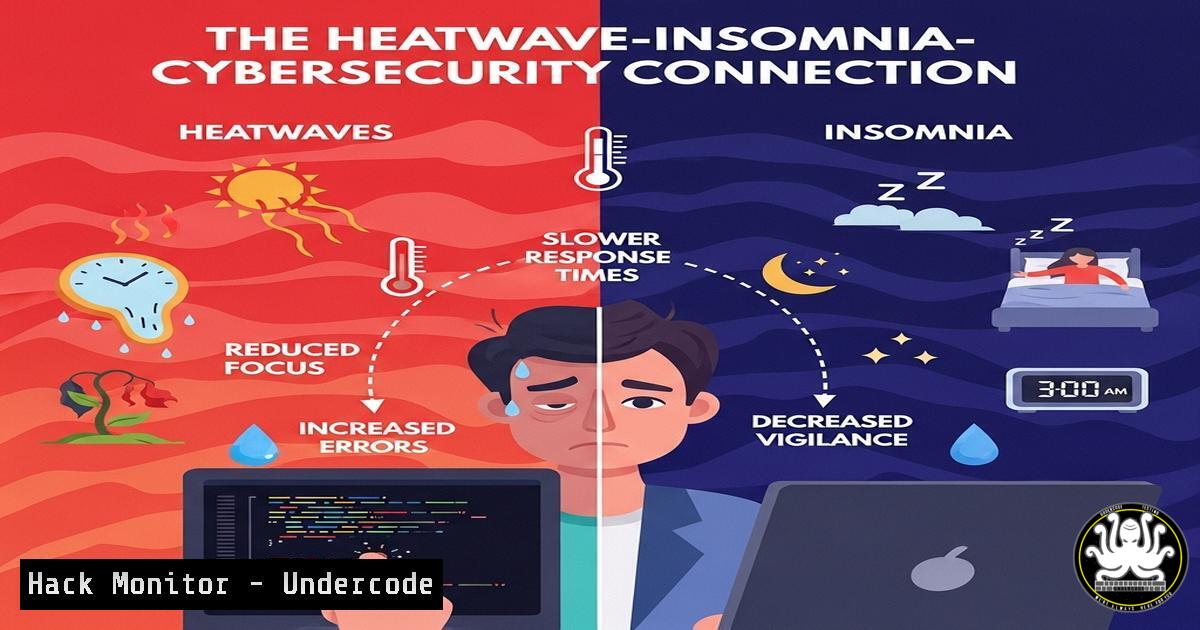
Heatwaves and insomnia don’t just affect personal well-being—they can also impair cognitive function, leading to critical mistakes in cybersecurity operations. As professionals combat rising cyber threats, maintaining peak mental performance is essential.
Learning Objectives:
- Understand how sleep deprivation affects cybersecurity decision-making.
- Learn techniques to mitigate heat-induced fatigue in high-stress IT environments.
- Discover tools and commands to automate tasks and reduce human error.
- Sleep Deprivation and Security Lapses: A Dangerous Mix
Command: `journalctl -u sshd –since “today” | grep “Failed”`
What it does: Checks for failed SSH login attempts, a critical task when fatigue might cause oversight.
Step-by-step:
- Run the command on a Linux system to monitor unauthorized access attempts.
- Pipe the output to a file for later review:
journalctl -u sshd --since "today" | grep "Failed" > ssh_failed.log. - Set up automated alerts using `cron` to avoid missing threats due to fatigue.
2. Automating Repetitive Tasks to Reduce Fatigue
Command (Windows): `Get-WinEvent -FilterHashtable @{LogName=’Security’; ID=4625} | Export-Csv failed_logins.csv`
What it does: Exports failed login events to a CSV file, reducing manual log checks.
Step-by-step:
1. Run in PowerShell to extract security logs.
2. Schedule with Task Scheduler to run hourly.
- Use Power BI to visualize trends and detect anomalies.
3. Cooling Down Systems (and Yourself)
Command: `sensors` (Linux) or `Get-CimInstance -ClassName Win32_TemperatureProbe` (Windows)
What it does: Monitors system temperatures—critical during heatwaves to prevent hardware failure.
Step-by-step:
- Install `lm-sensors` on Linux (
sudo apt install lm-sensors).
2. Run `sensors` to check CPU/GPU temps.
- Set up alerts with `thresholdd` to notify if temps exceed safe limits.
4. Securing Remote Workstations in Heatwave Conditions
Command: `sudo fail2ban-client status sshd`
What it does: Shows active bans on brute-force attacks, crucial when admins are distracted by discomfort.
Step-by-step:
1. Install Fail2Ban: `sudo apt install fail2ban`.
2. Configure `/etc/fail2ban/jail.local` to tighten SSH rules.
3. Monitor with `fail2ban-client status` to ensure protection.
5. AI-Powered Monitoring to Compensate for Human Fatigue
Tool: Splunk or ELK Stack
What it does: Uses machine learning to detect anomalies in logs, reducing reliance on tired analysts.
Step-by-step:
- Ingest logs into Splunk with
splunk add monitor /var/log/secure. - Set up alerts for unusual activity (e.g., midnight login spikes).
- Train models to flag deviations from baseline behavior.
What Undercode Say:
- Key Takeaway 1: Heat and insomnia degrade situational awareness, increasing vulnerability to phishing and misconfigurations.
- Key Takeaway 2: Automation and AI tools are force multipliers, compensating for human limitations during extreme conditions.
Analysis:
The intersection of environmental stress and cybersecurity is understudied. As climate change intensifies heatwaves, organizations must adapt by:
– Enforcing stricter shift rotations for SOC teams.
– Investing in AI-driven monitoring to offset human fatigue.
– Hardening systems against both thermal stress and cyber threats.
Prediction:
By 2030, heat-related IT failures and security breaches will rise by 30%, pushing industries to adopt “climate-resilient cybersecurity” protocols—integrating hardware cooling, automated threat detection, and fatigue-aware staffing models.
Stay alert, stay cool, and automate relentlessly. 🔒❄️
🎯Let’s Practice For Free:
IT/Security Reporter URL:
Reported By: Fatma Sekimi – Hackers Feeds
Extra Hub: Undercode MoN
Basic Verification: Pass ✅


