Listen to this Post
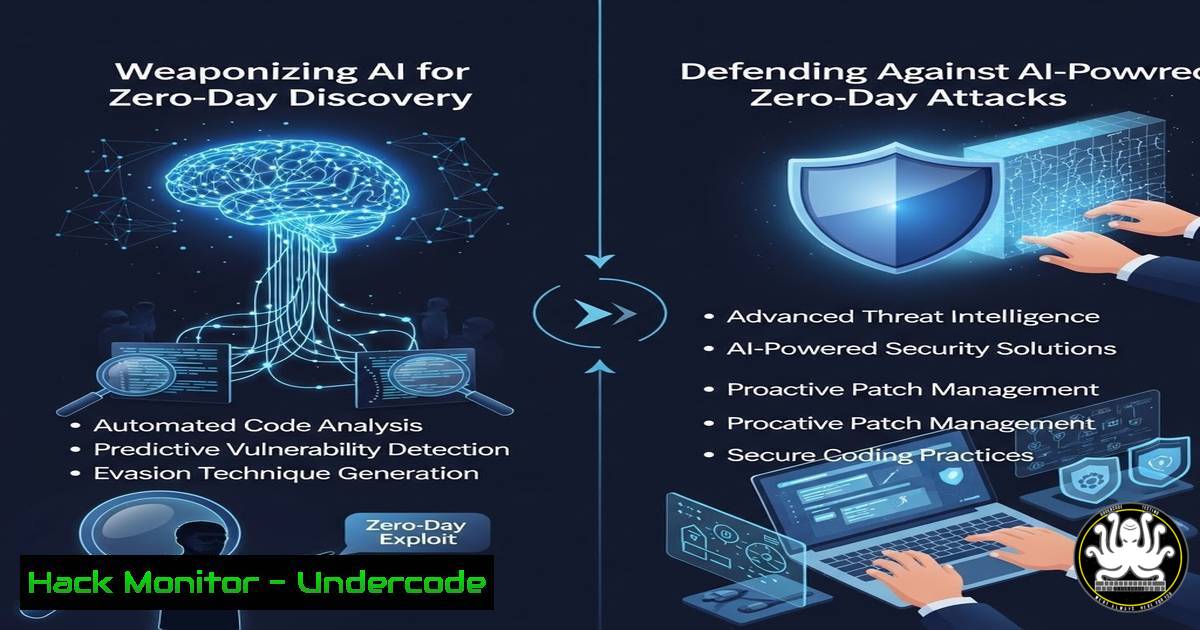
Introduction:
The cybersecurity landscape is entering a perilous new phase where advanced AI code-generation models, like OpenAI’s Codex, are being repurposed from productivity tools into automated vulnerability research assistants. This shift enables threat actors to systematically analyze codebases, hypothesize flaws, and generate proof-of-concept exploits at machine speed, dramatically lowering the barrier to discovering critical zero-day vulnerabilities. This article explores the technical methodologies behind AI-assisted hacking and provides actionable steps for defenders to adapt their security posture against this emerging threat.
Learning Objectives:
- Understand the methodology of using AI models like Codex for automated code analysis and vulnerability hypothesis generation.
- Learn defensive strategies and tool configurations to harden systems and code against AI-assisted reconnaissance and exploitation.
- Gain practical knowledge of mitigations, including secure coding practices, runtime protection, and threat-hunting techniques for AI-generated attack patterns.
You Should Know:
1. The AI-Powered Vulnerability Research Pipeline
The core of this new attack methodology is not about the AI magically “creating” zero-days, but about automating and scaling the initial, labor-intensive stages of vulnerability research. A threat actor uses the model to perform static application security testing (SAST)-like analysis at scale.
Step-by-step guide explaining what this does and how to use it:
Step 1: Code Context Feeding. The attacker feeds the AI model large chunks of source code—potentially from leaked repositories, open-source projects, or decompiled binaries. The prompt is engineered to ask the model to “analyze this code for security vulnerabilities,” “list all potential unsafe functions,” or “identify inputs that are not sanitized.”
Step 2: Hypothesis Generation. Codex, trained on vast amounts of public code and documentation, identifies patterns matching known vulnerability classes (e.g., buffer overflows, SQL injection sinks, command injection points). It outputs a list of suspicious code sections with explanations.
Step 3: Proof-of-Concept (PoC) Scaffolding. The actor then iteratively prompts the model to “write a Python script that exploits this potential buffer overflow” or “generate a malicious input for this SQL query.” The AI assembles a basic, often non-functional, exploit scaffold that the attacker then refines.
- Setting Up a Controlled Analysis Environment (Defensive Practice)
To ethically test your own code or understand the attack vector, you must isolate the process. This setup prevents accidental exposure of proprietary code to cloud-based AI models and allows for safe exploit development.
Step-by-step guide explaining what this does and how to use it:
Step 1: Create an Air-Gapped Analysis VM. Use a hypervisor like VirtualBox or VMware to create a Linux (e.g., Kali Linux) or Windows virtual machine with no network adapters. This is your sandbox.
 On a Linux host, create a new isolated network for the VM
vboxmanage natnetwork add --netname SecLabNet --network "10.0.100.0/24" --enable --dhcp off
Step 2: Deploy Local AI Tools. Instead of using cloud-based Codex, run offline-capable code analysis tools. Install `semgrep` for pattern matching and `CodeQL` for semantic analysis.
 Install Semgrep for fast, pattern-based code scanning
pip install semgrep
 Scan a code directory for common C vulnerabilities
semgrep --config auto /path/to/source_code/
Step 3: Analyze Code Safely. Run these tools against your code within the isolated VM to simulate what an attacker might find, without the data exfiltration risk.
 Using CodeQL to create a database and run security queries
codeql database create /path/to/db --language=cpp --source-root=/path/to/src
codeql database analyze /path/to/db /path/to/ql-repo/cpp/ql/src/Security/ --format=csv --output=findings.csv
3. Hardening Source Code Against AI-Assisted Discovery
The best defense is to write resilient code. An AI model looks for classic weakness patterns; eliminating these patterns raises the difficulty bar significantly.
Step-by-step guide explaining what this does and how to use it:
Step 1: Adopt Memory-Safe Languages and Secure Paradigms. For new projects, prioritize Rust, Go, or managed C. For C/C++, use modern compiler protections and safe libraries.
Windows (MSVC): Enable Control Flow Guard (/guard:cf) and Automatic Buffer Overflow Detection (/sdl).
Linux (GCC/Clang): Compile with -fstack-protector-strong, -D_FORTIFY_SOURCE=2, and -Wformat-security.
Step 2: Implement Rigorous Input Sanitization. Use canonicalization and allow-listing for all inputs. For web applications, leverage parameterized queries.
 BAD - AI will easily spot this SQL injection
query = "SELECT  FROM users WHERE id = " + user_input

GOOD - Use parameterized statements
import sqlite3
conn = sqlite3.connect('db.sqlite3')
cursor = conn.execute("SELECT  FROM users WHERE id = ?", (user_input,))
Step 3: Integrate SAST into CI/CD. Automate scanning with tools like semgrep, SonarQube, or `Checkmarx` in your pipeline to catch vulnerabilities before they reach production, effectively performing the “AI’s job” first.
4. Enhancing Runtime Defenses and Monitoring
When a potential AI-generated exploit attempts execution, robust runtime defenses must be in place to detect and block it.
Step-by-step guide explaining what this does and how to use it:
Step 1: Deploy Endpoint Detection and Response (EDR). Configure EDR rules to flag behavior typical of exploit testing, such as a process spawning a shell after a memory corruption event or making unusual syscalls.
Step 2: Implement Web Application Firewall (WAF) Rules. Tune your WAF (e.g., ModSecurity, cloud WAF) to block payloads containing common exploit kit patterns or obfuscated code snippets that AI models might generate.
 Example ModSecurity rule to detect suspicious repeated probe patterns
SecRule ARGS "@rx (union\s+select|sleep(\d+)|benchmark(|\x[0-9a-f]{2})" \
"id:1000,phase:2,log,deny,msg:'Potential AI-generated SQLi Probe'"
Step 3: Monitor for Anomalous Source Code Access. Use File Integrity Monitoring (FIM) and strict access controls on source code repositories. Alert on bulk downloads or access from unusual locations, which could indicate code being exfiltrated for AI analysis.
5. Proactive Threat Hunting for AI-Generated Activity
Defenders must look for the “fingerprints” of an AI-assisted attack cycle, which differs from human-led hacking.
Step-by-step guide explaining what this does and how to use it:
Step 1: Hunt for Automated, High-Volume Code Probing. Query logs for scanning activity that targets diverse, obscure API endpoints or parameters in a short time—behavior indicative of an automated tool guided by AI hypotheses.
Step 2: Analyze Exploit Code Characteristics. Suspicious scripts or payloads captured in honeypots may contain non-idiomatic code, odd comments, or structures reminiscent of AI-generated code (e.g., overly generic variable names, perfect textbook exploit syntax but with logic flaws).
Step 3: Correlate Internal SAST Findings with Attack Probes. If your internal SAST tool flags a vulnerability in a rarely-used module, and shortly after you see probing attacks against that same module, it may signal that an attacker’s AI has independently found the same flaw.
What Undercode Say:
- The Democratization of High-Tech Espionage: AI is not creating superhuman hackers; it is automating the apprenticeship, allowing less-skilled actors to perform advanced reconnaissance and initial exploit development. The primary impact is a massive increase in the volume of potential attackers capable of finding mid-to-high severity flaws.
- The Defensive Imperative is Automation and Resilience: The only viable defense against machine-speed offense is machine-speed defense. Security must shift left into code creation and right into automated runtime detection, with a focus on eliminating broad classes of vulnerabilities rather than chasing individual exploits.
Prediction:
In the next 2-3 years, AI-assisted vulnerability discovery will become a standard tool in both offensive security (red teams) and advanced persistent threat (APT) arsenals, leading to a short-term spike in reported vulnerabilities for widely used software. This will force a fundamental evolution in Software Development Life Cycles (SDLC), making advanced SAST, mandatory memory-safe practices, and “breach-and-blast-radius” reduction via micro-segmentation the absolute baseline for enterprise development. The long-term equilibrium may see defensive AI, trained on exploit patterns and code patches, automatically hardening code and configuring systems, turning this arms race into an automated conflict between competing AI models.
▶️ Related Video (82% Match):
🎯Let’s Practice For Free:
IT/Security Reporter URL:
Reported By: Abhirup Konwar – Hackers Feeds
Extra Hub: Undercode MoN
Basic Verification: Pass ✅


