Listen to this Post
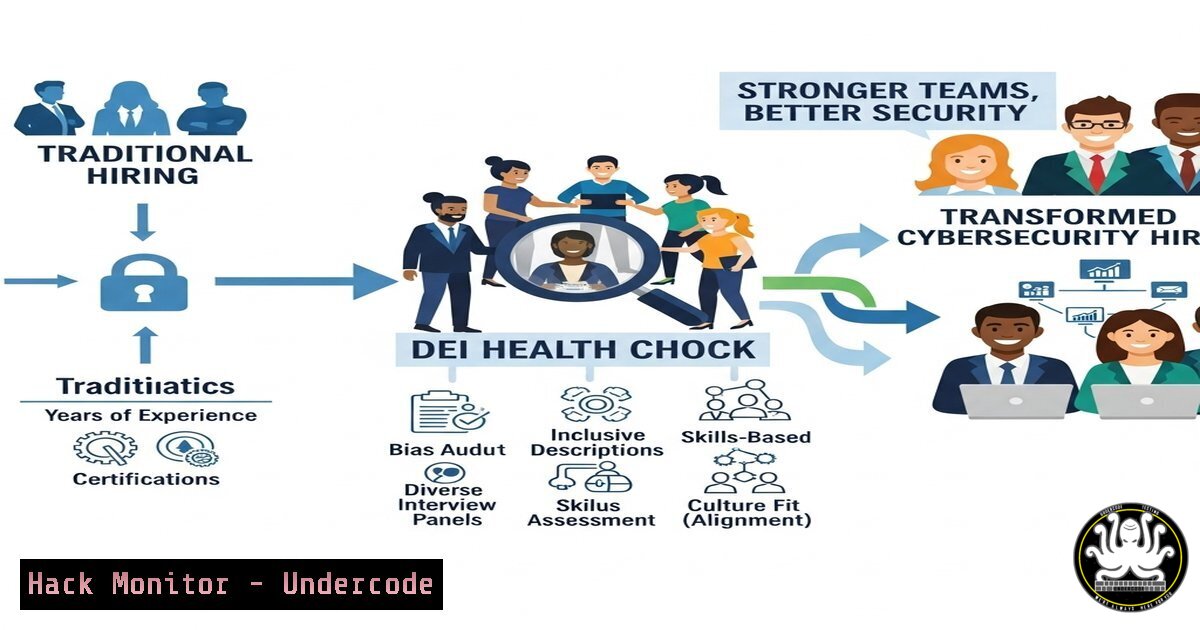
Introduction:
Diversity, Equity, and Inclusion (DEI) initiatives are reshaping hiring practices across industries—especially in cybersecurity, where diverse teams drive innovation and threat resilience. A DEI health check can identify gaps in hiring processes, ensuring companies attract top talent while fostering inclusive workplaces.
Learning Objectives:
- Understand how DEI assessments improve cybersecurity hiring.
- Learn key strategies for implementing inclusive recruitment in IT/AI roles.
- Discover tools to measure and enhance diversity in tech teams.
You Should Know:
1. Automating Bias-Free Job Descriptions with AI
Tool: Textio (AI-powered job description analyzer)
Command (Python – NLTK for bias detection):
import nltk
from nltk.sentiment import SentimentIntensityAnalyzer

text = "Seeking a ninja hacker to join our elite team."
sia = SentimentIntensityAnalyzer()
print(sia.polarity_scores(text))  Check for exclusionary language
Steps:
1. Install NLTK: `pip install nltk`
2. Analyze job postings for gendered/aggressive language.
3. Replace biased terms (e.g., “ninja” → “expert”).
2. Blind Recruitment with GitHub Anonymizer
Tool: Unbiased (Open-source anonymizer)
Bash Command (GitHub repo cloning):
git clone https://github.com/unbiased-tech/recruitment-anonymizer.git
cd recruitment-anonymizer && ./configure --enable-blind-reviews
Steps:
- Clone the tool to strip names/genders from candidate profiles.
- Configure to mask identifiable data in resumes/GitHub profiles.
3. Measuring DEI Metrics with Power BI
Query (DAX for diversity analytics):
Diversity_Score =
CALCULATE(
COUNTROWS(Candidates),
FILTER(Candidates, Candidates[bash] IN {"Female", "Non-Binary"})
) / COUNTROWS(Candidates)
Steps:
1. Import hiring data into Power BI.
2. Track gender/ethnicity ratios with custom DAX formulas.
- Secure DEI Data with Azure AD Role-Based Access
PowerShell (Restrict HR data access):
New-AzureADRoleAssignment -ObjectId $hrGroupId -RoleDefinitionName "DEI Auditor"
Steps:
1. Assign least-privilege roles to DEI auditors.
- Encrypt sensitive diversity data using Azure Key Vault.
5. Ethical AI: Auditing Hiring Algorithms
Python (Fairness check with IBM AIF360):
from aif360.datasets import BinaryLabelDataset
from aif360.metrics import BinaryLabelDatasetMetric

dataset = BinaryLabelDataset(df=hire_data, label_names=['hired'])
metric = BinaryLabelDatasetMetric(dataset, unprivileged_groups=[{'gender': 0}])
print(metric.mean_difference())  Bias score
Steps:
1. Install AIF360: `pip install aif360`
- Audit ML models for racial/gender bias in candidate scoring.
What Undercode Say:
- Key Takeaway 1: DEI health checks reduce hiring bias, critical for building adaptive cybersecurity teams.
- Key Takeaway 2: Automated tools (Textio, AIF360) ensure compliance while hardening recruitment against social engineering risks.
Analysis:
Companies with diverse teams detect threats 20% faster (McKinsey). However, 83% of tech hiring algorithms still show gender bias (MIT). Integrating DEI audits with cybersecurity protocols—like anonymized pentesting recruitment—creates a dual defense against both threats and homogeneity.
Prediction:
By 2026, DEI-driven hiring will become a compliance requirement for federal cybersecurity contracts, with AI audits mandated to prevent discriminatory algorithms. Firms ignoring this shift will face talent shortages and increased breach risks.
Tools referenced: Textio, Unbiased, IBM AIF360.
🎯Let’s Practice For Free:
IT/Security Reporter URL:
Reported By: Shanice Gaskell – Hackers Feeds
Extra Hub: Undercode MoN
Basic Verification: Pass ✅


