Listen to this Post
Introduction:
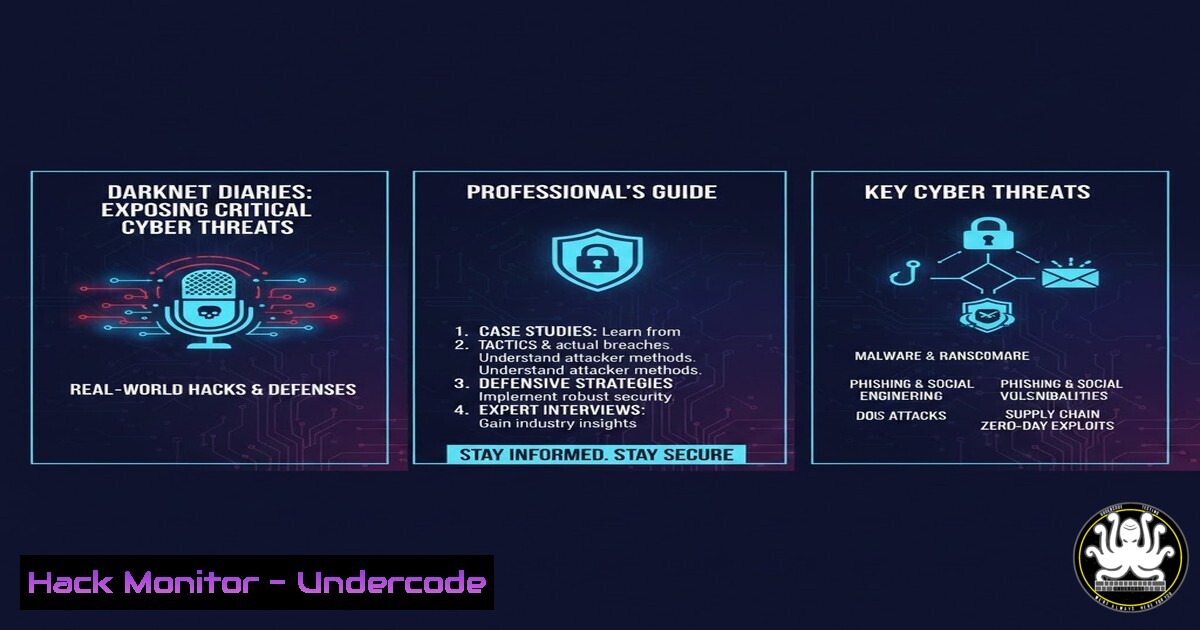
Darknet Diaries is a renowned podcast that unveils true stories from the cybersecurity underworld, offering unparalleled insights into real-world attacks, social engineering exploits, and defensive strategies. For IT and cybersecurity professionals, it serves as a catalyst for understanding evolving threat landscapes and reinforcing security postures through lessons learned from past incidents. This article extracts technical wisdom from the podcast, providing actionable guides on penetration testing, API security, cloud hardening, and more.
Learning Objectives:
- Understand real-world cyber attack vectors and methodologies documented in cybersecurity podcasts.
- Learn to apply penetration testing and social engineering techniques in controlled environments.
- Gain practical skills for securing systems, networks, and applications based on historical breaches.
You Should Know:
1. Social Engineering: Auditing the Human Firewall
Social engineering episodes on Darknet Diaries, such as those involving phishing and pretexting, highlight human vulnerabilities. Conducting a social engineering audit involves open-source intelligence (OSINT) gathering and simulated attacks.
Step-by-step guide:
- Step 1: Use OSINT tools like Maltego or theHarvester to collect target information (e.g., emails, social profiles). For example, on Linux:
`theharvester -d example.com -l 100 -b google`
- Step 2: Craft phishing emails with tools like Gophish or Social Engineer Toolkit (SET). On Kali Linux, launch SET:
`setoolkit` and select option 1 for Social Engineering Attacks. - Step 3: Deploy simulations and analyze click-through rates, using Wireshark to monitor network traffic:
`wireshark -i eth0 -k`
- Step 4: Educate employees based on results, reinforcing security awareness training.
2. Penetration Testing: From Reconnaissance to Exploitation
Episodes covering penetration testing reveal methodologies for identifying and exploiting vulnerabilities. Set up a lab environment to practice these techniques safely.
Step-by-step guide:
- Step 1: Perform network scanning with Nmap to discover live hosts and services:
`nmap -sS -sV -O 192.168.1.0/24`
- Step 2: Use vulnerability scanners like Nessus or OpenVAS to identify weaknesses. On Linux, install OpenVAS:
`sudo apt-get update && sudo apt-get install openvas`
- Step 3: Exploit vulnerabilities with Metasploit. For example, for an SMB vulnerability:
`msfconsole` then `use exploit/windows/smb/ms17_010_eternalblue`
- Step 4: Document findings and recommend patches, such as updating Windows systems via:
`wuauclt /detectnow` on Windows Command Prompt.
3. Physical Security: Bridging Digital and Physical Breaches
Darknet Diaries stories on physical audits, like tailgating or badge cloning, emphasize the need for holistic security. Assess physical security using controlled tests.
Step-by-step guide:
- Step 1: Survey facilities for weak access points, using tools like RFID cloners (e.g., Proxmark3) to test badge security.
- Step 2: Simulate tailgating by attempting entry during peak hours, documenting response times.
- Step 3: Implement monitoring with CCTV and access logs. On Windows, review security logs via Event Viewer:
`eventvwr.msc` and navigate to Windows Logs > Security.
- Step 4: Recommend multi-factor authentication and biometric systems to mitigate risks.
4. API Security: Mitigating Hidden Gateway Vulnerabilities
API-related hacks discussed in podcasts underscore risks like broken authentication and injection attacks. Secure APIs by testing and hardening endpoints.
Step-by-step guide:
- Step 1: Use OWASP ZAP or Burp Suite to scan APIs for vulnerabilities. Launch ZAP on Linux:
`zap.sh` and configure the API target URL.
- Step 2: Test for SQL injection with tool like sqlmap:
`sqlmap -u “http://example.com/api/user?id=1” –dbs` - Step 3: Implement API security best practices, such as using JWT tokens and rate limiting. In Node.js, add rate limiting:
`npm install express-rate-limit` and configure in your app.
- Step 4: Regularly audit API logs for suspicious activity, using grep on Linux:
`grep “401\|403” /var/log/api.log`
5. Cloud Hardening: Securing Virtual Environments
Cloud breaches featured in episodes highlight misconfigurations and weak access controls. Harden cloud infrastructure on platforms like AWS or Azure.
Step-by-step guide:
- Step 1: Use cloud security tools like AWS GuardDuty or Azure Security Center to detect threats. Enable GuardDuty via AWS CLI:
`aws guardduty create-detector –enable`
- Step 2: Apply least privilege access with IAM roles. For AWS, create a policy:
`aws iam create-policy –policy-name MyPolicy –policy-document file://policy.json`
- Step 3: Encrypt data at rest and in transit. On Azure, enable encryption for storage accounts using PowerShell:
`Set-AzStorageAccount -ResourceGroupName MyGroup -Name MyAccount -EnableEncryptionService Blob,File`
- Step 4: Automate compliance checks with tools like Terraform, ensuring resources meet security benchmarks.
6. Vulnerability Management: From Exploitation to Patching
Lessons from vulnerability exploitation stories emphasize proactive management. Use scanning and patching to mitigate risks.
Step-by-step guide:
- Step 1: Schedule regular scans with OpenVAS or Nessus. On Linux, run an OpenVAS scan:
`openvas-scanner –target 192.168.1.10 –port 9390`
- Step 2: Prioritize vulnerabilities using CVSS scores, and test exploits in a sandbox. For Windows, use PowerShell to check for patches:
`Get-Hotfix -Id KB1234567`
- Step 3: Apply patches promptly. On Linux, update systems:
`sudo apt-get update && sudo apt-get upgrade`
- Step 4: Verify fixes with re-scanning and monitor for regressions.
7. Incident Response: Leveraging Lessons from Breaches
Incident response episodes provide blueprints for handling breaches. Develop a response plan based on these narratives.
Step-by-step guide:
- Step 1: Establish an incident response team and use tools like Splunk or ELK for log analysis. On Linux, install ELK:
`sudo apt-get install elasticsearch kibana logstash`
- Step 2: Contain breaches by isolating affected systems. On Windows, disable network connections via:
`netsh interface set interface “Ethernet” disable`
- Step 3: Conduct forensics with Autopsy or Volatility. For memory analysis on Linux:
`volatility -f memory.dump imageinfo`
- Step 4: Post-incident, review and update policies, ensuring regular drills.
What Undercode Say:
- Key Takeaway 1: Darknet Diaries transforms anecdotal cyber stories into actionable learning, bridging the gap between theoretical knowledge and real-world application for professionals.
- Key Takeaway 2: Consistent engagement with cybersecurity podcasts fosters a proactive defense mindset, exposing teams to emerging threats and innovative mitigation strategies.
Analysis: The podcast demystifies complex attacks by detailing human, physical, and technical facets, reinforcing that security is multidimensional. It encourages continuous learning through relatable narratives, which can enhance organizational training programs and individual skill sets. By integrating podcast lessons into hands-on labs, professionals can better anticipate and counter threats, ultimately reducing breach risks.
Prediction:
As cyber threats grow in sophistication, podcasts like Darknet Diaries will become integral to cybersecurity education, driving faster dissemination of threat intelligence and best practices. This trend may lead to more organizations incorporating podcast insights into formal training curriculums, resulting in improved incident response capabilities and wider adoption of ethical hacking certifications. Ultimately, such resources could accelerate industry-wide shifts towards proactive, story-driven security cultures.
🎯Let’s Practice For Free:
IT/Security Reporter URL:
Reported By: Dorota Kozlowska – Hackers Feeds
Extra Hub: Undercode MoN
Basic Verification: Pass ✅


