Listen to this Post
Introduction:
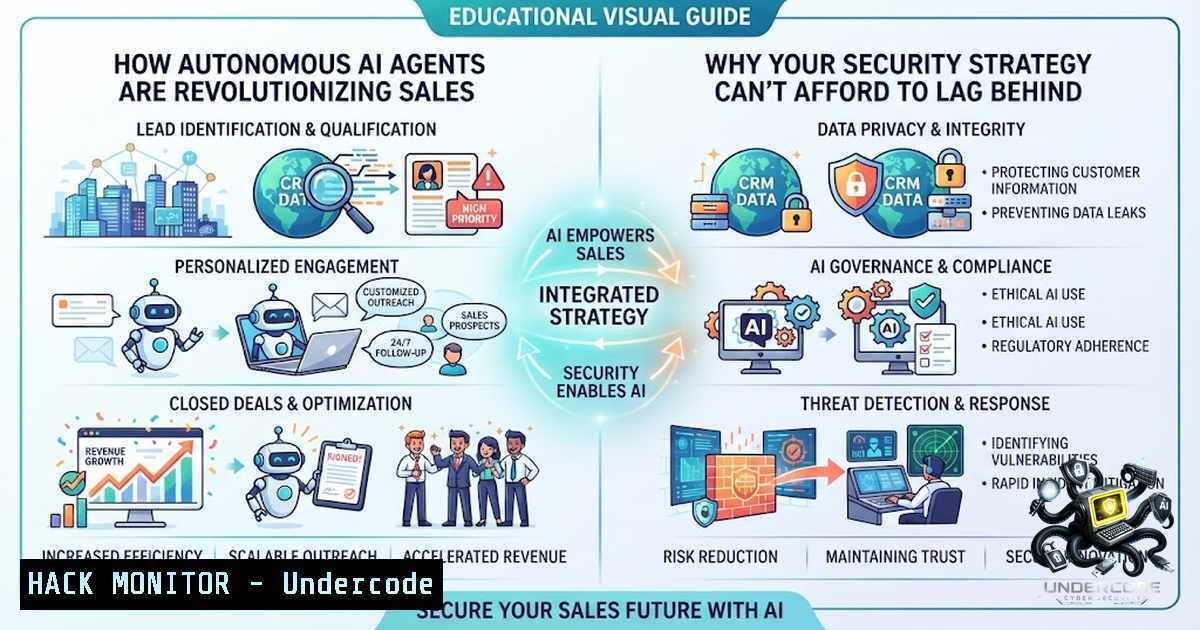
The era of autonomous AI agents is no longer on the horizon—it’s here, and it’s reshaping how businesses operate. As demonstrated by Muhammad Jawad Yasin’s recent project, organizations are now deploying AI-powered systems that autonomously find leads, build personalized outreach, manage CRM data, and automate follow-up sequences without human intervention. While this level of automation promises unprecedented efficiency, it also introduces a new class of cybersecurity risks that demand immediate attention. From prompt injection attacks to API key exposure and data leakage, the very features that make these agents powerful also make them prime targets for adversaries.
Learning Objectives:
- Understand the architecture and operational mechanics of autonomous AI agents in sales and marketing environments
- Identify the critical security vulnerabilities inherent in AI-driven automation systems
- Implement robust API security, access controls, and monitoring frameworks for agentic deployments
- Apply cloud hardening techniques and least-privilege principles to AI agent infrastructure
- Develop incident response procedures specific to AI agent compromises
You Should Know:
1. Understanding the Autonomous AI Agent Architecture
An autonomous AI agent for sales automation typically consists of several interconnected components: a Large Language Model (LLM) for reasoning and content generation, API integrations for CRM and communication platforms, data retrieval systems for lead research, and orchestration layers that manage workflows. The agent described in the post performs end-to-end sales functions: discovering leads, researching businesses, generating personalized outreach, building website prompts, updating CRM, sending Slack notifications, delivering cold emails, and managing follow-up sequences.
Step-by-Step Guide to Deploying a Basic AI Agent Pipeline:
Linux/macOS Environment:
 1. Install a local agent framework (using AFKBOT as example)
pip install afkbot

<ol>
<li>Initialize the agent with your API keys
export OPENAI_API_KEY="your-key-here"
export CRM_API_KEY="your-crm-key"</p></li>
<li><p>Create a basic agent workflow configuration
cat > agent_config.yaml << EOF
workflow:

<ul>
<li>name: lead_discovery
tool: apollo_scraper</li>
<li>name: research
tool: web_research</li>
<li>name: outreach_generation
tool: llm_generator</li>
<li>name: crm_update
tool: salesforce_api
EOF</li>
</ul></li>
<li>Run the agent in headless mode
afkboot --config agent_config.yaml --headless
Windows Environment (PowerShell):
 1. Install OSCTRL for desktop automation
npm install -g osctrl

<ol>
<li>Set environment variables
$env:OPENAI_API_KEY="your-key-here"
$env:CRM_API_KEY="your-crm-key"</p></li>
<li><p>Execute automation commands
osctrl type "Hello, this is your AI agent"
osctrl click --x 500 --y 300
osctrl screenshot --output "agent_status.png"
- API Security: The Achilles’ Heel of AI Agents
AI agents rely heavily on API integrations to function—connecting to CRMs, email platforms, Slack, and data sources. Each of these connections represents a potential attack vector. The “ForcedLeak” vulnerability discovered in Salesforce’s Agentforce demonstrated how attackers could compromise AI agents through malicious instructions embedded in trusted data sources, leading to CRM database exposure and competitive intelligence theft. Security researchers have observed threat actors actively exporting CRM data and searching for API keys, passwords, and other credentials.
Step-by-Step API Security Hardening:
 Linux: Audit all API keys in environment variables
env | grep -E "API_KEY|SECRET|TOKEN" > api_keys_inventory.txt

Use a secrets manager (HashiCorp Vault example)
vault kv put secret/agent/credentials crm_key="value" email_key="value"

Rotate keys regularly (cron job example)
0 0   0 /usr/local/bin/rotate_agent_keys.sh

Windows PowerShell: Audit environment variables
Get-ChildItem Env: | Where-Object {$_.Name -match "API|SECRET|TOKEN"} | Export-Csv api_keys_inventory.csv

Implement OAuth 2.0 with scopes (configuration example)
{
"oauth": {
"provider": "okta",
"scopes": ["crm:read", "crm:write", "email:send"],
"audience": "https://api.youragent.com"
}
}
3. Prompt Injection: The New Social Engineering
Prompt injection attacks represent one of the most significant threats to AI agents. Attackers can embed malicious instructions in data that the agent retrieves—such as emails, CRM notes, or website content—causing the agent to execute unauthorized actions or leak sensitive information. Unlike traditional vulnerabilities, prompt injection exploits the agent’s trust in its training and context, making it particularly insidious.
Step-by-Step Prompt Injection Defense:
 Python: Input sanitization for agent context
import re

def sanitize_agent_input(input_text):
 Remove potential instruction overrides
sanitized = re.sub(r'(?i)(ignore|forget|disregard|override).?(instructions|previous|context)', '[bash]', input_text)

Strip system prompt injection attempts
sanitized = re.sub(r'(?i)(you are now|act as|pretend to be).?(system|admin|superuser)', '[bash]', sanitized)

Validate against allowlist
allowed_patterns = ['lead', 'customer', 'follow-up', 'outreach']
if not any(pattern in sanitized.lower() for pattern in allowed_patterns):
return "[bash]"

return sanitized

Implement in agent workflow
user_input = get_incoming_email()
safe_input = sanitize_agent_input(user_input)
agent.process(safe_input)
 Linux: Monitor for injection patterns in logs
tail -f /var/log/agent.log | grep -E "ignore|forget|act as|pretend" --color=always

Windows PowerShell: Real-time monitoring
Get-Content -Path "C:\Agent\logs\agent.log" -Wait | Select-String -Pattern "ignore|forget|act as|pretend"
4. Cloud Hardening for AI Agent Deployments
Deploying AI agents in cloud environments introduces unique security challenges. Continuous monitoring is essential, with advanced tools tailored to detect behavioral anomalies, identify potential hijacking attempts, and limit AI-specific attacks. Google Cloud’s Model Armor provides comprehensive security services designed to protect AI applications and models. Organizations must inventory all AI agents, the APIs they call, and the data they access, using compliance benchmarks like CIS and SOC 2 as automation targets.
Step-by-Step Cloud Hardening:
 AWS: Implement least-privilege IAM for agent roles
aws iam create-role --role-1ame AgentExecutionRole --assume-role-policy-document file://trust-policy.json
aws iam attach-role-policy --role-1ame AgentExecutionRole --policy-arn arn:aws:iam::aws:policy/ReadOnlyAccess

Restrict to specific resources
cat > agent-policy.json << EOF
{
"Version": "2012-10-17",
"Statement": [
{
"Effect": "Allow",
"Action": ["s3:GetObject", "s3:PutObject"],
"Resource": "arn:aws:s3:::youragent-bucket/"
},
{
"Effect": "Deny",
"Action": ["s3:DeleteBucket", "iam:"],
"Resource": ""
}
]
}
EOF

aws iam put-role-policy --role-1ame AgentExecutionRole --policy-1ame AgentPolicy --policy-document file://agent-policy.json

Azure: Managed identities for agents
az identity create --1ame AgentIdentity --resource-group AgentRG
az role assignment create --assignee <identity-id> --role "Reader" --scope /subscriptions/<sub-id>/resourceGroups/AgentRG
5. Protecting CRM and Customer Data
CRM systems contain the lifeblood of any sales organization—customer contact information, sales pipeline data, business strategy, and internal communications. When AI agents interact with CRM data, they create new data flow paths that must be secured. Over-permissioned agents accessing or leaking internal drafts pose a significant risk.
Step-by-Step CRM Data Protection:
-- Database: Implement row-level security for agent access
CREATE POLICY agent_data_policy ON customers
USING (agent_id = current_setting('app.current_agent_id')::uuid);

-- Grant only necessary permissions
GRANT SELECT ON customers TO agent_role;
GRANT SELECT ON opportunities TO agent_role;
REVOKE INSERT, UPDATE, DELETE ON customers FROM agent_role;

-- Audit agent data access
CREATE TABLE agent_access_audit (
id SERIAL PRIMARY KEY,
agent_id UUID,
action VARCHAR(50),
resource VARCHAR(100),
timestamp TIMESTAMP DEFAULT NOW()
);

CREATE TRIGGER log_agent_access
AFTER SELECT ON customers
FOR EACH STATEMENT
EXECUTE FUNCTION log_agent_query();
 Linux: Monitor CRM API calls
tcpdump -i any -A -s 0 'host api.salesforce.com and port 443' | grep -E "SELECT|INSERT|UPDATE" > crm_audit.log

Windows: Monitor outbound connections to CRM
netstat -an | findstr "443" | findstr "salesforce"
6. Monitoring, Logging, and Incident Response
AI agents introduce new attack surfaces and require specialized monitoring. Security teams must extend their SIEM and SOAR capabilities to include agent-specific telemetry. Behavioral anomalies—such as unusual query patterns, unexpected API calls, or deviations from normal workflow—should trigger immediate alerts.
Step-by-Step Monitoring Setup:
 Linux: Centralized logging with rsyslog
cat > /etc/rsyslog.d/agent.conf << EOF
if $programname == 'agent' then /var/log/agent/agent.log
& stop
EOF

systemctl restart rsyslog

Implement log rotation and retention
cat > /etc/logrotate.d/agent << EOF
/var/log/agent/.log {
daily
rotate 30
compress
delaycompress
missingok
notifempty
create 640 agent agent
postrotate
/usr/bin/systemctl reload rsyslog > /dev/null 2>&1 || true
endscript
}
EOF

Windows PowerShell: Event logging for agent
New-EventLog -LogName "AgentSecurity" -Source "AgentRuntime"
Write-EventLog -LogName "AgentSecurity" -Source "AgentRuntime" -EventId 1001 -Message "Agent started with ID: $agentId"

Set up SIEM integration (Splunk universal forwarder example)
./splunk add monitor /var/log/agent/agent.log -index agent_security -sourcetype agent_logs
7. Training and Governance for Agentic Systems
The shift to agentic AI requires new governance frameworks. Organizations must know which models, prompts, tools, datasets, and vector stores they have, and who owns them. Security frameworks emphasize inventory and evidence, moving from prompt tinkering to hard controls on identity, tools, and data.
Step-by-Step Governance Implementation:
 agent_governance.yaml
governance:
inventory:
- models: ["gpt-4", "claude-3"]
- prompts: ["outreach_template", "follow_up_sequence"]
- tools: ["salesforce_api", "slack_api", "email_sender"]
- vector_stores: ["lead_vectors", "knowledge_base"]

permissions:
default: deny
rules:
- tool: salesforce_api
actions: [bash]
approval: required_for_write
- tool: email_sender
actions: [bash]
rate_limit: 100/hour

audit:
retention: 90_days
logs: all_actions
alerts:
- type: anomaly_detection
threshold: 3_std_dev
- type: rate_limit_exceeded
action: block_and_notify
 Linux: Automated compliance checking
!/bin/bash
 agent_compliance_check.sh

echo "Checking agent permissions..."
for agent in $(ls /etc/agent/configs/); do
if grep -q "write" /etc/agent/configs/$agent; then
echo "WARNING: Agent $agent has write permissions - review required"
fi
done

echo "Checking for hardcoded secrets..."
grep -r "API_KEY|SECRET" /opt/agent/src/ --exclude-dir=.git

echo "Compliance check complete"
What Undercode Say:
- Autonomous agents are transforming sales automation but introduce unprecedented security risks. The efficiency gains are real, but organizations must treat AI agents as privileged insiders with the potential for catastrophic data breaches.
-
Security must be architected into agentic systems from day one. Retrofit security is insufficient—least-privilege access, input validation, and continuous monitoring must be foundational design principles.
The convergence of AI and automation represents both a massive opportunity and a significant threat surface. As we’ve seen with the ForcedLeak vulnerability, attackers are already actively targeting these systems. The autonomous AI agent that finds leads and manages CRM today could be weaponized tomorrow if proper security controls aren’t in place. Organizations must adopt a defense-in-depth approach that encompasses API security, prompt injection defense, cloud hardening, and continuous monitoring. The stakes are high: a compromised sales agent could leak years of competitive intelligence, customer relationships, and strategic plans in minutes. Security teams must evolve their capabilities to understand, monitor, and defend these new autonomous entities.
Prediction:
- -1 The rapid adoption of autonomous AI agents will lead to a significant increase in data breaches throughout 2026-2027, as attackers develop sophisticated prompt injection and API exploitation techniques specifically targeting agentic systems.
-
+1 The security community will respond with specialized frameworks, tools, and best practices for agent security, creating a new cybersecurity sub-discipline focused on “Agentic Security” or “AI Agent Security Posture Management” (AASPM).
-
-1 Organizations that fail to implement proper governance and monitoring for AI agents will face regulatory scrutiny and compliance violations as data protection authorities begin to hold companies accountable for AI agent actions.
-
+1 The development of autonomous AI agents will accelerate the adoption of zero-trust architectures and just-in-time access controls, ultimately improving overall security posture beyond just AI systems.
-
-1 The democratization of AI agent creation will lead to a surge in “shadow AI” deployments—unauthorized agents operating without security oversight—creating blind spots that attackers will aggressively exploit.
-
+1 Security vendors will integrate AI agent detection and protection capabilities into existing SIEM, CASB, and cloud security platforms, making it easier for organizations to gain visibility into agentic activity.
-
-1 The cost of AI agent compromises will escalate rapidly, with incident response becoming more complex as attackers leverage the agent’s own capabilities against the organization (e.g., using the agent to send phishing emails from trusted accounts).
-
+1 Organizations that invest early in agent security training and governance will gain a competitive advantage, being able to deploy agents more aggressively while competitors remain paralyzed by security concerns.
-
-1 Third-party AI agent marketplaces and open-source agent frameworks will become prime targets for supply chain attacks, with malicious actors inserting backdoors into widely used agent components.
-
+1 The security industry will develop standardized certification and auditing frameworks for AI agents, providing organizations with verifiable security guarantees and insurance underwriting criteria.
▶️ Related Video (76% Match):
https://www.youtube.com/watch?v=2tpYNh4tcW0
🎯Let’s Practice For Free:
🎓 Live Courses & Certifications:
Join Undercode Academy for Verified Certifications
🚀 Request a Custom Project:
Secure, high-velocity infrastructure and disruptive technological engineering. Contact our engineering team for high-tier development and proprietary systems:
[email protected]
💎 Smart Architecture | 🛡️ Secure by Design | ⭐ Trusted by Thousands
IT/Security Reporter URL:
Reported By: Muhammadjawadyasin Built – Hackers Feeds
Extra Hub: Undercode MoN
Basic Verification: Pass ✅


