Listen to this Post
Introduction:
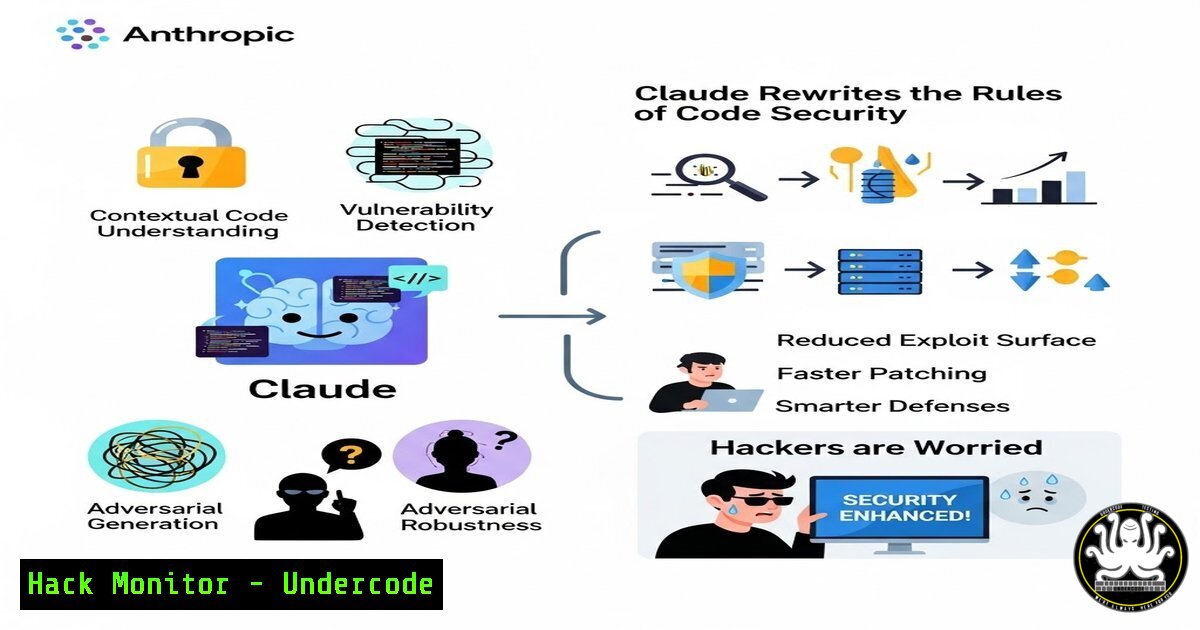
The cybersecurity world is reeling after a massive market correction wiped billions off the valuations of legacy security vendors. The catalyst? Anthropic’s Claude demonstrated the ability to autonomously reason through complex source code, identify logical flaws standard scanners miss, and propose contextual fixes. This marks a definitive shift from “detection” (finding the bug) to “Active Remediation” (fixing it automatically), forcing a fundamental reassessment of the Security Operations Center (SOC) and the future of application security.
Learning Objectives:
- Understand the mechanics of Large Language Model (LLM)-driven code analysis and how it differs from traditional Static Application Security Testing (SAST).
- Learn how to simulate “Active Remediation” by integrating AI tools into a secure development lifecycle.
- Identify the commands and configurations necessary to set up a local AI-assisted code review environment.
You Should Know:
- The Death of the SAST Scanner: Moving to Semantic Analysis
Traditional security tools rely on signature matching or pattern recognition to find vulnerabilities like SQL injection or hardcoded keys. They are noisy and lack context. Claude, however, utilizes semantic reasoning. It doesn’t just look for the string “password”; it understands the data flow and intent. The market correction we saw reflects the reality that if AI can reason like a security engineer, the value of simple scanning tools plummets.
Step‑by‑step guide: Simulating Semantic Analysis with Open Source Tools
To understand how this works locally, we can use a combination of a code parser and an LLM (like Ollama running a local model).
1. Extract the Code Context: Use `tree` to map the project structure.
 Linux/Mac: Generate a project tree for context
tree /path/to/project -L 3 -I 'node_modules|.git' > project_structure.txt
2. Identify a Suspicious Function: Use `grep` to find potentially dangerous functions.
 Find all exec or eval commands (high-risk in Python/JS)
grep -r -n "eval(|exec(|system(" /path/to/project/src/
3. Query the AI for Logic Flaws: Instead of just flagging the line, feed the function and its surrounding code to an AI with a prompt asking for business logic flaws. This mimics Claude’s approach of understanding why the code exists, not just what it does.
2. Active Remediation: From Identification to Patch Generation
The “shockwave” in the market stems from the transition from “Notify” to “Remediate.” Active Remediation means the AI doesn’t just send a ticket; it sends a Pull Request with the fix. This requires the AI to understand the codebase’s specific syntax, variable naming conventions, and dependency requirements to generate a patch that compiles and passes tests without introducing regressions.
Step‑by‑step guide: Automating a Patch with AI Assistance
This example demonstrates how to use a script to feed a vulnerable code snippet to an AI and apply the suggested fix automatically (simulating the “Active Remediation” loop).
1. Isolate the Vulnerability: Assume you have a file `vuln.py` with an unsafe YAML load.
 vuln.py (Insecure)
import yaml
data = yaml.load(user_input, Loader=yaml.Loader)  Vulnerable to arbitrary code execution
print(data)
2. Create a Remediation Script: Use `curl` to send the vulnerable block to an AI API (or local LLM) with a specific “fix” prompt.
!/bin/bash
 rem.sh - Active Remediation Simulator
CODE=$(cat vuln.py)
PROMPT="Fix this Python code by replacing unsafe yaml.load with yaml.safe_load. Output only the fixed code, no explanations."

Send to local AI model (Ollama example)
FIXED_CODE=$(curl -s http://localhost:11434/api/generate -d '{
"model": "codellama",
"prompt": "'"$PROMPT $CODE"'",
"stream": false
}' | jq -r '.response')

Overwrite the file with the fixed code
echo "$FIXED_CODE" > vuln_fixed.py
echo "Patch applied: vuln_fixed.py generated."
3. Verify the Fix: Run a linter or basic test to ensure the code still functions.
python vuln_fixed.py
- The Human-in-the-Loop: Why AI Won’t Run Wild (Yet)
Vladimir Shulman correctly notes that giants like Anthropic mandate human approval for every patch. This is a critical architectural and legal guardrail to avoid liability. In a real-world SOC, this translates to an “approval workflow” where the AI stages the change.
Step‑by‑step guide: Staging AI-Generated Patches with Git
Implement a workflow where AI commits fixes to a branch, waiting for human review.
1. Create a Bot Branch:
git checkout -b ai-hotfix/sql-injection-login
2. Apply the AI Patch (as simulated above): Modify the file.
3. Commit with Detailed AI Logs:
git add src/login.php
git commit -m "AI-REMEDIATION: Fixed SQL injection by parameterizing query. Risk: Medium. Analyst review required before merge."
4. Push and Alert:
git push origin ai-hotfix/sql-injection-login
 Trigger a Slack/Email alert for manual review
4. Hardening the Infrastructure Against AI-Powered Attacks
If defenders use AI to patch, attackers use AI to exploit. We must assume that AI can now chain vulnerabilities. A simple XSS might be used by an attacker’s AI to pivot to internal network scans. Defenders must adopt “Immutable Infrastructure” to counter this, ensuring that if an AI attacker breaks in, there is nothing to persist on.
Step‑by‑step guide: Implementing Immutable Servers (AWS Example)
Prevent an AI from establishing persistence by ensuring servers are replaced, not repaired.
1. User Data Script: When launching an EC2 instance, define its state at launch. If changed, terminate it.
!/bin/bash
 This runs on launch only. Any changes post-launch are lost on termination.
yum update -y
yum install -y httpd
echo "Secure App Version 1.0" > /var/www/html/index.html
systemctl enable httpd
systemctl start httpd
2. Autoscaling Group: Configure the ASG to replace “unhealthy” instances. If an AI attacker modifies the index.html, a health check failing will trigger a fresh, clean instance to spin up, wiping the attacker’s changes.
What Undercode Say:
- Key Takeaway 1: The market correction signals a definitive end for “checkbox” security compliance tools. The premium is now on platforms that can execute fixes, not just enumerate flaws. Active Remediation is the new standard.
- Key Takeaway 2: While foundational AI models are disrupting the space, they are purposely capping their own power by requiring human validation. This creates a symbiotic future where security analysts evolve into “AI Prompt Engineers” and “Patch Approvers,” moving away from manual code review.
The recent stock dip is not a sign of a weak cybersecurity market, but rather a violent rotation. Capital is fleeing legacy detection and flooding toward autonomous remediation. Analysts must adapt by learning how to orchestrate these AI agents, verify their logic, and manage the pipelines that allow for rapid, secure patching. The era of finding a bug and waiting three weeks to fix it is over; if you don’t remediate instantly, the AI (on either side of the fence) will run circles around you.
Prediction:
Within the next 18 months, we will see the emergence of the “Remediation Engineer” role—a hybrid of developer, security analyst, and AI operator. Simultaneously, nation-states will begin deploying “Offensive Remediation” AI, designed not just to break in, but to subtly alter code to create backdoors that appear as legitimate patches, exploiting the very trust we place in automated fixing pipelines. The battle will shift from the network perimeter to the integrity of the AI’s training data and the validation logic of the CI/CD pipeline.
▶️ Related Video (78% Match):
🎯Let’s Practice For Free:
IT/Security Reporter URL:
Reported By: Vladimir Shulman – Hackers Feeds
Extra Hub: Undercode MoN
Basic Verification: Pass ✅


