Listen to this Post
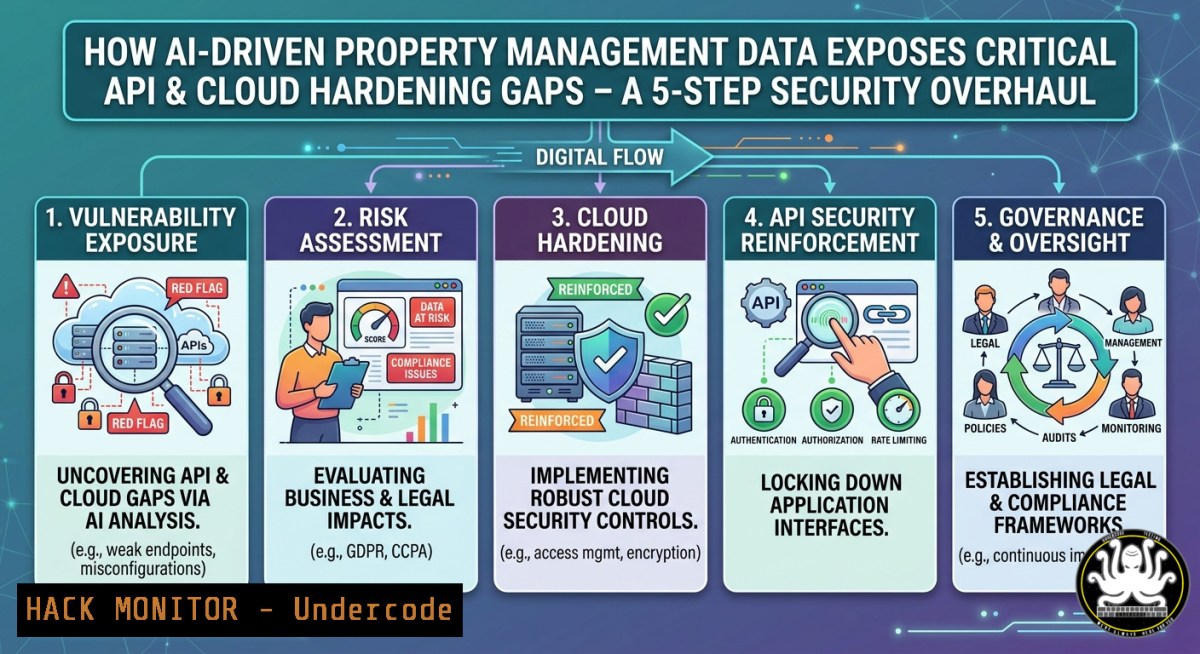
Introduction:
The rise of data‑driven property management, exemplified by platforms like Rentals America, promises landlords actionable market insights and predictive analytics. However, this convergence of real‑estate data, AI, and cloud APIs creates an expanded attack surface—where tenant information, financial models, and neighborhood intelligence become prime targets for cybercriminals. Without rigorous API security, cloud hardening, and continuous monitoring, the very data that powers confident decisions can also expose entire portfolios to breaches, ransomware, or supply‑chain compromises.
Learning Objectives:
- Identify common API vulnerabilities in property management dashboards and implement mitigation controls.
- Harden Linux and Windows servers that host AI analytics pipelines and rental databases.
- Deploy rate limiting, input validation, and logging to protect AI endpoints from adversarial attacks and data exfiltration.
You Should Know:
- Securing Data Ingestion from IoT Devices and Tenant Portals
Property management systems increasingly ingest data from smart locks, thermostats, and online tenant portals. Each source is a potential entry point for attackers.
Step‑by‑step guide:
- Inventory all data sources – Use `nmap` (Linux) or `PortQry` (Windows) to discover open ports and services on your network.
- Enforce TLS 1.3 – On Linux (NGINX): `ssl_protocols TLSv1.3;` On Windows (IIS): disable older TLS versions via Registry or PowerShell.
- Configure host firewalls – Linux `iptables -A INPUT -p tcp –dport 443 -j ACCEPT` (allow only HTTPS). Windows Firewall:
New-NetFirewallRule -DisplayName "Block HTTP" -Direction Inbound -Protocol TCP -LocalPort 80 -Action Block. - Monitor ingestion logs – Set up `fail2ban` on Linux to block IPs with repeated failed POST requests. Example `/etc/fail2ban/jail.local` for an API endpoint.
2. Hardening AI Model Endpoints Against Adversarial Attacks
AI models that generate market forecasts or rental prices are attractive targets for model inversion or adversarial inputs that skew decision‑making.
Step‑by‑step guide:
- Deploy an API gateway – Use `Kong` or `Traefik` to centralize authentication and rate limiting.
- Implement strict input validation – Validate JSON schemas. Python example using
pydantic:from pydantic import BaseModel, ValidationError class RentPredictionInput(BaseModel): sqft: int bedrooms: int zipcode: str
- Rate limit by client ID – Redis-based limiting:
redis-cli SET rate_limit:client123 "10" EX 60. - Add request signing – Require HMAC-SHA256 headers for all API calls to prevent replay attacks.
- Linux Commands for Real‑Time Log Analysis of Suspicious Access
Detecting anomalies in SSH, web server, or API logs is critical when attackers probe for weak credentials or SQL injection vectors.
Useful commands:
- Monitor authentication failures: `sudo journalctl -u ssh -f | grep “Failed password”`
- Count unique IPs trying to access
/api/v1/tenant: `grep “POST /api/v1/tenant” /var/log/nginx/access.log | awk ‘{print $1}’ | sort | uniq -c | sort -nr` - Auto‑block IPs with `fail2ban` – Create a custom jail for your property management app:
[property-api]
enabled = true
filter = property-api
logpath = /var/log/nginx/access.log
maxretry = 5
bantime = 3600
- Live traffic monitoring: `iftop -i eth0` to spot unexpected outbound connections (data exfiltration).
- Windows PowerShell Scripts for Auditing File Integrity on Rental Databases
Rental databases (SQL Server, PostgreSQL on Windows) must be monitored for unauthorised changes to sensitive tables like `TenantSSN` orLeaseDocuments.
Step‑by‑step guide:
- Enable SACL auditing – Use `auditpol /set /subcategory:”File System” /success:enable /failure:enable`
- Calculate baseline hashes –
Get-ChildItem -Path "D:\RentalData\" -Recurse | Get-FileHash -Algorithm SHA256 | Export-Csv -Path "baseline.csv"
- Run daily integrity check – Compare current hashes to baseline and email alerts on mismatch:
$changed = Compare-Object (Import-Csv baseline.csv) (Get-ChildItem ... | Get-FileHash) -Property Hash if($changed) { Send-MailMessage ... } - Monitor Event ID 4663 (file access) and 4656 (handle to object) in Windows Event Viewer for suspicious read/writes to database files.
- Cloud Hardening for AWS/Azure Hosted Property Management Apps
Most modern rental platforms use cloud services (EC2, Azure VMs, S3 buckets). Misconfigured IAM roles and public storage are leading causes of data leaks.
Step‑by‑step guide for AWS:
- Enforce least privilege IAM – Example policy denying S3 delete unless MFA:
{ "Effect": "Deny", "Action": "s3:DeleteObject", "Resource": "arn:aws:s3:::rental-data/", "Condition": {"BoolIfExists": {"aws:MultiFactorAuthPresent": false}} } - Enable S3 Block Public Access – Via CLI: `aws s3api put-public-access-block –bucket rental-data –public-access-block-configuration BlockPublicAcls=true,IgnorePublicAcls=true`
- Set up GuardDuty and Security Hub – Automatically detect anomalous API calls.
- Azure specific – Use Azure Policy to deny public network access for storage accounts:
New-AzPolicyAssignment -Name "DenyPublicStorage" -PolicyDefinition "/providers/Microsoft.Authorization/policyDefinitions/..." -Scope ...
- Regular cloud scanning – Run `prowler` (open‑source) to check AWS CIS benchmarks:
prowler -M html -R custom_ruleset.
6. Vulnerability Exploitation Simulation: Testing Your Data Dashboard
Before attackers find weaknesses, simulate common exploits on a staging copy of your property management portal.
Step‑by‑step using OWASP ZAP (cross‑platform):
- Spider the application – ZAP’s automated spider will discover all API endpoints.
- Run active scan – Targets SQL injection (e.g., `’ OR ‘1’=’1` in the `zipcode` field) and XSS.
- Check for IDOR – Intercept a request like `/api/lease/1234` and change the ID to `1233` – if you see another tenant’s data, the API lacks authorization.
- Linux command for quick SQLi test – `sqlmap -u “https://rentals.com/api/property?zip=85001″ –data=”zip=85001” –level=3`
- Windows equivalent – Use `Invoke-WebRequest` with crafted payloads in PowerShell.
What Undercode Say:
- Key Takeaway 1 – Data that merely confirms existing landlord biases is not only strategically limiting but also a security blind spot; attackers thrive on the same unchallenged assumptions, leaving hidden data lakes unprotected.
- Key Takeaway 2 – The “real shift” Undercode describes—data revealing unexpected neighborhood trends—requires encryption, immutable audit logs, and zero‑trust architecture. Without those, the most valuable predictive insights become the most exfiltrated assets.
Analysis: Undercode’s observation cuts to the heart of modern security. When property managers only seek data that reinforces their worldview, they ignore outlier signals—exactly the anomalies that indicate compromise. Real cybersecurity value comes from unexpected correlations: a sudden spike in API calls from a new IP range, an AI model drifting due to poisoned training data, or a cloud bucket inadvertently exposed because “it was never used before.” Embracing the unexpected demands dynamic defenses: continuous logging, adversarial testing, and a culture where “surprising data” triggers an incident response, not just a business strategy meeting.
Prediction:
By 2027, AI‑driven property management platforms will become primary ransomware vectors, with attackers leveraging LLMs to craft personalised phishing emails that incorporate real‑time rental data (e.g., “Your tenant at 123 Oak St missed rent—click to verify”). This will force adoption of blockchain‑based audit trails for all lease changes, mandatory API pentesting as a compliance requirement, and runtime application self‑protection (RASP) embedded directly into predictive analytics models. The landlords who survive will be those who treat every “data‑driven decision” as a potential breach surface.
▶️ Related Video (74% Match):
🎯Let’s Practice For Free:
IT/Security Reporter URL:
Reported By: Clientappreciation 5starreview – Hackers Feeds
Extra Hub: Undercode MoN
Basic Verification: Pass ✅
🎓 Live Courses & Certifications:
Join Undercode Academy for Verified Certifications
🚀 Request a Custom Project:
Secure, high-velocity infrastructure and disruptive technological engineering. Contact our engineering team for high-tier development and proprietary systems:
[email protected]


