Listen to this Post
Introduction:
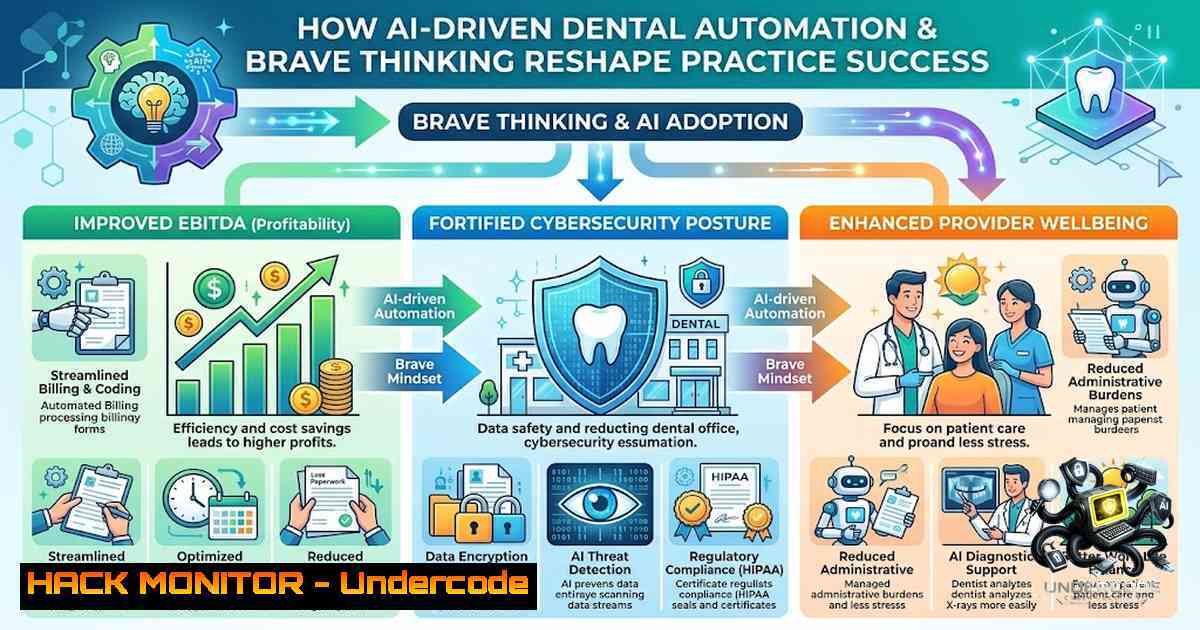
The modern dental practice operates at the intersection of clinical excellence, operational efficiency, and digital security—a triad that increasingly determines both financial performance and provider longevity. Gabriel Hofmann’s launch of the “Channel Your Greatness Daily” newsletter arrives at a pivotal moment when AI-powered automation promises to elevate case acceptance rates from the industry average of 42% to top-quartile performance of 75%, while simultaneously introducing new cybersecurity vulnerabilities that threaten protected health information (PHI) under HIPAA frameworks. This convergence of technological opportunity and security imperative demands that dental professionals master both the implementation of AI-driven efficiency tools and the hardening of their digital infrastructure against emerging threats.
Learning Objectives:
- Master the deployment and configuration of AI-driven diagnostic, scheduling, and revenue cycle management tools to drive measurable EBITDA gains
- Implement HIPAA-compliant data handling protocols and security controls for AI systems processing protected health information
- Apply Brave Thinking mindset techniques to overcome operational paralysis and drive practice transformation
- Execute security hardening procedures across practice management software, cloud infrastructure, and third-party vendor integrations
You Should Know:
1. AI-Powered Diagnostic Imaging and Case Acceptance Optimization
The integration of FDA-approved artificial intelligence into radiographic analysis represents one of the most significant efficiency multipliers available to modern dental practices. Platforms such as Dentrix Detect AI, powered by VideaHealth, and Overjet’s diagnostic system use computer vision algorithms to identify caries, calculus, bone loss, and restorations with color-coded visual overlays that enhance both diagnostic accuracy and patient communication. Practices implementing these tools report dramatic improvements: A Shop For Smiles achieved a 75% increase in case acceptance within two years of deploying Detect AI, while Overjet customers report a 25% lift in case acceptance and an average 18x return on investment.
Step-by-Step Guide: Implementing AI Diagnostic Tools
Step 1: Vendor Assessment and HIPAA Compliance Verification
Before deploying any AI diagnostic tool, execute a comprehensive Business Associate Agreement (BAA) review. Under HIPAA, AI companies are considered business associates if they access PHI. Verify that the vendor provides:
– SOC 2 Type II certification
– Encrypted data transmission (TLS 1.2+)
– Data residency and deletion policies
– Audit logging capabilities
Step 2: Integration with Existing Practice Management Software
Most AI diagnostic tools integrate directly with practice management platforms. For Dentrix users, Detect AI is natively embedded. For Open Dental users, AI diagnostic overlays integrate directly into the patient chart. Verify API compatibility and test in a sandbox environment before production deployment.
Step 3: Staff Training and Workflow Integration
Train clinical staff on interpreting AI-generated findings and presenting them to patients. AI-enhanced images facilitate clearer communication about diagnoses and treatment planning, which directly increases case acceptance. Establish protocols for:
– Reviewing AI-flagged findings before patient presentation
– Documenting AI-assisted diagnoses in treatment notes
– Handling false positives through clinical verification
Step 4: Performance Monitoring
Track key metrics including case acceptance rate, claim denial rate, and perio-to-prophy ratio. Top-performing practices achieving 75% case acceptance leverage AI to support consistency across providers and visits.
2. Revenue Cycle Automation and EBITDA Acceleration
DSOs and multi-location practices face intense EBITDA pressure from rising wages, turnover costs, declining reimbursements, and inflation. AI-1ative platforms such as Planet DDS’s DentalOS address these pressures through coordinated, end-to-end automation spanning the entire revenue cycle. AI reduces the 2.9% of production typically lost to insurance errors—amounting to millions annually for large DSOs—through automated eligibility checks, claims validation, and dynamic pricing tools.
Step-by-Step Guide: Configuring Revenue Cycle Automation
Step 1: Deploy Automated Insurance Verification
Configure AI-driven eligibility verification to run pre-appointment. Archy’s platform reportedly saved one practice over $50,000 in hardware and IT costs in year one while automating insurance verification and patient communications.
Step 2: Implement Predictive Scheduling Algorithms
AI-driven scheduling and communication tools personalize patient interactions and reduce no-show rates by 15–30%. Configure the system to:
– Analyze historical no-show patterns
– Send automated, personalized reminders
– Prioritize high-value appointment slots
Step 3: Automate Claims Management
Deploy AI-powered claims validation to identify errors before submission. Automated claims follow-up reduces revenue leakage and accelerates days in accounts receivable.
Step 4: Monitor EBITDA Impact
Track measurable outcomes including:
- Days in A/R reduction
- Claim denial rate decrease
- Staff onboarding time reduction
- Chair utilization improvement
3. Cybersecurity Hardening for AI-Enabled Dental Practices
The proliferation of AI tools in dentistry introduces significant security vectors that must be addressed proactively. Recent incidents highlight the severity of these risks: Practice by Numbers, a patient management software used in thousands of dental offices, fixed a vulnerability that allowed any logged-in user to access other patients’ medical records by modifying document IDs in URLs. Additionally, unauthorized vendors have been observed bypassing security standards to access Dentrix data through methods that interfere with core systems.
Step-by-Step Guide: Securing Your Dental AI Infrastructure
Step 1: Implement Access Control and Authentication
- Enforce multi-factor authentication (MFA) for all practice management and AI platform access
- Implement role-based access control (RBAC) limiting PHI access to minimum necessary
- Conduct quarterly access reviews and revoke inactive accounts
Step 2: Secure API Integrations
AI tools integrate via APIs that can become attack vectors. Implement:
– API key rotation every 90 days
– Rate limiting to prevent brute-force attacks
– Input validation to prevent injection attacks
– Monitoring for anomalous API call patterns
Step 3: Encrypt Data at Rest and in Transit
– Ensure all PHI is encrypted using AES-256 for storage
– Mandate TLS 1.3 for all data transmission
– Verify that AI vendors encrypt data both in transit and at rest
Step 4: Conduct Regular Vulnerability Assessments
- Run monthly vulnerability scans across practice management systems
- Perform penetration testing annually
- Monitor CVE databases for dental software vulnerabilities (e.g., CVE-2024-4577 affecting dental management systems)
Step 5: Establish Incident Response Protocols
- Document a breach notification procedure compliant with HIPAA 45 CFR § 164.404
- Maintain an up-to-date inventory of all AI vendors and their data access
- Conduct quarterly tabletop exercises simulating data breach scenarios
- Brave Thinking and Mindset Transformation for Practice Leaders
Beyond technology, sustainable practice transformation requires a fundamental shift in leadership mindset. The Brave Thinking Institute’s methodology, celebrating 50 years of transformative curriculum, provides a systematic approach to breaking through barriers of fear, doubt, and past failure. Central to this approach is the distinction between “common hour thinking”—limited by past experiences and worry—and “Brave Thinking,” which is expansive and focused on creating what is possible.
Step-by-Step Guide: Applying Brave Thinking to Practice Operations
Step 1: Practice the “Up Until Now” Framework
When facing operational challenges (e.g., low case acceptance, staff turnover), reframe the narrative: “Up until now, we have struggled with X. Starting today, we will implement Y.” This shifts focus from past limitations to future possibilities.
Step 2: Implement “Pause and Find Goodness”
In high-stress clinical environments, build a daily practice of pausing to identify three operational wins. This counteracts burnout, which a Yale University study found decreased by 13–15 percentage points within 30 days of adopting AI scribe solutions.
Step 3: Establish Morning Mindset Rituals
Following Hofmann’s 5-minute daily practice, dedicate time each morning to:
– Reviewing key performance indicators without judgment
– Setting one intentional operational goal for the day
– Visualizing successful patient interactions and team collaboration
Step 4: Build Resilience Against Burnout
Implement boundaries around technology use, including scheduled disconnection from practice management systems. Address the “tank running dry” through structured recovery practices, sleep hygiene, and burnout prevention protocols.
5. Voice-Activated Workflows and Ambient AI Documentation
Ambient AI scribing and voice-activated charting represent the next frontier in dental practice efficiency. Henry Schein One’s natively embedded voice workflow, unveiled at the 2025 Greater New York Dental Meeting, enables hands-free perio charting and real-time documentation assistance that captures and summarizes patient interactions. Voice-activated perio charting significantly reduces administrative burden and improves accuracy.
Step-by-Step Guide: Deploying Voice-Activated Clinical Workflows
Step 1: Select a HIPAA-Compliant Voice Solution
Ensure the voice AI vendor executes a BAA and provides:
– End-to-end encryption for voice data
– Automatic transcription deletion after documentation completion
– Audit trails for all voice interactions
Step 2: Configure Voice Commands for Clinical Workflows
Define standardized voice commands for:
- Perio charting (e.g., “Probe depth 3-3-2-4 on tooth 16”)
- Treatment documentation
- Prescription generation
Step 3: Train Clinical Staff on Voice Workflow Integration
Conduct hands-on training sessions focusing on:
- Voice command accuracy and error correction
- Integration with existing charting systems
- Troubleshooting common voice recognition issues
Step 4: Measure Documentation Time Reduction
Track time spent on documentation before and after deployment. Yale research indicates clinicians experienced reduced burnout within 30 days of adopting AI scribe solutions, directly correlating with reduced administrative burden.
6. Cloud Infrastructure Hardening for Dental Practice Management
As dental practices migrate to cloud-based platforms like Dentrix Ascend, securing cloud infrastructure becomes paramount. Henry Schein One’s partnership with AWS to integrate generative AI technologies underscores the importance of cloud security in AI-enabled dentistry.
Step-by-Step Guide: Hardening Cloud Practice Management Infrastructure
Step 1: Implement Cloud Security Posture Management
- Enable AWS CloudTrail or equivalent logging for all practice management activities
- Configure automated alerts for suspicious API calls or unauthorized access attempts
- Implement Security Hub or equivalent for centralized security monitoring
Step 2: Secure Cloud-1ative AI Workloads
- Isolate AI processing workloads in separate VPCs or subnets
- Implement network access controls limiting AI service exposure
- Use AWS KMS or equivalent for encryption key management
Step 3: Conduct Regular Cloud Security Audits
- Review IAM policies quarterly for least-privilege compliance
- Scan S3 buckets or equivalent storage for public exposure
- Verify that backup encryption meets HIPAA requirements
Step 4: Implement Disaster Recovery and Business Continuity
- Maintain encrypted off-site backups with defined RPO and RTO
- Test restoration procedures quarterly
- Document cloud failover procedures for critical AI services
What Undercode Say:
- Key Takeaway 1: The integration of AI diagnostic tools directly correlates with measurable increases in case acceptance (up to 75%) and significant reductions in provider burnout, but these benefits are contingent upon proper security implementation and HIPAA compliance.
-
Key Takeaway 2: Brave Thinking mindset techniques provide the psychological infrastructure necessary to navigate the disruption of AI adoption, transforming operational challenges from insurmountable barriers into opportunities for practice growth and provider wellbeing.
Analysis: The dental industry stands at a critical inflection point where technological capability must be matched by security maturity and leadership mindset. Gabriel Hofmann’s newsletter initiative addresses the often-overlooked human dimension of practice transformation—recognizing that even the most sophisticated AI tools cannot deliver sustainable value if providers are burned out, overwhelmed, or trapped in “common hour thinking.” The convergence of AI automation (driving EBITDA gains through revenue cycle optimization and case acceptance improvement) with Brave Thinking methodology (addressing the psychological barriers to change) creates a comprehensive framework for practice evolution. However, this technological revolution introduces significant cybersecurity risks that demand proactive mitigation. The Practice by Numbers vulnerability serves as a cautionary tale: AI adoption cannot outpace security implementation. Dental practices must treat cybersecurity not as an afterthought but as a foundational component of AI deployment strategy. The future belongs to practices that can simultaneously leverage AI for operational excellence, maintain robust security postures, and cultivate leadership mindsets that embrace rather than resist technological change.
Prediction:
- +1 AI-1ative dental platforms will become the standard operating model for DSOs and multi-location practices within 36 months, with practices failing to adopt AI automation facing competitive disadvantages in both patient acquisition and operational margins.
-
-1 The rapid proliferation of AI tools in dentistry will trigger a corresponding wave of cybersecurity incidents, including PHI breaches and ransomware attacks targeting vulnerable practice management systems, particularly among smaller practices lacking dedicated security resources.
-
+1 Voice-activated clinical workflows and ambient AI documentation will reduce administrative burden by 40–60%, enabling providers to spend more time on patient care and significantly reducing burnout rates across the profession.
-
-1 Regulatory scrutiny of AI in healthcare will intensify, with HIPAA enforcement actions targeting practices that fail to properly secure AI-processed PHI or maintain adequate BAAs with AI vendors.
-
+1 The integration of predictive business intelligence and dynamic pricing tools will enable practices to optimize revenue cycles with unprecedented precision, potentially increasing EBITDA by 15–25% for early adopters.
-
-1 Practices that neglect the mindset and wellbeing dimensions of AI adoption will experience higher turnover rates and lower ROI on technology investments, as burned-out providers resist or improperly utilize automation tools.
▶️ Related Video (76% Match):
https://www.youtube.com/watch?v=-TygXYtH4sw
🎯Let’s Practice For Free:
🎓 Live Courses & Certifications:
Join Undercode Academy for Verified Certifications
🚀 Request a Custom Project:
Secure, high-velocity infrastructure and disruptive technological engineering. Contact our engineering team for high-tier development and proprietary systems:
[email protected]
💎 Smart Architecture | 🛡️ Secure by Design | ⭐ Trusted by Thousands
IT/Security Reporter URL:
Reported By: https://lnkd.in/p/eSfcRQXN – Hackers Feeds
Extra Hub: Undercode MoN
Basic Verification: Pass ✅


